Forensic Odontologist
Forensic odontologists identify deceased and missing people from their teeth and jaws, and their evidence helps coroners confirm an identity and give families an answer.
- Median salary*
- $124,800
4.0%vs last year, before tax
- People employed*
- 50
Infinity%vs last year
- Projected growth
- +35.8%
to 2035
- AI exposure*
- Moderate
- automation risk
- Average hours*
- 40/wk
matches all-jobs average
- Shortage status
- In shortage
national
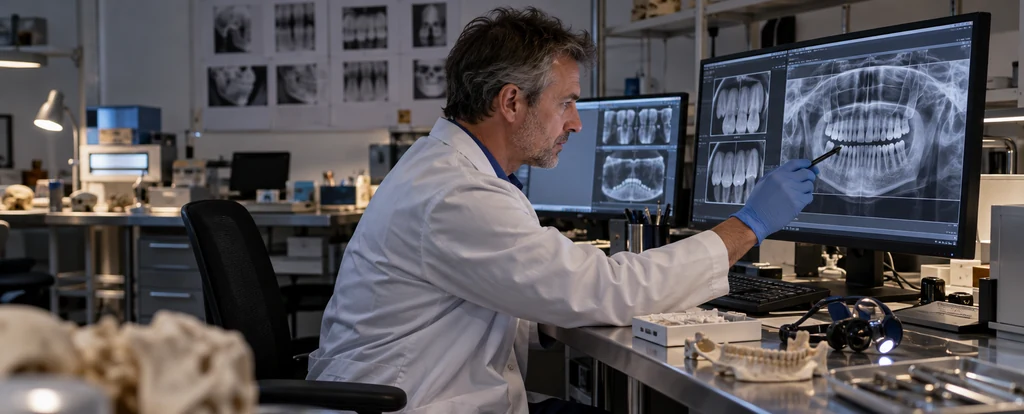
Forensic odontologists are registered dentists who apply dental anatomy to legal and coronial investigations. They compare ante-mortem dental records and radiographs with post-mortem remains, chart dental features and present their findings as expert evidence. Most work part time in the field while continuing clinical dentistry, academic work or defence service, which is the main thing that separates them from a dentist in general practice.
How much do forensic odontologists earn?
The median full-time salary for a forensic odontologist is $124,800 per annum, before tax, up $26,000 since 2018.
How much you earn depends heavily on how the field work fits around your other job, because most forensic odontology is part time, on call or case by case rather than a full-time salary. Coroners courts, police and defence are public sector employers, so rates follow state awards and classification levels. Full-time clinical dentistry, university research or Australian Defence Force service usually provides the base income.
What does a forensic odontologist do day to day?
The list below is what fills most weeks; the exact mix shifts with seniority and whatever stage the current work is at.
- Examining dental remains to establish identity
- Comparing ante-mortem and post-mortem dental records and radiographs
- Charting and imaging dental structures for identification cases
- Preparing expert reports and giving evidence in coronial and criminal proceedings
- Training dental, police and emergency personnel in disaster victim identification
What skills do forensic odontologists need?
Employers look for clinical assessment and treatment, laboratory analysis, regulatory compliance, backed by WinID3 fluency and strong attention to detail.
Specialist skills
- Clinical assessment and treatment
- Laboratory analysis
- Regulatory compliance
Software and tools
- WinID3
- DVI System International
- Planmeca Romexis
- Adobe Photoshop
- Microsoft Excel
General skills
- Attention to detail
- Problem solving
- Written communication
- Presenting and data storytelling
Is the job growing?
About 50 people work as forensic odontologists in Australia, and employment is projected to grow 35.8% over the decade to 2035. That's very strong growth. Few roles in Australia are expanding this fast, and it points to solid demand for years to come.
How do you become a forensic odontologist?
Here's the path most forensic odontologists take, step by step.
- 1Complete a dental degree and register
A five-year bachelor degree in dental surgery or oral health is the entry point, followed by registration with the Dental Board of AHPRA. There is no way into forensic odontology without a dental qualification first.
- 2Work as a dentist
Several years in clinical practice build the dental anatomy, radiography and record keeping skills the forensic work relies on, and most people in the field keep a practice going.
- 3Complete postgraduate study in forensic odontology
A graduate diploma or masters is the usual credential, offered by a small number of Australian universities and often taken while working. It covers identification methods, bite mark and age estimation evidence, and the legal framework.
- 4Train with a disaster victim identification team
State and territory police and forensic agencies run DVI courses and exercises, and getting on the register means you can be deployed to mass casualty events here or overseas.
- 5Build a case record
Assisting on coronial cases, writing reports and eventually testifying is what establishes you as an expert, and it usually takes a few years of supervised work before courts accept your evidence.
Ready to apply as a forensic odontologist?
Whether you're working toward becoming a forensic odontologist or already are one and want a hand with the next step (sharpening your resume for ATS screening, tightening your cover letter, or knowing what you'll actually be asked at interview), here are examples grounded in this specific role, not generic templates.
What jobs can a forensic odontologist move to?
Moving into Dentist typically comes with the biggest pay rise, worth $43,300 a year more on average.
| Move to | Typical pay change | Overlap | Retraining |
|---|---|---|---|
| Dentist Forensic odontologists bring advanced dental anatomy and identification expertise back to general practice, where their clinical skills apply to patient care.Known move | +$43,300 | 41% | requalify |
Moves are chosen from Jobs and Skills Australia's Data on Occupation Mobility, which follows income tax records between 2011-12 and 2020-21, together with entry requirements and skill overlap. A known move is one people were seen making in that data. Pay change compares median full-time pay for the two roles.
Who works as a forensic odontologist?
The typical forensic odontologist is 51 years old; 55% are men, 68% work full-time, and full-timers average 40 hours a week.
- 51
- Median age
- 45%
- Female share
- 68%
- Full-time
- +0h
- vs all-jobs avg
What's it like being a forensic odontologist?
The work has two very different halves. In the mortuary or the laboratory it is slow, careful and technical, checking tooth by tooth against records that may be decades old. In the courtroom or the briefing room it is about explaining, in plain language, how confident you are and why. Because the field is small, most people hold it alongside another job for years.
What people like
- An identification closes a case. Putting a name to a set of remains gives a family a death certificate, an estate and a funeral, and that outcome is usually why people stay in the field.
- Clinical anatomy used for something else. Teeth survive fire, immersion and long burial better than most tissue, so the training you did in dental school does work that DNA and fingerprints sometimes cannot.
- A small, connected field. Each state has only a handful of practitioners, so you get to know the coroners, police and pathologists you deal with and often work with them for years.
- Teaching and overseas deployments. Training dentists, police and emergency workers in DVI methods, or joining a team sent to a disaster overseas, adds a public and international dimension to the work.
What people find hard
- Emotionally heavy cases. Mass casualty events and cases involving children are part of the job, and the examination is done calmly and methodically despite what the circumstances are.
- Few full-time positions. There is not enough casework in Australia to fill a full week for most practitioners, so nearly everyone keeps a clinical practice, a university role or a defence posting.
- Evidence that gets challenged. A defence lawyer can question your report line by line, so you need to be precise about the limits of what a dental match can prove.
- Incomplete dental records. Ante-mortem records are often missing, handwritten or taken years earlier, and poor records can restrict what you are able to conclude.
Based on our synthesis of professional-body surveys and public accounts of the role, not first-person verified reviews.
Which industries employ forensic odontologists?
Hospitals employs the largest share of forensic odontologists, followed by Public administration and safety.
Top employing industries
- 1Hospitals
- 2Public administration and safety
- 3Tertiary education and research
- 4Dental services
- 5Defence
Ranked by employment share; the source doesn't publish an exact percentage per industry.
| Bachelor degree | 52% | |
|---|---|---|
| Postgraduate | 26% | |
| Diploma / Advanced Diploma | 13% | |
| Other | 9% |
Will AI replace forensic odontologists?
AI and automation reach the record matching side of this job more than the examination itself, so the overall exposure is moderate. Matching software can search a database of dental charts and rank likely candidates in seconds, and imaging tools help clean up radiographs. Someone still has to examine the remains, decide whether a match holds and defend that conclusion under cross examination.
Share of typical working time by exposure level
- Matching ante-mortem and post-mortem recordsSoftware such as WinID3 compares a chart against a records database and suggests candidates, but the odontologist confirms or rejects each one.35%moderate
- Examining and charting dental remainsThis is hands-on work at the mortuary bench, recording restorations, missing teeth and jaw features from remains that may be fragmented or burnt.30%low
- Writing expert reports and preparing court evidenceDrafting tools can help structure a report, while the opinion on identity and how strongly it can be stated remains the practitioner's own.20%moderate
- Disaster victim identification training and coordinationRunning exercises with police, dentists and emergency services, and deploying to an event to organise a team of examiners, is coordination work that depends on people on the ground.15%low
Moves least exposed to AI
These career moves from forensic odontologist work are rated low for AI exposure:
- Dentist
Solid skill overlap (41%), requalify to get there, and a low automation-risk profile.
Common questions about becoming a forensic odontologist
Straight answers to the questions people ask most.
How much do forensic odontologists earn?
Forensic odontologists working full time earn a median of $124,800 per year before tax. Because much of the work is part time or case by case, total income usually combines forensic fees with clinical dentistry, university or defence pay. Public sector rates are set by state awards and classification.
How do you become a forensic odontologist?
You qualify as a dentist and register with AHPRA first, then complete postgraduate study in forensic odontology. From there you train with a police or forensic agency disaster victim identification team and assist on coronial cases until courts accept your evidence.
Are forensic odontologists in demand in Australia?
Forensic odontologists are currently in shortage nationally, and employment is projected to grow 35.8% over the decade to 2035 over the decade to 2035. The field is very small, so openings depend on coronial, police and defence work rather than a steady advertised job market. Training and staying on a DVI register is what keeps you in line for that work.
Will AI replace forensic odontologists?
No, but it changes how the record matching is done. Software such as WinID3 can compare a dental chart against a records database and rank possible matches in seconds, which narrows the search. Examining the remains, judging whether a match is sound and defending that opinion in court still sit with the odontologist.
What other jobs can a forensic odontologist move into?
Dentistry is the close link in both directions, and moving back to full-time clinical practice pays around $43,300 more. Dentists come the other way by completing postgraduate forensic training, since they already hold the dental anatomy and radiography background the identification work builds on.
Do forensic odontologists work full time in the field?
Most do not. Coronial casework is intermittent, so practitioners usually combine it with a dental practice, a university position or Australian Defence Force service. Full-time forensic roles are rare and tend to sit inside a larger forensic pathology or police organisation.
Specialisation of
Related roles
- Dentist
- Dentist
- Medical Laboratory Scientist
- Oral Pathologist
- Dento-Maxillofacial Radiologist
- Optometrist
Not sure this is you? Take the career quiz and get a ranked shortlist of roles that fit how you like to work.