Orthodontist
An orthodontist is a dental specialist who straightens teeth and guides jaw growth, usually through treatment that runs a year or more.
- Median salary*
- $166,400
3.6%vs last year, before tax
- People employed*
- 650
8.3%vs last year
- Projected growth
- +35.8%
to 2035
- AI exposure*
- Low
- automation risk
- Average hours*
- 40/wk
matches all-jobs average
- Shortage status
- In shortage
national
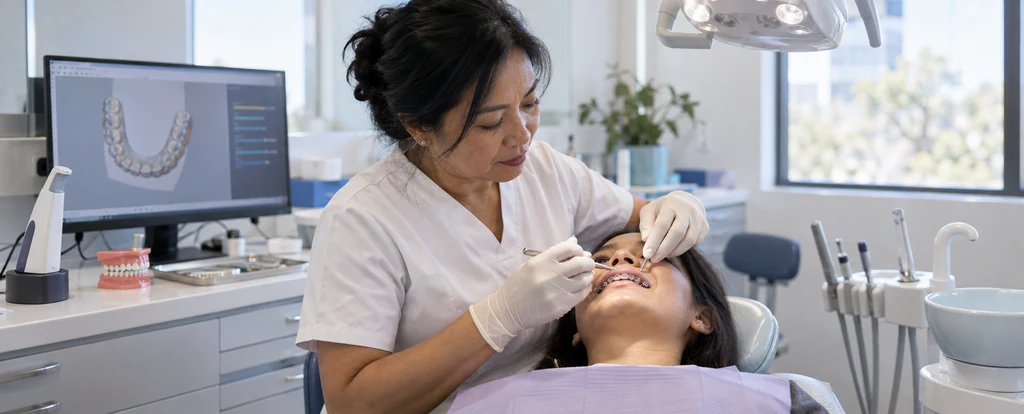
Most orthodontists work in private practice, where patients arrive on referral from a general dentist and come back for adjustments on a set cycle. They are dentists first: a general dentist treats decay, gum disease and repairs, while an orthodontist has completed further specialist training and takes on crooked teeth, bite problems and jaw growth. It is a small field, with about 650 people working as orthodontists across Australia.
How much do orthodontists earn?
The median full-time salary for an orthodontist is $166,400 per annum, before tax, up $35,500 since 2018.
How an orthodontist is paid depends heavily on how the practice is set up: a principal or partner draws a share of practice profit, while an associate usually works on a percentage of billings or a salary. Salaried posts in public dental services and universities sit at the other end of that range. Patient numbers, treatment mix and what the practice spends on staff and technology shape take-home pay more than years of experience.
What does an orthodontist do day to day?
The list below is what fills most weeks; the exact mix shifts with seniority and whatever stage the current work is at.
- Assessing tooth position and jaw growth from X-rays, photographs and digital scans
- Diagnosing bite problems and planning treatment sequences that can run for two years or more
- Fitting braces, clear aligners and other appliances, and adjusting them at regular review visits
- Working alongside oral and maxillofacial surgeons on cases where jaw surgery is needed as well as braces
- Talking through progress, cost and aftercare with patients and their families, and supervising the practice's clinical and administrative staff
What skills do orthodontists need?
Employers look for clinical assessment and treatment, patient care and support, health education and advice, backed by Dolphin Imaging fluency and strong attention to detail.
Specialist skills
- Clinical assessment and treatment
- Patient care and support
- Health education and advice
Software and tools
- Dolphin Imaging
- ClinCheck (Invisalign)
- 3Shape TRIOS intraoral scanner
- Planmeca Romexis CBCT software
- Practice management software (for example Praktika or Ortho2)
General skills
- Attention to detail
- Written communication
- Problem solving
- People leadership
Is the job growing?
About 650 people work as orthodontists in Australia, and employment is projected to grow 35.8% over the decade to 2035. That's very strong growth. Few roles in Australia are expanding this fast, and it points to solid demand for years to come.
How do you become an orthodontist?
Here's the path most orthodontists take, step by step.
- 1Complete a dental degree
Five years of undergraduate study, or a graduate-entry Doctor of Dental Medicine, then registration as a dentist with the Dental Board of AHPRA. Orthodontic training is not open to anyone without it.
- 2Work as a general dentist
A few years of general practice builds the clinical speed and patient handling that specialist programs look for, and it is unusual to be accepted straight out of a dental degree.
- 3Complete specialist orthodontic training
A three-year Doctor of Clinical Dentistry in orthodontics at an accredited university, combining supervised clinical work with a research component. Places are limited and entry is competitive.
- 4Register as a specialist
Specialist registration with AHPRA is what allows you to call yourself an orthodontist and treat patients as one. General dentists are not permitted to use the title.
- 5Join or buy into a practice
Most orthodontists work in private practice, starting as an associate and often moving into partnership or ownership later. A smaller number work in public dental services or universities.
Ready to apply as an orthodontist?
Whether you're working toward becoming an orthodontist or already are one and want a hand with the next step (sharpening your resume for ATS screening, tightening your cover letter, or knowing what you'll actually be asked at interview), here are examples grounded in this specific role, not generic templates.
What jobs can an orthodontist move to?
Moving into Dentist typically comes with the biggest pay rise, worth $1,700 a year more on average.
| Move to | Typical pay change | Overlap | Retraining |
|---|---|---|---|
| Dentist Orthodontists bring advanced dental training and treatment planning to general dental practice, though the work sits outside their specialist scope.Known move | +$1,700 | 41% | requalify |
Moves are chosen from Jobs and Skills Australia's Data on Occupation Mobility, which follows income tax records between 2011-12 and 2020-21, together with entry requirements and skill overlap. A known move is one people were seen making in that data. Pay change compares median full-time pay for the two roles.
Who works as an orthodontist?
The typical orthodontist is 45 years old; 67% are men, 70% work full-time, and full-timers average 40 hours a week.
- 45
- Median age
- 33%
- Female share
- 70%
- Full-time
- +0h
- vs all-jobs avg
What's it like being an orthodontist?
Orthodontics is planned, measured work with a slow feedback loop: you set a treatment direction and watch it unfold over a couple of years, one short appointment at a time. Days are built around appointment books of brief adjustment visits, broken up by longer new-patient consultations and planning sessions. It suits people who like precision and long patient relationships, and who are comfortable running a business as well as a clinic.
What people like
- You see the finished result. Treatment runs long, but the change is visible: a bite that closes properly and a patient who stops covering their mouth when they smile.
- Puzzle solving with measurements. Every case starts with scans, X-rays and photographs, and working out the sequence that will move teeth into place is the part many orthodontists find most engaging.
- Relationships that build over years. Visits every few weeks mean you get to know families well, and brothers and sisters often follow the first patient into treatment.
- Clinical work mixed with the business side. Most orthodontists own or part-own a practice, so the week combines hands-on treatment with staffing, scheduling and decisions about where the practice is heading.
What people find hard
- Progress depends on the patient. Braces and aligners only work if they are worn, and a teenager who skips elastics or loses aligners can stretch treatment out and undo months of planning.
- Recall sessions can feel repetitive. A full day of short adjustment appointments is efficient, but the variety in the job sits in the planning and consultation work rather than the chair-side checks.
- Slow feedback on your own decisions. You may not know for two years whether a treatment plan worked the way you intended, which takes patience and careful record keeping.
- The owner's workload. Running a practice adds marketing, staff management and billing, often done outside clinic hours.
Based on our synthesis of professional-body surveys and public accounts of the role, not first-person verified reviews.
Which industries employ orthodontists?
Private orthodontic and dental practices employs the largest share of orthodontists, followed by Public hospitals and specialist dental services.
Top employing industries
- 1Private orthodontic and dental practices
- 2Public hospitals and specialist dental services
- 3Higher education and dental research
- 4Community and school dental programs
Ranked by employment share; the source doesn't publish an exact percentage per industry.
| Bachelor degree | 52% | |
|---|---|---|
| Postgraduate | 26% | |
| Diploma / Advanced Diploma | 13% | |
| Other | 9% |
Will AI replace orthodontists?
Orthodontics is one of the less exposed parts of dentistry. Planning software traces cephalograms, segments CBCT scans and models tooth movement, and aligner companies use it to generate staging plans, but the diagnosis, the decision about what to move and the physical fitting of appliances stay with the clinician. The job also runs on long face-to-face relationships with patients and their families, which automation does not touch.
Share of typical working time by exposure level
- Fitting and adjusting braces, wires and clear alignersBonding brackets and changing archwires needs a steady hand inside a small mouth, and no current system does that part.35%low
- Review visits and progress checksDigital scans let software measure how far teeth have moved between visits, but deciding whether to change the plan is still a clinical call.25%moderate
- Talking patients and families through options and aftercareExplaining costs, timelines and what happens if elastics are skipped is a conversation, usually with a parent in the room.25%low
- Treatment planning from scans, X-rays and photographsAutomated tracing and aligner staging tools now produce a first draft of the plan, which the orthodontist reviews, corrects and takes responsibility for.15%high
Common questions about becoming an orthodontist
Straight answers to the questions people ask most.
How much does an orthodontist earn?
Orthodontists earn a median of $166,400 per year before tax. Practice structure moves that figure more than experience does, because principals and partners draw on practice profit while associates usually work on a share of billings or a salary.
How do you become an orthodontist?
You complete a dental degree, register as a dentist, work in general practice for a few years and then finish a three-year specialist orthodontic program. Specialist registration with AHPRA is the final step, and it is what allows you to use the title. Entry to the training programs is competitive.
Are orthodontists in demand in Australia?
Orthodontists are currently in shortage nationally, and employment is projected to grow 35.8% over the decade to 2035. The bigger constraint for anyone entering is training places rather than patient demand, so plan around getting into a specialist program.
Will AI replace orthodontists?
Not the clinical work. Treatment planning software already traces X-rays, segments CBCT scans and drafts aligner staging plans, but the diagnosis, the decision about what to move and the hands-on fitting of appliances stay with the orthodontist. The job also rests on long face-to-face relationships with patients, many of them children.
Where can an orthodontist's career go?
Some orthodontists return to general dentistry, where their advanced training carries over but the work sits outside their specialist scope. Others stay in specialist practice and move into partnership or ownership, which is often where earnings grow. Dentists can enter the field the other way, completing specialist orthodontic training after a few years in general practice.
How many hours do orthodontists work?
Full-time orthodontists average about 40 hours a week, mostly in booked clinic hours rather than shifts or on-call. Because adjustments are scheduled in advance, the job rarely involves the after-hours emergencies that general dentists deal with, though practice owners often add administrative evenings.
Specialisation of
Related roles
Not sure this is you? Take the career quiz and get a ranked shortlist of roles that fit how you like to work.