Orthoptist
Orthoptists assess and treat problems with eye movement, alignment and binocular vision, the skills that let the two eyes work together.
- Median salary*
- $91,000
3.5%vs last year, before tax
- People employed
- 1,100
0.0%vs last year
- Projected growth
- +32.9%
to 2035
- AI exposure*
- Moderate
- automation risk
- Average hours
- 39/wk
−1h vs all jobs
- Shortage status
- Not in shortage
national
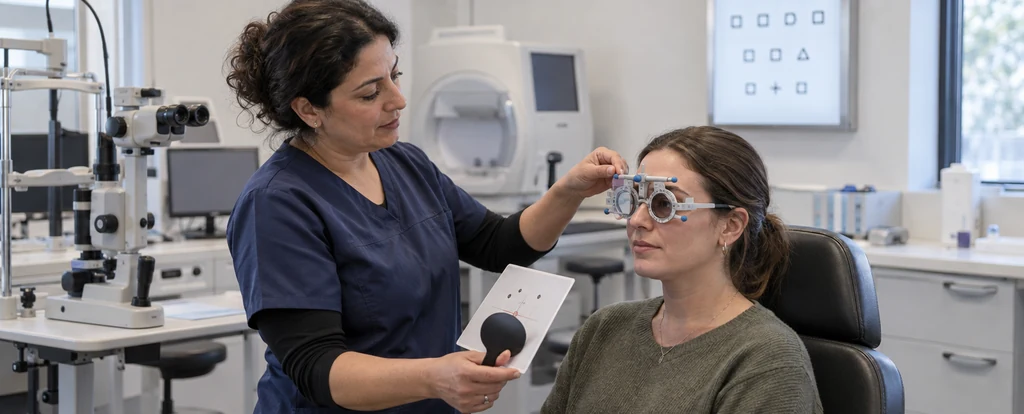
Orthoptists work in hospital eye departments, ophthalmology clinics and private practices, usually as part of a team led by an ophthalmologist. The job sits between optometry and ophthalmology: rather than prescribing glasses as their main work, orthoptists concentrate on how the eyes align, move and coordinate, and on conditions such as strabismus and amblyopia, often in children. Many also see patients with neurological or thyroid-related eye problems, where double vision is the main concern.
How much do orthoptists earn?
The median full-time salary for an orthoptist is $91,000 per annum, before tax, up $19,400 since 2018.
What an orthoptist earns depends heavily on the setting: public hospital roles are paid under the relevant state health award, with increments for years of experience and qualifications, while private practice pay is negotiated with the clinic. Experienced orthoptists who take on clinic coordination, teaching or specialised paediatric and neuro-ophthalmology work tend to earn more, and part-time hours are common, which affects annual figures.
What does an orthoptist do day to day?
The list below is what fills most weeks; the exact mix shifts with seniority and whatever stage the current work is at.
- Testing eye alignment, eye movements and binocular vision with cover tests, prisms and stereopsis charts
- Running visual field tests, retinal imaging and optical coherence tomography scans
- Assessing and managing conditions such as strabismus, amblyopia and double vision
- Fitting prisms for double vision and managing patching, atropine or vision therapy programs
- Explaining findings and treatment plans to patients, families, schools and other clinicians
What skills do orthoptists need?
Employers look for clinical assessment and treatment, patient care and support, health education and advice, backed by Humphrey Visual Field Analyser fluency and strong written communication.
Specialist skills
- Clinical assessment and treatment
- Patient care and support
- Health education and advice
- Infection control and hygiene
Software and tools
- Humphrey Visual Field Analyser
- Slit lamp biomicroscope
- Autorefractor
- Optical coherence tomography (OCT)
- Electronic medical records (EMR)
General skills
- Written communication
- Attention to detail
- Problem solving
Is the job growing?
About 1,100 people work as orthoptists in Australia, and employment is projected to grow 32.9% over the decade to 2035. That's very strong growth. Few roles in Australia are expanding this fast, and it points to solid demand for years to come.
How do you become an orthoptist?
Here's the path most orthoptists take, step by step.
- 1Finish Year 12 with science subjects
Biology, chemistry and maths are the usual preparation, and entry to the accredited programs is competitive, so a strong ATAR matters.
- 2Complete an accredited orthoptics degree
This is normally a four-year bachelor degree, or a two-year master's for people who already hold a degree in health, science or a related field. Only a small number of universities offer the accredited programs, so check the current list before you apply.
- 3Register with the Australian Orthoptic Board
The board accredits the courses and keeps the national register of orthoptists, and this credential is what hospitals and most employers expect. Orthoptists are not registered through AHPRA, so the board registration is the one that matters.
- 4Build supervised clinical experience and join the professional body
The degree includes clinical placements, and after graduating you keep working alongside an ophthalmologist while you develop the paediatric, neuro-ophthalmology and surgical assistance skills employers look for. Membership of Orthoptics Australia gives access to continuing education and peer networks.
Ready to apply as an orthoptist?
Whether you're working toward becoming an orthoptist or already are one and want a hand with the next step (sharpening your resume for ATS screening, tightening your cover letter, or knowing what you'll actually be asked at interview), here are examples grounded in this specific role, not generic templates.
What jobs can an orthoptist move to?
Moving into Respiratory and Sleep Scientist typically comes with the biggest pay rise, worth $3,600 a year more on average.
| Move to | Typical pay change | Overlap | Retraining |
|---|---|---|---|
| Respiratory and Sleep Scientist Orthoptists bring diagnostic testing and patient care skills, but need further study to work as a respiratory and sleep scientist. | +$3,600 | 78% | requalify |
Moves are chosen from Jobs and Skills Australia's Data on Occupation Mobility, which follows income tax records between 2011-12 and 2020-21, together with entry requirements and skill overlap. A known move is one people were seen making in that data. Pay change compares median full-time pay for the two roles.
Who works as an orthoptist?
The typical orthoptist is 34 years old; 89% are women, 48% work full-time, and full-timers average 39 hours a week.
- 34
- Median age
- 89%
- Female share
- 48%
- Full-time
- −1h
- vs all-jobs avg
What's it like being an orthoptist?
The work is appointment based, so most of the day is spent one on one with patients, running tests and explaining what the results mean. Children make up a large share of the caseload, which calls for patience and working closely with parents, and a busy paediatric clinic moves quickly. It suits people who like solving a problem in small steps and are comfortable working steadily within a team rather than leading the consultation.
What people like
- Results you can see. A child whose vision improves with patching, or an adult whose double vision settles with prisms, gives you fairly direct feedback that the treatment worked.
- Ongoing relationships with patients. Amblyopia and strabismus are managed over months or years, so you often see the same families across several visits and follow their progress.
- A defined role in a larger team. You work alongside ophthalmologists and optometrists with clear responsibilities and a steady referral stream, without carrying the weight of surgical decisions or prescribing.
- Variety across ages and conditions. A week can move between a squinting toddler, a stroke patient with double vision and an adult having visual field testing for glaucoma.
What people find hard
- Repetitive testing. Visual field testing and imaging are repeated many times a day, and keeping a patient positioned and attentive through each one gets tiring.
- Appointments with distressed children. Testing a toddler who will not sit still, or talking to a parent frightened by a new diagnosis, takes patience and can leave you drained by the end of a clinic.
- A lot of sitting and screen time. Slit lamp work, OCT scans and record keeping add up to long stretches in a small room, and outpatient clinics rarely give you a break from it.
- Hours that follow the clinic. Many orthoptists work part time, and in private practice your hours often shift with the clinic's referral flow rather than a fixed roster.
Based on our synthesis of professional-body surveys and public accounts of the role, not first-person verified reviews.
Which industries employ orthoptists?
Health Care and Social Assistance employs the largest share of orthoptists.
Top employing industries
- 1Health Care and Social Assistance
Ranked by employment share; the source doesn't publish an exact percentage per industry.
| Postgraduate | 50.4% | |
|---|---|---|
| Bachelor degree | 38.7% | |
| Diploma / Advanced Diploma | 8% | |
| Certificate III/IV | 0.8% | |
| Year 12 or below | 0.3% |
Will AI replace orthoptists?
Orthoptists sit at a moderate level of exposure: the equipment they use is increasingly automated, but the assessment and treatment decisions still rest with the clinician. Automated perimetry and OCT scanners now capture images and produce measurements that once took longer to work through, so software handles more of the first pass. Measuring eye alignment by hand, working with a restless child and explaining what a result means to a worried parent are the parts that resist automation.
Share of typical working time by exposure level
- Visual field testing and imagingAutomated perimeters and OCT scanners run the test and give a first read, though you still judge whether the patient understood it and whether the result is reliable.30%high
- Measuring eye alignment and binocular visionCover tests, prism bar measurements and stereopsis checks depend on your own observations and on coaxing a consistent response out of the patient.25%low
- Patient education, reports and coordinationWriting up findings for the ophthalmologist and explaining a diagnosis to a family happens in person, and the words you choose shape what they do next.25%low
- Amblyopia and strabismus treatmentSoftware can log patching hours or guide therapy exercises at home, but the choice of treatment and the adjustments made over months are clinical decisions.20%moderate
Common questions about becoming an orthoptist
Straight answers to the questions people ask most.
How much do orthoptists earn?
The median full-time pay for orthoptists is $91,000 per year before tax. Public hospital positions follow a state health award with annual increments, while private practice rates are negotiated and vary with the clinic and your experience.
How do I become an orthoptist?
You need an accredited orthoptics degree, usually a four-year bachelor or a two-year master's if you already hold a health or science degree. Registration with the Australian Orthoptic Board is then what hospitals and most employers expect, and it is not handled through AHPRA.
Are orthoptists in demand?
Orthoptists are currently not in shortage, and employment is projected to grow 32.9% over the decade to 2035. The profession is small, so vacancies tend to be advertised individually, and it pays to watch hospital and clinic networks as well as job boards.
Will AI replace orthoptists?
Parts of the job are already automated, particularly visual field testing and imaging, where software runs the test and produces a first read. The assessment side, measuring eye alignment by hand and deciding what a result means for a particular patient, still depends on a trained clinician working with the person in front of them.
What can orthoptists move into?
Moving into respiratory and sleep science is the clearest sideways step, since diagnostic testing and patient care overlap and the extra study builds on skills you already use; respiratory and sleep scientists typically earn $3,600 more. Some experienced orthoptists instead set up their own practice, usually alongside an ophthalmology clinic, and that is often where earnings grow.
What is the difference between an orthoptist and an optometrist?
Optometrists test vision, prescribe glasses and screen for eye disease, while orthoptists focus on how the eyes align and work together and on treatments such as patching, prisms and vision therapy. In many clinics the two work side by side and refer patients to each other.
Related roles
- Respiratory and Sleep Scientist
- Nuclear Medicine Technologist
- Acupuncturist
- Dental Hygienist
- Podiatrist
- Radiographer
Not sure this is you? Take the career quiz and get a ranked shortlist of roles that fit how you like to work.