Dental Hygienist
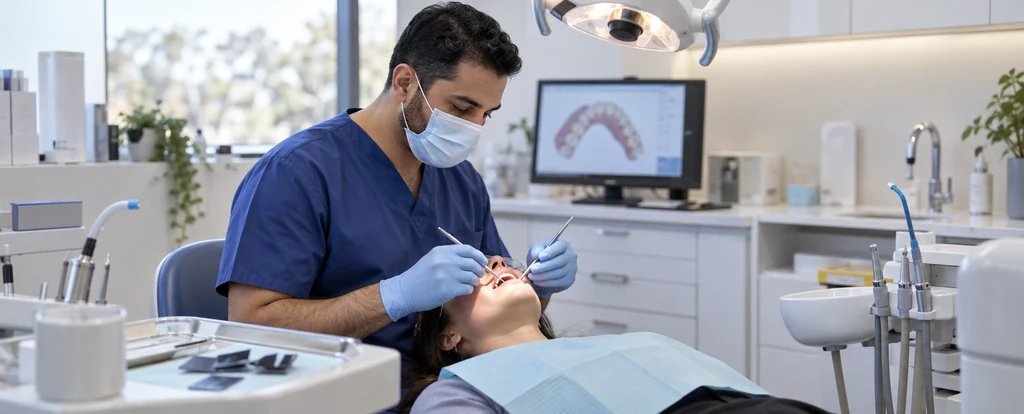
Dental hygienists clean teeth, check gums for the early signs of disease and show patients how to look after their own mouths between visits.
- Median salary*
- $85,800
4.5%vs last year, before tax
- People employed
- 1,300
0.0%vs last year
- Projected growth
- +20.6%
to 2035
- AI exposure*
- Low
- automation risk
- Average hours
- 37/wk
−3h vs all jobs
- Shortage status
- In shortage
national
Dental hygienists work in private practices, community dental clinics and aged care settings, usually alongside one or more dentists. They treat patients independently, which separates them from dental assistants, who work chairside helping the dentist rather than carrying their own list. The role is registered with the Dental Board of Australia through AHPRA, so an approved qualification and registration both come before you can treat anyone.
How much do dental hygienists earn?
The median full-time salary for a dental hygienist is $85,800 per annum, before tax, up $18,200 since 2018.
Dental hygienists are usually paid an hourly rate rather than a salary, so income depends on how many days you work and what the practice charges for a hygiene appointment. Public and community dental services pay under state health awards and enterprise agreements, while private practices set their own rates, and pay generally rises with experience and extra responsibility. Many hygienists work part time across one or two practices, so it's worth asking how the hours and the rate are structured before you accept a role.
What does a dental hygienist do day to day?
The list below is what fills most weeks; the exact mix shifts with seniority and whatever stage the current work is at.
- Scaling and polishing teeth to remove plaque and hardened tartar a brush can't reach
- Checking gums and measuring the pockets around each tooth to track gum disease over time
- Taking and processing intraoral x-rays so the dentist can see what's happening below the surface
- Applying preventive treatments such as fluoride and fissure sealants
- Showing patients how to brush and floss around their own teeth, and talking through diet or smoking where those are affecting their gums
What skills do dental hygienists need?
Employers look for patient care and support, clinical assessment and treatment, infection control and hygiene, backed by Dentally fluency and strong written communication.
Specialist skills
- Patient care and support
- Clinical assessment and treatment
- Infection control and hygiene
- Health education and advice
Software and tools
- Dentally
- Cliniko
- Dentrix
- Planmeca Romexis
- Intraoral scanner
General skills
- Written communication
- Attention to detail
- Empathy and interpersonal care
Is the job growing?
About 1,300 people work as dental hygienists in Australia, and employment is projected to grow 20.6% over the decade to 2035. That's very strong growth. Few roles in Australia are expanding this fast, and it points to solid demand for years to come.
How do you become a dental hygienist?
Here's the path most dental hygienists take, step by step.
- 1Finish Year 12 with a science subject where you can
Diploma of Dental Hygiene courses usually ask for Year 12 or equivalent, and biology or chemistry makes the anatomy and microbiology units easier. If you left school early, a Certificate III in Dental Assisting (HLT35021) is a common alternative entry route.
- 2Complete a dental hygiene or oral health qualification
A Diploma of Dental Hygiene takes about two years of full-time study at TAFE or a registered provider and includes supervised clinical placements. A Bachelor of Oral Health takes longer but qualifies you in both dental hygiene and dental therapy, which widens where you can work.
- 3Register with the Dental Board of Australia
Registration through AHPRA is required before you can treat patients, and it covers your scope of practice, English language requirements and criminal history checks. You renew each year, complete continuing professional development and hold professional indemnity insurance.
- 4Find a first role, often through the practice where you trained
Clinical placements are the main way students get hired, because the practice already knows how you work with its patients. Dental assistants can also study part time while staying in their job, which spreads the cost and keeps an income coming in.
Ready to apply as a dental hygienist?
Whether you're working toward becoming a dental hygienist or already are one and want a hand with the next step (sharpening your resume for ATS screening, tightening your cover letter, or knowing what you'll actually be asked at interview), here are examples grounded in this specific role, not generic templates.
What jobs can a dental hygienist move to?
Moving into Dentist typically comes with the biggest pay rise, worth $82,300 a year more on average.
| Move to | Typical pay change | Overlap | Retraining |
|---|---|---|---|
| Dentist Hygienists bring detailed knowledge of oral health and patient care, but becoming a dentist requires completing a full dental degree.Known move | +$82,300 | 50% | requalify |
| Dental Therapist Dental hygienists move into dental therapy using the same registration and clinical skills to provide restorative and preventive care for children.Known move | −$2,600 | 78% | minimal |
Moves are chosen from Jobs and Skills Australia's Data on Occupation Mobility, which follows income tax records between 2011-12 and 2020-21, together with entry requirements and skill overlap. A known move is one people were seen making in that data. Pay change compares median full-time pay for the two roles.
Who works as a dental hygienist?
The typical dental hygienist is 40 years old; 96% are women, 29% work full-time, and full-timers average 37 hours a week.
- 40
- Median age
- 96%
- Female share
- 29%
- Full-time
- −3h
- vs all-jobs avg
What's it like being a dental hygienist?
The day runs on appointments, usually 30 to 45 minutes each, so the work is steady, hands-on and closely scheduled. Much of it is fine, repetitive work in a small space, using the same instruments and positions many times a day on patients who may be nervous. It suits someone who likes a settled routine, is good at putting anxious people at ease, and finds it satisfying to watch a patient's gums improve across a series of visits.
What people like
- You see the result. Gum disease and early decay respond to treatment you can watch improve at each recall, which gives the work a visible scoreboard.
- Your own patients and your own judgement. Within a practice you generally run your own appointments and decide what each patient needs, referring to the dentist when you find something beyond your scope.
- Regular hours, booked in advance. Most practices keep standard weekday hours and the day is scheduled ahead, which fits more easily around family, study or a second job than shift work.
- Time to actually teach. A hygiene appointment is long enough to show someone how to brush around a bridge or explain why their gums bleed, rather than handing them a pamphlet on the way out.
What people find hard
- The same posture, all day. Fine scaling work in a small, wet space loads the neck, shoulders and wrists, so the physical side of the job builds over a career and good ergonomics matter.
- Advice that doesn't get followed. You can spend an appointment explaining flossing and see the same bleeding gums six months later, often because of cost, stress or habits that are hard to change.
- Anxious and uncomfortable patients. Some people arrive frightened of the chair, gag easily or haven't seen a clinician in years, and settling them takes as much skill as the cleaning.
- Piecing together a full week. A lot of hygiene work is part time or a few days at one practice, so building full-time hours can mean driving between two clinics.
Based on our synthesis of professional-body surveys and public accounts of the role, not first-person verified reviews.
Which industries employ dental hygienists?
Health Care and Social Assistance employs the largest share of dental hygienists.
Top employing industries
- 1Health Care and Social Assistance
Ranked by employment share; the source doesn't publish an exact percentage per industry.
| Diploma / Advanced Diploma | 53.6% | |
|---|---|---|
| Bachelor degree | 40.4% | |
| Postgraduate | 1.6% | |
| Year 12 or below | 1.3% | |
| Certificate III/IV | 0.7% |
Will AI replace dental hygienists?
Dental hygiene is a hands-on clinical job, so AI changes the administration and imaging around it more than the work itself, which is why the role's exposure is low. Digital radiographs, intraoral scanners and practice software now handle charting, records and recall reminders, and imaging tools can point to a shadow worth a closer look. None of that removes the scaling, the probing or the conversation with a nervous patient.
Share of typical working time by exposure level
- Scaling and polishing teethRemoving hardened tartar with hand instruments and an ultrasonic scaler means working by feel inside a small, wet space, and no current tool does that unattended.45%low
- Measuring gums and charting gum healthSoftware such as Dentrix or Cliniko stores pocket depths and flags changes since the last visit, but the six-point probing around each tooth is still done by hand.20%moderate
- Taking radiographs and keeping clinical recordsDigital sensors and caries-detection software now do part of the reading and filing, though the hygienist still positions the patient and decides what needs imaging.20%high
- Coaching patients on brushing, flossing and dietAutomated recall messages and oral health videos handle some of the prompting, but working out why a patient's technique isn't reaching one particular tooth takes a conversation.15%moderate
Common questions about becoming a dental hygienist
Straight answers to the questions people ask most.
How much does a dental hygienist earn?
Dental hygienists earn a median of $85,800 per year before tax, which is a guide to full-time earnings rather than a starting rate. Your hourly rate, the sector you work in and how many days you work all shift that figure.
How do you become a dental hygienist in Australia?
You complete an approved dental hygiene or oral health qualification, then register with the Dental Board of Australia through AHPRA. The diploma route takes about two years full time, while a Bachelor of Oral Health qualifies you in both dental hygiene and dental therapy. Dental assistants often study part time while continuing to work.
Are dental hygienists in demand in Australia?
Dental hygienists are currently in shortage nationally, and employment is projected to grow 20.6% over the decade to 2035. Hygiene days are booked by practices that need a registered clinician in the chair, and the work spreads across private practices, community clinics, aged care and specialist periodontal and orthodontic rooms. When you're applying, ask how the days are structured, since part-time hygiene roles are common.
Will AI replace dental hygienists?
Not the clinical part of the job, which keeps its exposure to AI low. Intraoral scanners, digital radiographs and practice software such as Dentally, Cliniko or Planmeca Romexis now handle imaging, charting, records and recall reminders, and imaging tools can highlight a suspicious shadow on an x-ray. Someone still has to probe the gum, work out what the reading means and treat it.
What can a dental hygienist move into?
Dental hygienists often move into dental therapy, which shares the same AHPRA registration and much of the same preventive work, so little extra study is needed. Becoming a dentist is the bigger change: it pays $82,300 more but means completing a full dental degree. In the other direction, dental assistants can study part time towards a hygiene qualification, and dental therapists can move across with minimal retraining.
Do you need to be registered to work as a dental hygienist?
Yes. Dental hygienists are registered with the Dental Board of Australia through AHPRA, and you can't treat patients without it. Registration requires an approved qualification, English language and criminal history checks, annual renewal, continuing professional development and professional indemnity insurance.
Related roles
Not sure this is you? Take the career quiz and get a ranked shortlist of roles that fit how you like to work.