Dental Therapist
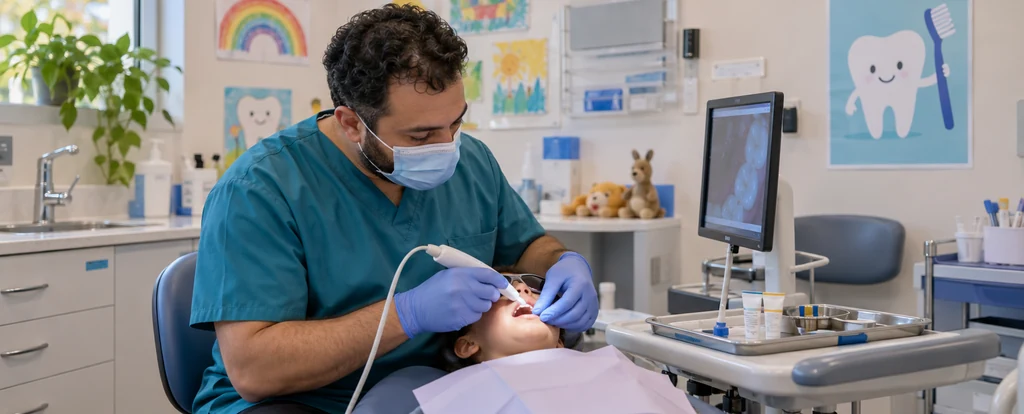
Dental therapists provide preventive and basic restorative dental care, mostly for children, in school dental programs and public clinics.
- Median salary*
- $83,200
3.9%vs last year, before tax
- People employed
- 2,600
0.0%vs last year
- Projected growth
- +20.6%
to 2035
- AI exposure*
- Low
- automation risk
- Average hours
- 40/wk
matches all-jobs average
- Shortage status
- In shortage
national
Dental therapists are registered oral health practitioners whose work centres on prevention: check-ups, fluoride, sealants and fillings for children and young people. Most are employed by state and territory school dental services or community health clinics, working alongside dental assistants, hygienists and a supervising dentist. Their scope of practice is set by registration and varies between jurisdictions, which separates them from dental hygienists, who focus on preventive and periodontal care for patients of any age.
How much do dental therapists earn?
The median full-time salary for a dental therapist is $83,200 per annum, before tax, up $17,200 since 2018.
Public sector employers, mainly state and territory health departments, set pay through their own awards and enterprise agreements, so earnings differ noticeably between jurisdictions. Private practice roles tend to pay differently again and may include commission or a higher hourly rate. Because a large share of dental therapists work part time in school programs, weekly hours often shape annual earnings more than the rate itself.
What does a dental therapist do day to day?
The list below is what fills most weeks; the exact mix shifts with seniority and whatever stage the current work is at.
- Examining children's teeth and gums, charting decay and deciding what treatment is needed within scope
- Applying fluoride, fissure sealants and other preventive treatments
- Placing fillings in baby and permanent teeth, and removing deciduous teeth where the scope of practice allows
- Taking and interpreting dental radiographs and recording the findings
- Talking with children, parents and carers about brushing, diet and habits that affect oral health
What skills do dental therapists need?
Employers look for patient care and support, clinical assessment and treatment, infection control and hygiene, backed by Titanium fluency and strong empathy and interpersonal care.
Specialist skills
- Patient care and support
- Clinical assessment and treatment
- Infection control and hygiene
- Health education and advice
- Care planning and coordination
Software and tools
- Titanium
- EXACT
- Dentally
- Intraoral cameras
- Dental radiography systems
General skills
- Empathy and interpersonal care
- Attention to detail
Is the job growing?
About 2,600 people work as dental therapists in Australia, and employment is projected to grow 20.6% over the decade to 2035. That's very strong growth. Few roles in Australia are expanding this fast, and it points to solid demand for years to come.
How do you become a dental therapist?
Here's the path most dental therapists take, step by step.
- 1Complete a degree in oral health therapy
Entry is through a three or four year bachelor degree in oral health therapy or oral health science, which qualifies you in dental therapy and dental hygiene together. The degree includes supervised clinical placements, usually in a university clinic and a public dental service, and universities in most states offer a program.
- 2Register with the Dental Board of Australia
You cannot practise without registration through AHPRA, which covers dental therapy and dental hygiene on the same registration. You will need to meet the board's English language and criminal history requirements and hold professional indemnity insurance.
- 3Get a radiation licence for your state or territory
Taking dental radiographs requires a licence from the state or territory radiation health authority. The radiography training is part of the degree, but the licence is issued separately and the paperwork and conditions differ between jurisdictions.
- 4Apply for graduate roles in school dental services
State and territory school dental programs and community health clinics are the main employers of new graduates, and several run structured graduate years. The work is usually a caseload of children across a group of schools, with a dentist available for supervision and referrals.
- 5Consider the dental assistant route if you already work in the field
Dental assistants who want to move into therapy need to complete the degree and register, because chairside experience is not recognised as a substitute for the qualification. Working as an assistant first does give you a grounded sense of the clinical environment before you commit to study.
Ready to apply as a dental therapist?
Whether you're working toward becoming a dental therapist or already are one and want a hand with the next step (sharpening your resume for ATS screening, tightening your cover letter, or knowing what you'll actually be asked at interview), here are examples grounded in this specific role, not generic templates.
What jobs can a dental therapist move to?
Moving into Dentist typically comes with the biggest pay rise, worth $84,900 a year more on average.
| Move to | Typical pay change | Overlap | Retraining |
|---|---|---|---|
| Dentist Dental therapists can requalify as dentists, building on their clinical foundation to provide the full scope of dental care.Known move | +$84,900 | 40% | requalify |
| Dental Hygienist Dental therapists move into hygiene work because preventive care, patient education and clinical skills carry across with minimal retraining.Known move | +$2,600 | 78% | minimal |
Moves are chosen from Jobs and Skills Australia's Data on Occupation Mobility, which follows income tax records between 2011-12 and 2020-21, together with entry requirements and skill overlap. A known move is one people were seen making in that data. Pay change compares median full-time pay for the two roles.
Who works as a dental therapist?
The typical dental therapist is 33 years old; 91% are women, 45% work full-time, and full-timers average 40 hours a week.
- 33
- Median age
- 91%
- Female share
- 45%
- Full-time
- +0h
- vs all-jobs avg
What's it like being a dental therapist?
The work is appointment based and child focused, so days follow a set patient list, often across a school or clinic. A good deal of the skill sits in getting a six year old to open their mouth and keeping a nervous parent informed, alongside the clinical work itself. Dental therapists who enjoy it tend to like the prevention side, catching problems early and seeing the same children return year after year.
What people like
- Prevention you can see working. Sealing a molar or showing a child how to brush properly can stop decay before it starts, and the result shows up at the next check-up.
- Working with children. Patients are young, visits are short, and you get to know families over several years of school dental rounds.
- A defined scope with support nearby. Your registration sets clear limits and a dentist is usually close at hand for complex cases, so clinical decisions are less open ended than they are in general dentistry.
- Reach across a community. Most positions sit in school and community services, so your caseload includes many children who would otherwise go without routine dental care.
What people find hard
- Behaviour management takes up the visit. A frightened or uncooperative child can turn a five minute procedure into a long appointment, and the treatment waits until they settle.
- Referring work on. Anything beyond your registration, from complex restorations to orthodontics, goes to a dentist, and some patients you have built a rapport with move to another provider.
- Tight schedules and heavy caseloads. School programs run to the bell with back to back patients, which leaves little room when a procedure takes longer than planned.
- Rules that change at the border. What you can do, whether direct supervision is required and how the service is funded all vary between states and territories, so moving interstate can mean adjusting to a different scope.
Based on our synthesis of professional-body surveys and public accounts of the role, not first-person verified reviews.
Which industries employ dental therapists?
Health Care and Social Assistance employs the largest share of dental therapists.
Top employing industries
- 1Health Care and Social Assistance
Ranked by employment share; the source doesn't publish an exact percentage per industry.
| Bachelor degree | 71.1% | |
|---|---|---|
| Diploma / Advanced Diploma | 15.7% | |
| Postgraduate | 5.3% | |
| Certificate III/IV | 0.4% | |
| Year 12 or below | 0.4% |
Will AI replace dental therapists?
Exposure is low because the core of the job happens inside a child's mouth. Digital radiography, intraoral cameras and practice management systems such as EXACT, Dentally and Titanium already handle imaging, charting and recalls, and some platforms flag possible decay on radiographs. None of that changes the treatment itself or the part where you get a nervous eight year old to sit still.
Share of typical working time by exposure level
- Placing fillings and applying sealants and fluorideThese are physical procedures in a small space on a moving patient, and no current system performs them.30%low
- Examining teeth and reading radiographsSoftware can highlight a suspicious area on an x-ray, but the diagnosis still comes from looking in the mouth and comparing what you see with the image.25%low
- Managing anxious children and advising parentsSettling a frightened patient and explaining diet and brushing to a parent depends on reading the room, and automated reminders only support that.25%low
- Charting, clinical notes and recallsPractice software drafts notes and schedules recall appointments, which saves time but still needs checking against what was actually treated.20%moderate
Common questions about becoming a dental therapist
Straight answers to the questions people ask most.
How much does a dental therapist earn?
Dental therapists earn a median of $83,200 per year before tax. Public sector awards and enterprise agreements set most of that, while private practice roles may pay a different hourly rate or include commission. Hours and jurisdiction move the figure as much as the rate does.
How do you become a dental therapist?
The route is a three or four year bachelor degree in oral health therapy, then registration with the Dental Board of Australia through AHPRA. You also need a radiation licence from your state or territory to take radiographs. The degree covers dental therapy and dental hygiene together, so graduates can register for both.
Are dental therapists in demand in Australia?
Dental therapists are currently in shortage nationally, and employment is projected to grow 20.6% over the decade to 2035 over the decade. Public school dental services and community health clinics are the largest employers, and they recruit continuously, so graduates prepared to work in those settings have steady options.
Will AI replace dental therapists?
The hands-on work is the job, and that keeps exposure low. Digital radiography, intraoral cameras and practice software already handle imaging, charting and recalls, and some systems flag possible decay on an x-ray. None of that places a sealant or settles a nervous child.
What jobs can a dental therapist move into?
Dental hygienists share the same registration and much of the same clinical work, so moving into hygiene takes minimal retraining and pays $2,600 more. Requalifying as a dentist takes years of further study but builds on the same clinical foundation and pays $84,900 more. Dental assistants can move the other way into dental therapy, though they need to complete the degree and register first.
Do dental therapists only treat children?
In most states and territories the scope centres on children and adolescents, which is where the role grew from school dental services. Some jurisdictions allow treatment of adults, particularly in rural and remote areas or within public programs, so it depends on where you register and work.
Related roles
Not sure this is you? Take the career quiz and get a ranked shortlist of roles that fit how you like to work.