Respiratory and Sleep Scientist
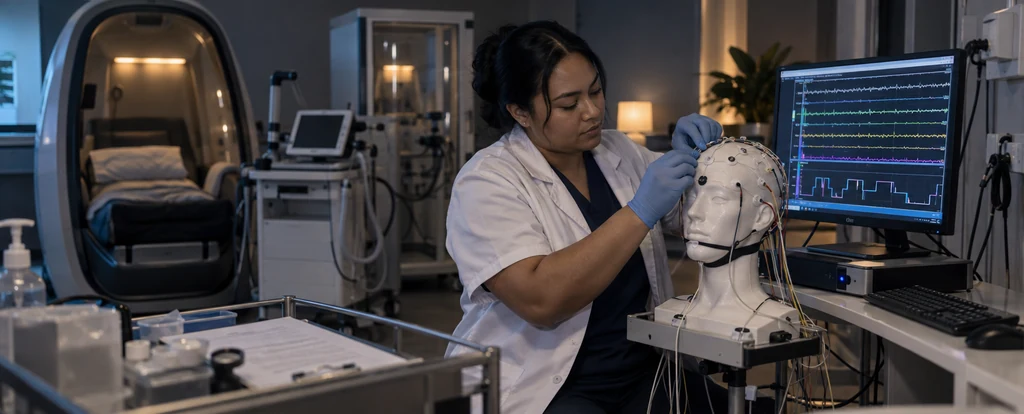
Respiratory and sleep scientists measure how well a person's lungs are working and how they breathe overnight, and the traces they produce give respiratory physicians and sleep specialists the evidence to diagnose asthma, sleep apnoea and related conditions.
- Median salary*
- $94,600
3.6%vs last year, before tax
- People employed
- 1,000
0.0%vs last year
- Projected growth*
- +12%
to 2035
- AI exposure*
- Moderate
- automation risk
- Average hours*
- 38/wk
−2h vs all jobs
- Shortage status*
- In shortage
national
They work in hospital respiratory and sleep laboratories, private sleep clinics and specialist practices, usually in a small team alongside respiratory physicians and sleep specialists. The role sits between the patient and the diagnosis: the scientist performs the test and works up the data, while the physician interprets it clinically and decides on treatment. Some laboratories run around the clock, because overnight sleep studies are recorded while the patient sleeps.
How much do respiratory and sleep scientists earn?
The median full-time salary for a respiratory and sleep scientist is $94,600 per annum, before tax, up $19,500 since 2018.
Most respiratory and sleep scientists work for public hospital and health services, so pay follows the relevant state enterprise agreement and its classification levels. Overnight sleep studies attract shift and on-call loadings, which lift take-home pay above the base rate, and senior scientists who take on reporting, quality or training responsibilities sit on higher bands. Private sleep clinics and diagnostic providers set their own rates, and these vary more than the public sector.
What does a respiratory and sleep scientist do day to day?
The list below is what fills most weeks; the exact mix shifts with seniority and whatever stage the current work is at.
- Performing spirometry and other lung function tests
- Setting up and monitoring overnight sleep studies
- Scoring sleep recordings and analysing test traces
- Calibrating, cleaning and troubleshooting respiratory and sleep equipment
- Explaining procedures and coaching patients through breathing tests, since the effort a patient gives shapes the result
What skills do respiratory and sleep scientists need?
Employers look for patient care and support, clinical assessment and treatment, data analysis, backed by Compumedics polysomnography systems fluency and strong attention to detail.
Specialist skills
- Patient care and support
- Clinical assessment and treatment
- Data analysis
- Infection control and hygiene
- Health education and advice
Software and tools
- Compumedics polysomnography systems
- Nox Medical sleep diagnostic systems
- Spirometers (Vyaire, MGC Diagnostics)
- Body plethysmographs
- Sleep staging software (RemLogic, Alice)
General skills
- Attention to detail
- Written communication
Is the job growing?
About 1,000 people work as respiratory and sleep scientists in Australia, and employment is projected to grow 12% over the decade to 2035. That's healthy, above-average growth, and the role should stay in solid demand.
How do you become a respiratory and sleep scientist?
Here's the path most respiratory and sleep scientists take, step by step.
- 1Complete a science degree
A three-year degree with a physiology, anatomy or broader life science major is the usual starting point, and Bachelor degree is the qualification most people in the field hold.
- 2Add postgraduate study in respiratory and sleep science
Several universities offer graduate certificates and diplomas covering lung function testing, sleep staging and the basics of interpretation. About 26% of people in the role have postgraduate study, and it can shorten the time it takes to reach accreditation.
- 3Train on the job in a laboratory
Most learning happens in a hospital respiratory or sleep laboratory, starting alongside a senior scientist and building up to running studies unsupervised. Trainee and assistant positions are advertised by state health services and private sleep providers.
- 4Work toward accreditation
Professional bodies in the field, including the Australian and New Zealand Society of Respiratory Science and the Australasian Sleep Association, run accreditation and credentialling pathways that employers generally expect scientists to complete. Requirements differ between health services and states, so check what your employer recognises.
Ready to apply as a respiratory and sleep scientist?
Whether you're working toward becoming a respiratory and sleep scientist or already are one and want a hand with the next step (sharpening your resume for ATS screening, tightening your cover letter, or knowing what you'll actually be asked at interview), here are examples grounded in this specific role, not generic templates.
What jobs can a respiratory and sleep scientist move to?
Moving into Medical Laboratory Scientist typically comes with the biggest pay rise, worth $12,300 a year more on average.
| Move to | Typical pay change | Overlap | Retraining |
|---|---|---|---|
| Medical Laboratory Scientist Medical science background and laboratory skills support a move into broader diagnostic pathology with additional study. | +$12,300 | 33% | reskill |
| Neurophysiology Scientist Diagnostic testing and patient monitoring skills transfer directly to neurophysiology assessments with short additional training. | +$6,800 | 52% | short course |
| Orthoptist Patient testing and diagnostic interpretation skills transfer to eye assessments with minimal retraining. | −$3,600 | 78% | minimal |
Moves are chosen from Jobs and Skills Australia's Data on Occupation Mobility, which follows income tax records between 2011-12 and 2020-21, together with entry requirements and skill overlap. A known move is one people were seen making in that data. Pay change compares median full-time pay for the two roles.
Who works as a respiratory and sleep scientist?
The typical respiratory and sleep scientist is 35 years old; 73% are women, 51% work full-time, and full-timers average 38 hours a week.
- 35
- Median age
- 73%
- Female share
- 51%
- Full-time
- −2h
- vs all-jobs avg
What's it like being a respiratory and sleep scientist?
The job alternates between people and data: a day might hold three lung function appointments, a stack of traces to score and a late start before an overnight study, so the roster is rarely a plain nine to five. Full-time scientists average about 38 hours a week, and study nights stretch that. It suits someone who likes precise measurement, is comfortable with equipment and software, and prefers the part of healthcare that finds the answer rather than delivers the treatment.
What people like
- Measurements that change treatment. A lung function test or an overnight study produces an objective answer that a physician can act on, often within days, and you are the person who produced it.
- Long stretches with one patient. Testing is one-to-one and unhurried compared with a hospital ward, so there is time to explain the manoeuvre, settle someone's nerves and get a result worth keeping.
- A mix of hands-on and analytical work. You move between setting up equipment and patients, and then sitting with the traces, which suits people who do not want a full day of either.
- A small, specialist field. There are only a few hundred scientists in the country, so the professional body, conferences and the senior people in the discipline are easy to get to know.
What people find hard
- Nights and shifting rosters. Sleep studies are recorded overnight, so evening and night shifts are a routine part of the job, and the roster moves around from week to week.
- Traces that will not cooperate. A sensor works loose, a patient cannot manage the breathing manoeuvre or the recording fills with artefact, which means repeating tests and scoring data that takes longer than it should.
- Equipment care is part of the job. Daily calibration, cleaning and fault-finding sit with the scientist, and a broken system can mean a cancelled clinic and patients rebooked.
- Few employers, often in one city. The work concentrates in public hospital laboratories and major sleep clinics, so changing jobs can mean moving interstate or taking a role outside your first choice of speciality.
Based on our synthesis of professional-body surveys and public accounts of the role, not first-person verified reviews.
Which industries employ respiratory and sleep scientists?
Hospitals employs the largest share of respiratory and sleep scientists, followed by Sleep disorder clinics.
Top employing industries
- 1Hospitals
- 2Sleep disorder clinics
- 3Respiratory physiology laboratories
- 4Specialist medical practices
- 5Diagnostic and pathology services
Ranked by employment share; the source doesn't publish an exact percentage per industry.
| Bachelor degree | 52% | |
|---|---|---|
| Postgraduate | 26% | |
| Diploma / Advanced Diploma | 13% | |
| Other | 9% |
Will AI replace respiratory and sleep scientists?
Exposure is moderate. Sleep staging software already flags events and produces a draft report, and lung function software calculates predicted values automatically, which trims the analysis time on a routine study. What holds the job back is the in-person part: getting a usable recording out of a tired patient, recognising when the equipment or the patient is the problem, and coaching someone through a breathing manoeuvre cannot be done remotely.
Share of typical working time by exposure level
- Coaching patients through breathing testsA reproducible spirometry effort depends on how well you explain the manoeuvre and encourage the person, which happens face to face.30%low
- Running overnight sleep studiesSoftware flags events as they happen, but someone still has to keep the recording usable and act when a sensor comes loose at 2am.25%moderate
- Scoring and reporting sleep recordingsAutomated staging gives a first pass, and a scientist reviews the epochs, corrects the software and writes the summary the physician reads.25%high
- Calibrating and maintaining diagnostic equipmentDaily calibration and fault-finding on spirometers, plethysmographs and sleep systems is physical, hands-on work in the laboratory.20%low
Common questions about becoming a respiratory and sleep scientist
Straight answers to the questions people ask most.
How much do respiratory and sleep scientists earn?
Respiratory and sleep scientists earn $94,600 per year before tax, based on the median for full-time workers. Because most are employed under state public hospital agreements, shift and on-call loadings for overnight studies, senior classifications and reporting duties are what lift pay above the base rate.
How do you become a respiratory and sleep scientist?
You usually start with a science degree majoring in physiology or a related field, then train on the job in a hospital respiratory or sleep laboratory while working toward accreditation with a professional body. Postgraduate study in respiratory and sleep science is common and can shorten that path. The field is small, so a trainee or assistant position in a laboratory is often the practical way in.
Are respiratory and sleep scientists in demand?
Respiratory and sleep scientists are currently in shortage nationally, and employment is projected to grow 12% over the decade to 2035. Because the workforce is small and concentrated in hospital and clinic laboratories, openings appear where services expand rather than in steady annual rounds. Accreditation and experience with overnight studies are the credentials most employers look for.
Will AI replace respiratory and sleep scientists?
Automated scoring and staging software has taken over part of the analysis and will keep improving, but it changes the work more than it removes it. A scientist still decides whether a recording is usable, corrects the software's calls and explains what happened during the night. The hands-on testing and patient coaching are the least exposed parts of the role.
Do you need a medical degree to work in this field?
It is a scientist role rather than a medical one, so a medical degree is not required. Respiratory physicians and sleep specialists diagnose and treat, while scientists run the tests, score the studies and prepare the reports. A science degree plus supervised clinical training and accreditation is what employers ask for.
What other jobs can a respiratory and sleep scientist move into?
Neurophysiology scientist is a close move, since both roles run diagnostic tests and monitor patients, with short additional training covering the differences, and pay is $6,800 more. Moving into medical laboratory science widens your options into broader diagnostic pathology, though it needs further study, and pay is $12,300 more. Orthoptists also test patients and interpret diagnostic results, with minimal retraining, and pay is $3,600 less.
Related roles
- Neurophysiology Scientist
- Orthoptist
- Medical Laboratory Scientist
- Neurophysiology Scientist
- Medical Laboratory Scientist
- Pathology Collector
Not sure this is you? Take the career quiz and get a ranked shortlist of roles that fit how you like to work.