Freight Handler
Freight handlers load, unload and move cargo so goods reach warehouses, shops and ports when they are due.
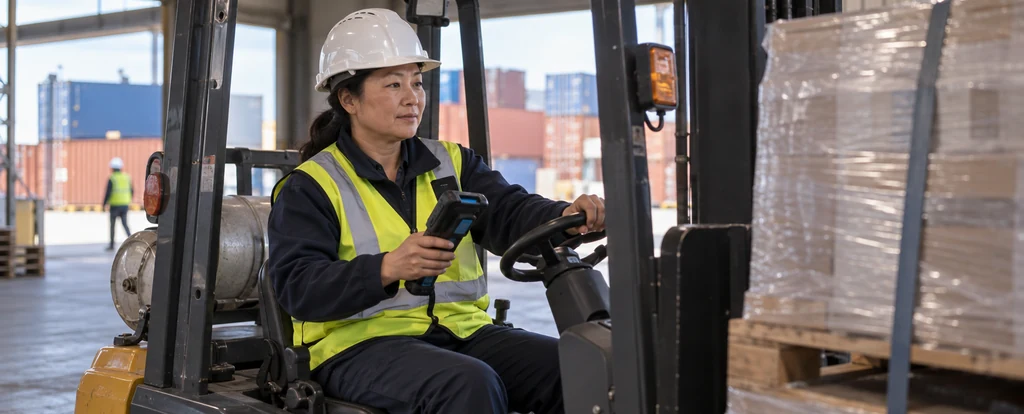
- Median salary*
- $65,000
4.5%vs last year, before tax
- People employed
- 8,100
0.0%vs last year
- Projected growth
- +1.5%
to 2035
- AI exposure*
- Moderate
- automation risk
- Average hours
- 42/wk
+2h vs all jobs
- Shortage status*
- Not in shortage
national
Freight handlers work in depots, warehouses, ports and transport yards, loading and unloading trucks, shipping containers and rail wagons. They are the people who physically move the freight and record where it goes, which is what separates them from warehouse storepersons whose main job is picking and storing stock. Most work full time on rotating shifts, because depots receive and dispatch around the clock.
How much do freight handlers earn?
The median full-time salary for a freight handler is $65,000 per annum, before tax, up $13,800 since 2018.
Rates are usually set by an award or enterprise agreement, and shift penalties for nights, weekends and public holidays are where the difference between two pay packets shows up. A forklift licence can move you onto higher-graded duties, while casual and labour hire work often pays a loading in place of paid leave. Large freight companies and port operators generally pay above the award, and small depots are more likely to stay at the minimum.
What does a freight handler do day to day?
The list below is what fills most weeks; the exact mix shifts with seniority and whatever stage the current work is at.
- Unloading trucks, shipping containers and rail wagons, often against the deadline set by the next departure
- Moving freight around the dock with a forklift, pallet jack or trolley
- Scanning consignments and checking them against manifests, labels and delivery dockets
- Stacking, wrapping and strapping pallets so loads travel without shifting
- Recording damaged, short or misdirected freight and passing it to a supervisor or claims clerk
What skills do freight handlers need?
Employers look for plant and equipment operation, warehousing and despatch, inventory management, backed by Forklift fluency and strong safety and compliance awareness.
Specialist skills
- Plant and equipment operation
- Warehousing and despatch
- Inventory management
Software and tools
- Forklift
- Pallet jack
- RF barcode scanner
- Warehouse management system (WMS)
- Pallet wrapper
General skills
- Safety and compliance awareness
- Physical stamina and dexterity
- Time and deadline management
- Attention to detail
Is the job growing?
About 8,100 people work as freight handlers in Australia, and employment is projected to grow 1.5% over the decade to 2035. That's modest growth: demand is steady rather than booming.
How do you become a freight handler?
Here's the path most freight handlers take, step by step.
- 1Finish school or a pre-employment course
No qualification is required to start, and 64% of the people working as freight handlers finished at Year 12 or below. Employers screen for reliability, fitness for manual handling and availability for shifts.
- 2Get a forklift licence
A high risk work licence (class LF) is issued after a short course and an assessment, and it takes you off the most repetitive manual work. Depots prefer staff who can cover both the forklift and the dock, so many handlers get the licence in their first year.
- 3Apply through large freight companies or labour hire
Big operators and labour hire firms take on handlers with no experience, often casually to begin with. Casual work is a common way in and can convert to permanent once you have shown you turn up and work safely.
- 4Add a Certificate III in Supply Chain Operations
The TLI30321 qualification covers receiving, storage, dispatch and load restraint, and some employers part-fund it for existing staff. It helps if you want to move into team leading or a storeperson role later.
Ready to apply as a freight handler?
Whether you're working toward becoming a freight handler or already are one and want a hand with the next step (sharpening your resume for ATS screening, tightening your cover letter, or knowing what you'll actually be asked at interview), here are examples grounded in this specific role, not generic templates.
What jobs can a freight handler move to?
Moving into Truck Driver typically comes with the biggest pay rise, worth $36,900 a year more on average.
| Move to | Typical pay change | Overlap | Retraining |
|---|---|---|---|
| Truck Driver Freight handlers already load and secure cargo, so moving into truck driving builds on that experience, though a truck licence and reskilling are required.Known move | +$36,900 | 33% | reskill |
| Stevedore Freight handlers can progress to stevedore work at ports, applying cargo handling and safety skills, though a certificate and port-specific training are needed. | +$36,400 | 36% | reskill |
| Shipping Clerk Freight handlers with an eye for detail can move into shipping clerk roles, handling documentation and schedules, but need reskilling in clerical and customs procedures.Known move | +$23,800 | 40% | reskill |
| Forklift Operator Freight handlers can become forklift operators after a short course, using their cargo handling skills to move pallets and containers safely in warehouses.Known move | +$4,700 | 53% | short course |
| Warehouse Storeperson Freight handlers can move into warehouse storeperson roles with minimal retraining because the core tasks of receiving, storing and dispatching goods overlap closely.Known move | +$4,100 | 86% | minimal |
Moves are chosen from Jobs and Skills Australia's Data on Occupation Mobility, which follows income tax records between 2011-12 and 2020-21, together with entry requirements and skill overlap. A known move is one people were seen making in that data. Pay change compares median full-time pay for the two roles.
Who works as a freight handler?
The typical freight handler is 32 years old; 91% are men, 59% work full-time, and full-timers average 42 hours a week.
- 32
- Median age
- 9%
- Female share
- 59%
- Full-time
- +2h
- vs all-jobs avg
What's it like being a freight handler?
The job runs to a timetable set by trucks and ships, so the pace is uneven: quiet stretches while you wait for a vehicle, then a burst of work to turn it around before it leaves. Full-time handlers average around 42 hours a week, and because depots operate overnight, early, late and weekend shifts are normal. It suits people who want physical work with a visible result and who can stay careful when a load has to move quickly.
What people like
- You can see what you finished. At the end of a shift the trailer is loaded or the container is empty, and that is the whole measure of the day.
- The work keeps you moving. Handling freight keeps you on your feet rather than at a screen, and a busy dock makes the hours pass quickly.
- Forklift time breaks up the shift. Once you hold a licence, time on the machine adds variety and takes some strain off your back and shoulders.
- The skills carry across sectors. Depots, retailers, manufacturers and ports all employ freight handlers, so you can change employer without starting again.
What people find hard
- Weather is part of the job. Loading in an open yard means rain, heat and cold, and wet-weather gear only does so much.
- Shift work disrupts routines. Rotating rosters, night shifts and weekend work make regular commitments hard to plan around.
- The body takes the load. Repeated lifting, bending and twisting is where most injuries happen, and back and shoulder strain builds up over years.
- Delays are not yours to fix. When a truck arrives late or a container is held, the work compresses into a shorter window while the departure time stays the same.
Based on our synthesis of professional-body surveys and public accounts of the role, not first-person verified reviews.
Which industries employ freight handlers?
Transport, Postal and Warehousing employs the largest share of freight handlers, followed by Retail Trade.
Top employing industries
- 1Transport, Postal and Warehousing
- 2Retail Trade
- 3Manufacturing
Ranked by employment share; the source doesn't publish an exact percentage per industry.
| Year 12 or below | 63.8% | |
|---|---|---|
| Certificate III/IV | 17.5% | |
| Bachelor degree | 6.7% | |
| Diploma / Advanced Diploma | 6.1% | |
| Postgraduate | 1.6% |
Will AI replace freight handlers?
Freight handling sits in the middle of the range: scanning, sortation and record keeping are already heavily automated in large depots, while the physical handling of mixed and awkward freight is not. Conveyor systems, RF scanners and warehouse management software do most of the tracking, but a person still has to load, secure, inspect and sort out problems on the dock. That split is what keeps the overall exposure moderate rather than high.
Share of typical working time by exposure level
- Loading and unloading vehiclesSomeone still has to position, stack and restrain the load, and automated sortation cannot yet deal with mixed pallets, oversized items or a container packed to the doors.35%low
- Sorting and staging freight for departureConveyor and sortation systems route standard parcels on fixed lanes, but damaged cartons, rerouted consignments and odd shapes come back to a person.25%moderate
- Scanning and recording freight movementsRF scanners and warehouse management systems log a consignment as it is moved, so the clerk-style paperwork that once went with it has largely gone.20%high
- Checking consignments and reporting damageSystems flag a discrepancy between the manifest and the scan, but deciding whether a crushed carton is safe to forward or should be held is a call made on the dock.20%moderate
Moves least exposed to AI
These career moves from freight handler work are rated low for AI exposure:
- Forklift Operator
Solid skill overlap (53%), short course to get there, and a low automation-risk profile.
Common questions about becoming a freight handler
Straight answers to the questions people ask most.
How much do freight handlers earn?
The median full-time pay for a freight handler is $65,000 per year before tax. Shift penalties, overtime and a forklift licence push take-home pay above that, and casual roles carry a loading in place of paid leave.
How do you become a freight handler?
There is no required qualification, and employers hire on reliability, fitness and availability for shifts. A forklift licence is the most useful early addition, and applying to a large freight company or a labour hire firm is the usual way in.
Are freight handlers in demand?
Freight handlers are currently not in shortage, and employment is projected to grow 1.5% over the decade to 2035. Openings come from staff turnover as much as from new positions, so a clean safety record and steady attendance matter more than experience.
Do you need a forklift licence to be a freight handler?
Not to start, as plenty of handlers work with pallet jacks and manual handling aids. Employers do prefer a licence for roles that involve loading trucks and containers, which is why the short course is usually the first qualification people add.
Will AI or automation replace freight handlers?
Automation already handles part of the job, particularly scanning, sortation and record keeping, and that is where the pressure sits. Machines still manage poorly with mixed loads, odd shapes and damaged freight, and someone has to decide what is safe to lift and load. The work is shifting towards exception handling rather than disappearing.
What jobs can a freight handler move into?
Warehouse storeperson work needs minimal retraining because the receiving, storing and dispatching tasks overlap closely, and these roles typically pay $4,100 more. Forklift operating is another short-course move with its own licence, and truck driving is open to handlers who get a truck licence, though it involves reskilling.
Related roles
Not sure this is you? Take the career quiz and get a ranked shortlist of roles that fit how you like to work.