Gasfitter
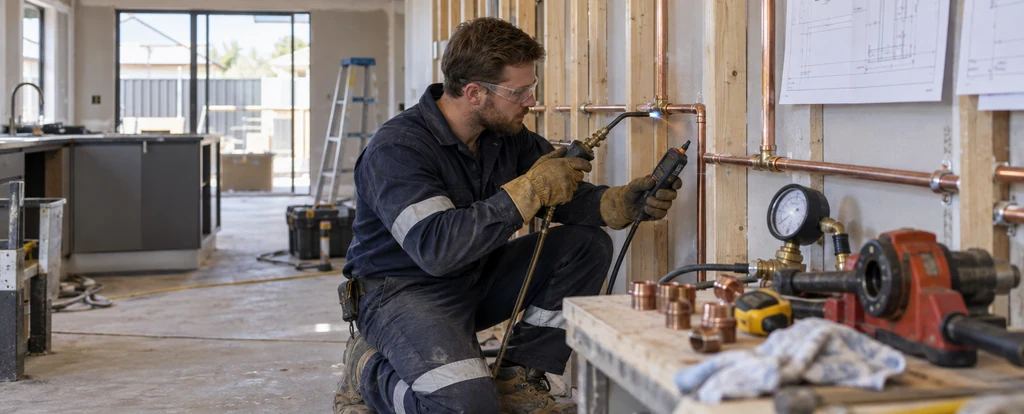
Gasfitters install and service the gas appliances, meters and pipework that homes and businesses rely on for heating, cooking and hot water.
- Median salary*
- $85,800
4.3%vs last year, before tax
- People employed
- 5,200
0.0%vs last year
- Projected growth*
- +3.5%
to 2035
- AI exposure*
- Low
- automation risk
- Average hours*
- 42/wk
+2h vs all jobs
- Shortage status*
- In shortage
national
Gasfitters install, test and repair gas appliances, meters and pipework in houses, commercial kitchens and industrial plants, working to Australian Standards and state gas regulations. In most states the work is authorised through a plumbing licence with a gasfitting endorsement, so gasfitting sits alongside plumbing rather than apart from it. A gasfitter might service a heater in the morning and attend a reported leak that afternoon.
How much do gasfitters earn?
The median full-time salary for a gasfitter is $85,800 per annum, before tax, up $18,100 since 2018.
Pay depends heavily on the endorsements you hold, so a gasfitter qualified in medical gas or commercial catering work can charge more than one doing domestic appliance servicing. Employees on an award or enterprise agreement pick up penalty rates for after-hours leak call-outs, while self-employed gasfitters set their own rates and carry the costs of the van, tools and insurance. Sector matters too, with industrial, mining and utilities work generally paying above domestic service work.
What does a gasfitter do day to day?
The list below is what fills most weeks; the exact mix shifts with seniority and whatever stage the current work is at.
- Installing gas appliances, meters and pipework to manufacturer instructions and the relevant standards
- Pressure testing lines and checking joints and appliances with an electronic leak detector
- Diagnosing faults in heaters, cooktops and hot water systems and replacing worn components
- Reading plans and specifications to run pipework through new and existing buildings
- Issuing compliance certificates and recording the tests carried out on each job
What skills do gasfitters need?
Employers look for hand and power tool work, reading plans and specifications, installation and maintenance, backed by Electronic gas leak detector fluency and strong problem solving.
Specialist skills
- Hand and power tool work
- Reading plans and specifications
- Installation and maintenance
- Worksite safety management
- Regulatory compliance
Software and tools
- Electronic gas leak detector
- Manometer
- Pipe threading machine
- Flaring tool
- Soldering torch
General skills
- Problem solving
- Attention to detail
Is the job growing?
About 5,200 people work as gasfitters in Australia, and employment is projected to grow 3.5% over the decade to 2035. That's modest growth: demand is steady rather than booming.
How do you become a gasfitter?
Here's the path most gasfitters take, step by step.
- 1Finish school with maths and English
Most employers ask for Year 10 as a minimum and look at maths and English results when they take on an apprentice.
- 2Start a plumbing and gasfitting apprenticeship
The usual route is a Certificate III in Plumbing (CPC32420) with gasfitting units, completed over about four years while working on site and attending TAFE. Apprenticeships are paid from day one.
- 3Get licensed in your state
Apply to your state regulator, such as Energy Safe Victoria, NSW Fair Trading or the QBCC in Queensland, for registration or a plumbing licence with a gasfitting endorsement. The licence name and the requirements differ between states.
- 4Add endorsements as you go
Type A appliance servicing, LPG, medical gas and commercial catering endorsements each open up different work and come with their own training and assessment.
- 5Keep the licence current
Renewal and continuing professional development are part of holding a licence, and gas standards and state rules are updated regularly.
Ready to apply as a gasfitter?
Whether you're working toward becoming a gasfitter or already are one and want a hand with the next step (sharpening your resume for ATS screening, tightening your cover letter, or knowing what you'll actually be asked at interview), here are examples grounded in this specific role, not generic templates.
What jobs can a gasfitter move to?
Moving into Plumber typically comes with the biggest pay rise, worth $17,700 a year more on average.
| Move to | Typical pay change | Overlap | Retraining |
|---|---|---|---|
| Plumber Gasfitters can move into general plumbing, applying gas and pipework knowledge with further training in water and drainage systems. | +$17,700 | 70% | reskill |
| Mechanical Services Plumber Gasfitters' experience with gas systems suits mechanical services plumbing, which requires extra study in heating and cooling pipework. | +$10,400 | 61% | reskill |
| Plumbing Inspector Gasfitters can move into plumbing inspection, using trade knowledge for compliance, with additional training in regulations and auditing. | +$5,200 | 32% | reskill |
| Fire Protection Plumber Gasfitters bring pipework and compliance skills to fire protection plumbing, but additional training is needed for fire system design and installation. | +$0 | 85% | reskill |
| Fire Protection Technician A short course allows gasfitters to become fire protection technicians, building on appliance maintenance and safety checking skills. | −$2,600 | 85% | short course |
Moves are chosen from Jobs and Skills Australia's Data on Occupation Mobility, which follows income tax records between 2011-12 and 2020-21, together with entry requirements and skill overlap. A known move is one people were seen making in that data. Pay change compares median full-time pay for the two roles.
Who works as a gasfitter?
The typical gasfitter is 40 years old; 99% are men, 84% work full-time, and full-timers average 42 hours a week.
- 40
- Median age
- 1%
- Female share
- 84%
- Full-time
- +2h
- vs all-jobs avg
What's it like being a gasfitter?
The job runs on a mix of scheduled work and urgent call-outs. A gasfitter plans installations and services for the week, then swaps jobs when someone reports a leak or a heater stops working in winter. It suits someone who likes diagnosing a problem, working with their hands and finishing a job properly on the day.
What people like
- Faults you can track down. A pressure drop or the smell of gas has a cause somewhere on the line, and finding it takes patience and a systematic approach.
- A different site every day. One morning might be a suburban kitchen, the next a commercial kitchen or a plant room, so the work does not settle into one location.
- Your licence behind the finished job. You install the appliance, test it and certify it, and the certificate is what the customer and the regulator rely on.
- Room to work for yourself. Once licensed, you can quote your own jobs, set your own hours and build a customer base, which is a well-worn path in the trade.
What people find hard
- Emergency call-outs. A reported gas leak is treated as urgent, so the work includes on-call rosters, evenings and weekend call-outs.
- Awkward spaces. Roof cavities, under-floor areas and tight hot water cupboards are ordinary parts of the job, and summer heat makes them harder.
- Paperwork on every job. Each installation and repair needs a compliance certificate and a record of the tests done, which takes time off the tools.
- Rules that change and vary. Gas standards and state licensing rules are updated regularly, and keeping across them is your own responsibility as a licence holder.
Based on our synthesis of professional-body surveys and public accounts of the role, not first-person verified reviews.
Which industries employ gasfitters?
Construction employs the largest share of gasfitters, followed by Electricity, Gas, Water and Waste Services.
Top employing industries
- 1Construction
- 2Electricity, Gas, Water and Waste Services
- 3Other Services
- 4Manufacturing
Ranked by employment share; the source doesn't publish an exact percentage per industry.
| Certificate III/IV | 34% | |
|---|---|---|
| Diploma / Advanced Diploma | 26% | |
| Bachelor degree | 20% | |
| Year 12 or below | 20% |
Will AI replace gasfitters?
Gasfitting is a low-exposure trade: the work is physical, happens on site and is tightly regulated. Electronic leak detectors, combustion analysers and job-management software have made testing, diagnosing and quoting faster, and they change how the job is done rather than who does it. Nothing in the trade so far installs pipework, traces a leak inside a wall cavity or certifies an appliance as safe to use.
Share of typical working time by exposure level
- Installing and connecting appliancesRunning gas lines, fitting regulators and connecting heaters, cooktops and hot water units is hands-on work in whatever space the building allows.35%low
- Leak detection and pressure testingDetectors and digital manometers give quick readings, but tracing a small leak back to a joint or appliance still means working along the line by hand.25%low
- Fault-finding and repairsCombustion analysers and manufacturer apps point towards likely causes, and the gasfitter still pulls the appliance apart to confirm the fault.25%moderate
- Certificates, quotes and job recordsJob software fills in standard forms and pricing, which cuts desk time on paperwork that used to be handwritten.15%moderate
Common questions about becoming a gasfitter
Straight answers to the questions people ask most.
How much does a gasfitter earn?
Full-time gasfitters earn a median of $85,800 per year before tax. What you take home depends on the endorsements you hold, whether you are an employee or self-employed, and how much after-hours and emergency work you take on.
How do you become a gasfitter?
The usual route is a plumbing apprenticeship with gasfitting units, which takes about four years and combines paid on-site work with TAFE study. After finishing, you apply to your state regulator for a plumbing licence with a gasfitting endorsement, and the licence name and requirements vary by state.
Are gasfitters in demand?
Gasfitters are currently in shortage nationally, and employment is projected to grow 3.5% over the decade to 2035. A good share of the work is servicing and repairing appliances in existing homes and businesses, which continues whether or not new construction is busy.
Will AI replace gasfitters?
Gasfitting is a low-exposure trade: the work is physical, happens on site and is tightly regulated. Electronic leak detectors, combustion analysers and job-management software have made testing, diagnosing and quoting faster, and they change how the job is done rather than who does it. Nothing in the trade so far installs pipework, traces a leak inside a wall cavity or certifies an appliance as safe.
What can a gasfitter move into?
General plumbing uses much of the same pipework and compliance knowledge, and plumbers earn $17,700 more. Mechanical services plumbing covers heating and cooling pipework and pays $10,400 more, though both moves need further training. Running your own business is a common progression for licensed gasfitters, and it is often where earnings grow as you take on your own jobs and apprentices.
Is gasfitting the same as plumbing?
They overlap closely. In most states a gasfitting endorsement sits on a plumbing licence, so many people in the trade hold both, but the work is different: plumbing covers water, drainage and sanitary work, while gasfitting covers gas lines, appliances and their testing.
Related roles
- Fire Protection Plumber
- Plumber
- Mechanical Services Plumber
- Fire Protection Technician
- Plumbing Inspector
- Plumber
Not sure this is you? Take the career quiz and get a ranked shortlist of roles that fit how you like to work.