Locksmith
Locksmiths fit, repair and open locks and security hardware in homes, businesses and vehicles, keeping property secure and getting people back in when a key is lost or a lock fails.
- Median salary*
- $78,000
3.9%vs last year, before tax
- People employed
- 2,700
0.0%vs last year
- Projected growth
- +8%
to 2035
- AI exposure*
- Low
- automation risk
- Average hours
- 42/wk
+2h vs all jobs
- Shortage status
- In shortage
national
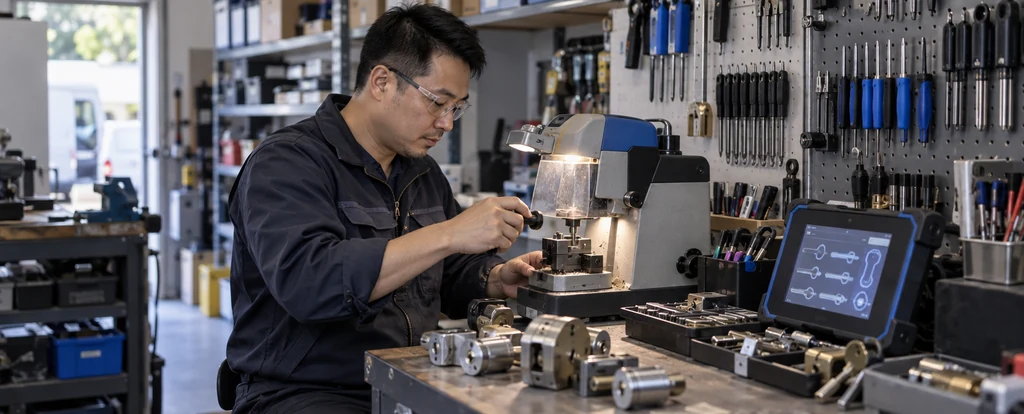
Most locksmiths work from a van or a small shop, covering homes, businesses and vehicles across a local area. The work sits close to security technicians, who install alarms and cameras, but the locksmith is the one who fits and opens the lock itself. Many are self-employed or work in businesses of only a few people, and 68% of locksmiths hold a Certificate III or IV.
How much do locksmiths earn?
The median full-time salary for a locksmith is $78,000 per annum, before tax, up $16,200 since 2018.
Pay moves more with how you work than where you work: employees on an award or enterprise agreement earn a set rate with penalty rates for after-hours callouts, while self-employed locksmiths set their own prices and carry the costs of a van, tools and insurance. Automotive work, which needs key programming equipment and dealer-level access, and licensing rules in the states that regulate locksmithing both affect what you can charge. Sector matters as well, since locksmiths employed in public administration and safety work under different arrangements from those in small commercial firms.
What does a locksmith do day to day?
The list below is what fills most weeks; the exact mix shifts with seniority and whatever stage the current work is at.
- Fitting locks, deadbolts and access control hardware to doors and gates
- Cutting and duplicating keys on mechanical and electronic key machines
- Programming transponder keys and keyless entry remotes for cars
- Opening locked homes, businesses and vehicles using the least damaging method available
- Rekeying locks and repairing hardware that has worn, jammed or been damaged
What skills do locksmiths need?
Employers look for hand and power tool work, installation and maintenance, quoting and estimating, backed by Key cutting machines (Silca, Keyline) fluency and strong attention to detail.
Specialist skills
- Hand and power tool work
- Installation and maintenance
- Quoting and estimating
- Security operations
Software and tools
- Key cutting machines (Silca, Keyline)
- Pick and decoder sets
- Electronic key programming tools (Autel, Xhorse)
- Master keying software
- Access control and lock hardware
General skills
- Attention to detail
- Customer service
- Problem solving
Is the job growing?
About 2,700 people work as locksmiths in Australia, and employment is projected to grow 8% over the decade to 2035. That's modest growth: demand is steady rather than booming.
How do you become a locksmith?
Here's the path most locksmiths take, step by step.
- 1Get a start as an apprentice
Locksmithing is usually learned on the job through an apprenticeship of about three to four years, so the first step is finding an employer willing to take you on. Apprentices are paid while they train, which makes this the main route for school leavers.
- 2Complete the Certificate III in Locksmithing
This is the trade qualification, delivered through TAFE or a private registered training organisation alongside your apprenticeship. It covers key cutting, lock mechanisms, master keying and access control, and it is what most employers look for.
- 3Check the licensing rules where you plan to work
Locksmithing is regulated as a security activity in some states and not in others, so the requirements differ depending on where you live. Where a licence applies it generally involves a national police check and an application through the state regulator.
- 4Add automotive and electronic locking skills
Transponder keys, smart keys and keyless entry are a growing part of the trade. Training on programming tools such as Autel or Xhorse equipment lets you take on car work that many general locksmiths turn away.
- 5Learn the business side if you want your own van
Quoting jobs, holding insurance, keeping stock of common lock bodies and key blanks, and building relationships with real estate agents and property managers are what turn the trade into a business.
Ready to apply as a locksmith?
Whether you're working toward becoming a locksmith or already are one and want a hand with the next step (sharpening your resume for ATS screening, tightening your cover letter, or knowing what you'll actually be asked at interview), here are examples grounded in this specific role, not generic templates.
What jobs can a locksmith move to?
Moving into Security Guard typically comes with the biggest pay rise, worth $16,500 a year more on average.
| Move to | Typical pay change | Overlap | Retraining |
|---|---|---|---|
| Security Guard Security awareness and customer contact carry into guarding work, though a security licence and certificate are required. | +$16,500 | 14% | reskill |
| Security Technician Locksmiths bring knowledge of locks and access control to installing alarm and surveillance systems, with further training in security technology. | +$2,600 | 45% | reskill |
| Handyman Locksmiths can apply their fitting and security hardware skills to general property maintenance, with little extra training. | +$2,000 | 63% | minimal |
Moves are chosen from Jobs and Skills Australia's Data on Occupation Mobility, which follows income tax records between 2011-12 and 2020-21, together with entry requirements and skill overlap. A known move is one people were seen making in that data. Pay change compares median full-time pay for the two roles.
Who works as a locksmith?
The typical locksmith is 38 years old; 96% are men, 76% work full-time, and full-timers average 42 hours a week.
- 38
- Median age
- 4%
- Female share
- 76%
- Full-time
- +2h
- vs all-jobs avg
What's it like being a locksmith?
The week runs on a mix of booked work and calls that arrive without warning, so a locksmith's day can move from a rental rekey to a car key programming job to an urgent lockout across town. The pressure sits in the emergencies, where someone is standing outside their home or beside their car and the job has to be done properly the first time. It suits people who like working with their hands, solving a practical puzzle and dealing with the public at close range.
What people like
- Every lockout has an answer. Working out how to open a door, car or safe without damage is a puzzle with an immediate payoff for the person waiting on the other side.
- No two days in the same place. A morning rekeying a rental property, an afternoon programming a car key and an evening callout to a warehouse keep the work varied.
- Room to work for yourself. A van, a key machine and a phone are enough to start out, and many locksmiths build a round of regular customers and property managers over time.
- Skills people actually need today. When someone is locked out or a break-in has damaged a door, they need the work done now, which keeps demand steady rather than seasonal.
What people find hard
- After-hours callouts. Evenings, weekends and public holidays are the busiest times for lockouts, and being on call cuts into family life and sleep.
- Proving you are legitimate. Customers are wary of locksmith pricing scams, so expect to show identification and ask for proof of address before you open a property or vehicle.
- Time spent in the van. A mobile locksmith can spend a good part of the day driving between jobs, and that travel is usually unpaid time between bookings.
- Awkward spaces. Old doors, warped frames, roof-height gates and car footwells mean kneeling, reaching and working in tight spots where a tool will only just fit.
Based on our synthesis of professional-body surveys and public accounts of the role, not first-person verified reviews.
Which industries employ locksmiths?
Other Services employs the largest share of locksmiths, followed by Public Administration and Safety.
Top employing industries
- 1Other Services
- 2Public Administration and Safety
Ranked by employment share; the source doesn't publish an exact percentage per industry.
| Certificate III/IV | 68.3% | |
|---|---|---|
| Year 12 or below | 21.7% | |
| Diploma / Advanced Diploma | 3.3% | |
| Bachelor degree | 2.8% | |
| Postgraduate | 1% |
Will AI replace locksmiths?
Automation touches locksmithing lightly, and the trade is rated low for AI exposure. Key cutting machines, key programming software and diagnostic tools have taken over part of the bench work, but the job happens at someone's door, car or safe, where the method has to be chosen on the spot and the result has to work the first time. Deciding whether the person asking is entitled to have the property opened also stays with the locksmith.
Share of typical working time by exposure level
- Opening locked homes, businesses and vehiclesChoosing between picking, decoding and a controlled bypass on a locked car or a jammed front door depends on the mechanism in front of you.35%low
- Fitting and rekeying locks and hardwareAligning a deadbolt in a warped timber frame or fitting an access pad at a warehouse gate is hand work that has to suit the door.35%low
- Cutting and duplicating keysMachines do the cutting, but you still judge the key blank, check a worn original and test the copy in the lock before the customer leaves.20%moderate
- Quoting, invoicing and stock orderingJob software and supplier systems handle quotes, invoices and reordering of common lock bodies and key blanks, leaving less paperwork than a decade ago.10%high
Common questions about becoming a locksmith
Straight answers to the questions people ask most.
How much does a locksmith earn in Australia?
Full-time locksmiths earn a median of $78,000 per year before tax. What you take home varies with whether you work for a wage or run your own business, and with how much after-hours and automotive work you take on.
How do you become a locksmith?
Most people start as an apprentice and complete the Certificate III in Locksmithing (MEM30819) while working, which takes around three to four years. You need an employer to take you on first, and in the states that regulate locksmithing you also need a security licence or registration.
Are locksmiths in demand in Australia?
Locksmiths are currently in shortage nationally, and employment is projected to grow 8% over the decade to 2035. With only about 2,700 people in the trade nationally, that means most work comes through local reputation and callouts rather than advertised vacancies.
Will AI replace locksmiths?
Automation reaches the bench work more than the job itself. Key cutting machines and key programming tools have taken over part of what used to be done by hand, but choosing how to open a lock without damage, and confirming who is entitled to have it opened, still happens at the door.
What can a locksmith move into later?
Security technician work is one option, installing alarms and access control on the strength of the same knowledge, with pay of $2,600 more. General property maintenance as a handyman is another, paying $2,000 more for largely overlapping skills, and many locksmiths end up running their own van or shop, which is often where earnings grow.
Do locksmiths need a licence?
It depends on the state. Locksmithing is regulated as a security activity in some states and not in others, and where it applies you need a licence or registration before you can do the work. Requirements typically include a police check.
Related roles
Not sure this is you? Take the career quiz and get a ranked shortlist of roles that fit how you like to work.