Home Improvement Installer
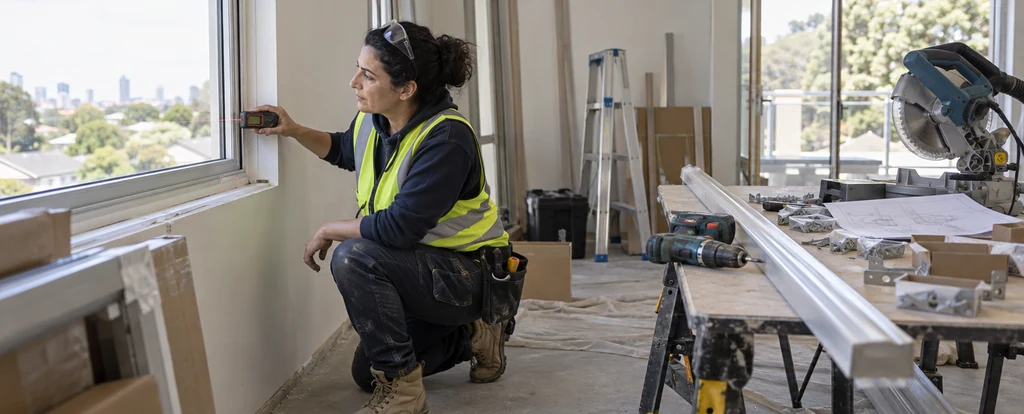
Home improvement installers measure, cut and fit the finishing pieces of a home, from blinds and awnings to shelving and cabinetry.
- Median salary*
- $67,600
3.8%vs last year, before tax
- People employed
- 12,700
0.8%vs last year
- Projected growth
- +6.5%
to 2035
- AI exposure*
- Moderate
- automation risk
- Average hours
- 43/wk
+3h vs all jobs
- Shortage status
- Not in shortage
national
Home improvement installers fit the products that finish a house: blinds, awnings, shutters, curtains, security screens, shelving and flat-pack cabinetry. Most work for a retailer, a manufacturer or a small installation business, and many are subcontractors paid per job who drive their own van between sites. The job stops short of carpentry, because installers fit a product to a wall or window rather than building the structure, and anything needing electrical wiring is left to a licensed electrician.
How much do home improvement installers earn?
The median full-time salary for a home improvement installer is $67,600 per annum, before tax, up $14,100 since 2018.
Pay depends heavily on how you are engaged: employees are covered by the award or enterprise agreement for their classification, while subcontractors are paid per job and carry their own costs. Higher-value products such as motorised blinds, security screens and external awnings generally pay better than basic fitting, and work involving travel, working at heights or weekend callouts often attracts loadings. The range of products you can install without help matters more to your rate than years on the job.
What does a home improvement installer do day to day?
The list below is what fills most weeks; the exact mix shifts with seniority and whatever stage the current work is at.
- Measuring windows, doors and walls, since an error here means a remake and a second visit
- Cutting and shaping blinds, panels, tracks and trims to size
- Fixing brackets, rails and mounts into timber, brick or plaster
- Hanging awnings, shutters, curtains and security screens
- Assembling and installing flat-pack cabinetry, shelving and wardrobes
What skills do home improvement installers need?
Employers look for hand and power tool work, installation and maintenance, reading plans and specifications, backed by Laser distance measure fluency and strong attention to detail.
Specialist skills
- Hand and power tool work
- Installation and maintenance
- Reading plans and specifications
- Worksite safety management
Software and tools
- Laser distance measure
- Mitre saw
- Power drill
- SketchUp
- ServiceM8
General skills
- Attention to detail
- Problem solving
- Customer service
Is the job growing?
About 12,700 people work as home improvement installers in Australia, and employment is projected to grow 6.5% over the decade to 2035. That's modest growth: demand is steady rather than booming.
How do you become a home improvement installer?
Here's the path most home improvement installers take, step by step.
- 1Get a White Card
General construction induction training is required to work on a building site in every state and territory, and it takes about a day. Retail and renovation work inside occupied homes sometimes does not require it, but most employers ask for it before you start.
- 2Start as an offsider or installer's assistant
Most installers learn the job on site rather than in a classroom, and 47% of the current workforce finished school at Year 12 or below. Assisting with measuring, carrying and fixing is paid work, and a few months of it teaches you the product range and the tools.
- 3Add a certificate III or short course if you want the trade route
A Certificate III in a related trade such as carpentry or cabinet making takes three to four years through an apprenticeship, and about 40% of the current workforce holds a certificate III or IV. It is worth it if you want the qualification behind you, though for most installation work short manufacturer courses in specific products are quicker and more directly useful.
- 4Specialise and check which licensing rules apply
Motorised blinds, security screens and external awnings pay more than basic fitting, and each has its own product training. Hard-wired electrical connections must be done by a licensed electrician, and licensing or registration requirements for security work vary by state, so check with your state's building or fair trading authority before quoting on it.
Ready to apply as a home improvement installer?
Whether you're working toward becoming a home improvement installer or already are one and want a hand with the next step (sharpening your resume for ATS screening, tightening your cover letter, or knowing what you'll actually be asked at interview), here are examples grounded in this specific role, not generic templates.
What jobs can a home improvement installer move to?
Moving into Carpenter typically comes with the biggest pay rise, worth $23,900 a year more on average.
| Move to | Typical pay change | Overlap | Retraining |
|---|---|---|---|
| Carpenter Home improvement installers bring fitting and measuring skills, but moving into carpentry requires completing a carpentry apprenticeship.Known move | +$23,900 | 42% | requalify |
| Metal Fabricator Home improvement installers bring some metalworking and fitting skills, but moving into fabrication requires a fabrication apprenticeship.Known move | +$20,200 | 52% | requalify |
| Insulation Installer Home improvement installers bring installation and tool skills, and can move into insulation work with a short course.Known move | +$1,000 | 53% | short course |
| Sign Installer Home improvement installers bring mounting and fixing skills, and can move into sign installation with minimal extra training. | −$1,000 | 78% | minimal |
| Glazier Home improvement installers bring precise fitting skills, but becoming a glazier requires completing a glazing apprenticeship.Known move | −$3,100 | 78% | requalify |
Moves are chosen from Jobs and Skills Australia's Data on Occupation Mobility, which follows income tax records between 2011-12 and 2020-21, together with entry requirements and skill overlap. A known move is one people were seen making in that data. Pay change compares median full-time pay for the two roles.
Who works as a home improvement installer?
The typical home improvement installer is 41 years old; 98% are men, 73% work full-time, and full-timers average 43 hours a week.
- 41
- Median age
- 2%
- Female share
- 73%
- Full-time
- +3h
- vs all-jobs avg
What's it like being a home improvement installer?
The work is booked rather than continuous: jobs are scheduled in half-day or full-day blocks, and the time goes into measuring, cutting, fixing and cleaning up. The pressure is accuracy and punctuality, because a wrong measurement or a late arrival creates a return trip that nobody pays for. People who like working with their hands, dealing with homeowners and finishing a task in one visit tend to settle into it well.
What people like
- You see the finished job before you leave. A room looks different within a couple of hours of your arrival, and the customer sees the change straight away.
- Every house is different. Out-of-square frames, different wall materials and a shifting product range mean the work does not repeat itself the way factory or warehouse work can.
- You largely run your own day. Once the job list is set, you plan the route, load the van and work through it with little supervision.
- Customers are usually glad to see you. Most visits are planned installations people have been waiting for rather than complaints, which makes the customer side of the job easier than it is for many trades.
What people find hard
- A measurement error follows you around. Ordering or cutting to the wrong size means a remake, an unpaid return trip and a difficult conversation with the customer.
- You sit at the end of the building chain. On new builds, installers arrive after plastering and painting, so another trade running late pushes your bookings into the following week.
- Older homes do not cooperate. Walls with no stud where you need one, hidden wiring and frames that are out of square all add time that a fixed price does not cover.
- The time between jobs is unpaid. Quoting, loading, driving between sites and sorting paperwork come out of a subcontractor's own day when the rate is set per job.
Based on our synthesis of professional-body surveys and public accounts of the role, not first-person verified reviews.
Which industries employ home improvement installers?
Construction employs the largest share of home improvement installers, followed by Manufacturing.
Top employing industries
- 1Construction
- 2Manufacturing
Ranked by employment share; the source doesn't publish an exact percentage per industry.
| Year 12 or below | 47.1% | |
|---|---|---|
| Certificate III/IV | 39.6% | |
| Diploma / Advanced Diploma | 4.7% | |
| Bachelor degree | 3.8% | |
| Postgraduate | 0.8% |
Will AI replace home improvement installers?
This is a moderately exposed job, mostly on the paperwork side. Measuring apps, quote builders and job management software such as ServiceM8 handle pricing, scheduling and invoices, and factory CNC cutting means many blinds and screens arrive already sized. What has not changed is the physical work in a real house: checking a frame that is out of square, lifting a shutter into place and adjusting it so it looks right.
Share of typical working time by exposure level
- Fitting the product into placeLifting an awning or screen onto its brackets, adjusting the reveal and getting it level is physical work inside someone's home.40%low
- Cutting and trimming products to fitFactory cutting and pre-sized kits cover standard openings, while odd sizes and older homes still get cut on site.25%moderate
- Measuring on site and pricing the jobLaser measures and quote apps speed up the numbers, but someone still has to check how the window actually sits before the order goes in.20%moderate
- Talking homeowners through options and fixesRecommendations and on-the-spot problem solving come from the person standing in the room, even when a chatbot can recite the specifications.15%low
Moves least exposed to AI
These career moves from home improvement installer work are rated low for AI exposure:
- Carpenter
Solid skill overlap (42%), requalify to get there, and a low automation-risk profile.
- Insulation Installer
Solid skill overlap (53%), short course to get there, and a low automation-risk profile.
- Glazier
High skill overlap (78%), requalify to get there, and a low automation-risk profile.
- Metal Fabricator
Solid skill overlap (52%), requalify to get there, and a low automation-risk profile.
Common questions about becoming a home improvement installer
Straight answers to the questions people ask most.
How much do home improvement installers earn?
$67,600 per year before tax for full-time work, which is the middle of the range rather than a starting rate. Full-time employees are paid under the award or enterprise agreement covering their employer, while subcontractors are usually paid per job, so income moves with how much work they book.
How do you become a home improvement installer?
There is no single qualification to get in, and most people start by assisting an experienced installer while they learn the products and tools. A White Card is needed for building sites, and a certificate III in a related trade helps if you want a formal qualification later.
Are home improvement installers in demand?
Home improvement installers are currently not in shortage, and employment is projected to grow 6.5% over the decade to 2035. Demand tracks renovation and new housing activity, so steady work usually comes from ongoing relationships with retailers, builders or strata managers rather than one-off jobs.
Will AI replace home improvement installers?
The quoting and scheduling side of the job is already partly automated, with measuring apps, quote builders and job management software doing work that used to take an evening. Factory cutting also means many products arrive pre-sized. The fitting itself stays hands-on, because lifting a shutter onto its brackets in a real house and getting it level is not something a tool does for you yet.
What can home improvement installers move into?
Moving into insulation installation or sign installation takes little extra training, and the pay is broadly similar, with insulation installers earning $1,000 more and sign installers $1,000 less. Carpentry pays $23,900 more more but requires completing a carpentry apprenticeship first. Many installers instead stay in the trade and build their own subcontracting business, which is often where earnings grow.
Do you need a licence to install blinds, awnings and security screens?
You need a White Card to work on a building site, and any hard-wired electrical connection has to be done by a licensed electrician. Licensing and registration rules for security screens and similar products vary by state, so check with your state's building or fair trading authority before quoting on that work.
Related roles
Not sure this is you? Take the career quiz and get a ranked shortlist of roles that fit how you like to work.