Home Manufacturing & Production
Metal Fabricator
Metal fabricators cut, shape and weld metal stock into finished parts and structures, working from engineering drawings to a set tolerance.
- Median salary
- $87,800
4.3%vs last year, before tax
- People employed
- 42,600
0.9%vs last year
- Projected growth
- +7.5%
to 2035
- AI exposure*
- Low
- automation risk
- Average hours
- 47/wk
+7h vs all jobs
- Shortage status
- In shortage
national
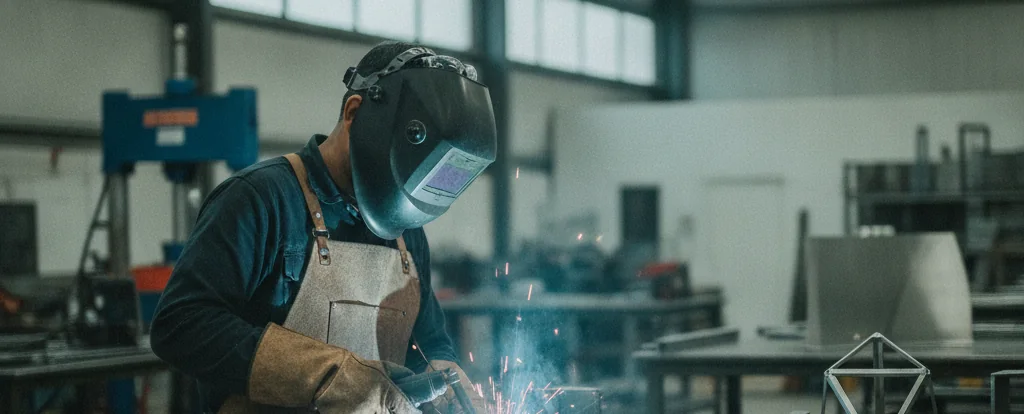
Metal fabricators work from engineering drawings to mark off, cut, bend, drill and weld metal sheet and structural steel into finished components. Welding is one skill inside the trade, not the whole of it: fabricators also form, fit and assemble, then check the finished item against the drawing. Most work sits in manufacturing workshops, construction sites and mining, making or repairing items such as tanks, frames, railings and boilers.
How much do metal fabricators earn?
The median full-time salary for a metal fabricator is $87,800 per annum, before tax, up $18,500 since 2018.
Fabricators are usually paid under the award or enterprise agreement that covers their employer, so a general manufacturing workshop and a mine site can pay different rates for the same qualification. Overtime, shift rosters and site allowances lift earnings, and coded welding qualifications for pressure or structural work normally attract a premium. Remote and fly-in fly-out roles generally pay more to compensate for the roster and the travel.
What does a metal fabricator do day to day?
The list below is what fills most weeks; the exact mix shifts with seniority and whatever stage the current work is at.
- Marking off steel and other metal stock against a drawing before any cutting starts
- Cutting, bending, drilling and shaping metal with hand tools, power tools and CNC machines
- Setting up jigs, clamps and lifting gear to hold heavy sections in place while they are fitted
- Fitting and tack welding components together, then checking the joint will hold under load
- Finishing and inspecting the completed item against the drawing before it is signed off
What skills do metal fabricators need?
Employers look for reading plans and specifications, hand and power tool work, fabrication and finishing, backed by MIG/TIG welding equipment fluency and strong attention to detail.
Specialist skills
- Reading plans and specifications
- Hand and power tool work
- Fabrication and finishing
- Building codes and standards
- Worksite safety management
Software and tools
- MIG/TIG welding equipment
- Plasma cutting torch
- CAD/CAM software
- Hydraulic press
- Measuring callipers and tape measures
General skills
- Attention to detail
- Problem solving
Is the job growing?
About 42,600 people work as metal fabricators in Australia, and employment is projected to grow 7.5% over the decade to 2035. That's modest growth: demand is steady rather than booming.
How do you become a metal fabricator?
Here's the path most metal fabricators take, step by step.
- 1Finish Year 10 or Year 12
Most employers ask for Year 10 as a minimum, and maths, metalwork or design and technology subjects make it easier to read drawings and work out measurements, which is most of the job at the start.
- 2Start a fabrication apprenticeship
The standard entry is a Certificate III in Engineering - Fabrication Trade (MEM31925), usually completed over about four years as a paid Australian Apprenticeship that combines workshop time with training at TAFE or another registered training organisation.
- 3Get your site cards and equipment licences
A White Card is required before you can work on a construction site, and some employers ask for a forklift licence or a high risk work licence for particular plant before they will put you on site.
- 4Add specialised welding qualifications
Welding is verified through qualification tests to recognised standards, and coded welders can take on pressure vessels and structural work that many general fabricators cannot, which is where the higher-paying jobs sit.
- 5Specialise as you gain experience
Experienced fabricators move into CNC programming, estimating, quality checking or supervising a small fabrication team, and some set up their own workshop once they have a customer base and the equipment.
Ready to apply as a metal fabricator?
Whether you're working toward becoming a metal fabricator or already are one and want a hand with the next step (sharpening your resume for ATS screening, tightening your cover letter, or knowing what you'll actually be asked at interview), here are examples grounded in this specific role, not generic templates.
What jobs can a metal fabricator move to?
Moving into Metal Machinist typically comes with the biggest pay rise, worth $47,700 a year more on average.
| Move to | Typical pay change | Overlap | Retraining |
|---|---|---|---|
| Metal Machinist Metal fabricators bring metal cutting, measuring and drawing skills to machining, though precision machining needs further training.Known move | +$47,700 | 70% | reskill |
| Pressure Welder Metal fabricators bring welding and structural assembly experience to pressure welding, though specialised code welding requires further training. | +$8,400 | 70% | reskill |
| Fitter Metal fabricators bring structural assembly and welding skills to fitting work, though mechanical fitting and alignment need further training. | +$3,200 | 61% | reskill |
| Site Supervisor Metal fabricators bring trade knowledge and plan reading to site supervision, though a supervisory qualification and people management are needed.Known move | −$2,000 | 32% | reskill |
| Sheet Metal Worker Metal fabricators bring welding, cutting and drawing interpretation to sheet metal work, though forming and folding need further training.Known move | −$16,000 | 70% | reskill |
Moves are chosen from Jobs and Skills Australia's Data on Occupation Mobility, which follows income tax records between 2011-12 and 2020-21, together with entry requirements and skill overlap. A known move is one people were seen making in that data. Pay change compares median full-time pay for the two roles.
Who works as a metal fabricator?
The typical metal fabricator is 38 years old; 99% are men, 91% work full-time, and full-timers average 47 hours a week.
- 38
- Median age
- 1%
- Female share
- 91%
- Full-time
- +7h
- vs all-jobs avg
What's it like being a metal fabricator?
Fabrication is physical, hands-on work with a steady rhythm: you set up, fit, weld and check, then start on the next item. The trade looks very different depending on the shop, from short runs of identical brackets in a production workshop to one-off repairs and shutdown work on a mine site. Full-time fabricators average 47 hours a week, and overtime is common when a project is running late.
What people like
- You can see what you built. A day's work ends with a tank, a frame or a set of railings that did not exist that morning, and on structural jobs you can point to it years later.
- The work varies with the job. One week might be a run of identical brackets on a jig, the next a repair on site where the drawing has to be worked out from the part itself.
- Skills that carry across industries. The same qualification opens doors in manufacturing, construction and mining, which makes it easier to change sectors or move towns without retraining.
- Straightforward measure of a good day. A component either fits the drawing or it does not, and the feedback on your work comes from the part in front of you rather than a report.
What people find hard
- Heat, noise and grinding dust. You work around welding arc flash, sparks, fumes and loud grinding, so a face shield, respirator and hearing protection are part of every shift.
- Small errors cost a lot of time. A hole in the wrong place or a part out by a few millimetres can mean cutting the piece apart and starting again, which makes accuracy worth the extra minute.
- Long days when a job is behind. Project deadlines and shutdown windows drive overtime and weekend work, and site jobs can mean weeks away from home.
- Repetition in production shops. Some fabrication work is the same weld or the same bracket hundreds of times over, which suits some people and wears down others.
Based on our synthesis of professional-body surveys and public accounts of the role, not first-person verified reviews.
Which industries employ metal fabricators?
Manufacturing employs the largest share of metal fabricators, followed by Construction.
Top employing industries
- 1Manufacturing
- 2Construction
- 3Mining
Ranked by employment share; the source doesn't publish an exact percentage per industry.
| Certificate III/IV | 72.7% | |
|---|---|---|
| Year 12 or below | 20.4% | |
| Diploma / Advanced Diploma | 2.8% | |
| Bachelor degree | 1.8% | |
| Postgraduate | 0.3% |
Will AI replace metal fabricators?
Metal fabrication has low exposure to AI overall, because most of the work happens at a bench, in a workshop or on site with heavy, awkward pieces of metal in front of you. CNC cutting tables, nesting software and robotic welders have taken over straight, repetitive runs, but they still need a fabricator to set them up, check the first part and handle everything that does not fit the machine.
Share of typical working time by exposure level
- Fitting up and tack welding componentsJigs, clamps and positioners help hold a frame square, though getting an awkward assembly to line up before welding still comes down to the fabricator's eye and experience.35%low
- Final welding and finishingRobotic welders suit long runs of identical parts, while one-off fabrication, site repairs and out-of-position welding stay in the hands of the tradesperson.30%low
- Marking off and cutting stock to sizeNesting software and CNC plasma tables work out the cuts and run them automatically, but someone still has to set up the plate, check the first piece and rework anything the table cannot reach.20%moderate
- Reading drawings and planning the buildDrawings increasingly arrive as CAD models on a tablet, which speeds up checking dimensions, but deciding the order of assembly and how to hold the work is still a judgement call.15%moderate
Common questions about becoming a metal fabricator
Straight answers to the questions people ask most.
How much do metal fabricators earn?
Metal fabricators earn a median of $87,800 per year before tax, based on full-time workers. Overtime, shift work and coded welding qualifications push earnings above that figure, and mine site and remote roles usually pay more than general manufacturing workshops.
How do you become a metal fabricator?
The usual path is a Certificate III in Engineering - Fabrication Trade (MEM31925) apprenticeship, which takes about four years and is paid while you train. Employers generally want Year 10 or Year 12, and you can approach fabrication workshops directly or apply through Australian Apprenticeships.
Are metal fabricators in demand?
Metal fabricators are currently in shortage nationally, and employment is projected to grow 7.5% over the decade to 2035. Hiring still moves with construction, mining and manufacturing activity, so the number of openings varies by region and by year within that trend.
Will AI replace metal fabricators?
Cutting and repetitive welding are the most exposed parts of the job, with CNC plasma tables, nesting software and robotic welders handling straight production runs. Fit-up, one-off fabrication and site work stay with the tradesperson, because holding tolerance on an awkward component depends on judgement built over years.
What can metal fabricators move into?
Experienced fabricators often move into metal machining, where the measuring and drawing skills carry across and they can earn $47,700 more, or into pressure welding for specialised code work. Some move off the tools into site supervision, and others open their own fabrication workshop, which is often where earnings grow.
What is the difference between a metal fabricator and a welder?
Fabricators take a job from the drawing through marking off, cutting, forming and assembly, while welders concentrate on joining metal. In small workshops the two roles overlap heavily and many fabricators weld most days. The distinction matters more in larger operations, where welding is often a separate, tested qualification.
Related roles
Not sure this is you? Take the career quiz and get a ranked shortlist of roles that fit how you like to work.