Pressure Welder
Pressure welders join and repair the pipework, vessels and boilers built to hold steam, gas or chemicals under pressure, and their welds have to pass testing before the plant can run.
- Median salary*
- $96,200
3.8%vs last year, before tax
- People employed
- 120
20.0%vs last year
- Projected growth
- +7.5%
to 2035
- AI exposure*
- Low
- automation risk
- Average hours
- 36/wk
−4h vs all jobs
- Shortage status
- In shortage
national
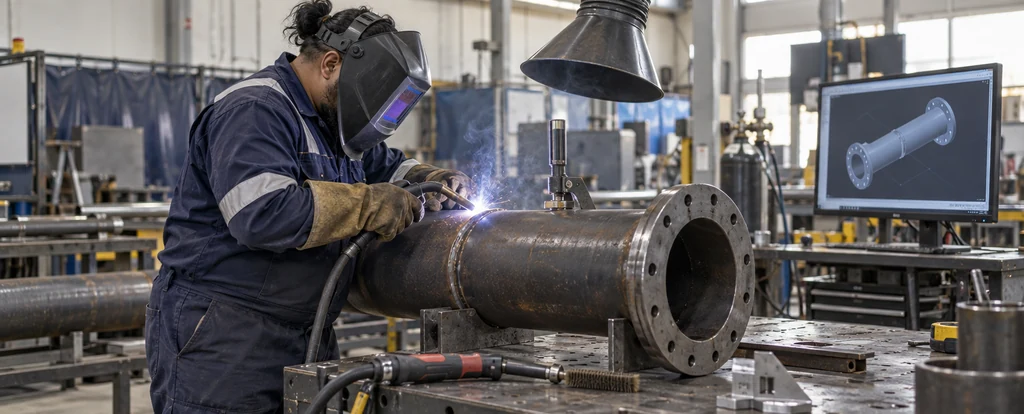
Pressure welders work in fabrication workshops and on site at power stations, refineries, water treatment plants and gas facilities. What separates them from general welders is certification: welds on pressure equipment follow a written procedure and are checked by testing, often radiography, before the plant is commissioned. They usually work in a small crew alongside boilermakers, fitters and welding inspectors.
How much do pressure welders earn?
The median full-time salary for a pressure welder is $96,200 per annum, before tax, up $19,900 since 2018.
Pay moves most with certification and with where the work is done. Welders who hold current code qualifications for the processes and positions an employer needs, and who will go to remote sites or shutdowns, tend to earn more than those in steady workshop fabrication. Overtime, penalty rates and enterprise agreements in resources and heavy industry also lift annual earnings above the base rate.
What does a pressure welder do day to day?
The list below is what fills most weeks; the exact mix shifts with seniority and whatever stage the current work is at.
- Reading welding procedure specifications, isometric drawings and weld maps before starting a joint
- Cutting, bevelling and aligning pipe and plate so the fit-up sits within tolerance
- Tacking and welding joints in position using TIG, MIG or manual metal arc processes
- Grinding out and rewelding a joint when a test or inspection finds a defect
- Looking after welding machines, consumables and gas, and keeping the work area safe
What skills do pressure welders need?
Employers look for fabrication and finishing, reading plans and specifications, worksite safety management, backed by MIG, TIG and MMA welding equipment fluency and strong attention to detail.
Specialist skills
- Fabrication and finishing
- Reading plans and specifications
- Worksite safety management
- Hand and power tool work
- Installation and maintenance
Software and tools
- MIG, TIG and MMA welding equipment
- Plasma cutters
- Oxy-acetylene torches
- Weld inspection gauges
- AutoCAD
General skills
- Attention to detail
- Problem solving
Is the job growing?
About 120 people work as pressure welders in Australia, and employment is projected to grow 7.5% over the decade to 2035. That's modest growth: demand is steady rather than booming.
How do you become a pressure welder?
Here's the path most pressure welders take, step by step.
- 1Complete a Certificate III in Engineering (Fabrication Trade)
Most pressure welders start as an apprentice, which takes three to four years and is paid, with most weeks in a workshop and blocks of study at TAFE. A pre-apprenticeship or a mature-age apprenticeship is a common alternative for people coming from another trade.
- 2Sit code tests for the processes you'll use
A trade qualification on its own doesn't let you weld on pressure equipment. You test to a welding procedure or code through a registered training organisation or an employer's assessment, and each certificate covers a specific process, position and material.
- 3Keep your certifications current
Code qualifications lapse or stop applying when you change employer, process or material, so retesting every couple of years is part of the job. A folder of current test certificates is what employers ask for first.
- 4Add the licences and qualifications site work needs
A White Card for construction sites, confined space and working at heights training, and a high risk work licence for rigging or crane work open up shutdown and project jobs. Employers often fund these once you're on the books.
- 5Specialise as your experience builds
Welders who certify in stainless steel, exotic alloys or pipe welding in restricted positions take on the work that pays best, and some move towards welding supervision, inspection or their own contracting crew.
Ready to apply as a pressure welder?
Whether you're working toward becoming a pressure welder or already are one and want a hand with the next step (sharpening your resume for ATS screening, tightening your cover letter, or knowing what you'll actually be asked at interview), here are examples grounded in this specific role, not generic templates.
What jobs can a pressure welder move to?
Moving into Metal Machinist typically comes with the biggest pay rise, worth $39,300 a year more on average.
| Move to | Typical pay change | Overlap | Retraining |
|---|---|---|---|
| Metal Machinist Precision metalwork and drawing interpretation carry into machining, but additional training is needed to operate lathes and mills. | +$39,300 | 70% | reskill |
| Metal Fabricator Pressure welders bring coded welding and metal joining skills to fabricating structures, though formal fabrication training is required.Known move | −$8,400 | 70% | reskill |
| Welder Pressure welding skills transfer directly into general welding, giving broader fabrication and repair work, with further training for the general qualification.Known move | −$8,400 | 70% | reskill |
Moves are chosen from Jobs and Skills Australia's Data on Occupation Mobility, which follows income tax records between 2011-12 and 2020-21, together with entry requirements and skill overlap. A known move is one people were seen making in that data. Pay change compares median full-time pay for the two roles.
Who works as a pressure welder?
The typical pressure welder is 45 years old; 100% are men, 88% work full-time, and full-timers average 36 hours a week.
- 45
- Median age
- 0%
- Female share
- 88%
- Full-time
- −4h
- vs all-jobs avg
What's it like being a pressure welder?
Pressure welding is precise, measured work with long stretches of preparation before a joint goes in, and the result is checked by someone else's test rather than your own opinion of it. Shutdown and project work brings tight schedules and time away from home, while workshop fabrication runs to steadier hours. It suits people who like getting a process exactly right and don't mind heat, noise and heavy gear.
What people like
- A weld that passes inspection. When the radiograph or ultrasonic test comes back clean, you have a documented result that came from your own hands, and coded welders tend to take pride in the stamp on their work.
- Work that takes you to different sites. Shutdown and project jobs can put you in refineries, mines, power stations and water plants around the country, often with travel allowances and a roster that gives you solid blocks of time off.
- Standards that are written down. The procedure specification and the code tell you what the joint has to meet, so quality is defined rather than a matter of someone's opinion on the day.
- Skills that carry between employers. Certification and welding experience are portable, and the same core skills apply whether you're on a gas pipeline, a boiler or a water treatment plant.
What people find hard
- Preparation takes longer than the weld. Measuring, bevelling and aligning a joint can eat most of a shift, and a lot of it happens in awkward positions under a pipe or against a wall.
- Heat, noise and heavy gear. Leathers, a helmet, gloves and ear protection are standard, and summer on an outdoor site or inside a vessel is genuinely uncomfortable.
- Retesting and record keeping. Certifications need renewing and testing costs time and money, so you're regularly booking tests and chasing paperwork to stay employable on coded work.
- Travel and rosters. The highest-paying jobs are often away from home for weeks at a time, which is hard on family life and not everyone wants the trade-off.
Based on our synthesis of professional-body surveys and public accounts of the role, not first-person verified reviews.
Which industries employ pressure welders?
Manufacturing employs the largest share of pressure welders, followed by Construction.
Top employing industries
- 1Manufacturing
- 2Construction
- 3Electricity, Gas, Water and Waste Services
Ranked by employment share; the source doesn't publish an exact percentage per industry.
| Certificate III/IV | 73.9% | |
|---|---|---|
| Bachelor degree | 5% | |
| Diploma / Advanced Diploma | 4.2% | |
| Year 12 or below | 3.4% | |
| Postgraduate | 2.5% |
Will AI replace pressure welders?
Pressure welding is one of the least exposed trades, because most of the work happens in place on pipework and vessels, in awkward or confined positions, and critical welds are verified by physical testing rather than software. Automated and robotic welding is common in high-volume fabrication and does reduce manual welding in those plants, but coded site welding still depends on a person to set up, weld and repair the joint.
Share of typical working time by exposure level
- Welding coded joints on pipe and pressure vesselsRunning a root pass in position inside a pipe rack comes down to torch control and feel, and the result is checked by radiography or ultrasonic testing afterwards.40%low
- Fitting, alignment and joint preparationMeasuring, bevelling and aligning components to tolerance is still done by hand on site, although plasma cutting tables and nesting software speed up workshop preparation.25%low
- Weld inspection and reworkAutomated inspection tools flag defects sooner, but grinding out a failed joint and rewelding it is manual repair work that depends on the welder's judgement.20%moderate
- Reading procedures, drawings and inspection reportsSoftware can generate isometrics and weld maps, but interpreting a welding procedure specification and applying it to the joint in front of you stays with the welder.15%moderate
Common questions about becoming a pressure welder
Straight answers to the questions people ask most.
How much do pressure welders earn?
Pressure welders earn a median of $96,200 per year before tax in full-time work. The certifications you hold, the industry you work in and whether the job is site-based or in a workshop move that figure considerably.
How do you become a pressure welder?
The usual route is a Certificate III in Engineering (Fabrication Trade) apprenticeship, which takes three to four years and is paid. To weld on pressure equipment you then pass code tests for the processes and positions your employer needs, and keep those certifications up to date.
Are pressure welders in demand?
Pressure welders are currently in shortage nationally, and employment in the occupation is projected to grow 7.5% over the decade to 2035. Employers hiring for coded work look closely at which processes and positions you hold current certification for, and at whether you'll travel for shutdowns.
Will AI or robots replace pressure welders?
Not in the near term. Automated welding is well established in high-volume manufacturing and reduces manual work in those plants, but field and site welding on pressure equipment happens in place and in awkward positions, and each joint is proven by physical testing. Maintenance, repair and coded work still need a person.
What other jobs can a pressure welder move into?
Many move across to metal fabrication or general welding, where the work is broader and pay is $8,400 less per year, with some retraining for the general qualification. Moving into metal machining takes training on lathes and mills and pays $39,300 more. Running your own fabrication business or contracting crew is another common route, and often where earnings grow.
How many hours do pressure welders work?
Full-time pressure welders average about 36 hours a week, but the pattern varies more than the average suggests. Workshop jobs run standard days, while shutdown and project rosters swing between long stretches on site and extended time off.
Related roles
Not sure this is you? Take the career quiz and get a ranked shortlist of roles that fit how you like to work.