Steel Fixer
Steel fixers cut, bend and tie the steel reinforcement that gives concrete slabs, columns and bridges their strength.
- Median salary*
- $83,200
3.7%vs last year, before tax
- People employed
- 4,000
0.0%vs last year
- Projected growth
- +4.6%
to 2035
- AI exposure*
- Low
- automation risk
- Average hours
- 44/wk
+4h vs all jobs
- Shortage status
- In shortage
national
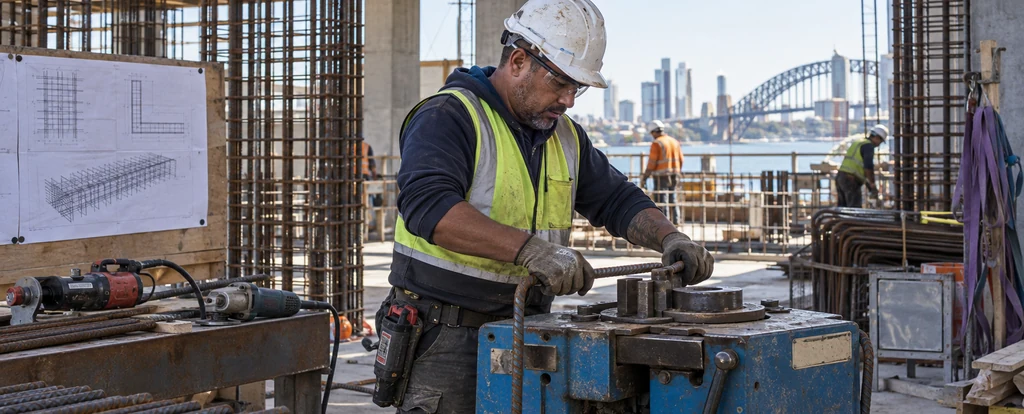
Steel fixers work on construction sites, from house slabs and tilt-up warehouses to bridges, tunnels and high-rise cores, reading reinforcement drawings and setting out bar and mesh before the concrete is poured. The nearest trade is the steel erector, who raises the structural frame, while the fixer's steel ends up cast inside the concrete. Most are employed by construction contractors and specialist reinforcement subcontractors, and the work is outdoors and often at height.
How much do steel fixers earn?
The median full-time salary for a steel fixer is $83,200 per annum, before tax, up $17,200 since 2018.
Steel fixing pay follows the construction award or a project enterprise agreement, so site allowances, overtime and the size of the job move it more than the job title does. Fixers on civil and infrastructure projects, or on remote and fly-in fly-out work, usually earn more than those on small residential sites. A rigging licence, a specialist welding qualification or experience running a crew also lifts the rate.
What does a steel fixer do day to day?
The list below is what fills most weeks; the exact mix shifts with seniority and whatever stage the current work is at.
- Reading reinforcement drawings and bar schedules
- Cutting and bending bars and mesh to length
- Positioning and tying reinforcement cages, slabs and columns
- Using tie wire, clips, tying tools and welding equipment
- Checking bar spacing, cover and laps against the drawings before a pour
What skills do steel fixers need?
Employers look for reading plans and specifications, hand and power tool work, worksite safety management, backed by Rebar tying tools fluency and strong attention to detail.
Specialist skills
- Reading plans and specifications
- Hand and power tool work
- Worksite safety management
- Fabrication and finishing
- Installation and maintenance
Software and tools
- Rebar tying tools
- Bar bending machines
- Hydraulic cutters
- Welding equipment
- Angle grinders
General skills
- Attention to detail
- Physical stamina and dexterity
Is the job growing?
About 4,000 people work as steel fixers in Australia, and employment is projected to grow 4.6% over the decade to 2035. That's modest growth: demand is steady rather than booming.
How do you become a steel fixer?
Here's the path most steel fixers take, step by step.
- 1Get a White Card
General construction induction training is required before you set foot on a site anywhere in Australia, and the course takes about a day. Employers ask for it before they will put you on a crew.
- 2Start on site as a labourer or trainee
Most steel fixers learn the trade working alongside an experienced crew, so this is a job you can enter from school without a degree. Traineeships combine paid work with training and are the usual way in.
- 3Complete a Certificate II or III in construction or concreting
A Certificate II in Construction (CPC20120) gets you on site, while a Certificate III in Concreting (CPC30320) with reinforcement units covers bar schedules, placing, tying and cover. Studying part time while you work is common.
- 4Add licences for the tasks you take on
A basic rigging or dogging high risk work licence lets you handle steel placed by crane, and an elevated work platform licence covers work at height. These are issued by the state or territory regulator, so requirements vary.
- 5Move into leading hand or supervision
Fixers who can read drawings, run a small crew and check their own work are the ones who step up, and some go on to set up a fixing subcontract business. Both routes usually need a Certificate III behind them.
Ready to apply as a steel fixer?
Whether you're working toward becoming a steel fixer or already are one and want a hand with the next step (sharpening your resume for ATS screening, tightening your cover letter, or knowing what you'll actually be asked at interview), here are examples grounded in this specific role, not generic templates.
What jobs can a steel fixer move to?
Moving into Concreter typically comes with the biggest pay rise, worth $31,700 a year more on average.
| Move to | Typical pay change | Overlap | Retraining |
|---|---|---|---|
| Concreter Steel fixers understand reinforcement placement and concrete work, so concreting needs only a short course.Known move | +$31,700 | 46% | short course |
| Rigger Steel fixers already position and secure steel on site, so rigging builds on those skills with a short course.Known move | +$10,400 | 45% | short course |
| Carpenter Steel fixers bring structural building site experience, but carpentry requires a separate apprenticeship qualification.Known move | +$8,300 | 57% | requalify |
| Steel Erector Steel fixers bring steel handling and structural site skills, so moving into steel erection needs little extra training.Known move | +$5,200 | 63% | minimal |
| Metal Fabricator Steel fixers bring steel measuring and assembly skills, but metal fabrication requires a separate trade qualification.Known move | +$4,600 | 62% | requalify |
Moves are chosen from Jobs and Skills Australia's Data on Occupation Mobility, which follows income tax records between 2011-12 and 2020-21, together with entry requirements and skill overlap. A known move is one people were seen making in that data. Pay change compares median full-time pay for the two roles.
Who works as a steel fixer?
The typical steel fixer is 35 years old; 99% are men, 76% work full-time, and full-timers average 44 hours a week.
- 35
- Median age
- 1%
- Female share
- 76%
- Full-time
- +4h
- vs all-jobs avg
What's it like being a steel fixer?
The day is physical and moves with the pour schedule: the steel has to be set, checked and signed off before the concrete truck arrives, which can mean early starts and long days when a pour is close. Work happens outdoors in heat, rain and dust, often at height or inside formwork, and the crew you tie alongside matters as much as the site. It tends to suit people who like seeing a structure take shape and are happy for the body to do most of the work.
What people like
- You see the structure take shape. A pour follows a few days after the steel goes in, so a slab you tied on Monday is finished concrete by the end of the week.
- A trade you can learn while you earn. There is no degree to get through; a White Card, a traineeship and a few years with a good crew are the usual path, and you are paid from your first week on site.
- Different sites, different problems. A basement slab, a bridge pier and a precast panel each need different bar, access and sequencing, so the job does not sit still.
- Routes sideways when you want them. Rigging, steel erection and concreting all build on the same skills, so you can change what you do without starting again.
What people find hard
- Weather rules the day. Sites shut down in high wind and heavy rain, and summer on an exposed slab is hot work with few places to get out of the sun.
- It is heavy on the body. Bars are carried, dragged and tied at height or in trenches, and backs, shoulders and hands carry the load over a career.
- Pour dates come first. Concrete waits for no one, so a late delivery or a drawing change turns into overtime, early starts and weekend work to have the steel ready.
- The work is where the project is. Large jobs are often on the edge of the city or in remote areas, which means long commutes or living away for weeks at a time.
Based on our synthesis of professional-body surveys and public accounts of the role, not first-person verified reviews.
Which industries employ steel fixers?
Construction employs the largest share of steel fixers.
Top employing industries
- 1Construction
Ranked by employment share; the source doesn't publish an exact percentage per industry.
| Year 12 or below | 61.1% | |
|---|---|---|
| Certificate III/IV | 21.8% | |
| Bachelor degree | 7.3% | |
| Diploma / Advanced Diploma | 4.1% | |
| Postgraduate | 1% |
Will AI replace steel fixers?
Steel fixing sits at the low end of AI exposure, because the core of the job is handling, placing and tying steel in conditions that change with every pour. Bar schedules and design models now arrive as digital files, and prefabricated cages and battery-powered tying tools speed up parts of the work, but someone still has to set the steel out on a real slab and make it fit around services and formwork.
Share of typical working time by exposure level
- Positioning and tying reinforcement cagesBattery tying tools are quicker than a hook and tie wire, but threading bar through a congested cage and tying it off at height is still done by hand.45%low
- Reading bar schedules and setting out on siteThe drawing set often comes off a digital model now, but cover, laps and set-out lines are still marked on formwork by hand and checked against what is actually there.20%moderate
- Cutting and bending bars and mesh to lengthBar bending machines and off-site prefabrication take some of this away from the deck, though odd lengths and last-minute changes are still cut and bent on site.20%moderate
- Checking placement before a pourLaser scanning and as-built models can now compare the placed steel with the design, which is where the checking and sign-off work is most exposed.15%high
Common questions about becoming a steel fixer
Straight answers to the questions people ask most.
How much do steel fixers earn?
Full-time steel fixers earn a median of $83,200 per year before tax. That is the middle of the range rather than a starting rate, and what you take home depends on the project, whether an enterprise agreement applies, and how much overtime and site work you do.
How do you become a steel fixer?
Get a White Card, then find work as a labourer or trainee with a fixing crew, because most of the trade is learned on site. A Certificate III in Concreting (CPC30320) with reinforcement units, or a construction traineeship, gives you the formal side and helps when you go for larger projects.
Are steel fixers in demand?
Steel fixers are currently in shortage nationally, and employment is projected to grow 4.6% over the decade to 2035. Reinforcement goes into almost every concrete structure, so the work follows the construction pipeline rather than one type of project.
Will AI or automation replace steel fixers?
Steel fixing is not very exposed to automation, because the core of the job is handling and tying steel on a site that changes with every pour. Design models and bar schedules now arrive as digital files, and prefabricated cages and battery tying tools speed up parts of the work, but someone still has to set the steel out, work around formwork and services, and make it fit.
What can a steel fixer move into?
Moving into steel erection is a short step, because the steel handling and structural site skills carry across, and steel erectors earn $5,200 more. Rigging builds on the same work with a short course and a basic rigging high risk work licence, and riggers earn $10,400 more. Experienced fixers also start their own fixing crews or subcontract businesses, which is often where earnings grow.
What are the hours like for a steel fixer?
Full-time steel fixers average around 44 hours a week, and the day often starts early so the steel is ready before the concrete truck arrives. Hours stretch around big pours, weekends and projects running behind schedule, and some large jobs are fly-in fly-out.
Related roles
Not sure this is you? Take the career quiz and get a ranked shortlist of roles that fit how you like to work.