Concreter
Concreters prepare, pour and finish concrete for jobs ranging from house slabs and driveways to roads, bridges and commercial floors.
- Median salary
- $114,900
3.5%vs last year, before tax
- People employed
- 44,600
0.0%vs last year
- Projected growth
- +5.7%
to 2035
- AI exposure*
- Low
- automation risk
- Average hours
- 45/wk
+5h vs all jobs
- Shortage status*
- In shortage (regional)
national
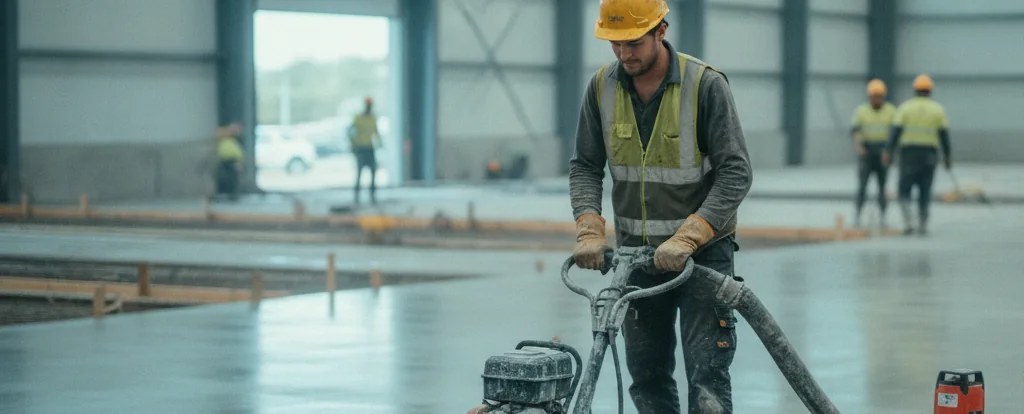
Concreters prepare the ground, build formwork and pour and finish concrete for everything from house slabs and paths to roads, bridges and commercial floors. Most work for a concreting or construction subcontractor rather than directly for a builder, and timing matters as much as skill, since a pour has to be mixed, placed and finished before the concrete sets. The trade is often confused with bricklaying, but a concreter works with poured, formed material rather than laying individual units.
How much do concreters earn?
The median full-time salary for a concreter is $114,900 per annum, before tax, up $24,500 since 2018.
How much a concreter takes home depends heavily on whether they are employed or subcontracting, since subcontractors quote the job and carry their own insurance, equipment and quiet weeks. Weekend, night and remote project work usually attracts loadings, and finishers who can run a pour and handle a ride-on trowel are generally paid above the labouring rate. In larger civil and commercial contractors, pay is set by an enterprise agreement rather than an individual deal.
What does a concreter do day to day?
The list below is what fills most weeks; the exact mix shifts with seniority and whatever stage the current work is at.
- Timing pours around weather forecasts and delivery schedules, because concrete that sits too long in the truck or on the ground is hard to finish well
- Building and bracing formwork and placing reinforcement mesh before the pour starts
- Mixing and testing concrete on site to hit the slump and strength the job calls for
- Screeding, floating and trowelling surfaces in a race against setting time, working flat out with the rest of the crew
- Covering and curing finished slabs, then stripping forms and cleaning down tools before the crew moves to the next site
What skills do concreters need?
Employers look for building codes and standards, worksite safety management, reading plans and specifications, backed by Concrete mixer fluency and strong attention to detail.
Specialist skills
- Building codes and standards
- Worksite safety management
- Reading plans and specifications
- Hand and power tool work
- Plant and equipment operation
Software and tools
- Concrete mixer
- Concrete pump
- Power trowel
- Laser level
- Concrete saw
General skills
- Attention to detail
- Problem solving
- Physical stamina and dexterity
Is the job growing?
About 44,600 people work as concreters in Australia, and employment is projected to grow 5.7% over the decade to 2035. That's modest growth: demand is steady rather than booming.
How do you become a concreter?
Here's the path most concreters take, step by step.
- 1Get a White Card
General construction induction training is required before you can work on a building site in any state, and it takes about a day. Employers will not put you on a crew without one.
- 2Start as a labourer on a concreting crew
Many concreters come in this way rather than through an apprenticeship, earning while they learn formwork, placing and finishing. A driver's licence helps, since sites are often spread across a region and starts can be before dawn.
- 3Complete a Certificate III in Concreting (CPC30320)
A concreting apprenticeship usually runs two to three years and combines paid site work with TAFE training in formwork, reinforcement, placing and finishing. It is the qualification that opens up supervisory roles and makes it easier to work for larger contractors or interstate.
- 4Add licences and qualifications for plant
Concrete pump, forklift, excavator and skid steer courses are short and let you take on more of the pour, usually at a higher rate than labouring. High risk work licences apply to some plant, and the requirements differ by state.
- 5Specialise or move towards running the work
Experienced concreters move into decorative and polished finishes, structural work or supervising crews, and some take a diploma in construction management. Others set up their own concreting business, often once they have a network of builders who keep sending work their way.
Ready to apply as a concreter?
Whether you're working toward becoming a concreter or already are one and want a hand with the next step (sharpening your resume for ATS screening, tightening your cover letter, or knowing what you'll actually be asked at interview), here are examples grounded in this specific role, not generic templates.
What jobs can a concreter move to?
Moving into Construction Manager typically comes with the biggest pay rise, worth $80,200 a year more on average.
| Move to | Typical pay change | Overlap | Retraining |
|---|---|---|---|
| Construction Manager Site experience with slabs and structures leads naturally into managing building projects, with a diploma in construction management.Known move | +$80,200 | 31% | reskill |
| Plasterer Both trades finish surfaces on building sites, though plastering requires a separate apprenticeship to learn rendering and coating.Known move | −$19,200 | 67% | requalify |
| Concrete Pump Operator Operating the pump uses the concreter's knowledge of mixes and pours, and needs a ticket for the machinery.Known move | −$23,900 | 32% | reskill |
| Site Supervisor Supervising concreting crews draws directly on trade knowledge, though the move needs formal training in site management.Known move | −$29,100 | 31% | reskill |
| Steel Fixer Placing reinforcement is closely related work, and a concreter's site knowledge shortens the ticket needed to fix steel.Known move | −$31,700 | 46% | short course |
Moves are chosen from Jobs and Skills Australia's Data on Occupation Mobility, which follows income tax records between 2011-12 and 2020-21, together with entry requirements and skill overlap. A known move is one people were seen making in that data. Pay change compares median full-time pay for the two roles.
Who works as a concreter?
The typical concreter is 35 years old; 97% are men, 87% work full-time, and full-timers average 45 hours a week.
- 35
- Median age
- 3%
- Female share
- 87%
- Full-time
- +5h
- vs all-jobs avg
What's it like being a concreter?
Concreting is outdoor work with deadlines set by the material itself: once the truck arrives, the pace of the day is fixed and there is no slowing down. Many days start before first light so the pour is finished before the heat, and rain can wipe out a day's work with little warning. It suits people who like physical, hands-on work in a small crew and a finished product they can point to at knock-off.
What people like
- A result you can see by the end of the day. A slab, driveway or floor you have finished yourself is obvious by knock-off time, and builders and other trades notice a clean finish.
- Small crews working closely together. Concreting crews are small and work the same patch all day, so skills pass between people on the tools and the day is social rather than solitary.
- A wide range of sites and jobs. The work moves between house slabs, footpaths, industrial floors, retaining walls and bridge decks, so the setting changes from week to week.
- Outdoors and physical rather than desk-bound. You are on your feet and using your hands all day, with the site, the weather and the crew changing regularly.
What people find hard
- Weather runs the schedule. Rain can stop a pour or spoil a finish, and summer heat means starting at first light, which for subcontractors can also mean a shorter pay week.
- Hard on the body. Bending, kneeling and trowelling for long stretches wears on knees, backs, hands and shoulders, and it is one reason some concreters move into supervising or running their own crew later on.
- No slowing down once the pour starts. Concrete sets on its own timetable, so the crew works flat out to place and finish it, and a delay shows up permanently in the surface.
- Early starts and long days. Full-time concreters average 45 hours a week, with pours often beginning before first light and overtime when a job runs behind.
Based on our synthesis of professional-body surveys and public accounts of the role, not first-person verified reviews.
Which industries employ concreters?
Construction employs the largest share of concreters.
Top employing industries
- 1Construction
Ranked by employment share; the source doesn't publish an exact percentage per industry.
| Year 12 or below | 56.2% | |
|---|---|---|
| Certificate III/IV | 35.1% | |
| Diploma / Advanced Diploma | 2.8% | |
| Bachelor degree | 1.9% | |
| Postgraduate | 0.3% |
Will AI replace concreters?
Concreting has low exposure to AI and automation because almost all of the work happens with your hands, on ground that is never quite the same twice. Software has changed the quoting and scheduling side, and machine screeds and ride-on trowels have taken over some levelling and finishing, but setting out, placing and judging a mix still come down to the crew on site. The parts that resist automation are also the parts that decide whether a job is any good.
Share of typical working time by exposure level
- Placing, screeding and finishing by handSpreading, screeding and hand-trowelling edges, steps and tight corners depend on feel and timing, and no machine has taken over the finish that customers actually look at.40%low
- Building and bracing formworkFormwork is measured and cut to fit the ground and the structure in front of you, so it is still built and braced by hand, with a laser level rather than a robot doing the checking.25%low
- Curing, saw cutting and site paperworkCuring regimes and concrete saws are largely routine and increasingly automated, and daily site records, dockets and safety paperwork are moving onto phone apps.20%moderate
- Reading plans, setting out and ordering concreteTakeoff and estimating software now works out quantities and prices a job quickly, but someone still has to check levels, set out on site and decide how the pour will be run.15%moderate
Common questions about becoming a concreter
Straight answers to the questions people ask most.
How much do concreters earn in Australia?
The median full-time concreter earns $114,900 per year before tax, and because that is a median, half of full-time concreters earn more and half earn less. Pay moves with experience, whether you are employed or subcontracting, and how much weekend, night and remote work you take on.
How do you become a concreter?
Most people start as a labourer on a concreting crew and learn formwork, placing and finishing on the job, after completing the White Card induction every site requires. A Certificate III in Concreting (CPC30320), usually through a two to three year apprenticeship, is the formal qualification and is what larger contractors and supervisory roles tend to ask for.
Are concreters in demand in Australia?
Concreters are currently in shortage in regional areas, and employment is projected to grow 5.7% over the decade to 2035. Demand follows the building and civil pipeline in your area rather than the national picture, so it is worth checking what projects are planned where you intend to live.
Will AI or automation replace concreters?
Very little of this job is exposed, because the work is hands-on, on uneven ground, and depends on reading the mix, the weather and the site as the pour happens. Estimating and takeoff software has sped up quoting, and laser screeds and ride-on trowels do some of the levelling and finishing once done by hand, but someone still has to set out, place and finish the concrete.
What can a concreter move on to?
Concreters often move into site supervision, where knowledge of formwork and pours is most of the qualification, or into construction management, which pays $80,200 more and usually needs a diploma. Others retrain as plasterers or concrete pump operators, though both mean a pay cut while the new skills build. Running your own concreting crew or business is the other common path, and it is often where earnings grow.
Do you need an apprenticeship to work as a concreter?
No, plenty of concreters learn the trade as labourers and never complete an apprenticeship. The Certificate III is still worth having if you want to run your own jobs, work for bigger contractors or move into supervision later.
Related roles
Not sure this is you? Take the career quiz and get a ranked shortlist of roles that fit how you like to work.