Steel Erector
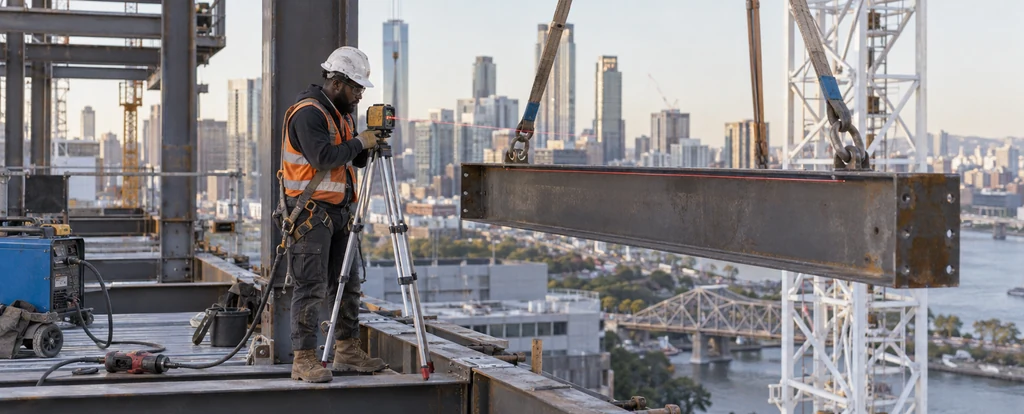
Steel erectors assemble the structural steel frames that hold up buildings, bridges and industrial sheds.
- Median salary*
- $88,400
4.2%vs last year, before tax
- People employed
- 380
5.0%vs last year
- Projected growth
- +4.6%
to 2035
- AI exposure*
- Low
- automation risk
- Average hours
- 41/wk
+1h vs all jobs
- Shortage status
- In shortage
national
Steel erectors work on construction sites, from industrial sheds and warehouses to high-rise towers and bridges, usually in a crew alongside riggers, crane operators and welders. Metal fabricators make the steel in a workshop, then the erector's job starts when it arrives on site and has to be lifted, lined up and fixed in place. Most work for steel fabrication and erection contractors, and much of the day is spent above ground level.
How much do steel erectors earn?
The median full-time salary for a steel erector is $88,400 per annum, before tax, up $18,600 since 2018.
Steel erectors are usually paid under the Building and Construction General On-site Award or a project enterprise agreement, so base rates, site allowances and overtime rules differ from one job to the next. A rigging or welding qualification and experience on structural work are what lift you into the higher paid classifications. Working away from home on a regional or remote project usually brings an allowance on top, while casual and labour hire arrangements pay a loading in exchange for less certainty.
What does a steel erector do day to day?
The list below is what fills most weeks; the exact mix shifts with seniority and whatever stage the current work is at.
- Reading structural drawings and lift plans before each stage of the build
- Slinging and guiding beams, columns and trusses into position with the crane crew
- Aligning, bolting and bracing members so the frame finishes plumb and square
- Cutting, drilling and welding steel on site where the drawings allow it
- Checking rigging gear and setting up exclusion zones before every lift
What skills do steel erectors need?
Employers look for reading plans and specifications, hand and power tool work, installation and maintenance, backed by Total station fluency and strong problem solving.
Specialist skills
- Reading plans and specifications
- Hand and power tool work
- Installation and maintenance
- Worksite safety management
- Fabrication and finishing
- Plant and equipment operation
- Building codes and standards
Software and tools
- Total station
- Laser level
- Impact wrench
- Rigging slings
- Welding machine
General skills
- Problem solving
Is the job growing?
About 380 people work as steel erectors in Australia, and employment is projected to grow 4.6% over the decade to 2035. That's modest growth: demand is steady rather than booming.
How do you become a steel erector?
Here's the path most steel erectors take, step by step.
- 1Get a construction induction card
A White Card is required before you can work on a commercial construction site anywhere in Australia, and it is the first thing most employers ask for.
- 2Start on site or in an apprenticeship
Many steel erectors begin as a labourer or trade assistant on an erection crew and learn the work from the people around them, while others take a Certificate III in Engineering (Fabrication Trade) apprenticeship, which usually runs three to four years. About 52% of steel erectors have Year 12 or below as their highest qualification, so a trade certificate is not the only way in.
- 3Add a rigging licence
A high risk work licence for rigging (RB or RI) is issued by the work health and safety regulator in your state after a short course and assessment, and it is what lets you sling and direct loads. Working at heights training is usually required as well.
- 4Build welding and structural experience
Qualified welding and experience with structural bolting make you more employable on larger frames, and both are often needed before you move onto high-rise or bridge work.
- 5Keep licences current
High risk work licences need renewing every five years in most states, and some structural welding qualifications are re-tested, so keep track of expiry dates.
Ready to apply as a steel erector?
Whether you're working toward becoming a steel erector or already are one and want a hand with the next step (sharpening your resume for ATS screening, tightening your cover letter, or knowing what you'll actually be asked at interview), here are examples grounded in this specific role, not generic templates.
What jobs can a steel erector move to?
Moving into Rigger typically comes with the biggest pay rise, worth $5,200 a year more on average.
| Move to | Typical pay change | Overlap | Retraining |
|---|---|---|---|
| Rigger Steel erectors bring working-at-height and steel handling skills to rigging, with a short rigging ticket needed.Known move | +$5,200 | 54% | short course |
| Scaffolder Steel erectors bring working-at-height and steel assembly skills to scaffolding, with a short scaffolding ticket needed. | +$2,600 | 83% | short course |
| Metal Fabricator Steel erectors bring structural steel and site skills to metal fabrication, though a fabrication trade qualification is required.Known move | −$600 | 70% | requalify |
| Steel Fixer Steel erectors bring structural steel and site skills to steel fixing, with minimal retraining.Known move | −$5,200 | 63% | minimal |
| Shed Builder Steel erectors bring frame erection and structural steel skills to shed building, with little extra training required. | −$10,400 | 91% | minimal |
Moves are chosen from Jobs and Skills Australia's Data on Occupation Mobility, which follows income tax records between 2011-12 and 2020-21, together with entry requirements and skill overlap. A known move is one people were seen making in that data. Pay change compares median full-time pay for the two roles.
Who works as a steel erector?
The typical steel erector is 38 years old; 99% are men, 85% work full-time, and full-timers average 41 hours a week.
- 38
- Median age
- 1%
- Female share
- 85%
- Full-time
- +1h
- vs all-jobs avg
What's it like being a steel erector?
The rhythm follows the construction program: early starts, lifts worked through in a planned order, and a frame that has to be plumb before the next stage can begin. The pressures are physical and immediate, because wind, rain and height limit when a crane can move. People who enjoy the job tend to like working with their hands in the open air, alongside a crew they know well, and being able to see a solid result at the end of a shift.
What people like
- The frame goes up fast. Steel that took weeks to design and fabricate is often standing in a few days, so the progress is easy to see and easy to point to later.
- Small, close crews. You work with the same riggers, crane operators and welders through a project, and everyone knows who is reliable and who is not.
- Different structures, different sites. An industrial shed one month and a warehouse, stadium or bridge the next, so the work does not settle into one routine.
- Skills that carry across trades. Rigging, welding and working at height are useful well beyond steel erection, which keeps your options open if you want to change later.
What people find hard
- Weather decides the day. Wind and rain stop crane lifts, so planned work gets pushed back and the program shifts around conditions you cannot control.
- You are working at height most days. Fall protection, harnesses and exclusion zones are part of every shift, and staying switched on all day is tiring in a way the physical work alone is not.
- Time away from home. Large projects are often regional or remote, which can mean weeks in camp or long drives, and that suits some people far better than others.
- Heavy, stop-start work. Steel is unforgiving on shoulders, knees and backs, and project work runs hot and cold, with quiet stretches between jobs.
Based on our synthesis of professional-body surveys and public accounts of the role, not first-person verified reviews.
Which industries employ steel erectors?
Construction employs the largest share of steel erectors, followed by Manufacturing.
Top employing industries
- 1Construction
- 2Manufacturing
- 3Transport, Postal and Warehousing
Ranked by employment share; the source doesn't publish an exact percentage per industry.
| Year 12 or below | 51.5% | |
|---|---|---|
| Certificate III/IV | 40.5% | |
| Bachelor degree | 2.6% | |
| Diploma / Advanced Diploma | 2.3% | |
| Postgraduate | 0% |
Will AI replace steel erectors?
Steel erection rates low for AI exposure, because the job is physical work at height in weather and on sites that change hour to hour. Estimating, scheduling and drawing coordination are increasingly software driven, and steel is cut and welded by machine in workshops, but that stock still has to be lifted, lined up and fixed by a person. What reaches this trade is better planning information rather than a machine that can do the work.
Share of typical working time by exposure level
- Slinging and guiding steel into positionCranes have remote controls and anti-collision systems, yet the slinging, taglines and hand signals stay with the crew on the ground and on the steel.30%low
- Aligning, bolting and bracing the frameImpact wrenches and torque tools speed up the bolting, but getting a frame plumb and square is a hands-on judgement made with a level and a spanner.25%low
- Cutting, drilling and welding on siteWorkshops use automated cutting and welding, while site cuts and structural welds are still made by hand by someone qualified to make them.25%low
- Reading drawings and working out lift sequences3D building models and drawings on a tablet make the layout clearer, but someone still has to check the measurements against what is actually on site.20%moderate
Common questions about becoming a steel erector
Straight answers to the questions people ask most.
How much do steel erectors earn?
Median pay is $88,400 per year, before tax, for full-time steel erectors. It moves with the qualifications you hold, the rigging and welding work you are licensed for, and the allowances that apply on a particular project.
How do you become a steel erector?
Most people start with a construction induction card, then learn on site as a labourer or trade assistant, or through a Certificate III in Engineering (Fabrication Trade) apprenticeship. A high risk work licence for rigging and working at heights training are what let you take on the lifts, and employers often ask for both before putting you on a crew.
Are steel erectors in demand?
Steel erectors are currently in shortage nationally, and employment is projected to grow 4.6% over the decade to 2035. The occupation is small, so a handful of new projects can create openings, and holding a rigging licence or being willing to travel to project sites makes a difference when work is being handed out.
Will AI take over steel erection?
AI has limited reach into this job because the core of it is physical work at height, in weather, on sites that change by the hour. Estimating, scheduling and drawing coordination are increasingly software driven, and steel is cut and welded by machine in workshops, but the erecting itself still needs a person on the steel.
What jobs can a steel erector move into?
Rigging pays $5,200 more than steel erection and usually needs a short course for a rigging licence, while moving into scaffolding pays $2,600 more with similar training. Steel fixing pays $5,200 less and needs minimal retraining because the steel handling and site skills transfer. Some erectors go on to run their own erection crew or contracting business, which is often where earnings grow.
Do steel erectors have to travel for work?
Often yes, because structural steel work follows major projects and some of those are in regional or remote areas. Large projects usually come with a living-away-from-home allowance, but the weeks in camp are part of the trade. If you would rather stay local, look for contractors working on sheds, warehouses and commercial buildings in your city.
Related roles
Not sure this is you? Take the career quiz and get a ranked shortlist of roles that fit how you like to work.