Paramedic Manager
A paramedic manager runs the day-to-day operation of an ambulance station or regional service, making sure crews are rostered, equipped and supported to deliver safe patient care.
- Median salary*
- $120,100
4.4%vs last year, before tax
- People employed
- 310
3.3%vs last year
- Projected growth*
- +9%
to 2035
- AI exposure*
- Moderate
- automation risk
- Average hours*
- 42/wk
+2h vs all jobs
- Shortage status*
- In shortage (regional)
national
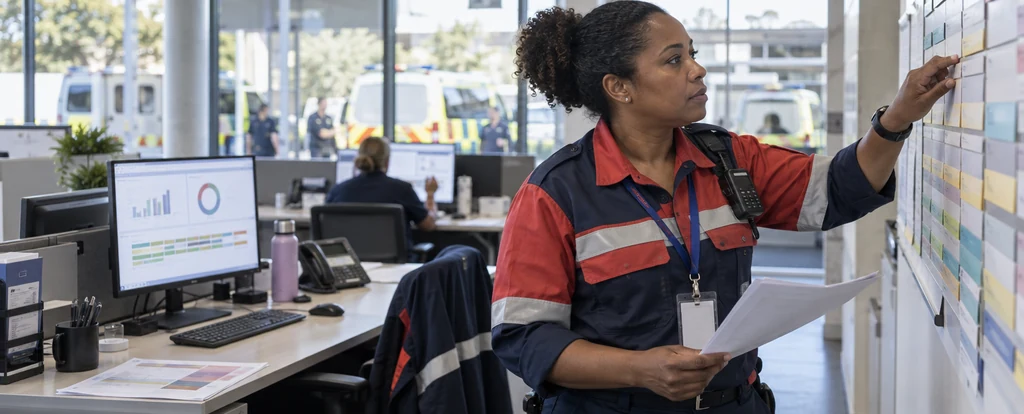
Paramedic managers spend most of their week away from the road, running the operation rather than responding to cases: rostering crews across shifts and response zones, managing station budgets, vehicles and equipment, and overseeing clinical standards for a station, region or service area. The role sits between front-line paramedics and senior health service management, so most of the day goes on people, rosters and compliance, though some managers keep a clinical shift. Employers are mainly state and territory ambulance services, with smaller numbers in hospitals, public administration and community health.
How much do paramedic managers earn?
The median full-time salary for a paramedic manager is $120,100 per annum, before tax, up $25,400 since 2018.
Pay follows the enterprise agreement covering your state or territory ambulance service, so rates differ between jurisdictions and rise with the management classification level. Regional and remote postings often carry additional allowances, and penalty rates or on-call loadings apply where the role includes clinical shifts. Progression generally comes through moving up the classification rather than through negotiation at the same level.
What does a paramedic manager do day to day?
The list below is what fills most weeks; the exact mix shifts with seniority and whatever stage the current work is at.
- Rostering crews across shifts, stations and response zones, then filling the gaps when someone calls in sick
- Reviewing clinical care and patient records to check that standards are met across the service area
- Managing the station budget, fleet, equipment and consumable stock
- Investigating incidents and near misses, then putting workplace health and safety changes in place
- Supervising, mentoring and performance managing paramedics and support staff
What skills do paramedic managers need?
Employers look for operations management, emergency response, clinical assessment and treatment, backed by Computer-aided dispatch (CAD) systems fluency and strong people leadership.
Specialist skills
- Operations management
- Emergency response
- Clinical assessment and treatment
- Patient care and support
- Rostering and venue operations
Software and tools
- Computer-aided dispatch (CAD) systems
- Electronic patient care record systems
- Kronos Workforce
- Microsoft Power BI
- Microsoft Teams
General skills
- People leadership
- Safety and compliance awareness
- Stakeholder management
Is the job growing?
About 310 people work as paramedic managers in Australia, and employment is projected to grow 9% over the decade to 2035. That's modest growth: demand is steady rather than booming.
How do you become a paramedic manager?
Here's the path most paramedic managers take, step by step.
- 1Qualify and register as a paramedic
A bachelor degree in paramedicine accredited by the Paramedicine Board of Australia, followed by registration with AHPRA, is the entry point to the profession and the qualification every manager shares.
- 2Spend several years on the road
The operational judgement the role needs comes from front-line experience, including time as a crew leader or clinical mentor, which is why most managers are recruited from within their service.
- 3Take a supervisory step
Team leader, station officer or clinical support roles are the usual first move into managing people, and they show whether the shift away from regular patient contact works for you.
- 4Study health management
A graduate certificate, graduate diploma or master's in health management, leadership or business is common preparation for a formal manager post, and it is where the budgeting and workforce planning skills come from.
- 5Apply when a position opens
Ambulance services generally fill manager roles internally, so the practical move is to build a record of rostering, safety and project work and apply when a vacancy is advertised.
Ready to apply as a paramedic manager?
Whether you're working toward becoming a paramedic manager or already are one and want a hand with the next step (sharpening your resume for ATS screening, tightening your cover letter, or knowing what you'll actually be asked at interview), here are examples grounded in this specific role, not generic templates.
What jobs can a paramedic manager move to?
We don't list lateral moves for paramedic managers: leaving means a full new qualification rather than a career move, and the realistic routes in are covered under how to become one.
Who works as a paramedic manager?
The typical paramedic manager is 46 years old; 58% are men, 86% work full-time, and full-timers average 42 hours a week.
- 46
- Median age
- 42%
- Female share
- 86%
- Full-time
- +2h
- vs all-jobs avg
What's it like being a paramedic manager?
The rhythm is set by the roster and the incident log: shifts have to be covered every day, so the work arrives whether or not anything unusual happens, and a serious case or a staff injury can reset the week's priorities. Managers carry responsibility for decisions made on the road by people they supervise, which suits anyone who is comfortable influencing through others rather than doing the clinical work themselves. The role trades regular patient contact for influence over how a whole station operates.
What people like
- Influence beyond a single case. A well-built roster or a station that runs smoothly affects every patient its crews see, which is a different kind of reach from treating one person at a time.
- The people side of the job. Coaching a paramedic through their first year, debriefing a crew after a difficult job or developing someone into a team leader is a visible part of the week.
- No two days in the same order. Budget work, incident reviews, roster problems and station visits rarely line up neatly, and the mix changes with whatever the service is dealing with.
- Still close to the clinical work. Managers need to understand what crews face, and keeping enough contact with operations helps maintain credibility with the people they supervise.
What people find hard
- Difficult conversations are routine. Performance issues, fatigue breaches and patient complaints mean regular conversations that nobody particularly wants to have.
- The roster never quite settles. Sick leave, training and unplanned surges mean the roster you finalised on Friday needs reworking by Monday.
- Responsibility without full control. You answer for response times and clinical standards that depend on crews, vehicles and budgets you only partly control.
- The administrative load. A large share of the week goes on compliance, reporting and approvals rather than anything clinical or operational.
Based on our synthesis of professional-body surveys and public accounts of the role, not first-person verified reviews.
Which industries employ paramedic managers?
Ambulance services employs the largest share of paramedic managers, followed by Hospitals.
Top employing industries
- 1Ambulance services
- 2Hospitals
- 3Public administration
- 4Community health services
- 5Education and training
Ranked by employment share; the source doesn't publish an exact percentage per industry.
| Bachelor degree | 52% | |
|---|---|---|
| Postgraduate | 26% | |
| Diploma / Advanced Diploma | 13% | |
| Other | 9% |
Will AI replace paramedic managers?
Exposure here is moderate, and it sits mostly in the administrative half of the job. Workforce tools and reporting dashboards already assemble rosters, flag coverage gaps and track response times, which takes over the number-crunching behind a station. What stays with the manager is the judgement around those outputs: how to handle an incident review, how to support a crew after a critical job, and what to argue for when resources are tight.
Share of typical working time by exposure level
- Rostering and workforce planningSystems such as Kronos Workforce build rosters and flag fatigue or coverage problems, but approving leave, arranging swaps and deciding who covers a gap remain the manager's call.30%high
- Budget and performance reportingPower BI dashboards pull response times and overtime straight out of dispatch data, which shortens the reporting work but leaves the decisions about what to cut or defend.25%moderate
- Incident review and clinical governanceWorking out what happened on a case means reading patient care records and talking to the crew, then judging whether practice, equipment or training needs to change.25%low
- Crew supervision and welfareDebriefing a crew after a death, handling a performance issue or mentoring a new team leader depends on trust built in person.20%low
Common questions about becoming a paramedic manager
Straight answers to the questions people ask most.
How much does a paramedic manager earn?
$120,100 per annum, before tax. State and territory enterprise agreements set the actual rates, so pay varies by jurisdiction, classification level and any regional or remote allowances. Treat the figure as a guide rather than a starting salary.
How do you become a paramedic manager?
Start as a registered paramedic, which means a bachelor degree in paramedicine accredited by the Paramedicine Board of Australia and registration with AHPRA. From there, it usually takes several years on the road plus a supervisory role such as team leader, and often postgraduate study in health management, before applying for a manager position.
Are paramedic managers in demand?
Paramedic managers are currently in shortage in regional areas, and employment is projected to grow 9% over the decade to 2035. The occupation is small, so openings tend to appear when a manager leaves or a service restructures, and they are generally filled from within.
Could AI or automation replace paramedic managers?
Not the core of the job, though parts of it are already automated. Rostering, demand forecasting and performance reporting increasingly run through workforce software and dashboard tools. Deciding what an incident review means, supporting a crew after a critical job and negotiating resources with senior management stay human work.
What roles lead into paramedic management?
Paramedics and intensive care paramedics are the two common sources. Paramedics bring front-line clinical experience and crew leadership, while intensive care paramedics add advanced clinical judgement and mentoring experience that supports senior operational management. Both routes rest on the same registered paramedic background.
How many hours do paramedic managers work?
Full-time paramedic managers average 42 hours a week, and 86% of people in the role work full time. Expect some after-hours contact, because roster gaps and serious incidents need decisions outside standard office hours.
Related roles
Not sure this is you? Take the career quiz and get a ranked shortlist of roles that fit how you like to work.