Intensive Care Paramedic
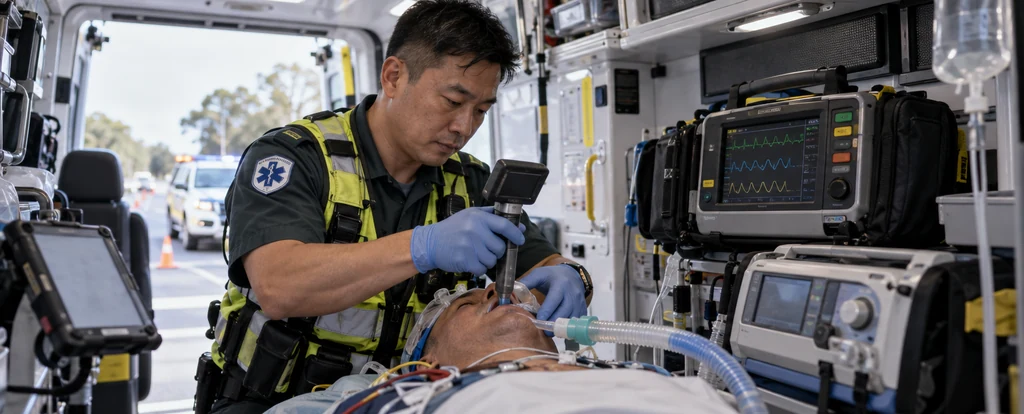
Intensive care paramedics treat critically ill and injured patients where they are found, giving the drugs, airway management and monitoring that keep someone alive on the way to hospital.
- Median salary*
- $114,400
4.2%vs last year, before tax
- People employed
- 1,500
0.0%vs last year
- Projected growth*
- +12%
to 2035
- AI exposure*
- Low
- automation risk
- Average hours*
- 42/wk
+2h vs all jobs
- Shortage status*
- In shortage
national
They are the most clinically advanced paramedics in most Australian ambulance services, working from road vehicles, helicopters and fixed wing aircraft in city, regional and remote settings. What separates the role from a general paramedic is the scope of practice: intensive care paramedics carry and administer a wider range of drugs, intubate, and interpret complex cardiac and neurological signs, usually with only a partner or retrieval colleague alongside them. Most work for state ambulance services, with smaller numbers in aeromedical retrieval, hospitals and mine site health services.
How much do intensive care paramedics earn?
The median full-time salary for an intensive care paramedic is $114,400 per annum, before tax, up $24,000 since 2018.
Pay follows state ambulance service enterprise agreements, so the figure above reflects a qualified intensive care paramedic rather than a graduate on a training wage. Shift penalties, weekend and public holiday rates, overtime and on-call allowances add considerably for most people, and retrieval or remote-area postings often carry loadings on top. Completing the postgraduate intensive care qualification is what moves a paramedic onto the higher clinical pay scale in most services.
What does an intensive care paramedic do day to day?
The list below is what fills most weeks; the exact mix shifts with seniority and whatever stage the current work is at.
- Assessing and triaging patients at the scene, from a cardiac arrest in a lounge room to a trauma patient on a highway
- Performing advanced life support, including intubation, intravenous drug administration and defibrillation
- Monitoring and interpreting cardiac rhythm, blood pressure, oxygen levels and neurological signs during transport
- Coordinating with retrieval teams, receiving hospitals and other emergency services, often by radio
- Documenting the care given and handing over to hospital staff, including the reasoning behind each drug and procedure
What skills do intensive care paramedics need?
Employers look for patient care and support, clinical assessment and treatment, medication management, backed by LIFEPAK 15 monitor/defibrillator fluency and strong written communication.
Specialist skills
- Patient care and support
- Clinical assessment and treatment
- Medication management
- Emergency response
- Care planning and coordination
Software and tools
- LIFEPAK 15 monitor/defibrillator
- Zoll X Series monitor/defibrillator
- Electronic patient care record (ePCR) systems
- Mechanical transport ventilators
- Video laryngoscopes
General skills
- Written communication
- Problem solving
- Time and deadline management
Is the job growing?
About 1,500 people work as intensive care paramedics in Australia, and employment is projected to grow 12% over the decade to 2035. That's healthy, above-average growth, and the role should stay in solid demand.
How do you become an intensive care paramedic?
Here's the path most intensive care paramedics take, step by step.
- 1Complete a bachelor degree in paramedicine
A three-year degree accredited by the Paramedicine Board of Australia is the entry qualification, and it includes supervised clinical placements with an ambulance service.
- 2Register as a paramedic
Registration with the Paramedicine Board of Australia through AHPRA is required before you can practise, and you renew it each year with continuing professional development.
- 3Work as a graduate paramedic
State ambulance services run graduate programs, usually around 12 months, where you build road experience under supervision. This is paid work and places are competitive.
- 4Complete postgraduate intensive care training
Most services require a Graduate Diploma or Master of Intensive Care Paramedicine, studied part time over two to four years while you keep working.
- 5Gain intensive care endorsement
Endorsement is granted by the individual ambulance service after clinical exams and a period of supervised practice, so the qualification alone does not make you an intensive care paramedic.
Ready to apply as an intensive care paramedic?
Whether you're working toward becoming an intensive care paramedic or already are one and want a hand with the next step (sharpening your resume for ATS screening, tightening your cover letter, or knowing what you'll actually be asked at interview), here are examples grounded in this specific role, not generic templates.
What jobs can an intensive care paramedic move to?
Moving into Paramedic Manager typically comes with the biggest pay rise, worth $5,700 a year more on average.
| Move to | Typical pay change | Overlap | Retraining |
|---|---|---|---|
| Paramedic Manager An intensive care paramedic can move into paramedicine management, bringing clinical leadership and needing formal management study. | +$5,700 | 33% | reskill |
Moves are chosen from Jobs and Skills Australia's Data on Occupation Mobility, which follows income tax records between 2011-12 and 2020-21, together with entry requirements and skill overlap. A known move is one people were seen making in that data. Pay change compares median full-time pay for the two roles.
Who works as an intensive care paramedic?
The typical intensive care paramedic is 43 years old; 69% are men, 88% work full-time, and full-timers average 42 hours a week.
- 43
- Median age
- 31%
- Female share
- 88%
- Full-time
- +2h
- vs all-jobs avg
What's it like being an intensive care paramedic?
The work runs on a roster covering 24 hours, and the pace swings between long quiet stretches and sudden high-acuity jobs that demand everything at once. Much of the skill sits in assessment: working out what is wrong with very little information, then choosing treatment that fits the patient in front of you. People who stay in the role tend to value the autonomy and the depth of clinical practice, and they accept that sleep disruption and repeated exposure to death and serious injury come with it.
What people like
- Wide scope of practice for a pre-hospital role. You intubate, give drugs and make treatment calls that a general paramedic would escalate, so the clinical work stays challenging long after the first few years.
- Autonomy at the scene. There is usually no doctor on hand, so the decisions are yours and your partner's, which suits people who want responsibility early in their career.
- Seeing a change within minutes. An airway opened or a seizure stopped produces a visible improvement almost immediately, and that feedback is a large part of why people stay in road work.
- Variety of settings. A week might include a city apartment, a highway crash, a remote clinic and a helicopter transfer, and no two shifts are laid out the same way.
What people find hard
- The roster accumulates over years. Nights, weekends and public holidays are part of covering 24 hours, and the disruption to sleep and family routine builds rather than easing.
- Quiet stretches between critical jobs. Rural and outer metropolitan stations can go hours without a high-acuity case and then receive several at once.
- Some calls stay with you. Deaths involving children, suicides and incidents involving people you know are part of the work, which is why services run formal debriefing and peer support.
- Paperwork eats into the shift. Patient care records have to be finished before you clock off, so a job that took an hour can take another forty minutes to write up.
Based on our synthesis of professional-body surveys and public accounts of the role, not first-person verified reviews.
Which industries employ intensive care paramedics?
Ambulance and paramedic services employs the largest share of intensive care paramedics, followed by Hospitals.
Top employing industries
- 1Ambulance and paramedic services
- 2Hospitals
- 3Aeromedical and retrieval services
- 4Government emergency management
- 5Mining and remote site health services
Ranked by employment share; the source doesn't publish an exact percentage per industry.
| Bachelor degree | 52% | |
|---|---|---|
| Postgraduate | 26% | |
| Diploma / Advanced Diploma | 13% | |
| Other | 9% |
Will AI replace intensive care paramedics?
This job has low exposure to AI overall, because the treatment is hands-on and the decisions are made at the scene with limited information and no time to wait. The area changing fastest is documentation, where electronic patient care records use voice input and structured templates to draft much of the narrative, and monitor/defibrillators increasingly interpret rhythms and log data automatically. Those tools support the clinician's assessment rather than replacing the procedures or the judgment behind them.
Share of typical working time by exposure level
- Advanced life support and procedures at the sceneIntubation, intravenous access and defibrillation are done with your hands on a patient who may be moving, so video laryngoscopes and automated defibrillators assist but do not perform the work.35%low
- Clinical assessment and triageForming a working diagnosis from a patient's history, observations and surroundings is a judgment call that a decision support tool can prompt but not make.25%low
- Clinical documentation and handoverElectronic patient care records can draft a narrative from dictated notes and pre-filled observations, leaving you to check accuracy before the record is filed.20%high
- Monitoring, drug preparation and equipment checksMonitors calculate doses and flag rhythm changes, but drawing up drugs, checking the ambulance at the start of shift and confirming equipment still sit with the crew.20%moderate
Common questions about becoming an intensive care paramedic
Straight answers to the questions people ask most.
How much do intensive care paramedics earn?
Intensive care paramedics earn a median of $114,400 per year before tax. That is the mid-point for full-time work rather than a starting salary, and shift penalties, overtime and on-call allowances push actual earnings above the base rate in most services.
How do you become an intensive care paramedic?
Start with a bachelor degree in paramedicine, register with the Paramedicine Board of Australia, then work as a paramedic for a state ambulance service. From there you complete postgraduate intensive care study and the service's own clinical assessments before endorsement.
Are intensive care paramedics in demand?
Intensive care paramedics are currently in shortage nationally, and employment is projected to grow 12% over the decade to 2035 over the decade to 2035. How many openings appear depends on state ambulance budgets and how many experienced paramedics each service funds through intensive care training, so check current recruitment rounds in the state you want to work in.
Will AI replace intensive care paramedics?
The exposure here is low, because the treatment is physical and the decisions are made in uncontrolled settings with incomplete information. Documentation is changing fastest: electronic patient care records now draft narratives from voice input, and monitor/defibrillators log and interpret rhythms automatically. The procedures, drug choices and the judgment about what is wrong with a patient at 3am remain with the clinician.
What can an intensive care paramedic move into?
Paramedic manager is one route, using the same clinical background in a supervisory role, and it typically pays $5,700 more than an intensive care paramedic's, though it needs formal management study. Moving to a general paramedic position is also possible for someone who wants a different pace, with pay around $33,900 less than an intensive care paramedic's.
Do intensive care paramedics work shifts?
Most work rotating rosters that cover 24 hours a day, including nights, weekends and public holidays. Average full-time hours run at about 42 a week, and many services build overtime and on-call into the pattern.
Related roles
Not sure this is you? Take the career quiz and get a ranked shortlist of roles that fit how you like to work.