Petroleum Engineer
Petroleum engineers work out how to get oil and gas out of the ground safely and at a cost that stacks up.
- Median salary*
- $158,600
3.8%vs last year, before tax
- People employed
- 2,600
0.0%vs last year
- Projected growth*
- −3%
to 2035
- AI exposure*
- Moderate
- automation risk
- Average hours*
- 44/wk
+4h vs all jobs
- Shortage status*
- Not in shortage
national
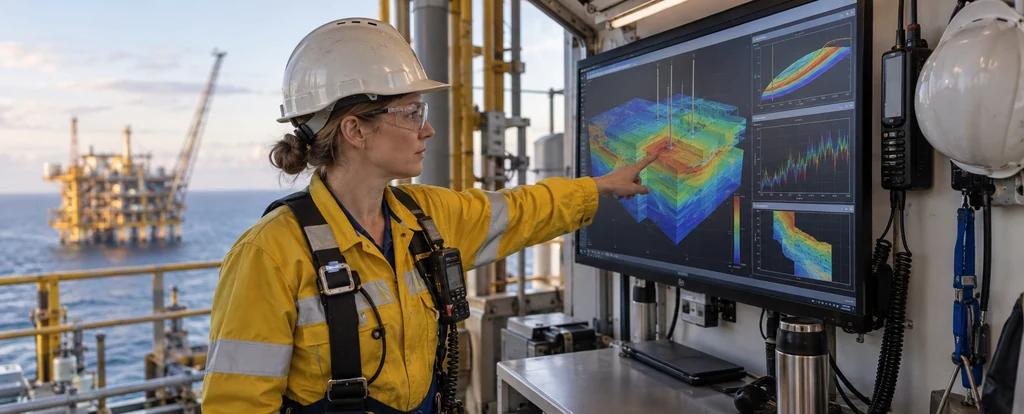
Petroleum engineers plan and oversee the extraction of oil and gas from underground reservoirs, working across reservoir, drilling and production engineering. Most are employed by oil and gas operators or by the service companies that drill and maintain their wells, and the work can be based in a city office, on a remote onshore field or on an offshore platform. It is a small occupation, with about 2,600 people in Australia, which sets it apart from the larger engineering disciplines it shares a degree with.
How much do petroleum engineers earn?
The median full-time salary for a petroleum engineer is $158,600 per annum, before tax, up $32,900 since 2018.
Pay varies as much with the employer and the roster as with the job itself: offshore rotations, remote onshore sites and fly-in fly-out work usually carry site allowances on top of base salary. Contract and consultancy roles often come with a higher rate in exchange for no paid leave or notice. The commodity cycle shapes what operators are willing to offer from one year to the next, so a figure from a strong year is not a guarantee.
What does a petroleum engineer do day to day?
The list below is what fills most weeks; the exact mix shifts with seniority and whatever stage the current work is at.
- Modelling reservoirs to estimate how much oil or gas can be recovered
- Designing wells and planning drilling and completion programs
- Monitoring production data and working out why a well is underperforming
- Building field development plans, cost estimates and production forecasts
- Working with drilling crews and contractors on site during operations
What skills do petroleum engineers need?
Employers look for engineering design and analysis, project engineering and delivery, operations management, backed by Petrel fluency and strong safety and compliance awareness.
Specialist skills
- Engineering design and analysis
- Project engineering and delivery
- Operations management
- Data analysis
- Budgeting and forecasting
Software and tools
- Petrel
- Eclipse
- OFM
- Prosper
- Python
General skills
- Safety and compliance awareness
- Problem solving
Is the job growing?
About 2,600 people work as petroleum engineers in Australia, and employment is projected to decline 3% over the decade to 2035. That's a real decline, worth weighing carefully before training into the role.
How do you become a petroleum engineer?
Here's the path most petroleum engineers take, step by step.
- 1Complete an accredited engineering degree
The standard entry is a four-year bachelor of engineering, either in petroleum engineering or in chemical or mechanical engineering, accredited by Engineers Australia. Employers accept all three, and a broader degree keeps other industries open if the oil and gas market turns.
- 2Get industry experience while you study
Vacation work with an operator or a service company is the most common route into a graduate program, and it is paid. It also tells you early whether you are comfortable with a remote or offshore roster.
- 3Join a graduate program
Graduate programs with operators and service companies typically run two to three years and rotate you through reservoir, drilling and production teams. You work under supervision while you build the experience needed for chartership.
- 4Apply for chartered status
Chartered Professional Engineer status through Engineers Australia is not legally required, but it is expected for senior technical and supervisory roles. It usually takes four to five years of relevant experience after graduating.
- 5Consider postgraduate study if you are changing fields
Engineers moving across from chemical, mechanical or mining work often add a masters in petroleum or reservoir engineering. It is a recognised route for people who already hold a related degree.
Ready to apply as a petroleum engineer?
Whether you're working toward becoming a petroleum engineer or already are one and want a hand with the next step (sharpening your resume for ATS screening, tightening your cover letter, or knowing what you'll actually be asked at interview), here are examples grounded in this specific role, not generic templates.
What jobs can a petroleum engineer move to?
Moving into Mining Engineer typically comes with the biggest pay rise, worth $24,300 a year more on average.
| Move to | Typical pay change | Overlap | Retraining |
|---|---|---|---|
| Mining Engineer Petroleum engineers bring drilling, subsurface and resource extraction experience to mining engineering, with further study needed for mining methods and geology. | +$24,300 | 34% | reskill |
| Chemical Engineer Petroleum engineers bring process, fluid and reservoir knowledge to chemical engineering roles in refining and petrochemicals, needing only a short bridging course. | −$10,500 | 46% | short course |
| Mechanical Engineer Petroleum engineers bring equipment, piping and project delivery experience to mechanical engineering, though substantial retraining is needed for broader mechanical design. | −$22,700 | 43% | reskill |
| Geotechnical Engineer Petroleum engineers bring subsurface and drilling knowledge to geotechnical engineering, though further study is needed to apply soil and rock mechanics. | −$43,300 | 37% | reskill |
| Production Engineer Petroleum engineers bring well performance and production optimisation experience to production engineering, with a short course covering broader process and manufacturing systems. | −$50,400 | 46% | short course |
Moves are chosen from Jobs and Skills Australia's Data on Occupation Mobility, which follows income tax records between 2011-12 and 2020-21, together with entry requirements and skill overlap. A known move is one people were seen making in that data. Pay change compares median full-time pay for the two roles.
Who works as a petroleum engineer?
The typical petroleum engineer is 39 years old; 82% are men, 90% work full-time, and full-timers average 44 hours a week.
- 39
- Median age
- 18%
- Female share
- 90%
- Full-time
- +4h
- vs all-jobs avg
What's it like being a petroleum engineer?
The job runs on two rhythms: the long cycle of a field development, which can take years from first study to first oil, and the daily response to what the wells are actually doing. Weeks offshore or on a remote site alternate with time in the office, and the pressure comes from production targets, safety and the cost of getting a well wrong. It suits someone who enjoys subsurface puzzles, is comfortable with both a reservoir model and a rig floor, and can live with an industry whose hiring rises and falls with the oil price.
What people like
- You see your work in the field. A well you helped design comes on production, and the numbers arriving from it either confirm or contradict the model you built months earlier.
- The problems are genuinely uncertain. You are making multi-million dollar decisions on incomplete data about rock you cannot see, and getting a model to match what the wells are doing is its own reward.
- You work with specialists from several fields. Geologists, drillers, equipment engineers and economists all sit in the same decision, so the technical conversation is broad rather than narrow.
- Rotations give you blocks of time off. A two or three week offshore roster is followed by equal time at home, which suits people who prefer long breaks to a daily commute.
What people find hard
- Hiring moves with the oil price. When prices fall, projects are deferred and teams are cut quickly, and graduates can find the door closed for a year or more.
- Rosters take you away from home. Offshore and remote onshore work means weeks away from family and friends, and the travel does not suit everyone long term.
- Projects can stall for years. A development may sit in permitting, joint venture negotiation and economics review long before any drilling starts, which frustrates people who want to see things move.
- The industry is concentrated. Much of the work sits with a handful of operators and service companies, so losing a role can mean relocating for the next one.
Based on our synthesis of professional-body surveys and public accounts of the role, not first-person verified reviews.
Which industries employ petroleum engineers?
Mining employs the largest share of petroleum engineers, followed by Professional, Scientific and Technical Services.
Top employing industries
- 1Mining
- 2Professional, Scientific and Technical Services
- 3Construction
- 4Electricity, Gas, Water and Waste Services
- 5Retail Trade
Ranked by employment share; the source doesn't publish an exact percentage per industry.
| Bachelor degree | 52% | |
|---|---|---|
| Postgraduate | 26% | |
| Diploma / Advanced Diploma | 13% | |
| Other | 9% |
Will AI replace petroleum engineers?
Petroleum engineering sits in the middle: the data-heavy parts of the job, especially reservoir simulation and production analysis, are increasingly handled by software that AI can drive further. The physical and interpersonal side of the work, from supervising a casing run to agreeing a development plan with joint venture partners, is much less exposed.
Share of typical working time by exposure level
- Reservoir modelling and simulationSoftware now runs history matching and hundreds of scenario cases overnight, so the engineer's time goes into framing the question and testing whether the model's assumptions still hold.25%high
- Well and drilling program designCasing, mud and completion options are increasingly generated and compared by software, but the engineer signs off the design and answers for it when the drilling crew hits something unexpected.25%moderate
- Production monitoring and optimisationAlgorithms flag underperforming wells from daily data, which speeds up diagnosis but still leaves the engineer to judge whether the fix is a workover, a choke change or nothing at all.25%moderate
- On-site supervision of drilling and completion workStanding on the rig floor during a casing run, reading the crew and making the call in the moment, is the part of the job that stays physical and local.25%low
Common questions about becoming a petroleum engineer
Straight answers to the questions people ask most.
How much do petroleum engineers earn?
Petroleum engineers earn a median of $158,600 per year before tax. Offshore rosters, site allowances and contract work push earnings above that, while moving into a related engineering discipline usually means a different figure.
How do you become a petroleum engineer?
Start with a four-year accredited engineering degree, in petroleum engineering or in chemical or mechanical engineering. Vacation work with an operator or service company is the usual way into a graduate program, which runs two to three years and rotates you through reservoir, drilling and production teams.
Are petroleum engineers in demand in Australia?
Petroleum engineers are currently not in shortage, and employment is projected to decline 3% over the decade to 2035 over the decade to 2035. The workforce is small and hiring follows project approvals and the oil and gas price, so openings tend to come in bursts rather than steadily. Experience in drilling and completions or in reservoir simulation keeps you employable across those swings.
Will AI replace petroleum engineers?
The data-heavy parts of the job, particularly reservoir simulation and production analysis, are already partly automated, and that will continue. Field work, well design decisions and the negotiation that holds a joint venture together are much harder to automate, so the role changes shape rather than disappearing.
What else can petroleum engineers do?
Chemical engineering draws on the same process and fluid expertise, and the pay difference is $10,500 less. Production engineering uses the production optimisation side of the work and pays $50,400 less, while moving into mining engineering builds on the drilling and subsurface background but needs further study and pays $24,300 more.
Do petroleum engineers work offshore?
Many do, particularly in drilling and production roles, on a roster of two or three weeks offshore followed by equal time at home. Others work onshore fields in remote areas or spend most of their time in a city office supporting the field teams.
Related roles
- Chemical Engineer
- Production Engineer
- Mechanical Engineer
- Mining Engineer
- Geotechnical Engineer
- Chemical Engineer
Not sure this is you? Take the career quiz and get a ranked shortlist of roles that fit how you like to work.