Powerline Worker
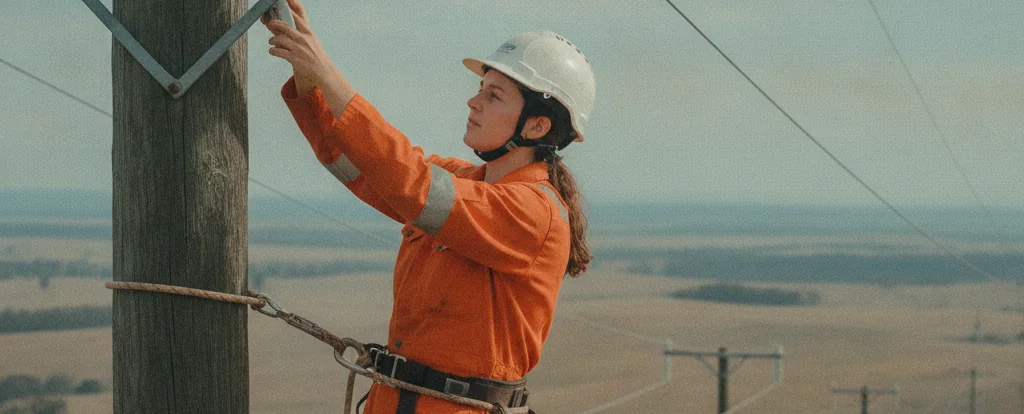
Powerline workers build and maintain the poles, wires and cables that carry electricity from substations to homes and businesses.
- Median salary
- $142,000
4.1%vs last year, before tax
- People employed
- 6,300
0.0%vs last year
- Projected growth
- +5.2%
to 2035
- AI exposure*
- Low
- automation risk
- Average hours
- 44/wk
+4h vs all jobs
- Shortage status
- In shortage
national
Most powerline workers are employed by electricity network operators and their contractors, and the job happens outdoors in all weather on overhead and underground distribution and transmission networks. It is separate from electrical work inside a building: a powerline worker is trained for the network side, where high voltages, heights and live-line procedures shape every task. Apprenticeships are the usual way in, and qualified crews split their week between scheduled maintenance and standby for faults.
How much do powerline workers earn?
The median full-time salary for a powerline worker is $142,000 per annum, before tax, up $29,700 since 2018.
Pay is set mainly by enterprise agreements with the network operators and their contractors, so overtime, on-call allowances and emergency callouts add a lot on top of a base rate. Remote and regional placements, crew leader roles and specialist endorsements such as live-line work lift earnings further.
What does a powerline worker do day to day?
The list below is what fills most weeks; the exact mix shifts with seniority and whatever stage the current work is at.
- Climbing poles or working from a bucket truck to reach conductors, crossarms and insulators
- Tensioning and hauling heavy conductors, then crimping and terminating them with hand and power tools
- Isolating and testing circuits before anyone touches a line, following the switching schedule and safety rules
- Replacing damaged poles, crossarms and hardware after storms, vehicle strikes and bushfire damage
- Responding to fault callouts at short notice, day or night, to get supply back to customers
What skills do powerline workers need?
Employers look for hand and power tool work, reading plans and specifications, installation and maintenance, backed by Climbing harness and safety equipment fluency and strong problem solving.
Specialist skills
- Hand and power tool work
- Reading plans and specifications
- Installation and maintenance
- Worksite safety management
- Plant and equipment operation
- Regulatory compliance
Software and tools
- Climbing harness and safety equipment
- Multimeter and testing equipment
- Power drills and crimpers
- Aerial platforms and bucket trucks
- Blueprint readers and digital tablets
General skills
- Problem solving
- Attention to detail
Is the job growing?
About 6,300 people work as powerline workers in Australia, and employment is projected to grow 5.2% over the decade to 2035. That's modest growth: demand is steady rather than booming.
How do you become a powerline worker?
Here's the path most powerline workers take, step by step.
- 1Take on a Certificate III in ESI (Power Systems) apprenticeship
This is the qualification the industry recognises for overhead and underground line work, and it runs about four years. Network operators and contracting firms advertise the intakes, usually once a year.
- 2Meet the entry requirements
Year 10 or Year 12 with reasonable maths is the usual baseline, along with a driver's licence, a White Card and a medical check that covers working at heights. Employers look for people who follow safety rules without being watched.
- 3Train on the crew while you study
Apprentices are paid from day one, splitting their time between TAFE and supervised work on poles, bucket trucks and switchyards. You build up to higher voltage work and switching duties as you complete each competency.
- 4Add the licences and qualifications the work needs
That includes a high risk work licence for elevated work platform and, on some networks, rigging, plus first aid, CPR and a heavy vehicle licence for larger depots. Requirements differ between states and employers.
- 5Choose a direction once you are qualified
Experienced crews move into live-line work, cable jointing, crew leading or network control, or take further study towards electrical engineering or construction management.
Ready to apply as a powerline worker?
Whether you're working toward becoming a powerline worker or already are one and want a hand with the next step (sharpening your resume for ATS screening, tightening your cover letter, or knowing what you'll actually be asked at interview), here are examples grounded in this specific role, not generic templates.
What jobs can a powerline worker move to?
Moving into Construction Manager typically comes with the biggest pay rise, worth $53,100 a year more on average.
| Move to | Typical pay change | Overlap | Retraining |
|---|---|---|---|
| Construction Manager Experienced powerline workers can progress into construction management, supervising electrical infrastructure projects after gaining project management qualifications.Known move | +$53,100 | 16% | reskill |
| Cable Jointer Powerline workers bring high-voltage line and cable experience, and with further training can specialise in jointing and terminating underground cables.Known move | −$40,600 | 81% | reskill |
| Electrical Engineering Technician Powerline workers understand distribution systems and can move into technical drafting and testing with further study in electrical engineering.Known move | −$50,500 | 34% | reskill |
| Telecommunications Linesworker Powerline workers already install and maintain overhead lines, so a short telecommunications course lets them apply those skills to communication networks.Known move | −$51,000 | 73% | short course |
| Telecommunications Cable Jointer Powerline workers with cable jointing experience can move into telecommunications cable jointing after a short course covering network standards.Known move | −$51,000 | 64% | short course |
Moves are chosen from Jobs and Skills Australia's Data on Occupation Mobility, which follows income tax records between 2011-12 and 2020-21, together with entry requirements and skill overlap. A known move is one people were seen making in that data. Pay change compares median full-time pay for the two roles.
Who works as a powerline worker?
The typical powerline worker is 40 years old; 98% are men, 93% work full-time, and full-timers average 44 hours a week.
- 40
- Median age
- 2%
- Female share
- 93%
- Full-time
- +4h
- vs all-jobs avg
What's it like being a powerline worker?
The job has two rhythms: planned work in reasonable conditions, and unplanned work when weather or a fault takes supply out. Crews sit on an on-call roster, so a quiet weekend can turn into a night of storm restoration, and the work is physical from the first hour to the last. It tends to suit people who are comfortable outdoors, careful with rules and happy to work with their hands, because a mistake on a live network carries real consequences.
What people like
- Work you can see finished. When a storm takes out a line and supply comes back, the crew's work is visible on the street for months afterwards.
- A trade that pays while you learn. Apprenticeships are paid from the first day, so you are not carrying four years of study costs before you start earning.
- Variety across sites. One week might be pole replacements on a rural line, the next fault finding in a suburban substation, which keeps the trade from feeling repetitive.
- Small, steady crews. Line work is done in teams of a few people who watch out for each other, and the crew you work with stays the same for long stretches.
What people find hard
- Hard on the body. Climbing, hauling cable and carrying gear in the heat takes a toll over a career, and the wear shows up in knees, shoulders and backs.
- Weather sets the schedule. Storms, high winds and bushfire risk are exactly when the work peaks, so plans are cancelled and crews work through the night restoring supply.
- On-call rosters. Being on the roster means staying fit for work and within reach of the depot for the week, ready to roll at any hour.
- Permits and switching rules. Isolating a line involves checks and a sequence that has to be followed exactly, which can feel slow when customers are waiting.
Based on our synthesis of professional-body surveys and public accounts of the role, not first-person verified reviews.
Which industries employ powerline workers?
Electricity, Gas, Water and Waste Services employs the largest share of powerline workers, followed by Construction.
Top employing industries
- 1Electricity, Gas, Water and Waste Services
- 2Construction
Ranked by employment share; the source doesn't publish an exact percentage per industry.
| Certificate III/IV | 82% | |
|---|---|---|
| Year 12 or below | 10.3% | |
| Diploma / Advanced Diploma | 4.1% | |
| Bachelor degree | 2.1% | |
| Postgraduate | 0.2% |
Will AI replace powerline workers?
Powerline work sits at low exposure to AI, because the network itself has to be built and repaired by people at the site, at height and often in bad weather. Technology has changed the supporting side more: drones and cameras inspect conductors, outage management systems narrow down where a fault is, and tablets carry job packs and switching schedules. Those tools cut some travel and paperwork, but none of them climb a pole or terminate a conductor.
Share of typical working time by exposure level
- Building and maintaining overhead linesClimbing, rigging, tensioning conductors and replacing poles, crossarms and insulators are all done by hand on site.40%low
- Emergency fault response and storm restorationFinding a break in bad weather and rebuilding the line on the spot is physical work, and the sequence depends on what the crew finds when they arrive.25%low
- Testing and fault findingTest equipment and outage systems point to the likely section of line, but the crew still isolates and confirms the fault themselves.20%moderate
- Permits, switching schedules and job recordsJob packs, permits and records can be generated and checked digitally, and automated switching removes some manual steps during an outage.15%high
Common questions about becoming a powerline worker
Straight answers to the questions people ask most.
How much do powerline workers earn?
Median full-time pay for powerline workers is $142,000 per year before tax. Enterprise agreements, overtime, on-call allowances and remote placements are what move that figure most, so two people with the same qualification can be on quite different totals.
How do you become a powerline worker?
The standard route is a paid apprenticeship, usually a Certificate III in ESI (Power Systems), which takes about four years and combines TAFE study with supervised work on the network. Network operators and their contractors run the intakes, so it is worth applying directly to the companies that own the poles and wires in your state.
Are powerline workers in demand?
Powerline workers are currently in shortage nationally, and employment is projected to grow 5.2% over the decade to 2035. Networks need crews to maintain ageing assets and connect new load, so qualified line workers with current licences are generally well placed where that work is happening.
Will AI replace powerline workers?
Automation reaches the inspection and administrative side of the job more than the line itself. Drones and cameras now check conductors and poles, and outage systems flag likely faults, but stringing, climbing, switching and storm restoration still need a qualified person at the site.
What can powerline workers move into?
Cable jointing is a close move, since underground cable skills build on the same network experience, and it pays $40,600 less at the median. Experienced workers who take on project qualifications can move into construction management, where median pay is $53,100 more.
Do powerline workers have to work at heights?
Yes, most of the work happens on poles, ladders or from a bucket truck, and you need to be comfortable at height from early in the apprenticeship. Medical checks and working at height training are part of getting started.
Related roles
- Cable Jointer
- Telecommunications Linesworker
- Electrical Engineering Technician
- Telecommunications Cable Jointer
- Construction Manager
- Electrical Trades Assistant
Not sure this is you? Take the career quiz and get a ranked shortlist of roles that fit how you like to work.