Electrical Trades Assistant
Electrical trades assistants help licensed electricians on site, preparing materials, handling tools and keeping the work area safe so installations are finished on time.
- Median salary*
- $65,000
3.7%vs last year, before tax
- People employed
- 2,700
0.0%vs last year
- Projected growth
- +4.2%
to 2035
- AI exposure*
- Low
- automation risk
- Average hours
- 43/wk
+3h vs all jobs
- Shortage status*
- Not in shortage
national
Electrical trades assistants work alongside qualified electricians on construction sites, in factories and on maintenance crews, doing the physical and preparatory parts of the job. They are not licensed, so testing, fault finding and connecting circuits stay with the electrician, which is the clearest line between the two roles. Most are employed by electrical contractors, and for many people the job is the first step towards an apprenticeship.
How much do electrical trades assistants earn?
The median full-time salary for an electrical trades assistant is $65,000 per annum, before tax, up $13,900 since 2018.
Pay follows the award or enterprise agreement your employer works under, so construction and utilities sites generally pay better than manufacturing and maintenance work. Overtime, shift loadings and site allowances can add considerably to a base rate, and labour hire arrangements often pay a casual loading instead of paid leave. While you are on a traineeship, pay is set by the training award rather than the trade rate.
What does an electrical trades assistant do day to day?
The list below is what fills most weeks; the exact mix shifts with seniority and whatever stage the current work is at.
- Assisting electricians with installing and mounting electrical equipment
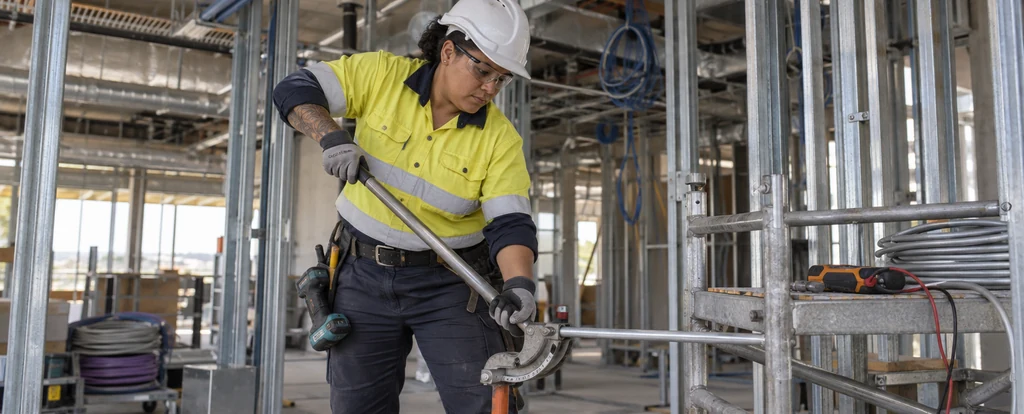
- Cutting, threading and bending conduit and cable tray
- Pulling and terminating cables under supervision
- Marking out runs and positions from drawings before work starts
- Loading out materials and keeping the work area clear and safe
What skills do electrical trades assistants need?
Employers look for hand and power tool work, installation and maintenance, worksite safety management, backed by Multimeters fluency and strong attention to detail.
Specialist skills
- Hand and power tool work
- Installation and maintenance
- Worksite safety management
- Reading plans and specifications
- Plant and equipment operation
Software and tools
- Multimeters
- Conduit benders
- Cable strippers
- Insulation testers
- Power drills
General skills
- Attention to detail
- Safety and compliance awareness
Is the job growing?
About 2,700 people work as electrical trades assistants in Australia, and employment is projected to grow 4.2% over the decade to 2035. That's modest growth: demand is steady rather than booming.
How do you become an electrical trades assistant?
Here's the path most electrical trades assistants take, step by step.
- 1Finish Year 10 or Year 12
There is no degree requirement, and 56% of the people in this role list Year 12 or below as their highest qualification. Employers look for reliability, physical fitness and a willingness to learn rather than school results.
- 2Get a White Card
The general construction induction card is required on construction sites in every state and territory, and it takes a short course to obtain. Some employers also ask for a current first aid certificate.
- 3Consider a Certificate II in Electrotechnology (Career Start)
This pre-apprenticeship qualification covers basic electrical theory, hand and power tools and safe work practices, and contractors use it to screen applicants. It usually takes about six months and is offered at TAFE and private providers.
- 4Apply for trade assistant roles
Electrical contractors, labour hire firms and maintenance companies all hire assistants, and experience on any construction site helps. The first jobs often come through a labour hire agency or someone who already works in the trade.
- 5Work towards an electrical apprenticeship
Assistants who want to qualify apply for a Certificate III in Electrotechnology Electrician (UEE30820) apprenticeship, which takes about four years and combines paid work with TAFE study. Site hours and references built as an assistant help with the application.
Ready to apply as an electrical trades assistant?
Whether you're working toward becoming an electrical trades assistant or already are one and want a hand with the next step (sharpening your resume for ATS screening, tightening your cover letter, or knowing what you'll actually be asked at interview), here are examples grounded in this specific role, not generic templates.
What jobs can an electrical trades assistant move to?
Moving into Powerline Worker typically comes with the biggest pay rise, worth $77,000 a year more on average.
| Move to | Typical pay change | Overlap | Retraining |
|---|---|---|---|
| Powerline Worker Assistants used to electrical work on site can move into powerline work, needing the powerline apprenticeship to build line and cable skills.Known move | +$77,000 | 76% | requalify |
| Electrician Site experience and familiarity with electrical tools carry into the electrician apprenticeship, which requires a full qualification and licence.Known move | +$48,900 | 54% | requalify |
| Air Conditioning Technician Electrical site skills transfer to refrigeration and air conditioning work, which needs the relevant apprenticeship and refrigerant handling tickets.Known move | +$44,200 | 76% | requalify |
| Cable Jointer Working alongside electricians on cable installations is close to jointing, which needs the jointing apprenticeship to work on distribution cables. | +$36,400 | 94% | requalify |
| Electrical Engineering Technician Assistants with solid electrical knowledge can study for a diploma and move into testing and supporting electrical systems.Known move | +$26,500 | 33% | reskill |
Moves are chosen from Jobs and Skills Australia's Data on Occupation Mobility, which follows income tax records between 2011-12 and 2020-21, together with entry requirements and skill overlap. A known move is one people were seen making in that data. Pay change compares median full-time pay for the two roles.
Who works as an electrical trades assistant?
The typical electrical trades assistant is 32 years old; 90% are men, 70% work full-time, and full-timers average 43 hours a week.
- 32
- Median age
- 10%
- Female share
- 70%
- Full-time
- +3h
- vs all-jobs avg
What's it like being an electrical trades assistant?
The work is physical and follows the project: early starts, a lot of carrying, cutting and fixing, and a pace set by the electricians you are supporting. Days can be long, outdoor and hot in summer, and shutdown work sometimes runs through the night. It suits people who like being active, want to learn the trade from the ground up, and prefer a day with something visible to show for it.
What people like
- You learn the trade from the inside. Working beside licensed electricians every day shows you how circuits are run, how jobs are sequenced and what a good finish looks like, which helps whether you stay in the role or move on.
- The site changes, even when the tasks don't. One month it is a new apartment build, the next a factory shutdown or a switchboard upgrade, so the setting and the crew keep changing around familiar work.
- Hands-on from the first day. There is very little desk time. You are carrying, cutting, fixing and setting up, and you can see what you got done by knock-off.
- Straightforward entry. A White Card and, often, a certificate II are enough to be hired, so you can start earning and learning without a long qualification first. Employers tend to value reliability over credentials.
What people find hard
- You can't do the electrical work itself. Assistants are not licensed, so the testing, fault finding and connection work belongs to the electrician until you qualify, however much you have picked up on site.
- Weather and site conditions. New builds mean dust, heat, cold and rain, and shutdown work can bring night shifts or confined spaces. The conditions are part of the job rather than an occasional inconvenience.
- Repetitive preparation work. Cutting, bending and carrying the same materials for weeks on a large project can wear thin, especially when the interesting work is happening further along the cable.
- Work follows the project. Contracts are often tied to a build or a shutdown, so you may move between employers and sites rather than settling in one place.
Based on our synthesis of professional-body surveys and public accounts of the role, not first-person verified reviews.
Which industries employ electrical trades assistants?
Construction employs the largest share of electrical trades assistants, followed by Electricity, Gas, Water and Waste Services.
Top employing industries
- 1Construction
- 2Electricity, Gas, Water and Waste Services
- 3Manufacturing
Ranked by employment share; the source doesn't publish an exact percentage per industry.
| Year 12 or below | 55.7% | |
|---|---|---|
| Certificate III/IV | 27.4% | |
| Bachelor degree | 6.4% | |
| Diploma / Advanced Diploma | 4.8% | |
| Postgraduate | 1.5% |
Will AI replace electrical trades assistants?
This is a low-exposure job. The work is physical, happens on site and is tied to what is in front of you, and the tools of the trade, conduit benders, multimeters and cable strippers, are still handled by hand. Prefabrication and BIM models have changed the preparation side, with cut lengths and cable routes worked out before materials arrive, but someone still has to carry the conduit, pull the cable and keep the area safe.
Share of typical working time by exposure level
- Pulling and securing cableGetting cable through conduit, up ladders and into trays is done by hand, in whatever the site conditions happen to be that day.35%low
- Installing conduit, tray and supportsPrefabricated lengths and pre-bent sections cut some of the cutting and bending, but fixing runs to walls, ceilings and structures is still manual work.25%moderate
- Loading out materials and keeping the site clearMoving gear, setting up tools and clearing the work area need a person who knows the job and can judge what is safe to move and when.25%low
- Marking out runs from drawingsBIM models and digital set-out now work out routes and positions in advance, so more of this arrives as a marked position or a labelled kit rather than something measured on the spot.15%high
Common questions about becoming an electrical trades assistant
Straight answers to the questions people ask most.
How much do electrical trades assistants earn?
$65,000 per annum, before tax, is the median for full-time electrical trades assistants. What you actually earn depends on the award or enterprise agreement, the sector, and how much overtime and site allowance comes with the job. Trainees are usually paid under the training award rather than the trade rate.
How do you become an electrical trades assistant?
Start with a White Card, the general construction induction you need on site in every state, then apply for trade assistant roles with electrical contractors. A Certificate II in Electrotechnology (Career Start) (UEE22025) helps because it covers basic wiring, tools and safety, and many contractors hire from it. Labour hire firms are a common entry point for people with no trade background.
Are electrical trades assistants in demand?
Electrical trades assistants are currently not in shortage. Employment is projected to grow 4.2% over the decade to 2035, and hiring follows construction and infrastructure activity, so the opportunities sit where projects are running. Asking contractors and labour hire firms directly about upcoming work is more useful than the national figure alone.
Will AI or automation replace electrical trades assistants?
Very little of this job is exposed. The work is physical and happens on site, and the tools involved, conduit benders, multimeters and cable strippers, are still used by hand. Prefabrication and digital layout change how jobs are prepared, with cut lengths and cable routes worked out before materials reach the site.
What can an electrical trades assistant move into?
Moving into an electrical apprenticeship is a well-worn path, and qualified electricians earn $48,900 more, with the site experience you build carrying into the training. Cable jointing and powerline work sit close to the work you already do, paying $36,400 more and $77,000 more respectively, though each needs its own apprenticeship. Qualifying as an electrician is also the usual step towards running your own contracting business, which is often where earnings grow.
Do electrical trades assistants need a licence?
No licence is required to work as an assistant, but electrical work itself is licensed, and what an unlicensed person may do varies by state. Check with your state or territory electrical safety regulator before taking on any task that involves testing or connecting circuits.
Related roles
- Electrician
- Powerline Worker
- Air Conditioning Technician
- Electrical Engineering Technician
- Cable Jointer
- Builder's Labourer
Not sure this is you? Take the career quiz and get a ranked shortlist of roles that fit how you like to work.