Electrician
Electricians install, maintain and repair the wiring, switchboards and equipment that power homes, businesses and worksites.
- Median salary
- $113,900
4.4%vs last year, before tax
- People employed
- 197,300
1.4%vs last year
- Projected growth
- +12%
to 2035
- AI exposure*
- Low
- automation risk
- Average hours
- 45/wk
+5h vs all jobs
- Shortage status
- In shortage
national
Electricians work on the wiring and equipment inside homes, offices, factories and construction sites, following building codes and safety standards as they install new systems or repair faults in existing ones. Most work comes from residential and commercial building projects, though many also do industrial maintenance or take emergency callouts when something fails outside business hours. The trade is sometimes confused with electrical engineering, but electricians install and maintain systems that engineers design, rather than designing them from scratch.
How much do electricians earn?
The median full-time salary for an electrician is $113,900 per annum, before tax, up $24,100 since 2018.
Pay depends heavily on the sector you work in and the agreement you're employed under. Many electricians are covered by the Electrical, Electronic and Communications Contracting Award or a site enterprise agreement, which set overtime, penalty rates and travel allowances. Mine sites, industrial maintenance and large construction projects generally pay more than residential service work, and once you hold your own licence and run your own business, your income depends on the work you win.
What does an electrician do day to day?
The list below is what fills most weeks; the exact mix shifts with seniority and whatever stage the current work is at.
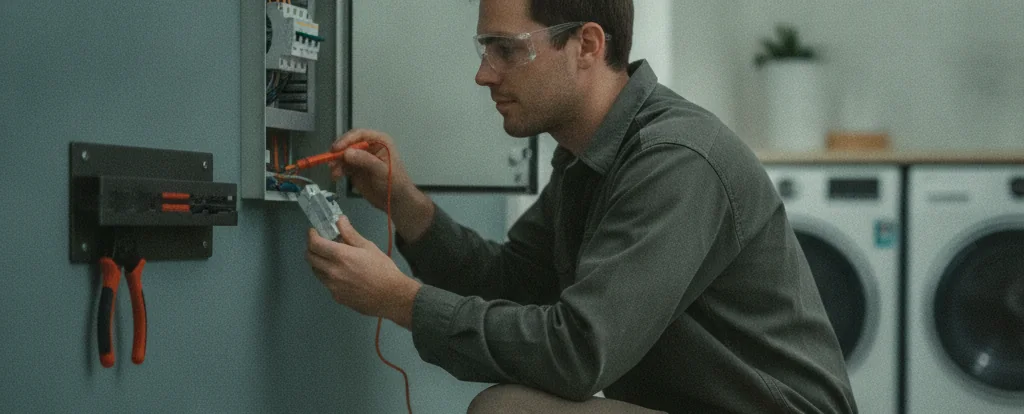
- Chasing down a fault with a multimeter and test gear when a circuit trips or a machine won't start
- Running cable and wiring up switchboards, outlets and fixtures on new builds and renovations
- Moving between job sites in a single day, from a quiet residential rewire to a noisy factory floor
- Working alongside carpenters, plumbers and other trades to keep a build on schedule
- Signing off completed work against safety standards and building codes before it's switched on
What skills do electricians need?
Employers look for reading plans and specifications, hand and power tool work, installation and maintenance, backed by Multimeter fluency and strong problem solving.
Specialist skills
- Reading plans and specifications
- Hand and power tool work
- Installation and maintenance
- Worksite safety management
- Building codes and standards
- Regulatory compliance
Software and tools
- Multimeter
- Voltage tester
- Circuit breaker panel
- Wire strippers and crimpers
- Conduit bender
General skills
- Problem solving
- Attention to detail
Is the job growing?
About 197,300 people work as electricians in Australia, and employment is projected to grow 12% over the decade to 2035. That's healthy, above-average growth, and the role should stay in solid demand.
How do you become an electrician?
Here's the path most electricians take, step by step.
- 1Finish Year 10 or Year 12
Most employers ask for Year 10 as a minimum, and Year 12 with maths or a trade-related subject helps when you're competing for a placement.
- 2Find an apprenticeship
You need an employer willing to take you on, either by applying directly to electrical contractors or through an Australian Apprenticeship Network provider. Some people complete a pre-apprenticeship course first to improve their chances.
- 3Complete the Certificate III in Electrotechnology Electrician
The apprenticeship runs about four years and combines paid on-site work with off-the-job training through a registered training organisation such as TAFE. You finish with a trade qualification and four years of supervised experience behind you.
- 4Get your electrical licence
You apply for an electrical licence in the state or territory where you work, and the licence classes and requirements differ between them. A White Card is also needed before you can set foot on a construction site.
Ready to apply as an electrician?
Whether you're working toward becoming an electrician or already are one and want a hand with the next step (sharpening your resume for ATS screening, tightening your cover letter, or knowing what you'll actually be asked at interview), here are examples grounded in this specific role, not generic templates.
What jobs can an electrician move to?
Moving into Auto Electrician typically comes with the biggest pay rise, worth $32,100 a year more on average.
| Move to | Typical pay change | Overlap | Retraining |
|---|---|---|---|
| Auto Electrician Electricians can move into automotive electrical work, though a separate apprenticeship covers vehicle systems and wiring.Known move | +$32,100 | 46% | requalify |
| Electrical Engineer Electricians with strong electrical systems experience can move into electrical engineering, but a degree is required.Known move | +$18,900 | 14% | requalify |
| Air Conditioning Technician Electricians bring electrical and safety skills to air conditioning work, with further training in refrigeration and climate systems.Known move | −$4,700 | 74% | reskill |
| Instrumentation Technician Electricians can specialise in instrumentation, applying wiring and control knowledge with further study in calibration.Known move | −$15,100 | 42% | reskill |
| Electrical Engineering Technician Electricians bring practical wiring and testing knowledge to electrical engineering technician work, though a diploma is needed.Known move | −$22,400 | 34% | reskill |
Moves are chosen from Jobs and Skills Australia's Data on Occupation Mobility, which follows income tax records between 2011-12 and 2020-21, together with entry requirements and skill overlap. A known move is one people were seen making in that data. Pay change compares median full-time pay for the two roles.
Who works as an electrician?
The typical electrician is 33 years old; 98% are men, 94% work full-time, and full-timers average 45 hours a week.
- 33
- Median age
- 2%
- Female share
- 94%
- Full-time
- +5h
- vs all-jobs avg
What's it like being an electrician?
The work has its own rhythm: a mix of planned installations and unplanned faults, days spent moving between sites, and a fair amount of time on your feet or in a roof space. The trade suits people who like diagnosing a problem and can stay patient while a build catches up around them. Apprentices spend four years learning on the job, and the early years are physically demanding and comparatively poorly paid.
What people like
- Faults give you something to solve. Tracking a tripping circuit back to a damaged cable or a loose termination is detective work, and the answer can be proved with a meter.
- You see the work switch on. By the end of the day there is a light, a machine or a switchboard working because you wired it.
- You earn while you train. An apprenticeship is a job with training attached, so you're paid through the four years rather than paying fees for a degree.
- A licence opens up options. Solar, industrial maintenance, mine sites, instrumentation and your own van all become available once you're licensed.
What people find hard
- Apprentice wages and the four-year wait. First-year pay is low, and the licence that lifts your earnings only arrives at the end of the apprenticeship.
- Tight, hot and awkward spots. Roof cavities, subfloor spaces and switchboards in full summer sun are ordinary parts of the week.
- Waiting on other trades. Your work often can't start until the frame is up or the plasterer has finished, so a delayed build delays your week too.
- The day runs between sites. Travel time can add hours that aren't spent on the tools, especially for service and maintenance work.
Based on our synthesis of professional-body surveys and public accounts of the role, not first-person verified reviews.
Which industries employ electricians?
Construction employs the largest share of electricians, followed by Mining.
Top employing industries
- 1Construction
- 2Mining
- 3Electricity, Gas, Water and Waste Services
Ranked by employment share; the source doesn't publish an exact percentage per industry.
| Certificate III/IV | 73.1% | |
|---|---|---|
| Year 12 or below | 17.1% | |
| Diploma / Advanced Diploma | 5.4% | |
| Bachelor degree | 2.7% | |
| Postgraduate | 0.6% |
Will AI replace electricians?
Electricians sit at the low end of AI exposure because the job is physical work in a specific building. Software has changed the quoting, scheduling and compliance paperwork around the trade, and tools such as thermal imaging cameras speed up fault-finding, but nothing runs cable or terminates a switchboard for you. Licensing rules also keep testing and certification with a licensed electrician.
Share of typical working time by exposure level
- Installing cable, switchboards and fittingsPulling cable through a finished building, terminating a board and mounting fittings happen in a particular space, and there's no machine on site doing it.30%low
- Tracing and fixing faultsThermal cameras and test apps narrow the search, but confirming where a circuit is broken still means testing it yourself.25%moderate
- Testing, tagging and signing off completed workRegulation requires a licensed electrician to test and certify the installation, and the results are recorded against the address and the licence holder.25%low
- Reading plans and setting out the runDesigners hand over drawings or models, but you work out the actual route through joists, ceiling spaces and existing services.20%low
Common questions about becoming an electrician
Straight answers to the questions people ask most.
How much do electricians earn?
Electricians earn $113,900 per annum, before tax. Pay climbs with the sector you work in and with overtime, shift work and callouts, so mine sites and large industrial plants typically pay more than residential service work.
How do you become an electrician?
You complete a four-year apprenticeship and the Certificate III in Electrotechnology Electrician (UEE30820), then get licensed in your state or territory. The apprenticeship is paid, so you earn while you learn, and it starts with finding an employer who will take you on.
Are electricians in demand?
Electricians are currently in shortage nationally, and employment is projected to grow 12% over the decade to 2035 over the decade to 2035. It's worth checking job ads in your own area, since hiring for electrical work follows the building and resources activity around you.
Will AI replace electricians?
No. Quoting, scheduling and plan markups are increasingly handled by software, and thermal cameras make faults easier to find, but running cable, terminating a switchboard and testing a circuit all happen in a real building and need hands on site.
What can electricians move into?
An electrical engineering degree opens the door to electrical engineer work, which typically pays $18,900 more, while auto electrician work pays $32,100 more but needs a separate apprenticeship covering vehicle systems. Many experienced electricians instead start their own contracting business, which is often where earnings grow.
Do you need a licence to work as an electrician?
Yes. Electrical work is licensed in every state and territory and you can't legally do it without one, though the licence classes and application requirements vary by jurisdiction. A White Card is also required for construction sites.
Related roles
- Electrical Engineering Technician
- Electrical Engineer
- Auto Electrician
- Instrumentation Technician
- Air Conditioning Technician
- Electrical Trades Assistant
Not sure this is you? Take the career quiz and get a ranked shortlist of roles that fit how you like to work.