Auto Electrician
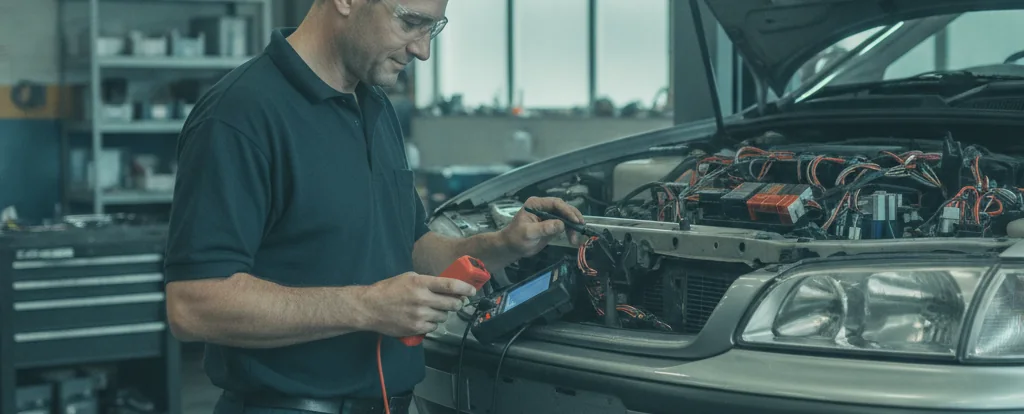
Auto electricians diagnose and repair the wiring, batteries and electronic systems in cars, trucks, buses, boats and plant equipment.
- Median salary
- $146,000
4.1%vs last year, before tax
- People employed
- 10,400
1.0%vs last year
- Projected growth
- +7.8%
to 2035
- AI exposure*
- Low
- automation risk
- Average hours
- 49/wk
+9h vs all jobs
- Shortage status
- In shortage
national
Auto electricians work on the electrical side of a vehicle: starting and charging systems, batteries, lighting, sensors and the control modules that run a modern engine. Most work in a workshop, dealership or fleet depot, and some run mobile vans that go to the vehicle. The trade is often confused with motor mechanics, but a mechanic looks after engines, brakes and transmissions while an auto electrician looks after the wiring and electronics that make those systems work, and the same skills carry across to trucks, buses, boats and mining equipment.
How much do auto electricians earn?
The median full-time salary for an auto electrician is $146,000 per annum, before tax, up $30,600 since 2018.
Pay moves with the sector and the roster as much as with the qualification: mine sites, fleet workshops and FIFO roles usually pay above a suburban garage, and overtime, callouts and penalty rates add to a base wage. Work that needs extra licences, such as automotive air conditioning or LPG, tends to attract more, while a small workshop job on ordinary hours sits at the lower end. Enterprise agreements and the relevant award set the floor, so it is worth asking how overtime and on-call work are paid before accepting a role.
What does an auto electrician do day to day?
The list below is what fills most weeks; the exact mix shifts with seniority and whatever stage the current work is at.
- Tracing an intermittent fault through a wiring loom with a multimeter and a diagnostic scanner
- Removing dashboards and trim panels to reach wiring that is not normally seen or touched
- Fitting and testing alternators, starters, batteries and charging systems on vehicles from utes to hybrids
- Reading circuit diagrams to work out where a fault starts, not just where it shows up
- Running safety and compliance checks once a repair is back together, so the vehicle meets Australian standards
What skills do auto electricians need?
Employers look for hand and power tool work, reading plans and specifications, installation and maintenance, backed by Digital multimeter fluency and strong problem solving.
Specialist skills
- Hand and power tool work
- Reading plans and specifications
- Installation and maintenance
- Plant and equipment operation
Software and tools
- Digital multimeter
- Diagnostic scanner (OBD-II)
- Soldering iron
- Wire strippers and crimpers
- Battery charger and tester
General skills
- Problem solving
- Attention to detail
- Safety and compliance awareness
Is the job growing?
About 10,400 people work as auto electricians in Australia, and employment is projected to grow 7.8% over the decade to 2035. That's modest growth: demand is steady rather than booming.
How do you become an auto electrician?
Here's the path most auto electricians take, step by step.
- 1Finish school with reasonable maths and English
Most employers ask for Year 10 or Year 12. Maths helps with circuits, voltage drop and load calculations, and a driver's licence is close to essential because many jobs are mobile or on a remote site.
- 2Consider a Certificate II pre-apprenticeship
A short automotive preparation course gives you workshop basics and a taste of the trade, and it helps you compete for an apprenticeship when you have no industry contacts.
- 3Start the Certificate III in Automotive Electrical Technology apprenticeship
This is the standard entry point and takes about four years. It is paid, combines TAFE or another registered training organisation with on-the-job training, and you need an employer willing to take you on as an apprentice.
- 4Add the licences the specialities need
Automotive air conditioning work requires a refrigerant handling licence, and LPG or high risk work on site brings its own requirements. These extras open up fleet, marine and mining work that a basic trade qualification alone does not.
- 5Choose a sector or go out on your own
After qualifying you can move into mining, heavy vehicle, marine or agricultural work, or set up a mobile service. Mobile operators usually build a customer base on after-hours and breakdown work before taking on staff.
Ready to apply as an auto electrician?
Whether you're working toward becoming an auto electrician or already are one and want a hand with the next step (sharpening your resume for ATS screening, tightening your cover letter, or knowing what you'll actually be asked at interview), here are examples grounded in this specific role, not generic templates.
What jobs can an auto electrician move to?
None of the roles auto electricians typically move into pay more than the role itself. Electrician is the closest match. If a bigger salary is the goal, moving up into a senior or principal position within the role is usually the faster route than moving sideways.
| Move to | Typical pay change | Overlap | Retraining |
|---|---|---|---|
| Electrician Auto electricians bring vehicle wiring and diagnostic skills, but general electrical work requires completing an electrician apprenticeship or recognition.Known move | −$32,100 | 46% | requalify |
| Motor Mechanic Auto electricians understand vehicle systems and diagnostics, but general mechanical repair requires broadening into engine, driveline and servicing work.Known move | −$61,700 | 74% | reskill |
Moves are chosen from Jobs and Skills Australia's Data on Occupation Mobility, which follows income tax records between 2011-12 and 2020-21, together with entry requirements and skill overlap. A known move is one people were seen making in that data. Pay change compares median full-time pay for the two roles.
Who works as an auto electrician?
The typical auto electrician is 35 years old; 94% are men, 86% work full-time, and full-timers average 49 hours a week.
- 35
- Median age
- 6%
- Female share
- 86%
- Full-time
- +9h
- vs all-jobs avg
What's it like being an auto electrician?
The work has a rhythm of jobs that finish within the hour and faults that take a full day, so patience matters as much as knowledge. Auto electricians often work alone on a job, moving between the bench, the vehicle bay and, for mobile operators, a customer's driveway or a mine site. Hours stretch in fleet, mining and FIFO work, where breakdowns and callouts set the schedule rather than the clock.
What people like
- The moment a fault makes sense. An intermittent electrical problem can take hours to pin down, and the satisfaction comes when the circuit diagram and the meter readings finally line up.
- No two vehicles are the same. A week might include a diesel ute, a bus, a boat and a piece of earthmoving equipment, each with its own wiring and its own quirks.
- Hands and technology together. The job is physical, but newer vehicles mean reading wiring databases and interpreting module data as well as stripping looms, so the trade keeps changing.
- Options beyond the local workshop. Fleet depots, mine sites, marine yards and farm machinery dealers all need the same skills, which gives you somewhere to go if you tire of general repair work.
What people find hard
- Chasing a fault that comes and goes. Intermittent problems can survive a whole day of testing and only appear on the customer's drive home, which is hard to explain on an invoice.
- Trim, clips and hidden wiring. Reaching a loom often means removing dashboards, seats and door trims, and brittle plastic clips from an older vehicle break easily.
- Awkward positions and weather. A lot of the work happens upside down under a dash or leaning into an engine bay, and mobile callouts mean doing it in whatever conditions the day brings.
- Quoted jobs that run long. Diagnosis time is not always easy to bill, so a fixed-price quote on an old vehicle with a vague fault can eat into the day's work.
Based on our synthesis of professional-body surveys and public accounts of the role, not first-person verified reviews.
Which industries employ auto electricians?
Other Services employs the largest share of auto electricians, followed by Mining.
Top employing industries
- 1Other Services
- 2Mining
- 3Manufacturing
Ranked by employment share; the source doesn't publish an exact percentage per industry.
| Certificate III/IV | 75.9% | |
|---|---|---|
| Year 12 or below | 16.8% | |
| Diploma / Advanced Diploma | 3.1% | |
| Bachelor degree | 1.8% | |
| Postgraduate | 0.5% |
Will AI replace auto electricians?
Auto electrical work rates low for AI exposure, because almost all of it involves physically finding and repairing faults in a specific vehicle. Diagnostic software, scan tools and online wiring databases narrow down where to look and speed up the paperwork, but the testing, the loom tracing and the repair itself still happen by hand. The technology has changed the starting point of a diagnosis rather than the job.
Share of typical working time by exposure level
- Scanning fault codes and tracing the causeA scan tool or manufacturer database can point to a circuit or module in minutes, but on an intermittent fault the readings still have to be confirmed with a multimeter at the connector.30%moderate
- Wiring repair, rewiring and loom workCutting, soldering, crimping and re-routing a loom through a vehicle is manual work, and the routing has to follow the original design so it survives vibration and heat.30%low
- Starting, charging and battery systemsTest equipment makes battery and alternator faults quick to identify, though replacing a starter buried behind an engine mount is still a job for hands and tools.25%moderate
- Air conditioning, lighting and accessory fittingFitting a bull bar, driving lights or an air conditioning system involves mounting hardware, running wiring and checking refrigerant or electrical loads against the vehicle's capacity.15%low
Common questions about becoming an auto electrician
Straight answers to the questions people ask most.
How much do auto electricians earn?
Full-time auto electricians earn a median of $146,000 per year before tax. Mine site, fleet and FIFO roles sit above that once overtime and callouts are counted, while a small workshop job on ordinary hours sits at the lower end.
How do you become an auto electrician?
The usual route is a Certificate III in Automotive Electrical Technology (AUR30320) apprenticeship, which takes about four years and is paid while you train. You need an employer to take you on, and a driver's licence helps because much of the work is mobile or based on site.
Are auto electricians in demand?
Auto electricians are currently in shortage nationally, and employment is projected to grow 7.8% over the decade to 2035. Vehicles carry more electronics every year, which keeps the diagnostic side of the trade busy even when general automotive work is quiet.
Will AI replace auto electricians?
The trade rates low for AI exposure because the work is physical and specific to each vehicle. Scan tools and wiring databases already suggest likely causes, but someone still has to test circuits, remove trim panels and confirm the fault by hand. What is changing is how much of a diagnosis starts on a laptop screen before a tool touches the vehicle.
What can auto electricians move into?
Some move into general electrical work, which means requalifying through an electrician apprenticeship and a pay difference of $32,100 less. Others broaden into motor mechanic work, where the vehicle systems knowledge carries over but engine, driveline and servicing skills have to be added. Many stay in the trade and start their own mobile service or workshop, which is often where earnings grow.
Do auto electricians work long hours?
Full-time auto electricians average about 49 hours a week, a figure that includes the overtime common in fleet and mining work. Workshop roles keep closer to standard hours, while mobile and site roles bring callouts and weekend breakdowns.
Related roles
Not sure this is you? Take the career quiz and get a ranked shortlist of roles that fit how you like to work.