Mechanic's Assistant
Mechanic's assistants handle the lifting, preparation and parts side of workshop jobs so qualified mechanics can get on with the repair.
- Median salary*
- $59,800
3.6%vs last year, before tax
- People employed
- 1,800
0.0%vs last year
- Projected growth
- +4.2%
to 2035
- AI exposure*
- Moderate
- automation risk
- Average hours
- 44/wk
+4h vs all jobs
- Shortage status*
- Not in shortage
national
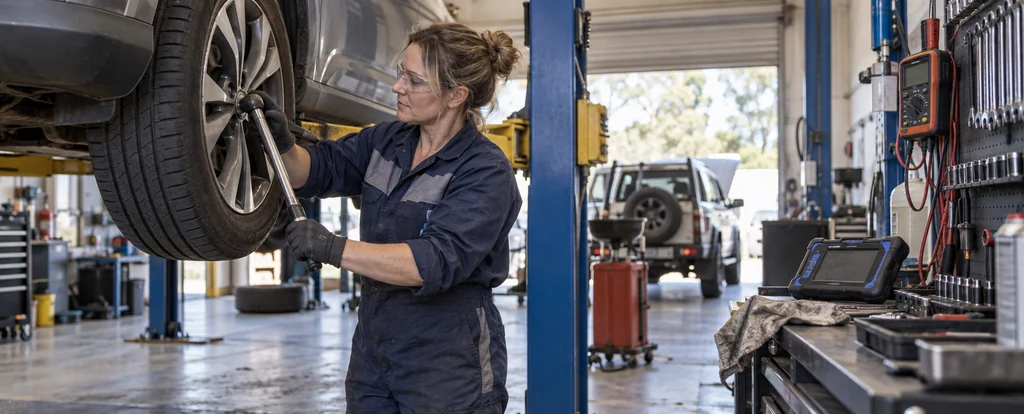
Mechanic's assistants work in workshops, dealerships and fleet depots alongside trade-qualified motor mechanics. They take on the preparation and physical side of a job, raising vehicles, changing fluids and finding parts, while diagnosis and final sign-off stay with the mechanic. Most learn on the floor through a traineeship rather than a full apprenticeship.
How much do mechanic's assistants earn?
The median full-time salary for a mechanic's assistant is $59,800 per annum, before tax, up $12,800 since 2018.
Pay usually follows the award or enterprise agreement covering the workshop, with traineeship rates set lower in the first year and rising as each stage is completed. Dealerships and large fleet workshops generally pay more than small independent garages, and overtime in busy periods adds to weekly earnings. Average full-time hours sit at 44, above the standard week, so penalty rates can matter as much as the base rate.
What does a mechanic's assistant do day to day?
The list below is what fills most weeks; the exact mix shifts with seniority and whatever stage the current work is at.
- Assisting qualified mechanics with servicing and repair jobs, from passing tools to tightening fasteners to the right torque
- Raising vehicles on jacks, stands and hoists so they can be worked on safely
- Draining and replacing engine oil, coolant, brake fluid and other fluids
- Cleaning, checking and storing tools, and keeping bays clear and safe
- Collecting, unpacking and matching spare parts and consumables to each job
What skills do mechanic's assistants need?
Employers look for hand and power tool work, installation and maintenance, plant and equipment operation, backed by OBD-II diagnostic scan tool fluency and strong attention to detail.
Specialist skills
- Hand and power tool work
- Installation and maintenance
- Plant and equipment operation
- Inventory management
Software and tools
- OBD-II diagnostic scan tool
- Hydraulic hoist
- Torque wrench
- Digital multimeter
- Parts catalogue software
General skills
- Attention to detail
- Problem solving
- Safety and compliance awareness
Is the job growing?
About 1,800 people work as mechanic's assistants in Australia, and employment is projected to grow 4.2% over the decade to 2035. That's modest growth: demand is steady rather than booming.
How do you become a mechanic's assistant?
Here's the path most mechanic's assistants take, step by step.
- 1Finish Year 10 or Year 12
Further study is not the usual entry point: about 62% of mechanic's assistants hold Year 12 or below as their highest qualification. A driver's licence matters more than a certificate at this stage, because you may be asked to collect parts or move vehicles.
- 2Start a traineeship or a Certificate II in Automotive Servicing Technology
A school-based or full-time traineeship with a workshop combines paid work with the Certificate II in Automotive Servicing Technology (AUR20520), and is the most common way in. TAFE and private providers also offer the certificate on its own if you cannot find an employer first.
- 3Build up your own basic tool kit
Workshops differ in what they supply, but most assistants are expected to bring hand tools, steel-capped boots and safety glasses over time, adding to the kit as pay allows.
- 4Consider a Certificate III apprenticeship
A Certificate III in Light Vehicle Mechanical Technology (AUR30620) apprenticeship leads to motor mechanic and takes about four years, and workshop experience helps when you apply. It is the usual route to higher pay and to signing off your own work.
- 5Or specialise through a short course
Tyre fitting, exhaust fitting and vehicle accessories work all build on assistant skills and need only a short course or on-the-job training, which suits people who want a different workshop setting sooner.
Ready to apply as a mechanic's assistant?
Whether you're working toward becoming a mechanic's assistant or already are one and want a hand with the next step (sharpening your resume for ATS screening, tightening your cover letter, or knowing what you'll actually be asked at interview), here are examples grounded in this specific role, not generic templates.
What jobs can a mechanic's assistant move to?
Moving into Motor Mechanic typically comes with the biggest pay rise, worth $24,500 a year more on average.
| Move to | Typical pay change | Overlap | Retraining |
|---|---|---|---|
| Motor Mechanic An assistant's workshop and servicing experience carries into the motor mechanic apprenticeship, building on familiar vehicle systems to become fully qualified.Known move | +$24,500 | 50% | requalify |
| Exhaust Fitter A mechanic's assistant already works with vehicle undersides and exhaust components, so exhaust fitting needs only minimal extra training. | +$7,800 | 67% | minimal |
| Vehicle Accessories Fitter Fitting vehicle accessories builds on the assistant's familiarity with vehicle interiors and tools, with a short course covering electrical connections.Known move | +$5,200 | 53% | short course |
| Small Engine Mechanic An assistant's engine and tool skills carry into a small engine mechanic apprenticeship, focusing on compact machinery and outdoor equipment. | +$5,200 | 94% | requalify |
| Tyre Fitter A mechanic's assistant already handles wheels, tools and workshop safety, so tyre fitting builds on that work with a short course.Known move | +$0 | 53% | short course |
Moves are chosen from Jobs and Skills Australia's Data on Occupation Mobility, which follows income tax records between 2011-12 and 2020-21, together with entry requirements and skill overlap. A known move is one people were seen making in that data. Pay change compares median full-time pay for the two roles.
Who works as a mechanic's assistant?
The typical mechanic's assistant is 32 years old; 92% are men, 70% work full-time, and full-timers average 44 hours a week.
- 32
- Median age
- 8%
- Female share
- 70%
- Full-time
- +4h
- vs all-jobs avg
What's it like being a mechanic's assistant?
The day follows the workshop's job list: vehicles arrive early, each one is lifted, stripped, serviced and sent out before close. It is physical, noisy and repetitive in places, and the satisfaction comes from hands-on progress and a tidy finish rather than from autonomy. Assistants who settle into it tend to like machinery, not mind dirt, and enjoy learning by watching a qualified mechanic work.
What people like
- You learn how vehicles actually go together. Working beside a trade-qualified mechanic shows you components, tools and procedures from the first week, which is hard to pick up from a course alone.
- The results are visible. A car that came in on a tow truck leaves running, and you had a hand in getting it there.
- You can start without a qualification. A traineeship pays you while you learn, so entry does not depend on a degree or a large upfront fee.
- Clear, hands-on days. The job list is set each morning and the work is physical, which suits people who would rather be on their feet than at a desk.
What people find hard
- The pay is low to begin with. Traineeship and junior rates sit near the bottom of workshop wages until you have a trade qualification behind you.
- Dirt, noise and heat. Oil, grease, exhaust fumes and a workshop that is freezing in winter and stifling in summer are part of most days, and the physical load adds up over a long shift.
- You take the jobs nobody notices. Cleaning bays, moving vehicles and fetching parts fill much of the week, while the more interesting work goes to qualified staff.
- Progress stalls without the trade. The role plateaus on its own, and higher pay or responsibility usually means starting a Certificate III apprenticeship.
Based on our synthesis of professional-body surveys and public accounts of the role, not first-person verified reviews.
Which industries employ mechanic's assistants?
Other Services employs the largest share of mechanic's assistants, followed by Retail Trade.
Top employing industries
- 1Other Services
- 2Retail Trade
- 3Manufacturing
Ranked by employment share; the source doesn't publish an exact percentage per industry.
| Year 12 or below | 61.9% | |
|---|---|---|
| Certificate III/IV | 25.9% | |
| Diploma / Advanced Diploma | 5% | |
| Bachelor degree | 3.5% | |
| Postgraduate | 0.6% |
Will AI replace mechanic's assistants?
Mechanic's assistant work is moderately exposed to AI: the record-keeping and parts-lookup side is already moving to software, while the physical work in the bay is not. Diagnostic scan tools and automated fault suggestions narrow down what gets tested, and catalogue systems handle ordering, which changes the day without removing the need for hands on the vehicle.
Share of typical working time by exposure level
- Servicing and repair work in the bayRaising vehicles, draining fluids, replacing filters and fitting components all need hands, tools and feel, and no system does that for you.45%low
- Fault-finding with a scan toolA scan tool and online service data often point straight to the likely fault, which speeds up the job but still leaves the testing and the repair to a person.25%moderate
- Looking up and ordering partsCatalogue software matches components to a vehicle from the registration or VIN, so what was once a phone call and a paper catalogue is now a few keystrokes.17%high
- Job notes, invoices and customer updatesWorkshop management systems generate quotes, service reminders and invoices automatically, so the assistant's part is recording what was actually done.13%high
Moves least exposed to AI
These career moves from mechanic's assistant work are rated low for AI exposure:
- Tyre Fitter
Solid skill overlap (53%), short course to get there, and a low automation-risk profile.
- Vehicle Accessories Fitter
Solid skill overlap (53%), short course to get there, and a low automation-risk profile.
- Exhaust Fitter
High skill overlap (67%), little retraining to get there, and a low automation-risk profile.
Common questions about becoming a mechanic's assistant
Straight answers to the questions people ask most.
How much does a mechanic's assistant earn?
A mechanic's assistant earns a median $59,800 per year before tax. Traineeship rates start below that and rise as each stage is completed, and workshop type, overtime and penalty rates all shift the figure.
How do you become a mechanic's assistant?
You can start with no formal qualification, and most people enter through a paid traineeship or a Certificate II in Automotive Servicing Technology (AUR20520). A driver's licence helps you get a start. A Certificate III apprenticeship is what turns the role into a trade.
Are mechanic's assistants in demand?
Mechanic's assistants are currently not in shortage, and employment is projected to grow 4.2% over the decade to 2035. About 1,800 people work in the role, so vacancies in any one area are limited and approaching workshops directly often works better than waiting for an advertisement.
Will AI or automation replace mechanic's assistants?
The physical work in the bay is not going anywhere, but software is reshaping parts of the job. Scan tools and online service data now suggest likely faults, and catalogue systems handle ordering that used to be manual. Lifting, draining fluids, fitting parts and cleaning still need hands on the vehicle.
Where can a mechanic's assistant move next?
The main move is into a motor mechanic apprenticeship, which pays $24,500 more and builds directly on workshop experience. Small engine mechanic work pays $5,200 more and draws on almost the same engine and tool skills, though it needs an apprenticeship behind it. Owning a workshop generally follows the trade qualification rather than coming straight from assisting.
Do you need your own tools?
Not on day one, but you are usually expected to build a basic set over time. Workshops differ on what they supply, so ask at interview, and keep receipts because tools bought for work may be claimable as a tax deduction.
Related roles
Not sure this is you? Take the career quiz and get a ranked shortlist of roles that fit how you like to work.