Protective Services Officer
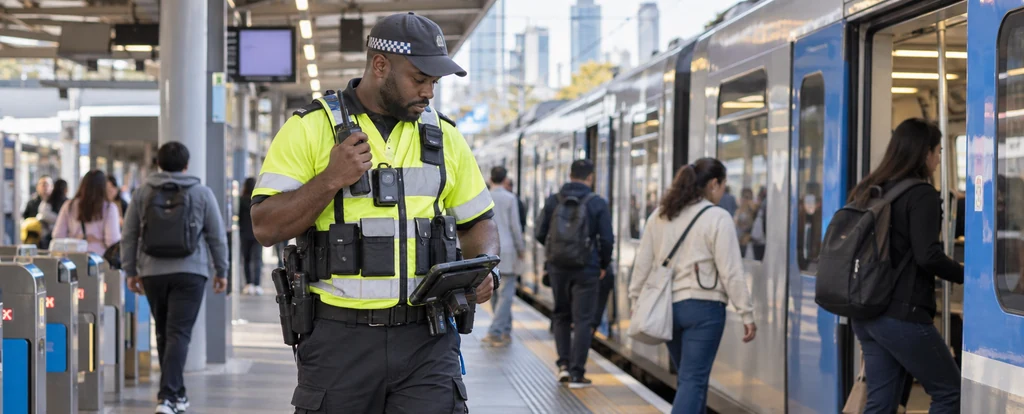
Protective services officers patrol train stations and the surrounding streets for Victoria Police, working to deter crime and respond to incidents on the public transport network.
- Median salary*
- $75,400
3.7%vs last year, before tax
- People employed
- 2,600
0.0%vs last year
- Projected growth*
- +5%
to 2035
- AI exposure*
- Low
- automation risk
- Average hours*
- 38/wk
−2h vs all jobs
- Shortage status*
- Not in shortage
national
Protective services officers are appointed under the Victoria Police Act and posted to train stations, mostly across metropolitan Melbourne and regional Victoria. They hold limited police powers, which means they can arrest, detain, search and issue infringements on the network, but they do not investigate crimes or take on general policing duties. The role sits between security work and sworn policing, and it comes with a paid training course and a defined entry point.
How much do protective services officers earn?
The median full-time salary for a protective services officer is $75,400 per annum, before tax, up $15,600 since 2018.
Pay comes from the Victoria Police enterprise agreement, so it moves with negotiated increases rather than anything you agree yourself. Penalty rates and loadings for nights, weekends and public holidays make up a large share of take-home pay, because protective services officers work when the network is busiest. Location matters less than how many unsocial hours your roster carries.
What does a protective services officer do day to day?
The list below is what fills most weeks; the exact mix shifts with seniority and whatever stage the current work is at.
- Patrolling platforms, station car parks and nearby streets to deter crime and anti-social behaviour
- Responding to incidents on the network, from assaults and thefts to medical emergencies, often as the first officer on scene
- Issuing infringements for fare evasion, disorderly conduct and other offences under transport and summary offences law
- Arresting and detaining offenders using limited police powers, then handing them over to police for investigation
- Writing statements and reports for court, and helping passengers with directions, lost property and accessibility needs
What skills do protective services officers need?
Employers look for security operations, regulatory compliance, emergency response, backed by LEAP database fluency and strong written communication.
Specialist skills
- Security operations
- Regulatory compliance
- Emergency response
Software and tools
- LEAP database
- Body-worn cameras
- Two-way radios
- Mobile data terminals
- Firearms
General skills
- Written communication
- Problem solving
- Attention to detail
- Customer service
- Physical stamina and dexterity
Is the job growing?
About 2,600 people work as protective services officers in Australia, and employment is projected to grow 5% over the decade to 2035. That's modest growth: demand is steady rather than booming.
How do you become a protective services officer?
Here's the path most protective services officers take, step by step.
- 1Check you meet the entry requirements
Victoria Police asks for Australian citizenship or permanent residency, a full driver's licence and a clear record through police, medical and background checks. You also need to pass a fitness assessment, so start physical preparation before you apply rather than after.
- 2Apply through Victoria Police recruitment
Recruitment runs in intakes, with an online application followed by aptitude and psychological testing, an interview and a medical. Intakes open and close through the year, so check the current round before you plan around a start date.
- 3Complete the recruit course at the academy
Successful applicants attend a full-time course at the Victoria Police Academy covering powers of arrest, use of force, firearms, first aid and report writing. The training is paid and you are an employee from the first day.
- 4Work through field training and confirmation
After the academy you are posted to a station and work the roster under supervision, building up your incident handling and report writing toward confirmation as a trained officer.
- 5Consider a related qualification
A certificate III or IV in protective services or government investigations is not an entry requirement, but it can strengthen an application and gives you something to fall back on if the intake timing does not suit.
Ready to apply as a protective services officer?
Whether you're working toward becoming a protective services officer or already are one and want a hand with the next step (sharpening your resume for ATS screening, tightening your cover letter, or knowing what you'll actually be asked at interview), here are examples grounded in this specific role, not generic templates.
What jobs can a protective services officer move to?
Moving into Police Officer typically comes with the biggest pay rise, worth $57,700 a year more on average.
| Move to | Typical pay change | Overlap | Retraining |
|---|---|---|---|
| Police Officer Protective services officers bring patrol and public safety experience, and can move into sworn policing with further training. | +$57,700 | 44% | reskill |
| Border Force Officer Public safety and enforcement experience transfers to border control, with a short course covering customs and immigration powers. | +$21,400 | 50% | short course |
| Sheriff's Officer Enforcement and public contact skills carry into court security and warrant work, with a short course covering sheriff's legal duties. | +$15,600 | 67% | short course |
| Detector Dog Handler Handling incidents and observing behaviour suits detector dog work, with a short course covering dog handling and search procedures. | +$10,400 | 50% | short course |
| Security Consultant Operational security and incident response experience supports advisory work, with a short course covering risk assessment and security planning. | +$10,400 | 47% | short course |
Moves are chosen from Jobs and Skills Australia's Data on Occupation Mobility, which follows income tax records between 2011-12 and 2020-21, together with entry requirements and skill overlap. A known move is one people were seen making in that data. Pay change compares median full-time pay for the two roles.
Who works as a protective services officer?
The typical protective services officer is 38 years old; 81% are men, 90% work full-time, and full-timers average 38 hours a week.
- 38
- Median age
- 19%
- Female share
- 90%
- Full-time
- −2h
- vs all-jobs avg
What's it like being a protective services officer?
The job follows the rhythm of the transport network: long quiet stretches broken by incidents that need a fast decision with limited immediate backup. Most protective services officers work a rotating roster of nights, weekends and public holidays, and a large part of the shift is talking to the public rather than enforcing anything. It suits people who are comfortable being visible, making a call on their own and standing by it.
What people like
- You act on what you see. The powers are limited but real, so you can arrest, detain and fine, which means an incident on your platform gets handled on the spot.
- The effect of a shift is visible. Clearing a group off a platform, getting someone medical help or resolving a fare dispute shows its result the same night.
- The roster is published in advance. Rosters are set ahead of time, which suits people who want their days off in blocks or would rather not work a standard office week.
- It is a way to test policing. The role lets you find out whether sworn policing suits you before committing to a longer police training course, and the public contact and incident experience counts in your favour if you later apply.
What people find hard
- People are often having their worst day. Assaults, overdoses and mental health crises come to you first, and some of the public you deal with are angry about the interaction itself.
- Your powers stop at the edge of the job. You can detain someone, but investigation, charging and follow-up belong to police, which is hard to explain to a victim who wants a result that night.
- The roster runs against the calendar. Evenings, weekends and public holidays are the busiest times on the network, so family events and social plans take planning around your shifts.
- Much of the shift is standing and walking. You are on your feet in all weather, in uniform and carrying equipment, and the quiet stretches on a platform can be long.
Based on our synthesis of professional-body surveys and public accounts of the role, not first-person verified reviews.
Which industries employ protective services officers?
Public Administration and Safety employs the largest share of protective services officers, followed by Health Care and Social Assistance.
Top employing industries
- 1Public Administration and Safety
- 2Health Care and Social Assistance
Ranked by employment share; the source doesn't publish an exact percentage per industry.
| Certificate III/IV | 34% | |
|---|---|---|
| Diploma / Advanced Diploma | 26% | |
| Bachelor degree | 20% | |
| Year 12 or below | 20% |
Will AI replace protective services officers?
This is a low-exposure job. The work happens on a platform with unpredictable people, and the calls that matter, whether to use force, what offence applies, how to talk someone down, are made in the moment and cannot be automated. Body-worn cameras, mobile data terminals and the LEAP database already handle evidence capture and record checks, which removes paperwork rather than the need for an officer standing there.
Share of typical working time by exposure level
- Patrolling platforms and station surroundsBeing visible on a platform at 11pm depends on reading a crowd in person, which camera networks and analytics do not replace.35%low
- Responding to incidents and use of force decisionsDeciding how to handle an assault or a mental health crisis, including whether to restrain someone, stays with the officer on the ground.30%low
- Issuing infringements and writing reportsBody-worn cameras and mobile data terminals speed up evidence capture and statement drafting, though the officer still decides what offence applies.20%moderate
- Rostering, briefings and database checksLEAP checks and rostering software handle routine lookups and shift allocation, which frees time for the station floor.15%moderate
Common questions about becoming a protective services officer
Straight answers to the questions people ask most.
How much does a protective services officer earn?
Protective services officers earn $75,400 per year before tax. That is the median for full-time workers and does not include the shift penalties and loadings that lift take-home pay for nights, weekends and public holidays.
How do you become a protective services officer?
You apply to Victoria Police, which is the only employer of protective services officers in Australia, and the role is based in Victoria. Applicants need citizenship or permanent residency, a full driver's licence, a fitness assessment and police, medical and background checks, then a paid recruit course at the academy followed by supervised field training.
Are protective services officers in demand?
Protective services officers are currently not in shortage, and employment is projected to grow 5% over the decade to 2035. Because the role is a Victoria Police one, hiring depends on recruit intakes and how the metropolitan and regional networks are staffed, so keep an eye on when intakes open rather than waiting for a job advertisement.
Will AI or automation replace protective services officers?
Exposure is low. The decisions that matter, whether to restrain someone, what offence applies and how to defuse a situation, are made on a platform in real time with people who are unpredictable. Body-worn cameras, the LEAP database and rostering software handle records and lookups, which trims paperwork without changing the core of the job.
What can a protective services officer move into?
Enforcement and public contact skills carry into a sheriff's officer or border force officer role, each with a short course covering the legal powers it adds ($15,600 more and $21,400 more respectively). Sworn policing means completing police training, and protective services experience counts in your favour ($57,700 more). Operational security and incident response experience also supports a move into security consulting, usually with a short course in risk assessment and security planning.
Do you need a qualification to become a protective services officer?
No, Victoria Police recruits on the strength of its own testing and training rather than a prior qualification. Around 34% of the people working as protective services officers hold a certificate III or IV, which describes the workforce rather than what the job requires.
Related roles
- Police Officer
- Sheriff's Officer
- Border Force Officer
- Detector Dog Handler
- Security Consultant
- Security Screening Officer
Not sure this is you? Take the career quiz and get a ranked shortlist of roles that fit how you like to work.