Sheriff's Officer
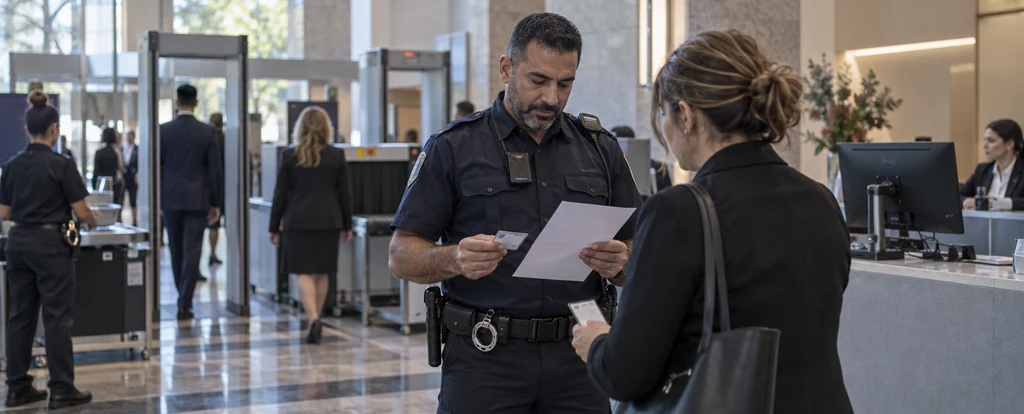
Sheriff's officers serve court documents and enforce warrants, keeping courts secure and making sure court orders are carried out.
- Median salary*
- $91,000
4.4%vs last year, before tax
- People employed
- 690
1.4%vs last year
- Projected growth
- +7.8%
to 2035
- AI exposure*
- Moderate
- automation risk
- Average hours
- 39/wk
−1h vs all jobs
- Shortage status
- Not in shortage
national
Sheriff's officers work for a state or territory sheriff's office, serving documents, enforcing warrants and providing security in courts and tribunals. The job mixes field work such as property seizure and document service with courtroom duties, including jury management and escorting people in custody. It is often confused with police work, but sheriff's officers carry out civil and court orders rather than investigating crime.
How much do sheriff's officers earn?
The median full-time salary for a sheriff's officer is $91,000 per annum, before tax, up $19,200 since 2018.
Pay is set by the relevant state or territory sheriff's office agreement, so it moves with your classification level and years of service rather than being negotiated case by case. Shift work, weekend court duties and regional postings can attract penalties and allowances that lift take-home pay. Which agency employs you matters more than which city you live in.
What does a sheriff's officer do day to day?
The list below is what fills most weeks; the exact mix shifts with seniority and whatever stage the current work is at.
- Serving court documents such as summonses, subpoenas and writs, often at a person's home or workplace
- Executing warrants, including property seizure and enforcement orders
- Screening visitors and providing security in courts and tribunals
- Managing jury selection, empanelment and support during trials
- Escorting and supervising people in custody while they attend court
What skills do sheriff's officers need?
Employers look for regulatory compliance, security operations, backed by JusticeLink fluency and strong written communication.
Specialist skills
- Regulatory compliance
- Security operations
Software and tools
- JusticeLink
- Integrated Court Management System (ICMS)
- Axon body-worn cameras
- Content Manager (records system)
- Microsoft Office
General skills
- Written communication
- Attention to detail
- Problem solving
- Customer service
- Safety and compliance awareness
Is the job growing?
About 690 people work as sheriff's officers in Australia, and employment is projected to grow 7.8% over the decade to 2035. That's modest growth: demand is steady rather than booming.
How do you become a sheriff's officer?
Here's the path most sheriff's officers take, step by step.
- 1Finish Year 12 or equivalent
Most agencies ask for Year 12, though some accept equivalent experience. Strong literacy and numeracy matter because the paperwork you prepare ends up before a court.
- 2Apply to a sheriff's office recruitment round
Selection usually includes interviews, a medical and fitness check, a psychological assessment and a police background check. Rounds open a few times a year and vary by state and territory, so watch the agency's careers page.
- 3Complete the agency's training program
Recruits are trained in enforcement law, warrant execution, court security and the defensive equipment they may carry. Training is generally paid, and the length depends on the jurisdiction.
- 4Be appointed or authorised under state legislation
Officers take an oath or are appointed under the relevant Sheriff Act, which is what allows them to serve documents and enforce orders lawfully. Some jurisdictions also require a security licence for the field work.
- 5Add vocational study if you want options later
A certificate III or IV in justice, government or security operations is the qualification most people in the role hold, and around 33% of the workforce has one. It helps if you later move into court or compliance roles.
Ready to apply as a sheriff's officer?
Whether you're working toward becoming a sheriff's officer or already are one and want a hand with the next step (sharpening your resume for ATS screening, tightening your cover letter, or knowing what you'll actually be asked at interview), here are examples grounded in this specific role, not generic templates.
What jobs can a sheriff's officer move to?
Moving into Police Officer typically comes with the biggest pay rise, worth $42,100 a year more on average.
| Move to | Typical pay change | Overlap | Retraining |
|---|---|---|---|
| Police Officer Sheriff's officers bring warrant enforcement and court security experience to police work, though a police academy reskill is required. | +$42,100 | 33% | reskill |
| Detector Dog Handler Sheriff's officers bring enforcement and security screening experience to detector dog handling, with a short course for the handler role. | −$5,200 | 71% | short course |
| Security Consultant Sheriff's officers bring court security and risk assessment experience to security consulting, with a short course in security consulting. | −$5,200 | 67% | short course |
Moves are chosen from Jobs and Skills Australia's Data on Occupation Mobility, which follows income tax records between 2011-12 and 2020-21, together with entry requirements and skill overlap. A known move is one people were seen making in that data. Pay change compares median full-time pay for the two roles.
Who works as a sheriff's officer?
The typical sheriff's officer is 50 years old; 67% are men, 79% work full-time, and full-timers average 39 hours a week.
- 50
- Median age
- 33%
- Female share
- 79%
- Full-time
- −1h
- vs all-jobs avg
What's it like being a sheriff's officer?
The job follows the court calendar, so a week moves between the office, the courtroom and the road. It suits people who stay calm and firm with the public, follow procedure closely and can hold their ground when someone is angry about an enforcement notice. The pace is steady rather than fast, but a missed step or a badly handled interaction has real consequences.
What people like
- Court days have a clear shape. Jury empanelment and court security run to set procedures, so you know what each part of the day involves and when it ends.
- You finish what you start. A warrant served or an order enforced is a visible result, which suits people who like work with a definite end point rather than an open-ended project.
- Field work breaks up the desk time. Serving documents and seizing property takes you out of the office and into different suburbs and towns each week.
- Public sector conditions. State and territory employment usually brings predictable hours, super and leave entitlements, and the skills carry across to other enforcement agencies.
What people find hard
- People are rarely pleased to see you. Serving a summons or enforcing a debt means meeting people on one of their worst days, and some react with anger or distress.
- Long stretches of waiting. Custody lists and jury empanelment can mean hours of standing by or sitting in a corridor, with strict rules about where you can move and what you can say.
- The paperwork is exacting. Every document served and every seizure made has to be recorded correctly, because the enforcement will be tested in court if it is not.
- Travel across a wide region. In some states, officers based outside the major courts cover large areas, which means driving between towns and the occasional overnight stay.
Based on our synthesis of professional-body surveys and public accounts of the role, not first-person verified reviews.
Which industries employ sheriff's officers?
Public Administration and Safety employs the largest share of sheriff's officers, followed by Professional, Scientific and Technical Services.
Top employing industries
- 1Public Administration and Safety
- 2Professional, Scientific and Technical Services
Ranked by employment share; the source doesn't publish an exact percentage per industry.
| Certificate III/IV | 33.1% | |
|---|---|---|
| Year 12 or below | 30% | |
| Diploma / Advanced Diploma | 17.2% | |
| Bachelor degree | 12% | |
| Postgraduate | 2.5% |
Will AI replace sheriff's officers?
The administrative side of the job, document lodgement, warrant registers, records checks and reporting, is where automation has already made inroads, which puts the role in the middle rather than at either end. The enforcement itself still needs an officer on the spot, so serving documents, seizing property and supervising people in custody are largely untouched by it.
Share of typical working time by exposure level
- Serving documents and enforcing warrantsLocating a person, explaining an order and seizing property on site means reading a situation and deciding how to proceed, which software cannot do.30%low
- Record keeping and warrant registersLodging documents and updating warrant status in JusticeLink or the agency's court records system is increasingly automated, and officers mostly check what the system has produced.25%high
- Court security and visitor screeningWalk-through scanners and body-worn cameras help, but deciding who to remove from a courtroom and how to handle a confrontation stays with the officer.25%low
- Jury management and custody escortsJury lists, empanelment records and custody scheduling run on court software, while calling a jury in the courtroom and supervising people in custody remain hands-on.20%moderate
Moves least exposed to AI
These career moves from sheriff's officer work are rated low for AI exposure:
- Detector Dog Handler
High skill overlap (71%), short course to get there, and a low automation-risk profile.
Common questions about becoming a sheriff's officer
Straight answers to the questions people ask most.
How much does a sheriff's officer earn?
Sheriff's officers earn $91,000 per annum, before tax, at the median. Pay comes from the state or territory agency agreement rather than individual negotiation, so shift penalties, weekend court duties and a higher classification level are what lift it.
How do you become a sheriff's officer?
You apply directly to your state or territory sheriff's office when a recruitment round opens, since there is no single national entry path. Expect interviews, medical and fitness checks and a police background check before paid training in enforcement law and court security. Study in justice or government helps, but it does not replace the agency's own training.
Are sheriff's officers in demand?
Sheriff's officers are currently not in shortage, and employment is projected to grow 7.8% over the decade to 2035 over the decade to 2035. Numbers are small and hiring happens through set intakes rather than continuous advertising, so it pays to check your local agency's recruitment page regularly. Demand also depends on court volumes and government budgets rather than on the wider labour market.
Will AI replace sheriff's officers?
Automation has taken over much of the record keeping, but the enforcement and courtroom work still needs an officer present, which is why the role sits in the middle rather than at either end. Document lodgement, warrant registers and records checks are increasingly handled by court systems that officers verify. Serving a warrant, seizing property, screening court visitors and supervising people in custody remain hands-on.
What jobs can a sheriff's officer move into?
The most direct moves are sideways into other enforcement and court roles. Court orderlies already know courtroom procedure and can step into sheriff's officer work with minimal retraining, and they earn $20,800 more. Becoming a police officer is a bigger change that needs a police academy reskill, and it pays $42,100 more.
What hours do sheriff's officers work?
Full-time sheriff's officers average 39 hours a week, and 79% of the workforce works full time. Court sitting days set the pattern, but custody lists and after-hours enforcement mean some rosters include early starts and evening court.
Related roles
- Police Officer
- Detector Dog Handler
- Security Consultant
- Court Orderly
- Protective Services Officer
- Security Screening Officer
Not sure this is you? Take the career quiz and get a ranked shortlist of roles that fit how you like to work.