Security Screening Officer
Security screening officers check people, bags and freight for prohibited items before they pass into airports, courts and ports.
- Median salary*
- $65,000
3.8%vs last year, before tax
- People employed
- 1,800
0.0%vs last year
- Projected growth*
- +4%
to 2035
- AI exposure*
- Moderate
- automation risk
- Average hours*
- 38/wk
−2h vs all jobs
- Shortage status*
- Not in shortage
national
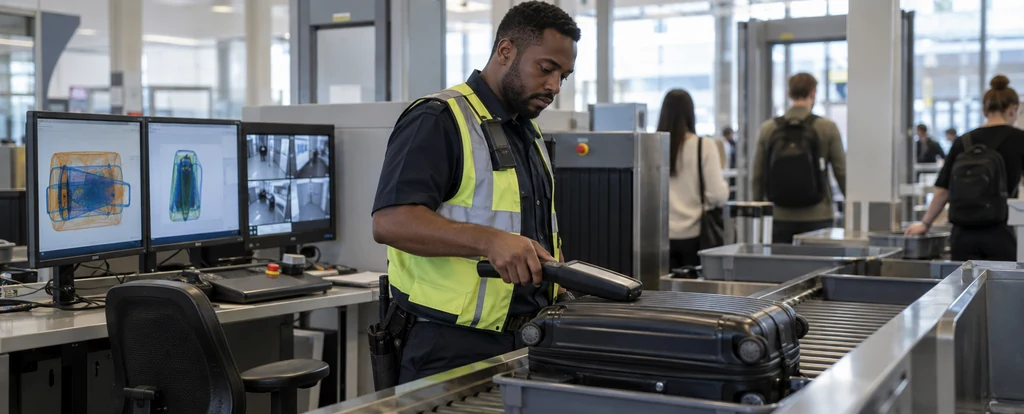
Security screening officers work the checkpoints into secure areas: airport terminals, court entrances, ports, defence sites and some government buildings. The work is narrower than general guarding, because the day revolves around screening equipment and the procedures that go with it rather than patrols and site access control. Most are employed by airport operators, federal and state agencies, or the contractors that hold screening contracts.
How much do security screening officers earn?
The median full-time salary for a security screening officer is $65,000 per annum, before tax, up $13,500 since 2018.
Pay depends heavily on who holds the contract, because airport screening sits under enterprise agreements while court and port work often follows a state award. Shift patterns move the figure more than experience does, with early starts, nights, weekends and public holidays attracting penalty rates. Additional duties such as supervisor, instructor or dangerous goods roles are usually paid at a higher classification.
What does a security screening officer do day to day?
The list below is what fills most weeks; the exact mix shifts with seniority and whatever stage the current work is at.
- Operating X-ray, metal detection and body scanning equipment to inspect passengers, baggage and freight
- Conducting pat-downs and hand searches when an alarm or an image anomaly is flagged
- Checking identification and travel documents against passenger and visitor records
- Holding a person and escalating to a supervisor or police when a prohibited item is suspected
- Recording incident details and completing screening and compliance paperwork at the end of a shift
What skills do security screening officers need?
Employers look for security operations, emergency response, regulatory compliance, backed by Rapiscan X-ray screening systems fluency and strong safety and compliance awareness.
Specialist skills
- Security operations
- Emergency response
- Regulatory compliance
Software and tools
- Rapiscan X-ray screening systems
- Walk-through metal detectors
- Explosive trace detection units
- Body scanners
- Access control and CCTV software
General skills
- Safety and compliance awareness
- Attention to detail
- Written communication
- Customer service
Is the job growing?
About 1,800 people work as security screening officers in Australia, and employment is projected to grow 4% over the decade to 2035. That's modest growth: demand is steady rather than booming.
How do you become a security screening officer?
Here's the path most security screening officers take, step by step.
- 1Get a security licence for your state or territory
Screening work generally requires a security licence, and the class and requirements differ between states and territories. You will need a police check, and some states also ask for a first aid certificate.
- 2Complete a Certificate II or III in Security Operations
This is the qualification most licensing bodies expect and the usual entry point into the industry. About 34% of people working in the role hold a certificate III or IV.
- 3Pass the employer's background and identity checks
Airport work needs an Aviation Security Identification Card, which involves a criminal history check, and government sites often require a security clearance. These checks can take weeks, so they are worth starting early.
- 4Do the site-specific equipment courses
Employers train new officers on X-ray image interpretation, explosive trace detection, body scanners and dangerous goods rules, and most of these certifications have to be renewed. Training is paid and usually runs alongside supervised shifts on a lane.
Ready to apply as a security screening officer?
Whether you're working toward becoming a security screening officer or already are one and want a hand with the next step (sharpening your resume for ATS screening, tightening your cover letter, or knowing what you'll actually be asked at interview), here are examples grounded in this specific role, not generic templates.
What jobs can a security screening officer move to?
Moving into Sheriff's Officer typically comes with the biggest pay rise, worth $26,000 a year more on average.
| Move to | Typical pay change | Overlap | Retraining |
|---|---|---|---|
| Sheriff's Officer Screening skills and court security awareness carry into sheriff's officer work, with a short course covering court procedures and enforcement. | +$26,000 | 71% | short course |
| Detector Dog Handler Experience in detecting prohibited items helps in dog handling, where a short course builds scent detection and animal handling skills. | +$20,800 | 53% | short course |
| Security Consultant Screening expertise and risk assessment carry into security consulting, with a short course adding advisory and auditing skills. | +$20,800 | 50% | short course |
| Protective Services Officer Their screening and threat detection experience transfers to protective services, where a short course adds legal powers and close protection duties. | +$10,400 | 80% | short course |
| Loss Prevention Officer Screening and observation skills transfer to loss prevention, with a short course covering retail theft and apprehension procedures. | +$10,400 | 53% | short course |
Moves are chosen from Jobs and Skills Australia's Data on Occupation Mobility, which follows income tax records between 2011-12 and 2020-21, together with entry requirements and skill overlap. A known move is one people were seen making in that data. Pay change compares median full-time pay for the two roles.
Who works as a security screening officer?
The typical security screening officer is 45 years old; 65% are men, 63% work full-time, and full-timers average 38 hours a week.
- 45
- Median age
- 35%
- Female share
- 63%
- Full-time
- −2h
- vs all-jobs avg
What's it like being a security screening officer?
The job runs to rosters rather than office hours, and a shift is a long sequence of short decisions at the lane: clear, search, escalate. Throughput sets the pace, so the pressure comes from keeping a queue moving while staying accurate on the checks that matter. People who like written procedures and don't need variety in the work itself tend to settle into it well.
What people like
- The rules are written down. Screening runs on set thresholds and procedures, so it is usually clear what to do when an alarm sounds and who decides when a case is not straightforward.
- A small crew at the lane. Officers work alongside the same handful of colleagues each shift, which makes the day social and the path to a supervisor obvious.
- Rosters that suit other commitments. The work is shift based and some sites run part-time rosters, which is harder to find in other security roles.
- Results you can see. Success is visible in the work itself: a lane runs through the day without an incident, and prohibited items are found rather than missed.
What people find hard
- Queue pressure at peak times. Flight schedules and screening targets keep the line moving, and taking the extra minute to search a bag properly is not always comfortable.
- Repetition across a shift. The same checks repeat hundreds of times in a day, which tests attention more than it tests physical effort.
- Travellers who take it personally. People can be rude or aggressive when a search is called, and officers absorb that while keeping the checkpoint running.
- Rotating shifts on your feet. Most roles cover early mornings, nights and public holidays on a rotating roster, and officers stand for most of the shift.
Based on our synthesis of professional-body surveys and public accounts of the role, not first-person verified reviews.
Which industries employ security screening officers?
Air Transport employs the largest share of security screening officers, followed by Public Order, Safety and Regulatory Services.
Top employing industries
- 1Air Transport
- 2Public Order, Safety and Regulatory Services
- 3Defence
- 4Water Transport
- 5Transport Support Services
Ranked by employment share; the source doesn't publish an exact percentage per industry.
| Certificate III/IV | 34% | |
|---|---|---|
| Diploma / Advanced Diploma | 26% | |
| Bachelor degree | 20% | |
| Year 12 or below | 20% |
Will AI replace security screening officers?
Security screening sits in the middle: image analysis and document checking are being automated, but a person still stands at the lane. Automated detection software flags suspicious shapes on X-ray images and e-gates verify some travel documents, which changes how an officer works rather than removing the role. Physical searches, refusing entry and dealing with an angry traveller remain firmly human tasks.
Share of typical working time by exposure level
- Reading X-ray and body scanner imagesDetection software now highlights suspicious shapes for the officer to confirm, so the skill is shifting from spotting a threat to judging what the system has flagged.30%moderate
- Checking identity and travel documentsAutomated gates and document readers verify most passports, but officers still handle mismatches, damaged documents and people flagged for a secondary check.25%moderate
- Incident reports and screening paperworkStandard incident and compliance records are increasingly drafted from a template or generated from the screening system, leaving the officer to review and sign off.25%high
- Pat-downs, hand searches and bag inspectionsSearching a person or a packed bag by hand still needs someone physically present and accountable.20%low
Moves least exposed to AI
These career moves from security screening officer work are rated low for AI exposure:
- Protective Services Officer
High skill overlap (80%), short course to get there, and a low automation-risk profile.
- Detector Dog Handler
Solid skill overlap (53%), short course to get there, and a low automation-risk profile.
Common questions about becoming a security screening officer
Straight answers to the questions people ask most.
How much do security screening officers earn?
Security screening officers earn a median of $65,000 per year before tax. Enterprise agreements, penalty rates and the site you work at all shift the actual rate, so two officers on the same lane can be on different figures.
How do you become a security screening officer?
You start with a state or territory security licence and the Certificate II or III in Security Operations that most licensing bodies expect. From there, employers run their own training on X-ray interpretation, body scanners and dangerous goods rules, and airport roles also need an Aviation Security Identification Card.
Are security screening officers in demand?
Security screening officers are currently not in shortage, and employment is projected to grow 4% over the decade to 2035. The occupation is small, so that growth adds a limited number of roles and most openings appear when staff leave.
Will AI replace security screening officers?
Not entirely, but parts of the job are already automated. Machine learning software now flags suspicious shapes on X-ray images and automated gates verify some documents, while pat-downs, bag searches and the judgement calls at the lane remain with the officer.
What can a security screening officer move into?
Screening experience transfers to protective services officer roles, which add legal powers and close protection duties through a short course, and pay around $10,400 more than screening work. Sheriff's officer roles are a similar step and pay around $26,000 more. Detector dog handling is another option, since the item detection skills carry over and a short course builds the animal handling side.
Do you need a degree to be a security screening officer?
No. About 34% of people in the role hold a certificate III or IV and 20% finished school at year 12 or below, so vocational training and a licence matter more than university.
Related roles
- Protective Services Officer
- Sheriff's Officer
- Detector Dog Handler
- Loss Prevention Officer
- Security Consultant
- Security Guard
Not sure this is you? Take the career quiz and get a ranked shortlist of roles that fit how you like to work.