Court Orderly
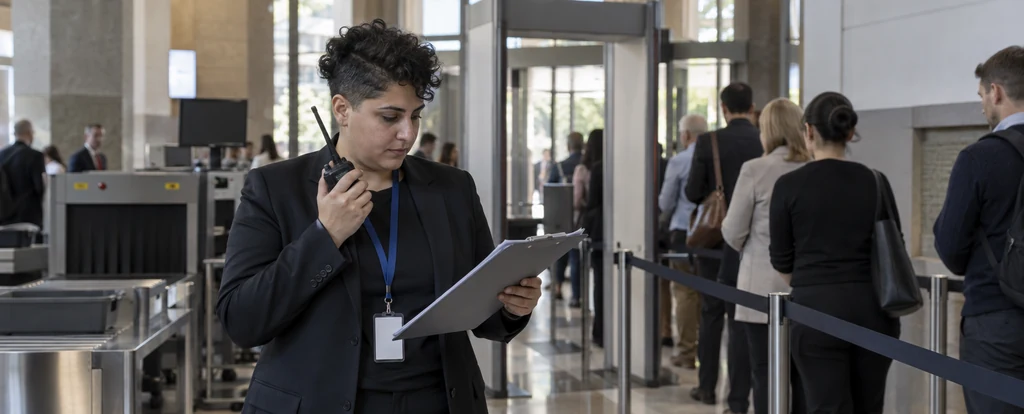
Court orderlies keep court buildings secure and orderly, screening everyone who comes through the door and keeping the day's list moving.
- Median salary*
- $70,200
3.5%vs last year, before tax
- People employed
- 1,400
0.0%vs last year
- Projected growth*
- +3%
to 2035
- AI exposure*
- Low
- automation risk
- Average hours*
- 38/wk
−2h vs all jobs
- Shortage status*
- Not in shortage
national
Court orderlies are employed by state, territory and local court administrations, and they work inside the court building rather than for the police. They screen everyone entering, keep order in courtrooms and public areas, administer oaths and handle the movement of jurors, witnesses and accused people during the day. Sheriff's officers do related work but serve documents and enforce warrants outside the court, so the two roles are easy to confuse.
How much do court orderlys earn?
The median full-time salary for a court orderly is $70,200 per annum, before tax, up $15,000 since 2018.
Pay is set by the enterprise agreement covering the state or territory courts administration, so rates differ between jurisdictions even where the duties are the same. Weekend and public holiday sittings attract loadings, and the classification level you are appointed at moves the figure more than anything you do in the job. There is little room to negotiate above the agreement, because the classification and its increments are fixed.
What does a court orderly do day to day?
The list below is what fills most weeks; the exact mix shifts with seniority and whatever stage the current work is at.
- Screening people and bags at court entrances and checking them through metal detectors and X-ray
- Maintaining order and decorum in courtrooms and public areas, and calming tense exchanges before they disrupt a hearing
- Administering oaths and affirmations when witnesses, interpreters and jurors are sworn in
- Escorting jurors, witnesses and accused people between courtrooms, jury rooms and public entrances
- Calling matters and announcing the entry and departure of judicial officers, which sets the rhythm of the sitting day
What skills do court orderlys need?
Employers look for regulatory compliance, security operations, backed by Court case management systems (for example ICMS or state equivalents) fluency and strong written communication.
Specialist skills
- Regulatory compliance
- Security operations
Software and tools
- Court case management systems (for example ICMS or state equivalents)
- Jury management systems
- Two-way radio
- Walk-through metal detectors and X-ray screening equipment
- Microsoft Office
General skills
- Written communication
- Attention to detail
- Customer service
- Safety and compliance awareness
- Time and deadline management
Is the job growing?
About 1,400 people work as court orderlys in Australia, and employment is projected to grow 3% over the decade to 2035. That's modest growth: demand is steady rather than booming.
How do you become a court orderly?
Here's the path most court orderlys take, step by step.
- 1Finish Year 12 or equivalent
Most courts administrations list Year 12 or a trade equivalent as the minimum, along with a national police check and, where the work involves jurors or family matters, a Working with Children Check.
- 2Build relevant experience
Event security, retail loss prevention, reception or customer service in a busy public building all show you can handle queues, screening and tense conversations, and this is often what separates shortlisted applicants because the courtroom side is taught on the job.
- 3Apply through the courts or public sector
Vacancies are advertised on state and territory courts websites and public sector job boards, and the process usually includes a medical or fitness check, reference checks and an interview against the court's security and conduct expectations.
- 4Complete induction and on-the-job training
New starters learn courtroom procedure, how to administer oaths, the court's case management system and the screening equipment, usually over a few weeks working alongside an experienced officer.
- 5Consider a Certificate III or IV
Among people already doing the job, the most common qualification is Certificate III/IV, held by about 34%, but employers do not require it. Check the job ad before enrolling, because at entry the police check and your work history matter more.
Ready to apply as a court orderly?
Whether you're working toward becoming a court orderly or already are one and want a hand with the next step (sharpening your resume for ATS screening, tightening your cover letter, or knowing what you'll actually be asked at interview), here are examples grounded in this specific role, not generic templates.
What jobs can a court orderly move to?
Moving into Sheriff's Officer typically comes with the biggest pay rise, worth $20,800 a year more on average.
| Move to | Typical pay change | Overlap | Retraining |
|---|---|---|---|
| Sheriff's Officer Court orderlies already know courtroom security and procedures, so they can move into sheriff's officer roles with little extra training. | +$20,800 | 83% | minimal |
| Protective Services Officer Court orderlies bring courtroom security and public order experience, moving into protective services roles with short additional training. | +$5,200 | 56% | short course |
| Security Screening Officer Court orderlies bring security screening and access control experience, so they can move into security screening roles with a short course. | −$5,200 | 71% | short course |
Moves are chosen from Jobs and Skills Australia's Data on Occupation Mobility, which follows income tax records between 2011-12 and 2020-21, together with entry requirements and skill overlap. A known move is one people were seen making in that data. Pay change compares median full-time pay for the two roles.
Who works as a court orderly?
The typical court orderly is 41 years old; 70% are women, 73% work full-time, and full-timers average 38 hours a week.
- 41
- Median age
- 70%
- Female share
- 73%
- Full-time
- −2h
- vs all-jobs avg
What's it like being a court orderly?
The day follows the court list: arrivals and screening first, then courtrooms, where you hold a post, watch the room and step in when something starts to fray. Much of it is standing, waiting and paying attention rather than action, which suits people who are patient, procedural and comfortable being firm without being confrontational. Jury trials can keep you in the building well past the listed finish, so the roster shapes the week as much as the work does.
What people like
- You see how courts really work. Court orderlies are in the room for mentions, jury trials and sentencing, so you learn the procedure from the inside rather than from television.
- The rules are clear. Court protocol, the daily list and the wording of oaths are all prescribed, so you know what your job is at any point in the day.
- Small, familiar teams. You work alongside a handful of colleagues and the same registrars and associates each day, which builds familiarity quickly.
- Public sector conditions. Most of the work sits in courts administrations, so leave, super and rostered hours come from a public sector agreement.
What people find hard
- Long stretches on your feet. A post at a courtroom door or a screening point can mean standing for hours, and jury deliberations produce plenty of waiting with nothing to do.
- Difficult behaviour is routine. People coming to court are often stressed, angry or frightened, and family and criminal listings can be confronting to work around.
- The roster takes over. Sitting days set the hours, so early starts before the morning list are normal and a jury that stays out keeps you back at the end of a shift.
- Little internal ladder. Most registries have few levels above the orderly role, so moving up usually means applying for a sheriff's officer or another public sector position.
Based on our synthesis of professional-body surveys and public accounts of the role, not first-person verified reviews.
Which industries employ court orderlys?
State and territory courts administration employs the largest share of court orderlys, followed by Public order and safety services.
Top employing industries
- 1State and territory courts administration
- 2Public order and safety services
- 3Legal services
- 4Local government administration
Ranked by employment share; the source doesn't publish an exact percentage per industry.
| Certificate III/IV | 34% | |
|---|---|---|
| Diploma / Advanced Diploma | 26% | |
| Bachelor degree | 20% | |
| Year 12 or below | 20% |
Will AI replace court orderlys?
Court orderly work sits at the low end of AI exposure because the job is physical presence in a secure building. Screening equipment and court case and jury management systems have taken over some record keeping and threat flagging, but someone still has to search a bag, stand at a courtroom door and judge whether an argument in front of them is about to escalate. The technology changes what you record and how quickly you hear about a risk, not whether the post is staffed.
Share of typical working time by exposure level
- Maintaining order in the courtroomThis depends on standing where you can be seen, noticing tension rising and stepping in early, which no camera or alert replaces.35%low
- Screening people and bags at the entranceX-ray and metal detection equipment flags items and court systems log who enters, but the decision to search, confiscate or refuse entry is made by the officer on the door.25%moderate
- Escorting jurors, witnesses and accused peopleJurors are kept away from witnesses and parties, and the route through the building changes with the day's list, so the escort is worked out on the spot.25%low
- Swearing in witnesses and administering oathsThe oath is spoken aloud to the witness and the court, so the task stays with the officer even though the record is entered in the case management system.15%low
Common questions about becoming a court orderly
Straight answers to the questions people ask most.
How much do court orderlies earn?
Court orderlies earn a median of $70,200 per year before tax, which is about $1,350 a week. Because nearly all of this work sits in state and territory court administrations, pay follows the relevant public sector agreement and shift and weekend loadings are what move it most. Treat the median as a guide rather than a starting rate, since it includes experienced staff and penalty-heavy rosters.
How do you become a court orderly?
Most court administrations ask for Year 12 or equivalent, a national police check and sometimes a Working with Children Check, then train you on the job in courtroom procedure, oaths and screening. Experience in security, reception or customer service in a busy public building helps you get shortlisted, and a Certificate III or IV in government or security operations is useful without being required. Vacancies are advertised on state and territory courts websites and public sector job boards.
Are court orderlies in demand?
Court orderlies are currently not in shortage, and employment is projected to grow 3% over the decade to 2035. Openings tend to appear through state and territory courts and public sector job boards, so it is worth checking those directly rather than waiting for a national signal.
How much will AI change court orderly work?
Very little of it, because the job is a person standing in a secure building, watching a room and making decisions in the moment. Courts already use case and jury management systems and X-ray screening with automatic threat detection, which speeds up records and flags bags for a closer look. Someone still has to search the bag, walk the juror to the jury room and step in when a hearing starts to escalate.
What can court orderlies move into?
Sheriff's officer is one move open to court orderlies, using the same courtroom and security knowledge and paying $20,800 more than the median for court orderlies. Protective services officer is another, with short additional training, paying $5,200 more. Both sit in the same public sector world, so your service, checks and training carry across.
What are the hours like?
Full-time court orderlies work an average of 38 hours a week, and about 73% of people in the role work full time. Rosters follow the court's sitting days, so an early start before the morning list is normal and a jury that stays out keeps officers in the building longer than the listed finish.
Related roles
- Sheriff's Officer
- Protective Services Officer
- Security Screening Officer
- Security Screening Officer
- Loss Prevention Officer
- Security Monitoring Operator
Not sure this is you? Take the career quiz and get a ranked shortlist of roles that fit how you like to work.