Radiologist
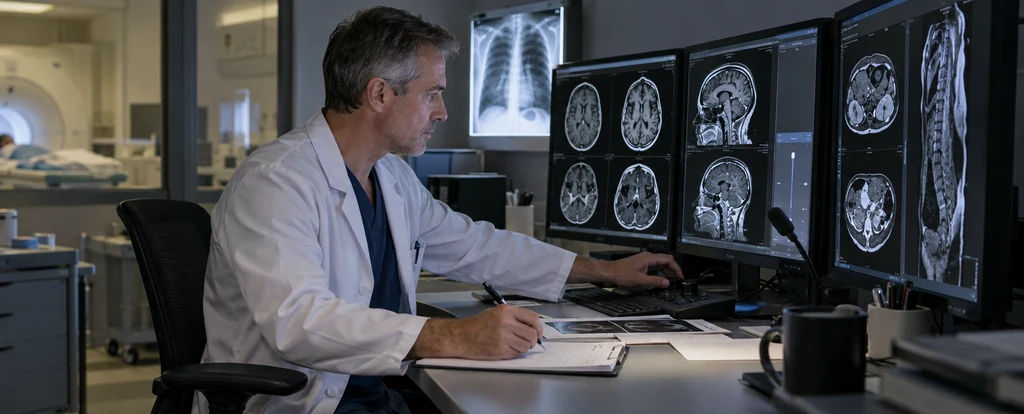
Radiologists interpret X-rays, CT, MRI and ultrasound scans and report what they find, and those reports guide treatment decisions across almost every branch of medicine.
- Median salary*
- $218,400
3.9%vs last year, before tax
- People employed
- 2,800
3.7%vs last year
- Projected growth
- +33%
to 2035
- AI exposure*
- Moderate
- automation risk
- Average hours
- 45/wk
+5h vs all jobs
- Shortage status
- In shortage
national
Radiologists are medical specialists rather than the radiographers who take the images: they read the studies, and they also perform image-guided procedures such as biopsies, drainages and joint injections. Most work in public or private hospital departments, private imaging practices and teleradiology services that report scans remotely. Getting there takes a medical degree, an intern year and about five years of specialist training with the Royal Australian and New Zealand College of Radiologists.
How much do radiologists earn?
The median full-time salary for a radiologist is $218,400 per annum, before tax, up $45,300 since 2018.
Where you work moves pay more than anything else. Public hospital radiologists are paid under state medical officer awards or enterprise agreements, which set salary by seniority and on-call load, while private practice earnings usually depend on how much you bill and the mix of work you take on. Procedural subspecialties such as interventional radiology tend to sit at the higher end.
What does a radiologist do day to day?
The list below is what fills most weeks; the exact mix shifts with seniority and whatever stage the current work is at.
- Reviewing X-rays, CT, MRI and ultrasound studies, usually working through a reporting list that includes scans queued from the emergency department
- Reporting findings to the referring doctor or treating team in writing and at multidisciplinary meetings
- Performing image-guided procedures such as biopsies, drainages and injections under live imaging
- Choosing and adjusting imaging protocols so each scan answers the clinical question being asked
- Supervising registrars, teaching medical students and covering an on-call roster for after-hours reporting
What skills do radiologists need?
Employers look for clinical assessment and treatment, patient care and support, teaching and instruction, backed by Sectra PACS fluency and strong written communication.
Specialist skills
- Clinical assessment and treatment
- Patient care and support
- Teaching and instruction
Software and tools
- Sectra PACS
- Nuance PowerScribe
- GE Centricity PACS
- Agfa IMPAX
- Visage 7
General skills
- Written communication
- Attention to detail
- Problem solving
- Stakeholder management
Is the job growing?
About 2,800 people work as radiologists in Australia, and employment is projected to grow 33% over the decade to 2035. That's very strong growth. Few roles in Australia are expanding this fast, and it points to solid demand for years to come.
How do you become a radiologist?
Here's the path most radiologists take, step by step.
- 1Complete a medical degree
Either an undergraduate medicine program of five to six years or a graduate entry degree after a first bachelor. Entry is competitive and usually involves the UCAT, an interview and a strong academic record.
- 2Finish internship and prevocational years
One intern year gives you general registration with AHPRA, then two or more resident years in hospital rotations build the broad clinical experience radiology training selectors look for.
- 3Win a place in the RANZCR training program
Radiology training places with the Royal Australian and New Zealand College of Radiologists are limited and selection is competitive, so most applicants apply across several rounds while continuing hospital work.
- 4Complete about five years of specialist training
The program combines rotations through modalities such as CT, MRI, ultrasound and nuclear medicine with written and oral exams, a research project and increasing on-call responsibility.
- 5Fellowship and specialist registration
Fellowship of the RANZCR (FRANZCR) plus specialist registration with AHPRA allows independent consultant work. Many radiologists then do a fellowship year in a subspecialty such as neuroradiology or musculoskeletal imaging.
Ready to apply as a radiologist?
Whether you're working toward becoming a radiologist or already are one and want a hand with the next step (sharpening your resume for ATS screening, tightening your cover letter, or knowing what you'll actually be asked at interview), here are examples grounded in this specific role, not generic templates.
What jobs can a radiologist move to?
None of the roles radiologists typically move into pay more than the role itself. Radiation Oncologist is the closest match. If a bigger salary is the goal, moving up into a senior or principal position within the role is usually the faster route than moving sideways.
| Move to | Typical pay change | Overlap | Retraining |
|---|---|---|---|
| Radiation Oncologist Radiologists can retrain in radiation oncology, applying imaging expertise to cancer treatment planning and delivery.Known move | −$20,800 | 50% | requalify |
Moves are chosen from Jobs and Skills Australia's Data on Occupation Mobility, which follows income tax records between 2011-12 and 2020-21, together with entry requirements and skill overlap. A known move is one people were seen making in that data. Pay change compares median full-time pay for the two roles.
Who works as a radiologist?
The typical radiologist is 45 years old; 66% are men, 74% work full-time, and full-timers average 45 hours a week.
- 45
- Median age
- 34%
- Female share
- 74%
- Full-time
- +5h
- vs all-jobs avg
What's it like being a radiologist?
The job runs on lists and deadlines: scans arrive, get reported, and the referrer acts on what you write, so much of the day is focused screen work punctuated by phone calls, meetings and procedures. The pressure comes from volume and from being the person who has to notice the thing everyone else missed. It suits people who like pattern recognition, quiet concentration and the breadth of seeing cases from every specialty, and who are comfortable making a call on incomplete information.
What people like
- Diagnostic puzzles across every specialty. A radiologist might report a paediatric chest, a trauma CT and a prostate MRI in the same session, which keeps the clinical content varied and demands constant learning.
- Quiet, focused work. Reporting is largely solo and screen-based, so there is room for deep concentration in a way that ward or theatre work rarely allows.
- Procedural work when you want it. Interventional radiology and biopsy lists give hands-on variety within the same specialty, and you can build a practice weighted towards procedures or away from them.
- Direct influence on treatment. Surgeons, oncologists and emergency physicians often decide what to do next based on your report, so the contribution is immediate even though the patient contact is brief.
What people find hard
- Reporting lists that never clear. Imaging demand keeps rising and departments are often short-staffed, so unfilled lists and after-hours backlogs are a standing frustration rather than an occasional crunch.
- Long hours at a screen. Most of the week is spent at a workstation reading studies, which brings eye strain, neck and back load and little natural movement.
- On-call and after-hours cover. Trauma and stroke calls come in overnight and at weekends, and the on-call radiologist is expected to answer quickly from home or return to the department.
- Being the one who has to spot the miss. A finding nobody else picked up lands on your report, and that responsibility weighs on decisions made quickly with imperfect images.
Based on our synthesis of professional-body surveys and public accounts of the role, not first-person verified reviews.
Which industries employ radiologists?
Health Care and Social Assistance employs the largest share of radiologists.
Top employing industries
- 1Health Care and Social Assistance
Ranked by employment share; the source doesn't publish an exact percentage per industry.
| Postgraduate | 48.2% | |
|---|---|---|
| Bachelor degree | 46% | |
| Diploma / Advanced Diploma | 1.3% | |
| Year 12 or below | 1.3% | |
| Certificate III/IV | 0.5% |
Will AI replace radiologists?
Radiology sits in the middle of AI exposure: it was one of the first specialties to see working tools, and triage software, nodule and fracture detection and speech recognition now sit inside everyday reporting. What those tools do is sort the worklist, raise a flag on a scan and turn speech into a draft. What they do not do is decide what a finding means for this patient, hold the needle during a biopsy or answer for the report when the treating team calls.
Share of typical working time by exposure level
- Reading and reporting scansWorklist triage and detection tools flag suspected findings on chest CT and mammograms, but the radiologist still forms the diagnosis and writes the report the referrer acts on.40%high
- Image-guided proceduresBiopsies, drainages and joint injections depend on hand-eye control under live imaging and on managing a patient on the table, which no current system performs.20%low
- Protocol selection and scan planningSoftware suggests protocols based on the referral and prior studies, which saves time, but you still adjust for the patient, the clinical question and the scanner in front of you.20%moderate
- Teaching, supervision and multidisciplinary meetingsRegistrar supervision, exam preparation and tumour board discussions rely on reasoning aloud and negotiation between specialists, and are largely untouched by automation.20%low
Moves least exposed to AI
These career moves from radiologist work are rated low for AI exposure:
- Radiation Oncologist
Solid skill overlap (50%), requalify to get there, and a low automation-risk profile.
Common questions about becoming a radiologist
Straight answers to the questions people ask most.
How much do radiologists earn in Australia?
Radiologists earn a median of $218,400 per year before tax. That is the figure for full-time specialist work, and it varies with whether you are employed in the public system or billing privately, your subspecialty and how much on-call and procedural work you take on.
How do you become a radiologist?
You complete a medical degree, an intern year and at least a couple of years of hospital residency, then gain a place in the RANZCR radiology training program. Training takes about five years and finishes with fellowship exams, after which you apply for specialist registration with AHPRA.
Are radiologists in demand in Australia?
Radiologists are currently in shortage nationally, and employment is projected to grow 33% over the decade to 2035. Imaging referrals keep growing as the population ages and more conditions are diagnosed through scans, so trained specialists remain needed in hospital departments and private practices, including in regional areas.
Will AI replace radiologists?
AI is already part of the work: triage software prioritises urgent scans, detection tools flag suspected nodules and fractures, and speech recognition drafts reports. Those tools speed up parts of reporting and protocol selection, but image-guided procedures, complex cases and the clinical judgement behind the final report stay with the radiologist, who signs off and carries the consequences.
What can radiologists move into?
Some retrain in radiation oncology, using imaging knowledge to plan and deliver cancer treatment, though that means requalifying through a separate training program and involves a lower median salary. Others move in the other direction: radiographers and resident medical officers bring imaging or general clinical experience and can enter radiology training, and general practitioners can retrain to specialise in imaging. Private practice is also a common long-term path, with many radiologists becoming partners or principals in imaging practices, and that is often where earnings grow.
What are the hours like for a radiologist?
Full-time radiologists average around 45 hours a week, mostly in business hours with a share of on-call and after-hours cover. About 74% work full time, and part-time roles are reasonably common in larger departments and private practices.
Related roles
- Radiation Oncologist
- Radiographer
- Resident Medical Officer
- General Practitioner
- Vascular Surgeon
- Cardiothoracic Surgeon
Not sure this is you? Take the career quiz and get a ranked shortlist of roles that fit how you like to work.