Emergency Physician
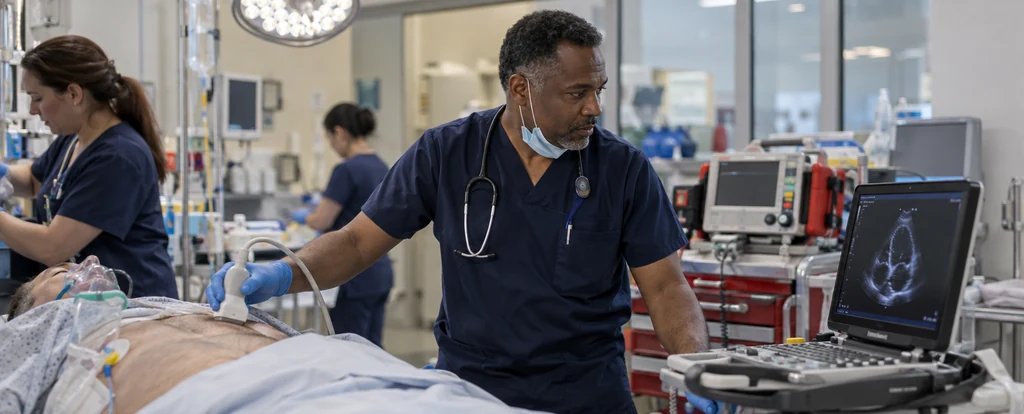
Emergency physicians treat people who arrive at hospital acutely unwell or injured, stabilising the critically ill and deciding what happens next.
- Median salary*
- $202,800
4.0%vs last year, before tax
- People employed
- 4,000
2.6%vs last year
- Projected growth
- +33%
to 2035
- AI exposure*
- Moderate
- automation risk
- Average hours
- 44/wk
+4h vs all jobs
- Shortage status
- In shortage
national
Emergency physicians work in hospital emergency departments, where patients arrive without a diagnosis and often without an appointment. The role differs from general practice in that you see a person once, under time pressure, and decide whether to admit, treat or send them home with follow-up. Most work in public hospital emergency departments in teams that include registrars, junior doctors, nurses and allied health staff, with some private emergency departments also employing specialists.
How much do emergency physicians earn?
The median full-time salary for an emergency physician is $202,800 per annum, before tax, up $42,300 since 2018.
Emergency physicians are paid under state and territory hospital enterprise agreements, so the base rate and loadings differ depending on where you work. Shift penalties, overtime and on-call allowances make up a large part of take-home pay because the department runs around the clock. Pay also rises with seniority and specialist registration, and locum work through an agency is common enough that rates vary widely.
What does an emergency physician do day to day?
The list below is what fills most weeks; the exact mix shifts with seniority and whatever stage the current work is at.
- Assessing patients who arrive with undifferentiated symptoms, from chest pain to major trauma, and deciding what tests and treatment they need
- Leading resuscitation and stabilisation of critically ill or injured patients, directing the team in the room
- Ordering and interpreting blood tests, ECGs and imaging, often before a diagnosis is clear
- Performing urgent procedures such as intubation, chest drain insertion, fracture reduction and wound repair
- Supervising and teaching registrars and junior doctors, and handing over care to inpatient teams
What skills do emergency physicians need?
Employers look for clinical assessment and treatment, patient care and support, medication management, backed by Epic fluency and strong written communication.
Specialist skills
- Clinical assessment and treatment
- Patient care and support
- Medication management
- Emergency response
Software and tools
- Epic
- Cerner
- PACS
- Point-of-care ultrasound
General skills
- Written communication
- Problem solving
- People leadership
- Time and deadline management
Is the job growing?
About 4,000 people work as emergency physicians in Australia, and employment is projected to grow 33% over the decade to 2035. That's very strong growth. Few roles in Australia are expanding this fast, and it points to solid demand for years to come.
How do you become an emergency physician?
Here's the path most emergency physicians take, step by step.
- 1Complete a medical degree
Entry is through an undergraduate or graduate medicine degree, taking four to six years depending on the pathway, followed by a supervised internship year in a hospital.
- 2Gain general registration
After the internship year you register with AHPRA through the Medical Board of Australia, which allows you to work as a doctor in Australian hospitals.
- 3Work prevocational hospital years
Two or more years as a resident medical officer, including emergency department terms, build the acute care experience and referee reports that specialist training selection looks for.
- 4Enter the college training program
Selection into the Australasian College for Emergency Medicine training program is competitive. The program runs for at least four years and includes rotations outside the emergency department, such as intensive care, anaesthetics and paediatrics.
- 5Complete fellowship and specialist registration
Finishing the program and its examinations gives Fellowship of the Australasian College for Emergency Medicine and specialist registration as an emergency physician.
Ready to apply as an emergency physician?
Whether you're working toward becoming an emergency physician or already are one and want a hand with the next step (sharpening your resume for ATS screening, tightening your cover letter, or knowing what you'll actually be asked at interview), here are examples grounded in this specific role, not generic templates.
What jobs can an emergency physician move to?
Moving into Intensive Care Specialist typically comes with the biggest pay rise, worth $20,800 a year more on average.
| Move to | Typical pay change | Overlap | Retraining |
|---|---|---|---|
| Intensive Care Specialist Emergency physicians bring rapid stabilisation and critical care judgement to intensive care, with formal intensive care training required for the specialist role. | +$20,800 | 55% | requalify |
| General Practitioner Emergency physicians bring acute assessment and resuscitation skills to general practice, though they must complete general practice training to register.Known move | −$75,600 | 44% | requalify |
Moves are chosen from Jobs and Skills Australia's Data on Occupation Mobility, which follows income tax records between 2011-12 and 2020-21, together with entry requirements and skill overlap. A known move is one people were seen making in that data. Pay change compares median full-time pay for the two roles.
Who works as an emergency physician?
The typical emergency physician is 38 years old; 54% are men, 80% work full-time, and full-timers average 44 hours a week.
- 38
- Median age
- 46%
- Female share
- 80%
- Full-time
- +4h
- vs all-jobs avg
What's it like being an emergency physician?
The job runs to a roster rather than a diary. A shift brings a queue that keeps moving, so the work is a series of decisions made with whatever information is available at the time, punctuated by resuscitations that need everyone in the room. Emergency physicians tend to enjoy the variety, the procedures and the team, and they accept that the same roster includes nights, weekends and public holidays.
What people like
- No two shifts are alike. Presentations range from a sprained ankle to a major trauma, so the day rarely follows the plan you made at the start of it.
- Hands-on procedures are part of the week. Intubation, chest drains, fracture reduction and bedside ultrasound are done in the department rather than referred elsewhere.
- You work inside a team. Nurses, registrars, residents and allied health staff are all in the department, so most decisions are made with others in the room rather than alone.
- The outcome arrives quickly. Many patients are treated, admitted or discharged within the shift, so you see the result of your decisions rather than handing them on.
What people find hard
- Nights, weekends and public holidays. Emergency departments never close, so the roster rotates through every hour of the week and your social life fits around it.
- Waiting for beds. When the hospital is full, patients stay in the department under your care while the queue behind them keeps growing.
- Deciding with incomplete information. Test results take time and histories are sometimes unclear, and the risk of missing something serious sits with the decisions you make in the first hour.
- Heavy cases are routine. Deaths, serious injuries and distressed families come through the department regularly, and the shift keeps going through them.
Based on our synthesis of professional-body surveys and public accounts of the role, not first-person verified reviews.
Which industries employ emergency physicians?
Health Care and Social Assistance employs the largest share of emergency physicians.
Top employing industries
- 1Health Care and Social Assistance
Ranked by employment share; the source doesn't publish an exact percentage per industry.
| Bachelor degree | 61.1% | |
|---|---|---|
| Postgraduate | 35.7% | |
| Diploma / Advanced Diploma | 0.4% | |
| Certificate III/IV | 0.1% | |
| Year 12 or below | 0.1% |
Will AI replace emergency physicians?
Emergency medicine sits in the middle: documentation, triage support and ECG or imaging interpretation are increasingly assisted by software, while procedures and the decisions about who to admit stay with the doctor. Tools such as triage decision support, ECG interpretation software and voice-to-text notes speed up parts of the assessment without managing a deteriorating patient or an airway.
Share of typical working time by exposure level
- Assessing undifferentiated presentationsDecision-support tools can suggest likely diagnoses and flag high-risk patients, but the history, examination and the call on which tests to order are still made at the bedside.35%moderate
- Leading resuscitation and urgent proceduresIntubation, chest drains and fracture reduction are hands-on skills, and the team in the room follows a human leader who can change course as the patient responds.25%low
- Clinical documentation and handoverVoice-to-text dictation and note templates already draft assessments and discharge summaries, and this is the part of the job where software does the most.20%high
- Coordinating admissions, referrals and discharge planningBed management and referral systems automate some of the paperwork, but getting a patient admitted or safely home depends on conversations with inpatient teams and families.20%moderate
Common questions about becoming an emergency physician
Straight answers to the questions people ask most.
How much do emergency physicians earn?
Emergency physicians earn $202,800 per year before tax at the median, and almost all work full time. The figure is a median rather than a starting salary: it sits above what registrars in training are paid and reflects shift loadings, overtime and on-call allowances on top of the base rate set by hospital enterprise agreements.
How do you become an emergency physician?
The path is a medical degree, an internship year, general registration with AHPRA, several years of hospital work as a resident medical officer, and then the Australasian College for Emergency Medicine training program. Fellowship of the college is what makes you a specialist emergency physician, and entry to the training program is competitive.
Are emergency physicians in demand in Australia?
Emergency physicians are currently in shortage nationally, and employment is projected to grow 33% over the decade to 2035. Hospitals need specialist cover in their emergency departments at all hours, so the openings are mainly for doctors who have completed or are well through college training.
Will AI replace emergency physicians?
Parts of the work are already assisted by software, including triage tools that flag high-risk presentations, programs that read ECGs, and voice-to-text notes. It changes how quickly information reaches you rather than who runs the resuscitation, since procedures and the decision to admit a patient stay with the treating doctor.
What other roles can an emergency physician move into?
Intensive care is a common move, because acute assessment and stabilisation skills carry across, though intensive care specialist training is still required and the pay is $20,800 more. Some move into general practice, which means completing general practice training before registering in that specialty.
Do emergency physicians work night shifts?
Yes. Emergency departments operate every hour of every day, so rostered nights, weekends and public holidays are part of the job. Full-time emergency physicians average around 44 hours a week, and shift and penalty loadings are built into hospital pay agreements.
Related roles
- General Practitioner
- Intensive Care Specialist
- Resident Medical Officer
- General Practitioner
- Intensive Care Paramedic
- Ophthalmologist
Not sure this is you? Take the career quiz and get a ranked shortlist of roles that fit how you like to work.