Ophthalmologist
Ophthalmologists are medical specialists who diagnose and treat eye disease, and much of their work is surgery that preserves or restores sight.
- Median salary*
- $218,400
3.5%vs last year, before tax
- People employed
- 1,000
0.0%vs last year
- Projected growth
- +33%
to 2035
- AI exposure*
- Moderate
- automation risk
- Average hours
- 47/wk
+7h vs all jobs
- Shortage status
- In shortage
national
Ophthalmologists are medical specialists who diagnose and treat eye disease, and most split their week between clinic rooms and an operating theatre. They are the doctors a GP or optometrist refers a patient to when something needs medical or surgical treatment, which is what separates them from optometrists who test vision and prescribe glasses. About 1,000 people work as ophthalmologists in Australia, and all of them hold specialist registration with AHPRA.
How much do ophthalmologists earn?
The median full-time salary for an ophthalmologist is $218,400 per annum, before tax, up $46,500 since 2018.
Pay depends more on how you work than on how long you have worked. Salaried public hospital specialists earn a set rate under the relevant state award, while ophthalmologists in private practice bill Medicare for each consultation and procedure, so income follows surgical volume and case mix. Subspecialty and location shape the mix of work too, and full-time procedural practice bills more than a clinic-only public appointment.
What does an ophthalmologist do day to day?
The list below is what fills most weeks; the exact mix shifts with seniority and whatever stage the current work is at.
- Running clinics where patients are assessed for cataracts, glaucoma, diabetic eye disease and macular degeneration
- Operating on cataracts, glaucoma and retinal conditions, usually on day surgery lists
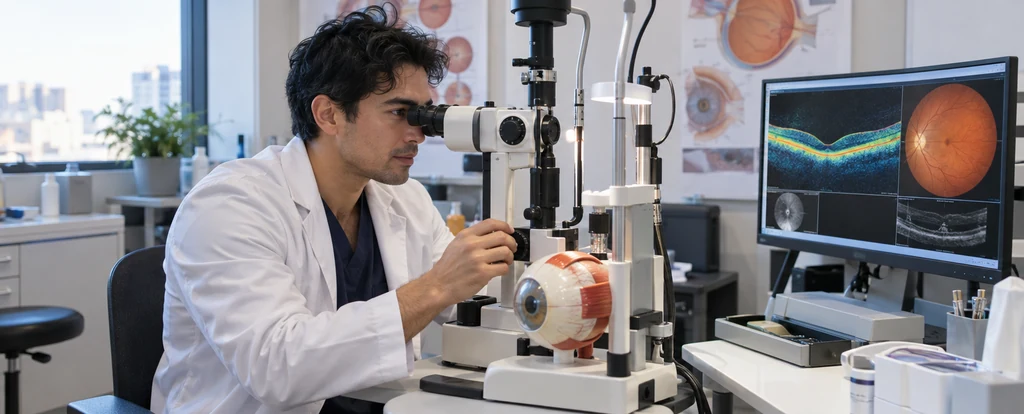
- Measuring vision, eye pressure and the shape of the eye, then interpreting OCT scans and fundus photographs
- Prescribing eye drops, injectable medicines, glasses and contact lenses
- Following patients with long term conditions such as glaucoma or macular degeneration across years of visits
What skills do ophthalmologists need?
Employers look for clinical assessment and treatment, patient care and support, medication management, backed by Optical coherence tomography (OCT) systems fluency and strong attention to detail.
Specialist skills
- Clinical assessment and treatment
- Patient care and support
- Medication management
Software and tools
- Optical coherence tomography (OCT) systems
- Slit lamp biomicroscopes
- Electronic medical records (EMR)
- Fundus cameras
- Ophthalmic surgical lasers
General skills
- Attention to detail
- Problem solving
- Written communication
- People leadership
Is the job growing?
About 1,000 people work as ophthalmologists in Australia, and employment is projected to grow 33% over the decade to 2035. That's very strong growth. Few roles in Australia are expanding this fast, and it points to solid demand for years to come.
How do you become an ophthalmologist?
Here's the path most ophthalmologists take, step by step.
- 1Complete a medical degree
A Bachelor of Medicine, Bachelor of Surgery or a Doctor of Medicine takes five or six years and is the only way in. Entry is competitive and depends on your Year 12 results, or on an earlier degree and the GAMSAT for graduate entry.
- 2Finish the intern year and gain general registration
A supervised year in a hospital after graduation leads to general registration with AHPRA. It is paid work, and it is where you begin managing patients under your own name.
- 3Work as a resident medical officer
Two or more prevocational years follow, usually with rotations through emergency, general medicine and neurology. This is where applicants build the references and clinical experience that selection panels look for.
- 4Enter the RANZCO training program
Selection into the Royal Australian and New Zealand College of Ophthalmologists program is competitive, and training runs about five years with written and clinical exams and a surgical logbook. You rotate through public hospital clinics and theatres while completing it.
- 5Attain specialist registration and choose a setting
Fellowship of RANZCO leads to specialist registration with AHPRA, which you need before you can bill Medicare for eye surgery. Many ophthalmologists then add a subspecialty fellowship in retina, glaucoma, cornea or paediatrics, and most work across public and private settings.
Ready to apply as an ophthalmologist?
Whether you're working toward becoming an ophthalmologist or already are one and want a hand with the next step (sharpening your resume for ATS screening, tightening your cover letter, or knowing what you'll actually be asked at interview), here are examples grounded in this specific role, not generic templates.
What jobs can an ophthalmologist move to?
We don't list lateral moves for ophthalmologists: leaving means a full new qualification rather than a career move, and the realistic routes in are covered under how to become one.
Who works as an ophthalmologist?
The typical ophthalmologist is 49 years old; 70% are men, 73% work full-time, and full-timers average 47 hours a week.
- 49
- Median age
- 30%
- Female share
- 73%
- Full-time
- +7h
- vs all-jobs avg
What's it like being an ophthalmologist?
The week tends to split between clinic and theatre, with public hospital lists often full and private practice running to a tighter schedule. The work is precise and largely procedural, and a good share of it is repeat visits, because glaucoma and macular degeneration patients come back for years. It suits people who like fine hand work, clear diagnostic problems and seeing the result of their own surgery.
What people like
- Surgery you can see the result of. Cataract surgery often improves a patient's vision the same day, which is unusually direct feedback for a medical specialty.
- Fine, precise hand work. Operating under a microscope with instruments a fraction of a millimetre wide rewards steadiness and patience, and the technique keeps improving with volume.
- Long term patient relationships. Chronic conditions such as glaucoma mean the same patients return for years, so you get to know them and watch how treatment plays out.
- A small specialty with control over your working life. With so few ophthalmologists in the country, most can choose between public hospital work, private practice or a mix, and set the shape of their own week.
What people find hard
- A long training road. Medical degree, internship, prevocational years and about five years of RANZCO training sit between you and consultant work, with competitive selection at the narrow point.
- Full clinics and waiting lists. Public eye clinics run long lists, and much of a session goes to high-volume reviews of stable patients rather than new diagnoses.
- Complications carry weight. The eye is small, unforgiving tissue, and an infection or a retinal problem after surgery can cost sight, which is a real source of pressure.
- Running the business side. Private practice brings billing, rooms, staff and Medicare compliance, and that admin grows with the practice rather than going away.
Based on our synthesis of professional-body surveys and public accounts of the role, not first-person verified reviews.
Which industries employ ophthalmologists?
Health Care and Social Assistance employs the largest share of ophthalmologists.
Top employing industries
- 1Health Care and Social Assistance
Ranked by employment share; the source doesn't publish an exact percentage per industry.
| Postgraduate | 60.9% | |
|---|---|---|
| Bachelor degree | 31.4% | |
| Year 12 or below | 1.5% | |
| Diploma / Advanced Diploma | 1.3% | |
| Certificate III/IV | 0.7% |
Will AI replace ophthalmologists?
Ophthalmology sits in the middle. The diagnostic and administrative parts of the work are increasingly assisted by software, while the surgery remains hands-on. Automated grading of retinal photographs already sorts diabetic retinopathy images in some services, which changes who reads a scan first but not who decides on treatment, and operating under a microscope with fine instruments is the part least likely to change soon.
Share of typical working time by exposure level
- Eye surgeryFemtosecond lasers and robotic assistance add precision in some steps, but the surgeon still controls the instruments inside the eye.40%low
- Clinic assessment and diagnosisOCT and fundus imaging give clean measurements, yet interpreting them alongside the history and deciding whether to operate is clinical judgement.30%moderate
- Imaging and test interpretationAutomated grading flags suspicious retinal images before a specialist reads them, cutting the time spent on routine screening results.20%high
- Records, billing and follow-up schedulingElectronic medical records, Medicare claiming and recall systems handle much of the paperwork that once sat with the practice.10%high
Common questions about becoming an ophthalmologist
Straight answers to the questions people ask most.
How much do ophthalmologists earn?
$218,400 per annum, before tax, for full-time ophthalmologists. That median covers a wide spread: salaried public hospital specialists sit on a fixed scale, while those in private practice bill Medicare for each consultation and procedure. Subspecialty and how much of the week is surgical move the figure most.
How do you become an ophthalmologist?
You start with a medical degree, then an intern year and general registration with AHPRA, followed by prevocational hospital years as a resident medical officer. From there you apply for the RANZCO training program, which takes about five years and leads to specialist registration. The selection step is the bottleneck, so the prevocational years are best spent building a strong application.
Are ophthalmologists in demand in Australia?
Ophthalmologists are currently in shortage nationally, and employment is projected to grow 33% over the decade to 2035. The limit on numbers is training places rather than demand for eye care, so entry to the specialist program stays competitive even when the specialty is short of people. If you are weighing up the move, plan for several prevocational years before you can apply.
Will AI replace ophthalmologists?
It will take over parts of the work rather than the whole job. Automated grading of retinal images and AI screening tools for diabetic retinopathy already do first-pass reads in some services, and clinic notes, billing and scheduling are increasingly handled by software. Surgery under a microscope is the least affected part, and the decision about what to treat still rests with the ophthalmologist.
Where can an ophthalmologist's career go after training?
Many move into the specialty from a resident medical officer role, where general hospital training and clinical assessment carry across, and about 71% of the skills overlap. Once registered, most build a subspecialty such as retina, glaucoma, cornea or paediatrics, often with a fellowship overseas. Owning or running your own practice, frequently alongside a public hospital appointment, is a common longer term step and is usually where earnings grow.
Do ophthalmologists work long hours?
Average full-time hours are 47 a week, which is longer than a standard week. The pattern varies by setting, with private rooms running to scheduled lists and public hospital roles adding on-call for eye trauma. Sessional work is common later in a career, which brings the hours down.
Related roles
Not sure this is you? Take the career quiz and get a ranked shortlist of roles that fit how you like to work.