Home Manufacturing & Production
Scrap Metal Recycler
Scrap metal recyclers sort, process and prepare recovered metal so it can be sold back into manufacturing.
- Median salary
- $68,500
3.6%vs last year, before tax
- People employed
- 2,900
0.0%vs last year
- Projected growth
- +8.5%
to 2035
- AI exposure*
- Moderate
- automation risk
- Average hours
- 44/wk
+4h vs all jobs
- Shortage status*
- Not in shortage
national
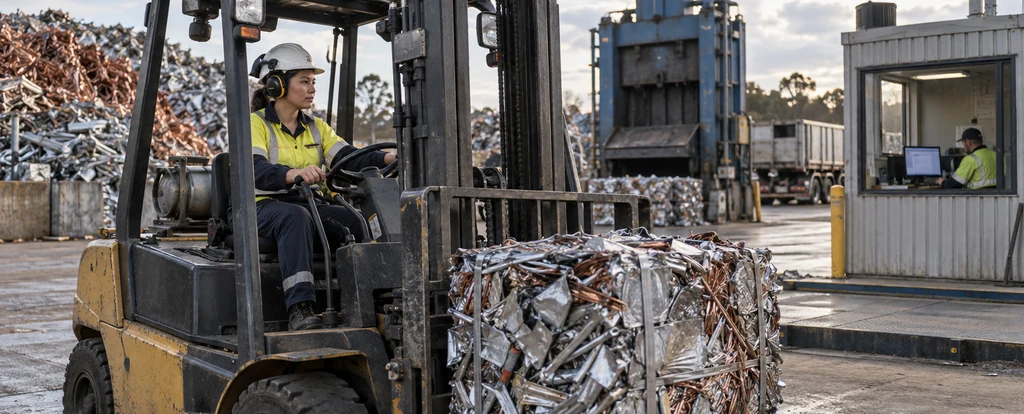
Most of the work happens in scrap yards and metal merchant depots, where trucks arrive with mixed loads of steel, aluminium, copper and brass. It is narrower than general recycling work, which handles mixed waste streams, because the value here sits in identifying and separating metals accurately. Employers are usually scrap metal merchants, demolition contractors and waste services companies.
How much do scrap metal recyclers earn?
The median full-time salary for a scrap metal recycler is $68,500 per annum, before tax, up $14,600 since 2018.
Many yards pay under the Manufacturing and Associated Industries and Occupations Award, while others use a waste management award or an enterprise agreement, so the same job can sit on different rates. Overtime and shift penalties add a lot in a yard where average full-time hours run to 44 a week. Pay also rises with the licences you hold and the machines you can run unsupervised.
What does a scrap metal recycler do day to day?
The list below is what fills most weeks; the exact mix shifts with seniority and whatever stage the current work is at.
- Sorting incoming loads by metal type and grade, separating copper, brass, aluminium and steel
- Checking loads for contaminants, sealed containers and hazardous items before processing
- Operating forklifts, balers, shears and shredders to move and reduce material
- Weighing loads across the weighbridge and recording grades, weights and shipments
- Loading processed metal onto trucks and containers for sale to mills and foundries, keeping grades clean because a contaminated load drops the price the yard is paid
What skills do scrap metal recyclers need?
Employers look for operations management, plant and equipment operation, hand and power tool work, backed by Forklift fluency and strong safety and compliance awareness.
Specialist skills
- Operations management
- Plant and equipment operation
- Hand and power tool work
- Worksite safety management
- Inventory management
Software and tools
- Forklift
- Metal baler
- Hydraulic shears
- Weighbridge
- Inventory management software
General skills
- Safety and compliance awareness
- Physical stamina and dexterity
Is the job growing?
About 2,900 people work as scrap metal recyclers in Australia, and employment is projected to grow 8.5% over the decade to 2035. That's modest growth: demand is steady rather than booming.
How do you become a scrap metal recycler?
Here's the path most scrap metal recyclers take, step by step.
- 1Start as a yard hand or labourer
Most people enter without formal qualifications: about 61% of the people in this job hold Year 12 or below. Yards hire on reliability and a willingness to work outdoors, then train sorting and machine feeding on site.
- 2Get a forklift licence
The forklift licence (the LF high risk work licence) is the qualification most yards ask for. It is issued by state and territory work health and safety regulators after a short course and a practical assessment.
- 3Learn the processing machines
Training on balers, shears and shredders usually happens on the job, with experienced operators signing off your competence. Larger yards may pay for manufacturer courses and additional plant licences.
- 4Add a qualification if you want to move up
A certificate III in waste management or resource recovery at TAFE suits people heading towards supervisory or yard management roles, and some employers support the study.
- 5Build towards plant and transport work
Loader and excavator licences or a heavy vehicle licence open up better-paid work moving material and driving collection trucks, both of which build on the same yard skills.
Ready to apply as a scrap metal recycler?
Whether you're working toward becoming a scrap metal recycler or already are one and want a hand with the next step (sharpening your resume for ATS screening, tightening your cover letter, or knowing what you'll actually be asked at interview), here are examples grounded in this specific role, not generic templates.
What jobs can a scrap metal recycler move to?
Moving into Truck Driver typically comes with the biggest pay rise, worth $33,400 a year more on average.
| Move to | Typical pay change | Overlap | Retraining |
|---|---|---|---|
| Truck Driver Scrap metal recyclers understand loading and moving heavy materials, and can gain a heavy vehicle licence to drive trucks.Known move | +$33,400 | 17% | reskill |
| Loader Operator Scrap metal recyclers work with heavy loads and can add a loader ticket to operate plant machinery. | +$26,100 | 74% | short course |
| Motor Mechanic Scrap metal recyclers work with metals and mechanical parts, and can undertake an apprenticeship to become a motor mechanic.Known move | +$15,800 | 35% | requalify |
| Process Worker Scrap metal recyclers can apply sorting and machine feeding experience to process work in manufacturing.Known move | +$10,500 | 16% | reskill |
| Forklift Operator Scrap metal recyclers already move heavy material around yards, and a forklift ticket lets them operate lift trucks.Known move | +$1,200 | 57% | short course |
Moves are chosen from Jobs and Skills Australia's Data on Occupation Mobility, which follows income tax records between 2011-12 and 2020-21, together with entry requirements and skill overlap. A known move is one people were seen making in that data. Pay change compares median full-time pay for the two roles.
Who works as a scrap metal recycler?
The typical scrap metal recycler is 42 years old; 90% are men, 63% work full-time, and full-timers average 44 hours a week.
- 42
- Median age
- 10%
- Female share
- 63%
- Full-time
- +4h
- vs all-jobs avg
What's it like being a scrap metal recycler?
The work follows the trucks: quiet spells between deliveries, then a burst of sorting, weighing and processing when a load arrives. Most recyclers work outdoors in a small crew, moving between the yard, the weighbridge and the machines, and long weeks are normal when a big demolition job is being cleared.
What people like
- You can see what the metal is worth. Grading copper or aluminium correctly changes what the yard is paid, so the skill shows up in the numbers rather than staying invisible.
- No two loads are the same. One delivery might be whitegoods, the next a stripped factory fit-out, which keeps the sorting varied.
- Running serious machinery. Balers, shears and forklifts do the heavy lifting, and operating them well is a skill in its own right.
- Small crews and clear results. Yards often run with a handful of people, so you can see where your work fits by the end of a shift.
What people find hard
- Weather, dust and noise. Most of the yard is outdoors and shears and shredders are loud, so the shift is spent in ear protection and whatever the day brings.
- Hazardous surprises in loads. Sealed drums, gas cylinders and sharp metal turn up in mixed scrap, which is why inspection rules are strict and never optional.
- Prices are set elsewhere. Metal prices move with global markets, so volumes, overtime and hiring in a yard can shift with them.
- Repetitive hand sorting. Working through a mixed load by hand is dirty and repetitive, and on some days it fills most of the shift.
Based on our synthesis of professional-body surveys and public accounts of the role, not first-person verified reviews.
Which industries employ scrap metal recyclers?
Wholesale Trade employs the largest share of scrap metal recyclers, followed by Electricity, Gas, Water and Waste Services.
Top employing industries
- 1Wholesale Trade
- 2Electricity, Gas, Water and Waste Services
Ranked by employment share; the source doesn't publish an exact percentage per industry.
| Year 12 or below | 61.4% | |
|---|---|---|
| Certificate III/IV | 19.9% | |
| Bachelor degree | 4.2% | |
| Diploma / Advanced Diploma | 3.6% | |
| Postgraduate | 1.5% |
Will AI replace scrap metal recyclers?
Scrap metal recycling sits in the middle: record keeping and some grading are increasingly handled by software and sensors, but the physical handling of mixed, heavy and unpredictable material keeps much of the job out of reach of automation. Weighbridge systems, X-ray and sensor sorting lines and inventory software already do work that used to be manual, and larger processing yards are adopting them first. Smaller yards still lean on the eye of the people on the sorting line.
Share of typical working time by exposure level
- Operating balers, shears and shreddersFeeding and running this machinery is physical, safety-critical work that changes with the shape of every load, so it stays with the operator.35%low
- Sorting and grading incoming scrapHand sorting still sets most grades in smaller yards, though X-ray and sensor sorters are taking over part of the separation on larger processing lines.30%moderate
- Inspecting loads for contaminants and hazardsSpotting sealed drums or the wrong alloy is quicker with an experienced eye, and handheld X-ray analysers now support the call.20%moderate
- Recording weights, grades and shipmentsWeighbridge and inventory software logs most of this automatically, so the task is shifting towards checking and correcting the data.15%high
Moves least exposed to AI
These career moves from scrap metal recycler work are rated low for AI exposure:
- Forklift Operator
Solid skill overlap (57%), short course to get there, and a low automation-risk profile.
- Loader Operator
High skill overlap (74%), short course to get there, and a low automation-risk profile.
Common questions about becoming a scrap metal recycler
Straight answers to the questions people ask most.
How much do scrap metal recyclers earn?
Scrap metal recyclers earn a median of $68,500 per year before tax. What you take home depends on the award or agreement the yard uses, how much overtime and shift work is available, and the plant licences you hold.
How do you become a scrap metal recycler?
Most people start as a yard hand and learn sorting and machine work on site, with a forklift licence being the qualification employers commonly ask for. Adding plant licences, or a certificate III in waste management later on, opens up operator and supervisory roles.
Are scrap metal recyclers in demand?
Scrap metal recyclers are currently not in shortage, and employment is projected to grow 8.5% over the decade to 2035. The occupation is small, so openings tend to come from turnover as people move on, and a yard that is hiring often wants someone with forklift experience ready to start.
Will AI replace scrap metal recyclers?
AI is changing parts of the job rather than replacing it. Weighbridge software, X-ray and sensor sorting lines and inventory systems already handle more of the grading and record keeping, but mixed loads still need hands-on sorting, and heavy, dirty, unpredictable material is hard to automate.
What jobs can a scrap metal recycler move into?
Forklift operating is a short step across, paying $1,200 more for much of the same yard work, while loader operating pays $26,100 more once you hold the plant licence. A heavy vehicle licence opens up truck driving at $33,400 more. Some experienced recyclers go on to run their own collection business or small yard, which is often where earnings grow.
Is scrap metal recycling a dangerous job?
It carries real risks: mobile plant, hydraulic shears, sharp metal, and loads that occasionally hide sealed containers or gas cylinders. Yards manage this with traffic plans, inspection rules and protective equipment, and following them is a core part of the work rather than an add-on.
Related roles
Not sure this is you? Take the career quiz and get a ranked shortlist of roles that fit how you like to work.