Sign Writer
Sign writers design, make and install the signs that identify a business, from vinyl lettering on a shopfront to hand-painted work on a vehicle.
- Median salary*
- $68,600
4.3%vs last year, before tax
- People employed
- 6,300
1.6%vs last year
- Projected growth
- +10.2%
to 2035
- AI exposure*
- Moderate
- automation risk
- Average hours
- 43/wk
+3h vs all jobs
- Shortage status
- Not in shortage
national
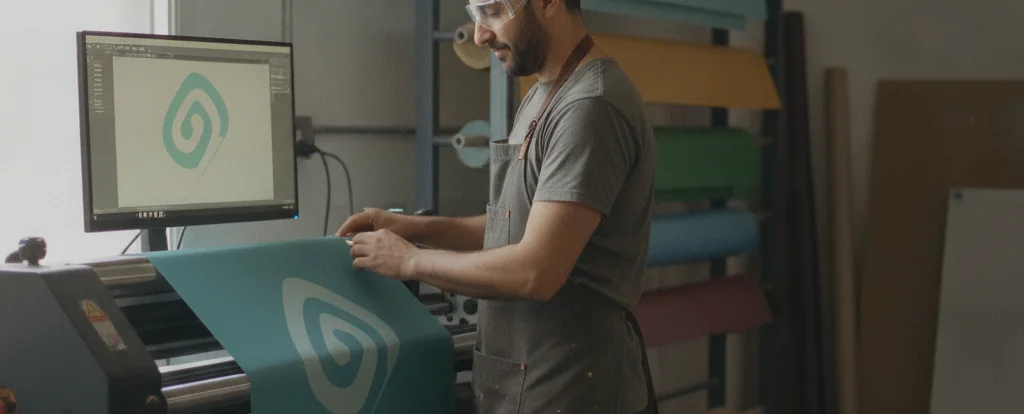
Sign writers work in a workshop and on site, taking a job from a client's brief through to a sign that is made and fitted. Most work for small signage firms rather than large agencies, and the trade sits closer to graphic design than people expect: cutting vinyl and running a spray gun matter as much as choosing a typeface. The job is often confused with graphic design, but a sign writer also fabricates and installs the physical object, which brings materials, weather and access into the work every day.
How much do sign writers earn?
The median full-time salary for a sign writer is $68,600 per annum, before tax, up $14,400 since 2018.
Pay is usually set by an award or enterprise agreement, so overtime, weekend installs and travel to sites add to a week's earnings. Rates climb with the skills a shop can charge more for, such as vehicle wraps, large-format printing and CNC routing. Sign writers who run their own business set their own margins, and that is where earnings can grow most.
What does a sign writer do day to day?
The list below is what fills most weeks; the exact mix shifts with seniority and whatever stage the current work is at.
- Measuring up a wall, vehicle or shopfront and working out how a design will sit on it
- Cutting vinyl or hand-painting lettering so the edges stay crisp and the spacing reads correctly from a distance
- Mixing paint to match a brand colour by eye as much as by formula
- Installing finished signs on site, often working around traffic, weather or awkward access
- Quoting a job and talking a client through material and finish options before work starts
What skills do sign writers need?
Employers look for visual design, creative software production, spatial and interior design, backed by Adobe Illustrator fluency and strong attention to detail.
Specialist skills
- Visual design
- Creative software production
- Spatial and interior design
- Hand and power tool work
Software and tools
- Adobe Illustrator
- CorelDRAW
- Vinyl cutting machines (Silhouette/Cricut)
- Paint sprayers and brush kits
- Measuring tape and laser levels
General skills
- Attention to detail
- Client relationships and advisory
- Written communication
- Problem solving
Is the job growing?
About 6,300 people work as sign writers in Australia, and employment is projected to grow 10.2% over the decade to 2035. That's healthy, above-average growth, and the role should stay in solid demand.
How do you become a sign writer?
Here's the path most sign writers take, step by step.
- 1Complete a Certificate III in Signs and Graphics
This is the trade qualification employers look for, usually delivered through TAFE over about three to four years as part of an apprenticeship. It covers design software, vinyl production, large-format printing, painting and installation.
- 2Find a paid apprenticeship with a signage firm
Most sign writers learn on the job while completing the certificate, so you are measuring, cutting and installing from early on. Small shops and group training organisations advertise these places, and having a folder of your own lettering and design work helps you stand out.
- 3Add the licences site work requires
A White Card is needed to work on construction sites, and a working at heights course or an elevated work platform licence opens up larger installs. Requirements vary between states, so check with your state regulator.
- 4Build a portfolio of finished work
Photographs of completed signs, from shopfront vinyl to vehicle wraps, do more for a job application than a resume alone. A design-heavy portfolio also keeps the door open to graphic design work later.
- 5Move across from graphic design if you already have the design skills
Designers who know typography and Illustrator can move into signage with a short course in large-format production and vinyl cutting, then learn installation on the job. Expect to start on the production side while you pick up the physical skills.
Ready to apply as a sign writer?
Whether you're working toward becoming a sign writer or already are one and want a hand with the next step (sharpening your resume for ATS screening, tightening your cover letter, or knowing what you'll actually be asked at interview), here are examples grounded in this specific role, not generic templates.
What jobs can a sign writer move to?
Moving into Graphic Designer typically comes with the biggest pay rise, worth $27,600 a year more on average.
| Move to | Typical pay change | Overlap | Retraining |
|---|---|---|---|
| Graphic Designer Sign writers bring typography, layout and client briefing skills to graphic design, moving into print and digital work with a short course.Known move | +$27,600 | 50% | short course |
| Illustrator Sign writers bring drawing, lettering and composition skills to illustration, extending into editorial and commercial artwork with a short course. | +$27,600 | 50% | short course |
| Interior Designer Sign writers bring visual composition, material knowledge and client project experience to interior design, reskilling in spatial planning, documentation and building codes. | +$19,400 | 60% | reskill |
| Sign Installer Sign writers know signage materials, finishes and site needs, moving into installation work where fitting and rigging skills are built through reskilling.Known move | −$2,000 | 18% | reskill |
Moves are chosen from Jobs and Skills Australia's Data on Occupation Mobility, which follows income tax records between 2011-12 and 2020-21, together with entry requirements and skill overlap. A known move is one people were seen making in that data. Pay change compares median full-time pay for the two roles.
Who works as a sign writer?
The typical sign writer is 43 years old; 92% are men, 76% work full-time, and full-timers average 43 hours a week.
- 43
- Median age
- 8%
- Female share
- 76%
- Full-time
- +3h
- vs all-jobs avg
What's it like being a sign writer?
The week moves between a design screen, a workshop bench and someone else's site, and in a small firm the same person often quotes the job, makes it and fits it. The pace is set by other people's opening dates and by the weather, so plans change and the last day of a job can run long. It suits people who like seeing a finished object go up and don't mind that the wall turns out to be brick or the truck turns out to be booked for the morning.
What people like
- You see the finished sign go up. A job that started as a sketch ends the week fixed to a wall, a truck or a shopfront, and you can point at it in traffic.
- Variety across the week. A small firm might have you lettering a ute, cutting vinyl for a cafe window and printing a site hoarding in the same few days.
- Design work and hands-on work in one job. You use design software in the morning and a rivet gun in the afternoon, which suits people who don't want to sit at a screen all day.
- Early responsibility in a small team. In a five-person shop an apprentice can be running their own jobs within a couple of years, quoting, making and installing.
What people find hard
- Weather decides the day. Outdoor installs get cancelled, rescheduled or finished in the heat, and a wet morning can push the rest of the week around.
- Deadlines are set by someone else's opening date. Retail fitouts and events come with a date that cannot move, so the pressure lands at the end of a job when the sign has to be up.
- The work is physical and messy. Ladders, panels, adhesives, solvents and spray fumes are part of it, and standing at a bench for hours is normal.
- Quotes often come down to price. Small shops chase the same jobs, so clients compare quotes closely and straightforward work can be squeezed on margin.
Based on our synthesis of professional-body surveys and public accounts of the role, not first-person verified reviews.
Which industries employ sign writers?
Professional, Scientific and Technical Services employs the largest share of sign writers, followed by Manufacturing.
Top employing industries
- 1Professional, Scientific and Technical Services
- 2Manufacturing
- 3Construction
Ranked by employment share; the source doesn't publish an exact percentage per industry.
| Certificate III/IV | 49.9% | |
|---|---|---|
| Year 12 or below | 32.9% | |
| Diploma / Advanced Diploma | 7.3% | |
| Bachelor degree | 5.6% | |
| Postgraduate | 1.2% |
Will AI replace sign writers?
AI reaches the design end of sign writing more than the making and fitting. Image and layout tools can draft type options and logo placements in minutes, and some clients arrive with finished artwork, but someone still has to measure the wall, adjust the file to real dimensions, cut it in the right material and fix it in place. The moderate rating reflects that split: quick help at the desk, hands-on judgement everywhere else.
Share of typical working time by exposure level
- Producing vinyl and large-format printsCutters, printers and laminators run from prepared files, while loading, aligning, weeding and applying the vinyl is still done by hand.30%moderate
- Measuring, installing and finishing on siteFitting a sign to brick, glass or a truck panel involves access equipment, sealants and weather, and it takes up much of the working week on top of workshop time.30%low
- Designing and laying out signage artworkGenerative tools can offer type and layout variations quickly, but the artwork still has to be built to a measured shopfront or vehicle panel and checked against the client's brand rules.25%high
- Mixing paint and finishing by hand or sprayColour matching and a clean finish are judged by eye against the customer's paintwork or brand colour, and no software does that.15%low
Moves least exposed to AI
These career moves from sign writer work are rated low for AI exposure:
- Sign Installer
Some skill overlap (18%), reskill to get there, and a low automation-risk profile.
Common questions about becoming a sign writer
Straight answers to the questions people ask most.
How much do sign writers earn?
$68,600 per annum, before tax, is the median for full-time sign writers, so half earn more and half earn less. Pay is usually set by an award or enterprise agreement, and overtime, weekend installs and travel add to it. Specialists in vehicle wraps, large-format printing or CNC routing tend to sit above the middle.
How do you become a sign writer?
Most sign writers start as an apprentice and complete a Certificate III in Signs and Graphics (CPC30216) while working, which takes about three to four years and is paid. A White Card is needed for construction site work, and a working at heights course or elevated work platform licence helps with larger installs. Graphic designers can move across with a short course in large-format production and vinyl cutting.
Are sign writers in demand?
Sign writers are currently not in shortage, and employment is projected to grow 10.2% over the decade to 2035. Signage follows construction, retail fitouts and events, so where you look for work matters as much as the overall figure. An apprenticeship with a firm that does varied work leaves you with the widest options.
Will AI take over sign writing?
AI is changing the design side of the job more than the physical side. Type and logo variations that once took an afternoon can be generated in minutes, and some clients now arrive with finished artwork, so sign writers increasingly adjust and produce rather than design from scratch. Measuring, fabricating and fitting a sign still needs a person with the right materials on site.
What can a sign writer move into?
A move into graphic design or illustration suits sign writers who want more design work and less site time, since typography and layout carry over and a short course covers the digital tools, with graphic designers earning $27,600 more than sign writers. Interior design takes longer to break into because it needs spatial planning and building code knowledge, and pays $19,400 more. Installing signage is the other direction, trading design for on-site fitting and paying $2,000 less, and because most signage firms are small, experienced sign writers often end up running their own business, which is where earnings tend to grow.
Do you need to be good at drawing to be a sign writer?
You need an eye for lettering, spacing and colour rather than fine-art drawing skills. Most work is set in type and then cut or printed, so hand lettering is a smaller part of the trade than it once was, though a sign writer who can still do it can take on heritage and custom jobs others turn down.
Related roles
Not sure this is you? Take the career quiz and get a ranked shortlist of roles that fit how you like to work.