Surfing Instructor
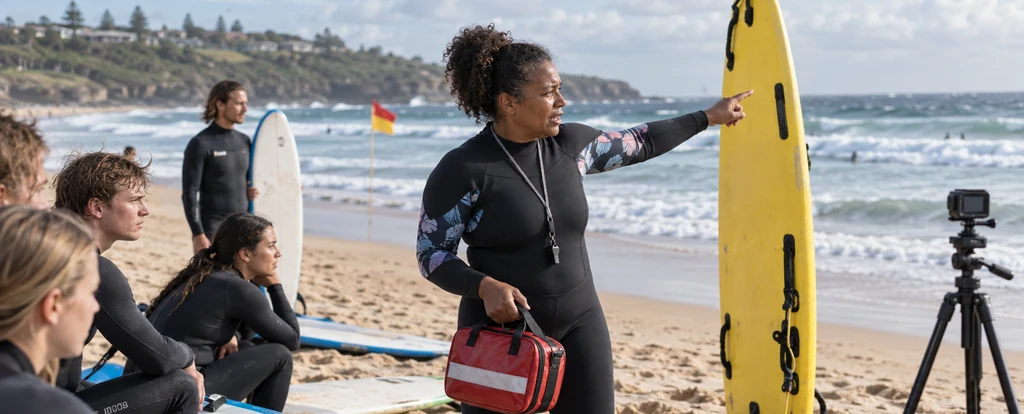
Surfing instructors teach people to paddle out, stand up and stay safe in the surf, usually in group lessons run by a surf school.
- Median salary*
- $52,000
3.6%vs last year, before tax
- People employed*
- 2,000
0.0%vs last year
- Projected growth*
- +3%
to 2035
- AI exposure*
- Low
- automation risk
- Average hours*
- 38/wk
−2h vs all jobs
- Shortage status*
- Not in shortage
national
Surfing instructors usually work at surf schools on patrolled beaches, and also through resorts, school camps and holiday programs, running lessons that last an hour or two. Most teach beginners in the whitewash rather than coaching experienced surfers, so the job sits closer to teaching than to competitive surfing, and it is different again from surf lifesaving, which is about patrolling rather than instruction. The work is heavily seasonal and often casual, busiest over summer and school holidays.
How much do surfing instructors earn?
The median full-time salary for a surfing instructor is $52,000 per annum, before tax, up $10,700 since 2018.
What you take home depends on whether you are on a casual per-lesson rate or a part-time or full-time wage, and on how many lessons you pick up across the season. Flat spells, onshore wind and the winter months cut hours sharply, while instructors with their own board, an accreditation and a following of private clients can charge more per session. Beaches with a steady tourist trade support more lessons, so the volume of work follows the crowds.
What does a surfing instructor do day to day?
The list below is what fills most weeks; the exact mix shifts with seniority and whatever stage the current work is at.
- Checking the surf and picking a break that suits the group's level
- Explaining rips, flags and board handling before anyone goes in
- Demonstrating paddling, pop-ups and turning, then watching each student try it
- Supervising the group in the water and moving anyone who is struggling out of the impact zone
- Rinsing boards, wetsuits and rash vests and checking them for damage
What skills do surfing instructors need?
Employers look for teaching and instruction, fitness coaching and instruction, backed by Surfline fluency and strong safety and compliance awareness.
Specialist skills
- Teaching and instruction
- Fitness coaching and instruction
Software and tools
- Surfline
- Mindbody
- GoPro
- Rescue boards
- First aid kits
General skills
- Safety and compliance awareness
- Customer service
- Physical stamina and dexterity
- Empathy and interpersonal care
Is the job growing?
About 2,000 people work as surfing instructors in Australia, and employment is projected to grow 3% over the decade to 2035. That's modest growth: demand is steady rather than booming.
How do you become a surfing instructor?
Here's the path most surfing instructors take, step by step.
- 1Become a confident surfer first
You need to paddle out through broken waves, handle yourself in a rip and surf well enough to demonstrate what you are teaching. Most schools want several years of regular surfing behind you, not just a few summers of holidays.
- 2Complete first aid, CPR and a surf rescue qualification
Surf schools normally ask for current first aid and CPR certificates, plus a surf rescue award such as the Bronze Medallion, because you are responsible for people in the water and may be the only person watching them.
- 3Take an instructor accreditation
Surfing Australia runs instructor and coach accreditation courses, usually a short course over a few days covering water skills, teaching method and safety. Some schools train and assess their own staff instead, and the requirement varies by state.
- 4Clear the working with children check
Much of the work is with school groups, holiday programs and children, so a Working with Children Check or its state equivalent is standard. Each state runs its own process and issues its own clearance.
- 5Start with a season at a surf school
Casual, per-lesson work at an established school is the usual way in. A season or two of lessons, plus a reputation for running safe sessions, is what leads to private coaching, school programs or your own school.
Ready to apply as a surfing instructor?
Whether you're working toward becoming a surfing instructor or already are one and want a hand with the next step (sharpening your resume for ATS screening, tightening your cover letter, or knowing what you'll actually be asked at interview), here are examples grounded in this specific role, not generic templates.
What jobs can a surfing instructor move to?
Moving into Dive Instructor typically comes with the biggest pay rise, worth $7,800 a year more on average.
| Move to | Typical pay change | Overlap | Retraining |
|---|---|---|---|
| Dive Instructor Surfing instructors bring ocean awareness and group teaching skills to dive instruction, though a dive certification is required. | +$7,800 | 35% | reskill |
| Sailing Instructor Surfing instructors bring water safety and instructional technique to sailing instruction, with sailing qualifications needed to teach. | +$7,800 | 26% | reskill |
| Martial Arts Instructor Surfing instructors bring physical coaching and safety management to martial arts instruction, requiring a short course in the discipline. | +$2,600 | 75% | short course |
| Horse Riding Instructor Surfing instructors bring outdoor instruction and risk management to horse riding, though equine certification is needed. | +$2,600 | 64% | short course |
| Gymnastics Coach Surfing instructors bring physical coaching and safety skills to gymnastics coaching, with a short course in gymnastics required. | +$2,600 | 57% | short course |
Moves are chosen from Jobs and Skills Australia's Data on Occupation Mobility, which follows income tax records between 2011-12 and 2020-21, together with entry requirements and skill overlap. A known move is one people were seen making in that data. Pay change compares median full-time pay for the two roles.
Who works as a surfing instructor?
The typical surfing instructor is 28 years old; 65% are men, 30% work full-time, and full-timers average 38 hours a week.
- 28
- Median age
- 35%
- Female share
- 30%
- Full-time
- −2h
- vs all-jobs avg
What's it like being a surfing instructor?
The job follows the surf and the season: early mornings, late afternoons, long stretches on the beach and a steady stream of people who have never stood on a board. Conditions change quickly, so sessions are planned around tide and swell and cancelled when it turns dangerous, which means plans are always provisional. Instructors who enjoy it tend to like teaching in short bursts, being in the water every day and working with people who are new to the sport.
What people like
- Watching someone stand up for the first time. Beginners remember the lesson where it finally clicked, and you are the one who got them there.
- Days spent in the water. You are outside in the surf rather than indoors, and the job keeps you fit as a side effect of doing it.
- No two sessions are the same. A day might hold a children's holiday program, a private lesson and a school group, each needing a different pace and explanation.
- A skill that travels. Accredited instructors can work at beaches in other states or overseas, because surf schools everywhere need the same safety and teaching basics.
What people find hard
- The weather decides your week. Flat spells, onshore wind and storms cancel lessons at short notice, and the income disappears along with the swell.
- Weekends, holidays and early starts. That is when lessons run, so the busiest shifts fall exactly when everyone else is off work.
- Casual and seasonal work. Many positions are per-lesson casual jobs and winter is thin, so instructors often hold a second job or move with the season.
- Repetition at the beginner end. Most lessons cover the same paddling and pop-up basics in the whitewash, and it can take years before you are coaching surfers who already stand.
Based on our synthesis of professional-body surveys and public accounts of the role, not first-person verified reviews.
Which industries employ surfing instructors?
Sports and Recreation Activities employs the largest share of surfing instructors, followed by Accommodation.
Top employing industries
- 1Sports and Recreation Activities
- 2Accommodation
- 3Education and Training
- 4Food and Beverage Services
Ranked by employment share; the source doesn't publish an exact percentage per industry.
| Bachelor degree | 38% | |
|---|---|---|
| Diploma / Advanced Diploma | 24% | |
| Certificate III/IV | 20% | |
| Postgraduate | 10% | |
| Other | 8% |
Will AI replace surfing instructors?
Surfing instruction is barely touched by AI, because the core of the job is physical, happens in the water and depends on judgements about conditions and people that software cannot make. Forecasting tools such as Surfline and booking platforms such as Mindbody change how lessons are planned and scheduled, and video review helps a student see their own technique. None of it replaces the instructor standing in the whitewash with a beginner.
Share of typical working time by exposure level
- Teaching in the waterCorrecting a pop-up from behind the board, holding a nervous beginner steady and timing a push into a wave are hands-on, physical calls.40%low
- Reading the surf and setting the lesson planYou choose where to put the group based on tide, swell and crowd, then adjust again when the wind shifts mid-lesson.25%low
- Watching the group and keeping them safeNoticing that a swimmer is drifting towards a rip or tiring before they say anything is what the job is built around.25%low
- Bookings, waivers and lesson adminBooking systems and automated reminders already handle much of the scheduling, payment and waiver paperwork, freeing time on the beach.10%high
Common questions about becoming a surfing instructor
Straight answers to the questions people ask most.
How much do surfing instructors earn?
Surfing instructors earn a median of $52,000 per year before tax, though that figure covers full-time work and many instructors work casually or only part of the year. Pay is usually an hourly or per-lesson rate, so what you take home depends on how many lessons you pick up and whether you can work through winter.
How do you become a surfing instructor?
You need to be a competent surfer, hold current first aid and CPR, and complete a surf instructor accreditation, usually through Surfing Australia or the school that hires you. A working with children check is also standard, since much of the work is with school groups and holiday programs.
Are surfing instructors in demand?
Surfing instructors are currently not in shortage, and employment is projected to grow 3% over the decade to 2035 over the decade. Hiring follows the tourist season rather than the calendar year, so schools take on staff before summer, and the openings sit on the coast rather than spread across the country.
Will AI replace surfing instructors?
Very little of this job can be automated, because someone has to read the surf, watch a nervous beginner and pull them out of trouble. Forecasting tools such as Surfline and booking platforms such as Mindbody make planning and scheduling easier, and video review can show a student their own technique, but none of that replaces an instructor standing in waist-deep water.
What can surfing instructors move into?
Water safety and group teaching carry across to other outdoor instruction roles, and the usual step is dive instruction, which pays $7,800 more at the median but needs a dive certification first. Martial arts instructor is a shorter hop on $2,600 more at the median, with a short course in the discipline. Some instructors stay with surfing and open or run their own surf school, which is often where earnings grow.
What are the hours like?
Full-time instructors work around 38 hours a week, but the hours arrive in lessons rather than a fixed day, so early mornings, weekends and school holidays carry most of the work. Outside peak season, hours can drop to whatever the weather and the bookings allow.
Related roles
- Dive Instructor
- Sailing Instructor
- Martial Arts Instructor
- Horse Riding Instructor
- Gymnastics Coach
- Tennis Coach
Not sure this is you? Take the career quiz and get a ranked shortlist of roles that fit how you like to work.