Tour Guide
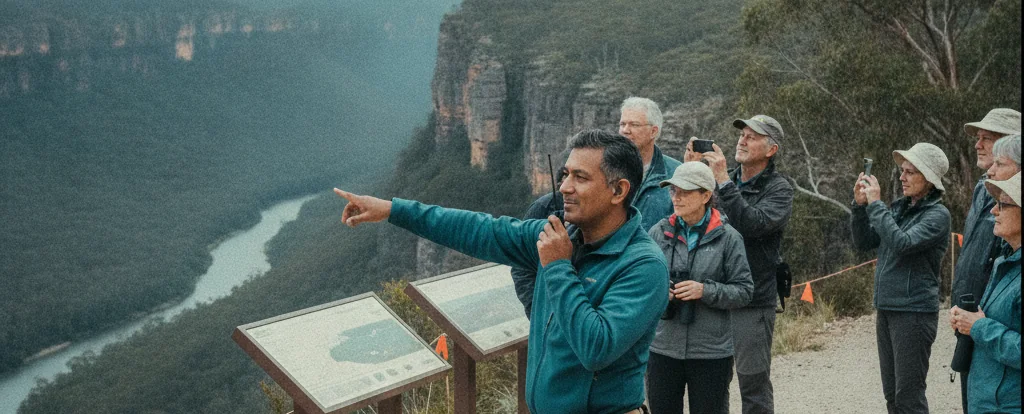
Tour guides lead visitors through a destination, attraction or heritage site, explaining what they're seeing while keeping the group safe and on schedule.
- Median salary
- $74,500
3.6%vs last year, before tax
- People employed
- 2,900
0.0%vs last year
- Projected growth
- +9.3%
to 2035
- AI exposure*
- Moderate
- automation risk
- Average hours
- 46/wk
+6h vs all jobs
- Shortage status
- In shortage
national
Tour guides work for tour operators, museums, councils, national parks and heritage sites, and a fair number work freelance, picking up tours through agencies or their own bookings. The job is not the same as a travel agent, who books the trip from behind a desk: a guide delivers it in person and adjusts on the spot when the weather turns or a visitor needs a slower pace. Most guides end up specialising, whether that is walking tours, coach groups, a wine region or a single historic site, and they build deep local knowledge around it.
How much do tour guides earn?
The median full-time salary for a tour guide is $74,500 per annum, before tax, up $15,900 since 2018.
Most employed guides are paid under the award that covers the operator, so casual work, weekends and public holidays carry loadings on top of the base rate, and multi-day tour leaders are often on a daily rate plus an allowance for food and accommodation. Freelance guides set their own prices but cover their own costs and carry the quiet months between seasons. A second language, a licence to drive passengers or a specialist activity qualification tends to move earnings more than years on the job.
What does a tour guide do day to day?
The list below is what fills most weeks; the exact mix shifts with seniority and whatever stage the current work is at.
- Briefing the group before departure and reshaping the plan when weather, traffic or a late arrival gets in the way
- Narrating a route or site from memory while answering questions from the front and the back of the group
- Confirming entry times, transport bookings and any site permits for the next stop while the current one is still running
- Counting heads at every stop and stepping in quickly when someone is lost, unwell or struggling with the pace
- Spending evenings on calls and emails to lock in tomorrow's itinerary and check that suppliers are ready
What skills do tour guides need?
Employers look for emergency response, backed by Radio or two-way communication devices fluency and strong written communication.
Specialist skills
- Emergency response
Software and tools
- Radio or two-way communication devices
- GPS and mapping software
- Mobile ticketing and booking systems
- Microphone or audio amplification equipment
- First aid kit
General skills
- Written communication
- Customer service
- Presenting and data storytelling
- Problem solving
- Attention to detail
- Stakeholder management
Is the job growing?
About 2,900 people work as tour guides in Australia, and employment is projected to grow 9.3% over the decade to 2035. That's modest growth: demand is steady rather than booming.
How do you become a tour guide?
Here's the path most tour guides take, step by step.
- 1Get a current first aid and CPR certificate
It is one of the few things nearly every operator asks for before you take a group out, because you are responsible for people in public places and sometimes in remote ones. A one or two day course through a registered training organisation covers it.
- 2Start somewhere you are already talking to visitors
Museums, visitor information centres, cellar doors, hostels, wildlife parks and volunteer guiding programs all hire people who know the local area and can hold a conversation with strangers. Six months in a role like this gives you the customer service and local knowledge that operators screen for, and it is paid work rather than study.
- 3Add a guiding or tourism qualification if the roles you want ask for one
A Certificate III or Certificate IV in Guiding (SIT40222), or a broader tourism qualification, covers interpretation, group leadership, risk management and itinerary planning. TAFE and private providers offer them over about six months to a year, and they matter most for museum, heritage and national park work.
- 4Sort the licence or endorsement your tours need
If you drive a minibus or coach as part of the job you need the right licence class plus a passenger endorsement or driver authority, and the rules and names differ by state. Marine, four-wheel drive, snow or adventure tours each carry their own certification on top.
- 5Apply with operators, or build up from casual and seasonal work
Coach companies, cruise operators, walking tour businesses and local councils hire most heavily before peak season, and casual tours are the usual way in. Once you have a specialty and a track record, freelance bookings and your own small tour business become realistic.
Ready to apply as a tour guide?
Whether you're working toward becoming a tour guide or already are one and want a hand with the next step (sharpening your resume for ATS screening, tightening your cover letter, or knowing what you'll actually be asked at interview), here are examples grounded in this specific role, not generic templates.
What jobs can a tour guide move to?
Moving into Bus Driver typically comes with the biggest pay rise, worth $18,800 a year more on average.
| Move to | Typical pay change | Overlap | Retraining |
|---|---|---|---|
| Bus Driver Tour guides bring passenger care, safety awareness and schedule keeping, and a bus licence opens driving work.Known move | +$18,800 | 50% | short course |
| Flight Attendant Tour guides bring group safety, customer service and cultural interpretation, while cabin crew training adds aircraft procedures. | +$3,700 | 64% | minimal |
| Travel Agent Tour guides bring destination knowledge and customer service, while travel agency work adds booking systems and sales skills.Known move | −$5,300 | 33% | reskill |
| Outdoor Adventure Guide Tour guides share safety, group leadership and interpretation skills, while outdoor guiding adds activity certifications and risk management.Known move | −$7,000 | 35% | reskill |
| Visitor Information Officer Tour guides already interpret destinations for visitors, and visitor information work adds local services advice and booking support.Known move | −$16,300 | 19% | reskill |
Moves are chosen from Jobs and Skills Australia's Data on Occupation Mobility, which follows income tax records between 2011-12 and 2020-21, together with entry requirements and skill overlap. A known move is one people were seen making in that data. Pay change compares median full-time pay for the two roles.
Who works as a tour guide?
The typical tour guide is 44 years old; 52% are men, 41% work full-time, and full-timers average 46 hours a week.
- 44
- Median age
- 48%
- Female share
- 41%
- Full-time
- +6h
- vs all-jobs avg
What's it like being a tour guide?
The shape of the job is a performance with logistics attached. You are switched on for the whole tour, answering questions, watching the clock and keeping people moving, and the admin happens after the group disperses, often in the evening. Guides who last tend to enjoy the performance and stay calm when something goes wrong, because both happen on most tours.
What people like
- You become the local expert. Guides who stay in one place build knowledge that visitors cannot get from a guidebook, and that is what repeat customers and good operators come back for.
- The same route never looks quite the same. A site changes with the season, the light and the crowd, and you notice details locals walk past, which keeps a job that repeats daily from feeling identical.
- Every group is different. The commentary is the same on paper, but the mix of ages, the questions and the mood of a group change what the day actually feels like.
- You spend the day with people on holiday. Most of the people in front of you are in a good mood and pleased to be there, and if you speak a second or third language you use it every day.
What people find hard
- Long days and irregular hours. Early starts, weekend and public holiday work are normal, because that is when visitors travel, and a multi-day tour keeps you with the group from breakfast until the evening.
- The logistics land in your own time. Confirming tomorrow's entries, transport and suppliers usually happens in the evening after a full day of talking, and a problem that surfaces at 10pm is still yours to fix before the morning.
- You carry the group with you. If someone is late, unwell or unhappy, the guide is the person standing in front of everyone, and there is no stepping away from that until the tour ends.
- The commentary repeats. Some days you run the same route and the same stories several times over, and you still have to sound as interested the fourth time as the first.
Based on our synthesis of professional-body surveys and public accounts of the role, not first-person verified reviews.
Which industries employ tour guides?
Administrative and Support Services employs the largest share of tour guides, followed by Arts and Recreation Services.
Top employing industries
- 1Administrative and Support Services
- 2Arts and Recreation Services
- 3Transport, Postal and Warehousing
Ranked by employment share; the source doesn't publish an exact percentage per industry.
| Year 12 or below | 27.4% | |
|---|---|---|
| Bachelor degree | 25.5% | |
| Certificate III/IV | 18.8% | |
| Diploma / Advanced Diploma | 13.2% | |
| Postgraduate | 10.5% |
Will AI replace tour guides?
Tour guiding sits in the middle: the research, scripting, translation and booking side of the job is increasingly automated, while the live part is not. Commentary drafts and itineraries can be generated in minutes, which speeds up preparation, but someone still has to walk the route with the group, read the room and deal with whatever goes wrong. Self-guided audio apps and translation tools change what guides are for at some sites, particularly where the content is fixed and the route is simple.
Share of typical working time by exposure level
- Delivering live commentary and answering questions on the dayA script can be written in advance, but the timing, the asides and the answers to whatever the group asks depend on a person being there.30%low
- Managing the group and keeping people safeHeadcounts, first aid, a call on the weather and a visitor separated from the group at a busy stop are all handled in person.30%low
- Researching a route and writing the commentaryAI tools can pull together a site history, check dates and produce a translated commentary sheet, which removes hours of preparation for a new route.20%high
- Bookings, confirmations and supplier adminBooking platforms and automated reminders now handle the confirmations and itinerary updates that used to take a string of phone calls.20%high
Moves least exposed to AI
These career moves from tour guide work are rated low for AI exposure:
- Outdoor Adventure Guide
Some skill overlap (35%), reskill to get there, and a low automation-risk profile.
Common questions about becoming a tour guide
Straight answers to the questions people ask most.
How much do tour guides earn?
Tour guides earn a median of $74,500 per year before tax for full-time work, and what you take home depends on how much of your roster is casual or seasonal. Loadings for weekends, public holidays and multi-day trips add to the base rate, while freelance guides set their own prices and cover their own costs between tours.
How do you become a tour guide?
Most people start with a first aid certificate and a role where they are already talking to visitors, such as a museum, visitor information centre or cellar door, then add a Certificate III or IV in Guiding if the jobs they want ask for it. Operators hire on local knowledge, clear speech and calmness with a group as much as on qualifications. If your tours involve driving passengers, you will also need the right licence class and passenger endorsement for your state.
Are tour guides in demand?
About 2,900 people work as tour guides in Australia, they are currently in shortage nationally, and employment is projected to grow 9.3% over the decade to 2035. The work follows visitors, so openings cluster in capital cities and well-known tourist regions, and a lot of it is casual or seasonal rather than full-time.
Will AI replace tour guides?
The live part of the job is not easily replaced. AI is already used to draft site histories, translate commentary and run bookings, and self-guided audio apps exist at many attractions, but someone still has to walk the route with a group, read the room, answer whatever gets asked and handle the day going sideways.
What can a tour guide move into?
Bus driving, cabin crew work and travel agency roles are common moves, since passenger care, safety awareness and destination knowledge carry across, and a bus licence is a short course rather than a new career. Visitor information officer roles suit guides who want steadier hours and less time on their feet. Many experienced guides stay in the industry instead by going freelance or running their own small tour business, which is often where earnings grow.
Related roles
- Travel Agent
- Visitor Information Officer
- Bus Driver
- Outdoor Adventure Guide
- Flight Attendant
- Visitor Information Officer
Not sure this is you? Take the career quiz and get a ranked shortlist of roles that fit how you like to work.