HomeCoursesAllied health assistance courses
Allied health assistance courses
5 allied health assistance qualifications in Australia, from certificates to the degree, compared side by side: cost, duration, providers and where each one leads.
- Qualifications
- 5
on this page
- Providers
- 191
across all qualifications
- Median pay
- $62,400–$80,600
across roles in this field
- Employment growth*
- +12%
average across roles
Which of these is right for you?
We don't recommend one provider over another, but four things usually decide which qualification is the right one to start with.
- How much time can you give it?
- A certificate usually runs months, not years, and gets you working sooner. A degree is a multi-year commitment, but it's the only route into a registered profession like pharmacist.
- Do you want to study online, on campus, or both?
- Check each qualification's study modes below. Some are online only, some require placements or on-campus units even in a mostly online course.
- What's your entry point?
- If you're starting from school leaver or career change with no background in the field, the lowest rung on the ladder is usually the realistic start, not the top qualification.
- Which role are you aiming for?
- Some roles need one specific qualification. Others accept several. The roles section below says which qualification on this page actually gets you there.
The allied health assistance qualifications
5 qualifications, from certificates through to a degree. Each links through to cost, duration and the providers that teach it.
Certificates and diplomas
Certificate III in Health Services Assistance
112 providersThis qualification prepares you to work alongside nurses, doctors and other health professionals, helping with the day to day care of patients in hospitals, clinics and aged care settings.
Certificate IIIView qualification →Certificate III in Sterilisation Services
19 providersThis qualification prepares you to work in a sterilising service or reprocessing area, the part of a hospital or clinic that turns used surgical instruments back into safe, sterile ones.
Certificate IIISterilisation TechnicianView qualification →Certificate IV in Allied Health Assistance
54 providersThis certificate prepares you to work as an allied health assistant, carrying out therapy and program activities that a physiotherapist, occupational therapist, speech pathologist or similar professional has delegated to you.
Certificate IVView qualification →Diploma of Anaesthetic Technology and Practice
4 providersAnaesthetic technicians work alongside anaesthetists, getting patients ready for anaesthesia, watching them while it is given and helping manage their airway if something goes wrong.
DiplomaAnaesthetic TechnicianView qualification →
What allied health assistance study leads to
The 2 roles where a allied health assistance qualification is a recognised route in, which qualification on this page it is, and what else you need.

Sterilisation Technician
The direct route is the Certificate III in Sterilisation Services. Instrument sterilisation and reprocessing duties within the qualification and employer infection-control procedures.
Median salary for the role
$62,400
A year, before tax. Median for everyone in the occupation, not a graduate starting salary. Indicative estimate, not yet verified against official Jobs and Skills Australia / ABS data, Estimate.
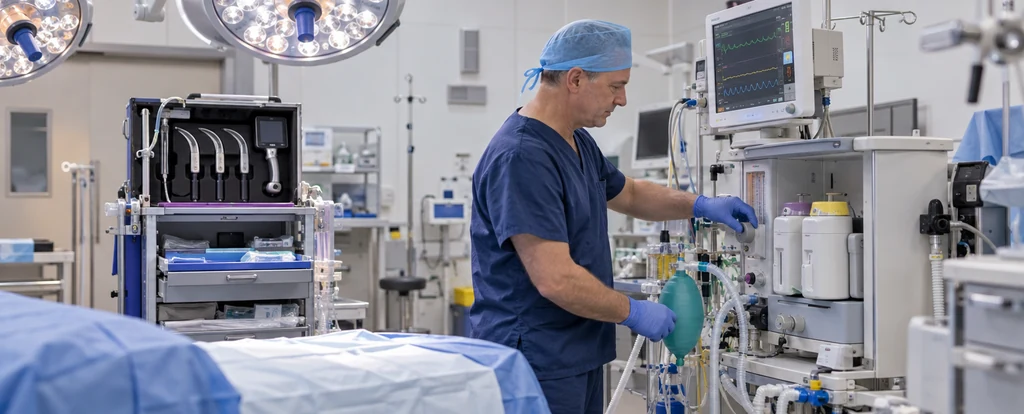
Anaesthetic Technician
The direct route is the Diploma of Anaesthetic Technology and Practice. Complete required clinical workplace hours and work under the direction of anaesthetists; this is not a medical practitioner qualification.
Median salary for the role
$80,600
A year, before tax. Median for everyone in the occupation, not a graduate starting salary. Indicative estimate, not yet verified against official Jobs and Skills Australia / ABS data, Estimate.