Art Teacher
Art teachers teach students to draw, paint, print and build, and to look critically at the images and objects around them.
- Median salary*
- $101,400
4.2%vs last year, before tax
- People employed
- 2,100
0.0%vs last year
- Projected growth*
- +9%
to 2035
- AI exposure*
- Low
- automation risk
- Average hours*
- 42/wk
+2h vs all jobs
- Shortage status*
- Not in shortage
national
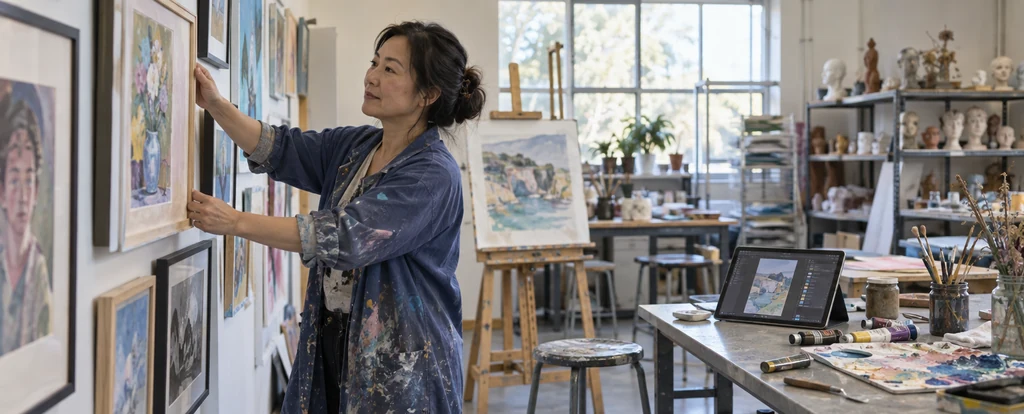
Art teachers spend most of their week in a classroom or studio, teaching visual arts to secondary students, though some work in primary schools, TAFE or private studios. Where they differ from a generalist classroom teacher is the materials: kilns, printing presses, clay and drying racks all need managing alongside the curriculum, and many schools expect an exhibition of student work each year. Most are employed by government or independent schools and hold registration with their state or territory teacher authority.
How much do art teachers earn?
The median full-time salary for an art teacher is $101,400 per annum, before tax, up $21,300 since 2018.
Art teachers are paid on a teacher salary scale, so your years of service and your step on that scale move your pay more than the subject you teach. Government schools pay under a state or territory award or enterprise agreement, while independent schools set their own scales, which can sit above or below the public rate. A faculty or year level coordination role adds an allowance, and casual relief work pays a daily rate instead of a continuing salary.
What does an art teacher do day to day?
The list below is what fills most weeks; the exact mix shifts with seniority and whatever stage the current work is at.
- Planning and delivering visual arts lessons across drawing, painting, printmaking, sculpture and digital media
- Demonstrating a technique at the easel or wheel, then moving between students to give feedback on work in progress
- Assessing folios and finished pieces against the curriculum and writing reports for students and parents
- Ordering and storing supplies, and keeping kilns, cutting tools and solvents safe for a room of teenagers
- Hanging the annual student exhibition, from selecting work through to framing and labelling it
What skills do art teachers need?
Employers look for teaching and instruction, curriculum and lesson design, classroom and behaviour management, backed by Adobe Creative Cloud fluency and strong written communication.
Specialist skills
- Teaching and instruction
- Curriculum and lesson design
- Classroom and behaviour management
- Student assessment and reporting
- Pastoral care and wellbeing
Software and tools
- Adobe Creative Cloud
- Google Classroom
- Canvas LMS
- Procreate
- Microsoft 365
General skills
- Written communication
- Attention to detail
Is the job growing?
About 2,100 people work as art teachers in Australia, and employment is projected to grow 9% over the decade to 2035. That's modest growth: demand is steady rather than booming.
How do you become an art teacher?
Here's the path most art teachers take, step by step.
- 1Complete an accredited teaching qualification
The usual routes are a four-year Bachelor of Education (Secondary) with a visual arts specialisation, or a three-year arts or fine arts degree followed by a Master of Teaching. Both include supervised teaching placements, which is where most students find out whether a full timetable suits them.
- 2Add a second teaching method
Secondary art teachers are usually asked to teach a second subject, so pairing visual arts with English, media, design and technologies or history widens the pool of positions you can apply for. Adding the method during your degree is far simpler than doing it later.
- 3Build a portfolio of your own work
Interview panels often ask to see your artwork as well as your teaching materials, and a continuing studio practice keeps the techniques you demonstrate in class current.
- 4Register with your state or territory teacher authority
Registration requires a police check and a Working with Children Check, and some states also require literacy and numeracy testing or English proficiency evidence. Requirements differ between states and territories, so check the one where you intend to work.
- 5Apply for positions and complete your probation period
Most new teachers start on short-term or casual contracts before winning a continuing role, and registration typically moves from provisional to full after a period of supervised teaching.
Ready to apply as an art teacher?
Whether you're working toward becoming an art teacher or already are one and want a hand with the next step (sharpening your resume for ATS screening, tightening your cover letter, or knowing what you'll actually be asked at interview), here are examples grounded in this specific role, not generic templates.
What jobs can an art teacher move to?
Moving into Music Teacher typically comes with the biggest pay rise, worth $29,500 a year more on average.
| Move to | Typical pay change | Overlap | Retraining |
|---|---|---|---|
| Music Teacher Art teachers bring creative teaching and student engagement to music, with subject-specific musical knowledge developed on the job. | +$29,500 | 74% | minimal |
| Secondary School Teacher Art teachers bring secondary classroom experience and curriculum knowledge to general secondary teaching, but registration and broader subject qualifications are needed. | +$19,300 | 84% | requalify |
| Head of Faculty Art teachers bring curriculum and classroom leadership to a faculty head role, though management and registration requirements add study. | +$18,200 | 45% | requalify |
| VET Trainer Art teachers bring lesson planning and assessment skills to vocational training, and need a trainer and assessor credential. | +$9,300 | 74% | short course |
| Drama Teacher Art teachers bring creative arts teaching and classroom management to drama, and can move across with minimal extra training. | −$2,600 | 71% | minimal |
Moves are chosen from Jobs and Skills Australia's Data on Occupation Mobility, which follows income tax records between 2011-12 and 2020-21, together with entry requirements and skill overlap. A known move is one people were seen making in that data. Pay change compares median full-time pay for the two roles.
Who works as an art teacher?
The typical art teacher is 48 years old; 81% are women, 23% work full-time, and full-timers average 42 hours a week.
- 48
- Median age
- 81%
- Female share
- 23%
- Full-time
- +2h
- vs all-jobs avg
What's it like being an art teacher?
The week is a mix of teaching, preparation and marking, and the preparation runs heavier than for many subjects because materials have to be ready before each class begins. The room is rarely quiet: you are demonstrating, moving between tables and keeping a class safe around knives, kilns and solvents. It suits someone who enjoys making work themselves and can stay patient while a student's first attempt looks nothing like the plan.
What people like
- You can see a student's work change. Progress in art is visible in what a student can draw in term four that they could not manage in term one, and the subject often keeps a student engaged with school who struggles elsewhere.
- The studio is the classroom. Days are built around making things rather than paperwork, and there is room to bring your own practice and interests into what you teach.
- Senior classes choose to be there. Visual arts usually becomes an elective in the senior years, so part of your load is students who picked the subject and are working towards a folio.
- The annual exhibition gives the year a finish. Selecting and hanging student work puts it in front of families and the wider school, which is a different kind of task from marking.
What people find hard
- Assessment is subjective and heavy. Judging creative work means defending that judgement to students, parents and sometimes a review panel, and the marking load sits on top of full teaching hours.
- Materials budgets are tight. Art departments usually run on a small consumables budget, so you spend time sourcing cheap supplies, asking families for contributions and repairing equipment instead of replacing it.
- Setup takes longer than the lesson. Mixing paints, wedging clay or preparing a printing press happens before and after the school day, and it does not shrink when your timetable fills up.
- Your own practice is the first thing to go. Term-time workload and holidays spent planning make it hard to keep a studio practice running, which is a sore point for teachers who trained as artists first.
Based on our synthesis of professional-body surveys and public accounts of the role, not first-person verified reviews.
Which industries employ art teachers?
Education and Training employs the largest share of art teachers, followed by Arts and Recreation Services.
Top employing industries
- 1Education and Training
- 2Arts and Recreation Services
- 3Health Care and Social Assistance
- 4Public Administration and Safety
- 5Retail Trade
Ranked by employment share; the source doesn't publish an exact percentage per industry.
| Bachelor degree | 52% | |
|---|---|---|
| Postgraduate | 26% | |
| Diploma / Advanced Diploma | 13% | |
| Other | 9% |
Will AI replace art teachers?
Art teaching is a low-exposure job overall, because the core of it happens in a room with people, materials and work in progress. Software speeds up some planning and research, and image generators have changed what students can make at home, but none of it demonstrates a technique, fires a kiln or reads a year of a student's development.
Share of typical working time by exposure level
- Demonstrating techniques at the easel or wheelShowing a class how to mix a colour, build a slab or throw a pot happens by hand, in response to the work in front of you.35%low
- Studio safety and materials managementKiln firings, sharp tools, solvent storage and the safe handling of clay dust are physical tasks that no software takes over.25%low
- Marking folios and giving feedbackAI can draft rubric comments or generate exemplars for a class discussion, but judging how a student's work has developed across a folio stays with the teacher who has watched it happen.20%moderate
- Planning lessons and gathering referencesSearch tools and image generators cut the time spent collecting art historical examples or building a worksheet, though you still choose what suits the class and the curriculum.20%high
Common questions about becoming an art teacher
Straight answers to the questions people ask most.
How much do art teachers earn?
Art teachers earn a median of $101,400 per annum, before tax. That figure is a median across the occupation, so what you take home depends on your state or territory, whether the school is government or independent, and how far up the salary scale you sit.
How do you become an art teacher?
You need a teaching qualification and registration in the state or territory where you work. The common routes are a four-year Bachelor of Education (Secondary) with a visual arts specialisation, or an arts degree followed by a Master of Teaching, both of which include supervised placements in schools.
Are art teachers in demand?
Art teachers are currently not in shortage, and employment is projected to grow 9% over the decade to 2035. Demand follows state education budgets and whether schools keep visual arts compulsory in the junior years, so it is worth watching vacancy lists in the systems you want to join.
Will AI replace art teachers?
Not the parts of the job that happen in the room. Image generators have changed what students can produce and research, in the way photography and digital editing did before them, and the teaching shifts further towards process, critique and the thinking behind an image rather than a polished final piece.
Do art teachers need to be good artists?
You need to be competent enough to demonstrate technique and explain how an image or object was made, but you do not have to be an exhibiting artist. Schools do value a visible studio practice, and some panels ask to see your own work alongside your teaching materials.
What else can an art teacher do?
Because the classroom and curriculum skills carry across, art teachers move into other creative subjects such as music teacher roles ($29,500 more) or general secondary teaching ($19,300 more). Some take a trainer and assessor credential to move into vocational training as a VET trainer ($9,300 more), and experienced teachers often step up to a head of faculty role ($18,200 more).
Related roles
Not sure this is you? Take the career quiz and get a ranked shortlist of roles that fit how you like to work.