Bicycle Mechanic
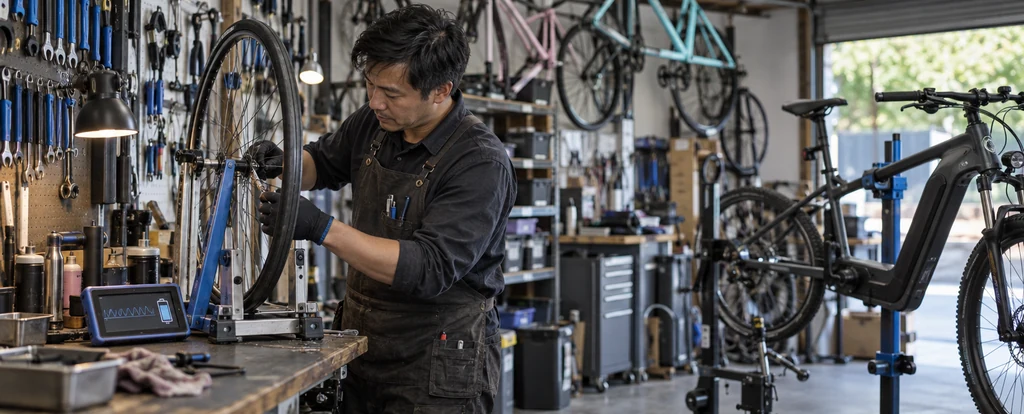
A bicycle mechanic services, repairs and builds bicycles and e-bikes, and works out what is wrong when a bike does not ride right.
- Median salary*
- $59,800
3.8%vs last year, before tax
- People employed
- 1,700
0.0%vs last year
- Projected growth
- +4.2%
to 2035
- AI exposure*
- Low
- automation risk
- Average hours
- 40/wk
matches all-jobs average
- Shortage status*
- Not in shortage
national
Most bicycle mechanics work in retail bike shops, where the workshop sits behind the sales floor, and a smaller number run independent repair workshops or mobile repair services. The tools and diagnostic habits overlap with motor mechanic work, but the machines are light, the parts are small, and much of the job is adjusting rather than rebuilding. E-bikes have added battery, motor and software work to what was once a purely mechanical trade.
How much do bicycle mechanics earn?
The median full-time salary for a bicycle mechanic is $59,800 per annum, before tax, up $12,400 since 2018.
Pay depends heavily on where you work, because a small independent workshop, a busy city store and a chain retailer all set rates differently, and some employers add a share of sales to a base rate. Skills that attract a premium include wheel building, suspension servicing and manufacturer certification for e-bike systems such as Bosch or Shimano. Part-time and casual workshop roles are common, so weekly earnings move around more than an annual figure suggests.
What does a bicycle mechanic do day to day?
The list below is what fills most weeks; the exact mix shifts with seniority and whatever stage the current work is at.
- Diagnosing faults on customer bikes, often by riding them and listening for the noise the owner described
- Replacing and adjusting worn parts such as chains, cassettes, cables, brake pads and tyres
- Truing wheels and tensioning spokes, including building wheels from new rims and hubs
- Servicing e-bike motors and batteries, including firmware updates and diagnostic checks
- Booking in work, quoting repairs and explaining to customers why a part needs replacing
What skills do bicycle mechanics need?
Employers look for hand and power tool work, installation and maintenance, inventory management, backed by Shimano E-Tube Project fluency and strong customer service.
Specialist skills
- Hand and power tool work
- Installation and maintenance
- Inventory management
- Selling and negotiation
Software and tools
- Shimano E-Tube Project
- Bosch eBike Diagnostic Software
- Park Tool workshop equipment
- Lightspeed Retail POS
- Wheel truing stand
General skills
- Customer service
- Problem solving
- Attention to detail
Is the job growing?
About 1,700 people work as bicycle mechanics in Australia, and employment is projected to grow 4.2% over the decade to 2035. That's modest growth: demand is steady rather than booming.
How do you become a bicycle mechanic?
Here's the path most bicycle mechanics take, step by step.
- 1Get a paid job in a bike shop
Retail or workshop assistant work is the usual way in, and it is paid. A few months on the floor teaches you the product range, the booking system and how a workshop runs before you take on a customer's bike.
- 2Start a traineeship or apprenticeship
A certificate III in bicycle mechanical technology is the recognised qualification, delivered through TAFE or a registered training organisation while you work. Arrangements vary by state, and some students start it as a school-based traineeship.
- 3Learn e-bike systems
Bosch, Shimano and the other drive manufacturers run their own training and certification for dealers, and it is worth taking early because e-bike servicing brings different diagnostic software and warranty procedures.
- 4Build a specialism
Wheel building, suspension servicing and bike fitting are the skills shops find hardest to hire, and they are usually learned on the job from a senior mechanic or through short manufacturer courses.
- 5Move into management or ownership
Experienced mechanics often take on workshop management, and some open their own repair workshop or mobile service, which needs business, pricing and retail skills on top of the mechanical ones.
Ready to apply as a bicycle mechanic?
Whether you're working toward becoming a bicycle mechanic or already are one and want a hand with the next step (sharpening your resume for ATS screening, tightening your cover letter, or knowing what you'll actually be asked at interview), here are examples grounded in this specific role, not generic templates.
What jobs can a bicycle mechanic move to?
Moving into Motor Mechanic typically comes with the biggest pay rise, worth $24,500 a year more on average.
| Move to | Typical pay change | Overlap | Retraining |
|---|---|---|---|
| Motor Mechanic Bicycle mechanics can apply mechanical diagnostic skills to cars, but the move typically requires completing a motor mechanic apprenticeship.Known move | +$24,500 | 38% | requalify |
| Store Manager Bicycle mechanics with shop-floor experience can step into retail management, though the role needs broader leadership and business skills.Known move | +$24,400 | 7% | reskill |
| Motorcycle Mechanic Bicycle mechanics already work on two-wheeled machines, so moving to motorcycle repair is a close fit, though a motorcycle mechanic apprenticeship is needed. | +$10,400 | 47% | requalify |
| Small Engine Mechanic Bicycle mechanics already repair small mechanical systems, so moving to small engine work is a natural specialism, though a formal apprenticeship may be required. | +$5,200 | 63% | requalify |
| Retail Assistant Bicycle mechanics already know bike products and customers, so moving into retail sales is common, though broader retail training may be needed.Known move | +$4,700 | 44% | reskill |
Moves are chosen from Jobs and Skills Australia's Data on Occupation Mobility, which follows income tax records between 2011-12 and 2020-21, together with entry requirements and skill overlap. A known move is one people were seen making in that data. Pay change compares median full-time pay for the two roles.
Who works as a bicycle mechanic?
The typical bicycle mechanic is 33 years old; 97% are men, 55% work full-time, and full-timers average 40 hours a week.
- 33
- Median age
- 3%
- Female share
- 55%
- Full-time
- +0h
- vs all-jobs avg
What's it like being a bicycle mechanic?
The job has a clear rhythm: quiet winter weeks for services and builds, then a rush in spring when everyone wants their bike ready for the first warm weekend. Workshop space is often tight and shared, and in a small shop a mechanic may spend as much time at the counter as at the stand. It suits someone who likes finishing a job properly and can explain a repair without overselling it.
What people like
- A job with a finish line. A bike comes in broken and leaves working, often the same day, so you see the result of your own work rather than adding to someone else's.
- Mechanical puzzles on light machines. Faults often hide in the interaction between parts, and working out whether a creak is the bottom bracket, the pedals or the saddle rail takes patient testing.
- New technology arriving. Motors, batteries and controllers have brought diagnostic software and a different set of problems into a trade that had changed slowly for decades.
- Regular customers. In a local shop you get to know riders and their bikes, and a reputation for honest work spreads by word of mouth.
What people find hard
- Spring and summer pile up. The first warm weekends bring a queue of services, and the workshop can be booked out for weeks while customers still hope for same-day repairs.
- Neglected bikes. Some bikes arrive rusted with seized bolts and parts that were never maintained, and the repair takes longer than the owner expects or wants to pay for.
- Slow pay progression in small shops. Independent workshops run on thin margins, so rises come slowly unless you move into management or a larger retailer.
- Workshop conditions. It is a standing job with grease, dust and cramped benches, and lifting bikes onto stands all day takes a physical toll.
Based on our synthesis of professional-body surveys and public accounts of the role, not first-person verified reviews.
Which industries employ bicycle mechanics?
Retail Trade employs the largest share of bicycle mechanics, followed by Other Services.
Top employing industries
- 1Retail Trade
- 2Other Services
Ranked by employment share; the source doesn't publish an exact percentage per industry.
| Year 12 or below | 45.9% | |
|---|---|---|
| Certificate III/IV | 27.4% | |
| Bachelor degree | 13.8% | |
| Diploma / Advanced Diploma | 8.5% | |
| Postgraduate | 2.4% |
Will AI replace bicycle mechanics?
Bicycle mechanic work carries low exposure to AI and automation, because most of it happens with tools on a physical machine. Diagnostic software can read fault codes from an e-bike system and suggest a likely cause, but freeing a seized bottom bracket, rebuilding a wheel or tracking down an intermittent creak still needs hands, ears and judgement.
Share of typical working time by exposure level
- Servicing drivetrains, brakes and bearingsCleaning, regreasing and replacing worn parts is dirty, physical work on components that are often corroded, and the order of disassembly matters more than any software could tell you.40%low
- Advising customers and quoting repairsChat tools can draft an explanation, but a mechanic still has to look at the bike, judge what is safe to leave and tell the owner honestly what a repair will cost.40%low
- Diagnosing faults and test ridingA dealer app will read an error code from a Bosch or Shimano system, but a creak under load or a gear that slips only in one sprocket has to be reproduced on the road.15%moderate
- Building new bikes and setting up e-bike systemsFirmware updates and battery health checks are now partly automated through manufacturer software, though routing cables, cutting steerer tubes and torquing bolts to spec are not.5%moderate
Common questions about becoming a bicycle mechanic
Straight answers to the questions people ask most.
How much does a bicycle mechanic earn?
The median full-time wage is $59,800 per year before tax. Pay varies with the type of employer, your qualifications and whether the shop pays a share of sales, so treat the median as a middle point rather than a starting rate.
How do you become a bicycle mechanic?
Most people start in a bike shop and learn on the job, often while completing a certificate III in bicycle mechanical technology as a trainee or apprentice. Some TAFEs and registered training organisations offer the qualification, and the arrangements vary by state. Manufacturer training for e-bike systems is usually done through the distributor once you are working.
Is there demand for bicycle mechanics?
Bicycle mechanics are currently not in shortage, and employment is projected to grow 4.2% over the decade to 2035. The occupation is small, at about 1,700 people, so openings tend to be local and are often filled through a shop's own staff or word of mouth rather than advertised widely.
Will AI or automation replace bicycle mechanics?
Very little of this work is exposed, because the job is physical and most faults have to be found by feel, sight and a test ride. Diagnostic software does read error codes from e-bike systems and apps help with parts lookups, but someone still has to remove the motor, replace the bearing and check the repair on the road.
What jobs can a bicycle mechanic move into?
Motorcycle and small engine repair are close fits, since the mechanical and diagnostic habits transfer and pay is $10,400 more or $5,200 more. Moving into shop management or opening your own repair workshop is the other common path, and owning the business is often where earnings grow. Motor mechanic work pays $24,500 more, but it normally means completing an apprenticeship first.
Is bicycle mechanic work physically demanding?
Yes, it is a standing job with a lot of lifting, crouching and fine work with small fasteners. Bikes come off stands and onto the floor all day, and seized or rusted parts often need real force before they move.
Related roles
Not sure this is you? Take the career quiz and get a ranked shortlist of roles that fit how you like to work.