Motorcycle Mechanic
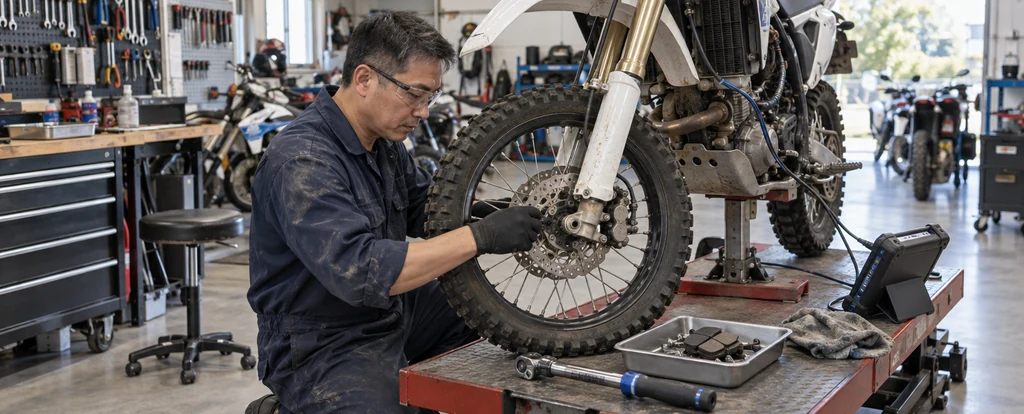
A motorcycle mechanic services, diagnoses and repairs motorcycles, from daily commuters and scooters to dirt bikes and track machines.
- Median salary*
- $70,200
4.0%vs last year, before tax
- People employed
- 1,700
0.0%vs last year
- Projected growth*
- +4%
to 2035
- AI exposure*
- Low
- automation risk
- Average hours*
- 40/wk
matches all-jobs average
- Shortage status*
- Not in shortage
national
Motorcycle mechanics inspect, service and repair road bikes, dirt bikes, scooters and classics. They work on engines, fuel and electrical systems, brakes, suspension and frames, and road test a machine before handing it back to its owner. Most work in dealership workshops, independent repair shops or specialist performance and off-road businesses, often in small teams of two or three.
How much do motorcycle mechanics earn?
The median full-time salary for a motorcycle mechanic is $70,200 per annum, before tax, up $14,600 since 2018.
Pay depends heavily on where you work: franchised dealerships and specialist performance shops generally pay more than small independent workshops, and overtime through the spring and summer service rush lifts earnings. Brand training and experience with diagnostic systems move you up the scale, and running your own workshop or mobile servicing business changes the picture again.
What does a motorcycle mechanic do day to day?
The list below is what fills most weeks; the exact mix shifts with seniority and whatever stage the current work is at.
- Servicing engines, clutches, gearboxes and drive systems on road, dirt and touring bikes
- Tracing electrical, fuel injection and electronic control faults with brand diagnostic software
- Rebuilding brakes, suspension, wheels and steering assemblies
- Road testing machines and explaining faults and repair options to the owner
- Ordering parts and keeping job cards, service records and warranty claims in order
What skills do motorcycle mechanics need?
Employers look for hand and power tool work, installation and maintenance, plant and equipment operation, backed by Honda Diagnostic System (HDS) fluency and strong attention to detail.
Specialist skills
- Hand and power tool work
- Installation and maintenance
- Plant and equipment operation
Software and tools
- Honda Diagnostic System (HDS)
- Yamaha Diagnostic System
- TEXA IDC5
- Ducati Diagnostic System (DDS)
General skills
- Attention to detail
- Problem solving
- Safety and compliance awareness
- Customer service
Is the job growing?
About 1,700 people work as motorcycle mechanics in Australia, and employment is projected to grow 4% over the decade to 2035. That's modest growth: demand is steady rather than booming.
How do you become a motorcycle mechanic?
Here's the path most motorcycle mechanics take, step by step.
- 1Finish Year 10 or Year 12
Most people enter through an apprenticeship after Year 10 or Year 12. English, maths and any metalwork or technical subjects help, but employers mostly look for reliability and a willingness to learn on the tools.
- 2Start an apprenticeship in motorcycle mechanical technology
The trade qualification is a Certificate III in Motorcycle Mechanical Technology (AUR30820), usually completed through an Australian Apprenticeship over about four years. Apprenticeships are paid, and you split your time between the workshop and TAFE or a private training provider.
- 3Get your rider licence early
Most employers expect you to hold a rider licence because road testing repaired machines is part of the job. Learning to ride also teaches you how a bike behaves when something is worn or out of adjustment.
- 4Check what your state requires for repair work
Licensing of repair businesses and tradespeople varies by state, so check the requirements where you plan to work before taking on customers' bikes. Your apprenticeship provider or state fair trading office can confirm what applies.
- 5Specialise once you are qualified
Qualified mechanics often build depth in one area, such as a particular brand, off-road and motocross bikes, classic restoration or performance tuning. That specialisation is what dealerships and specialist shops hire for.
Ready to apply as a motorcycle mechanic?
Whether you're working toward becoming a motorcycle mechanic or already are one and want a hand with the next step (sharpening your resume for ATS screening, tightening your cover letter, or knowing what you'll actually be asked at interview), here are examples grounded in this specific role, not generic templates.
What jobs can a motorcycle mechanic move to?
Moving into Auto Electrician typically comes with the biggest pay rise, worth $75,800 a year more on average.
| Move to | Typical pay change | Overlap | Retraining |
|---|---|---|---|
| Auto Electrician Auto electricians deepen the electrical diagnostic and wiring skills already used on motorcycle systems. | +$75,800 | 75% | reskill |
| Motor Mechanic Motor mechanics extend the same vehicle repair and diagnostic skills to cars and light commercial vehicles. | +$14,100 | 63% | reskill |
| Diesel Mechanic Diesel mechanics build on the same engine and drivetrain repair skills for heavier vehicles and machinery. | +$10,400 | 75% | reskill |
| Marine Mechanic Marine mechanics apply similar engine, fuel and electrical repair skills to outboard motors and marine systems. | +$5,200 | 81% | reskill |
| Small Engine Mechanic Small engine repair uses the same diagnostic and rebuild skills, with further training adapting them to mowers and chainsaws. | −$5,200 | 81% | reskill |
Moves are chosen from Jobs and Skills Australia's Data on Occupation Mobility, which follows income tax records between 2011-12 and 2020-21, together with entry requirements and skill overlap. A known move is one people were seen making in that data. Pay change compares median full-time pay for the two roles.
Who works as a motorcycle mechanic?
The typical motorcycle mechanic is 36 years old; 98% are men, 82% work full-time, and full-timers average 40 hours a week.
- 36
- Median age
- 2%
- Female share
- 82%
- Full-time
- +0h
- vs all-jobs avg
What's it like being a motorcycle mechanic?
The job runs on a steady stream of services and tyres mixed with a few larger rebuilds or diagnostics jobs that can sit on the stand for a week. Spring and the first warm weekends bring a rush as riders book in before the season, and small workshops feel that pressure with only a couple of people to absorb it. It suits someone who likes working out why something is misbehaving and then fixing it properly.
What people like
- Every fault is a puzzle. An intermittent electrical fault or a handling complaint that only shows up at speed takes real reasoning to track down, and finding it is the satisfying part of the trade.
- You see the repair work. A rebuilt engine or a freshly set up suspension comes back to life on the road test, and the owner notices the difference as soon as they ride away.
- A different machine every week. A week might include a scooter commuter, a touring bike in for tyres and a two-stroke dirt bike needing a top end, so the work stays varied.
- Riders care about their bikes. Customers are usually enthusiasts who want to talk through what went wrong, which makes the counter conversations more interesting than a routine service booking.
What people find hard
- Grease, kneeling and tight spaces. A lot of the job happens on a concrete floor or bent over a bike on a lift, and some fasteners are only reachable with the tank, fairings or exhaust off.
- The spring service rush. The first warm weekends bring a backlog of services, tyres and pre-season checks, and a small workshop has to fit them around ongoing rebuilds.
- Seized bolts and parts delays. Older and neglected bikes bring corroded fasteners and snapped studs, and waiting on an overseas part can leave a machine occupying a stand for weeks.
- Customers weigh up the labour cost. Servicing a bike is discretionary spending, so a quote can be the point where an owner delays the work or asks for only the essentials.
Based on our synthesis of professional-body surveys and public accounts of the role, not first-person verified reviews.
Which industries employ motorcycle mechanics?
Automotive Repair and Maintenance employs the largest share of motorcycle mechanics, followed by Motor Vehicle and Motor Vehicle Parts Retailing.
Top employing industries
- 1Automotive Repair and Maintenance
- 2Motor Vehicle and Motor Vehicle Parts Retailing
- 3Motor Vehicle and Motor Vehicle Parts Wholesaling
- 4Machinery and Equipment Repair and Maintenance
- 5Sport and Recreation Activities
Ranked by employment share; the source doesn't publish an exact percentage per industry.
| Certificate III/IV | 34% | |
|---|---|---|
| Diploma / Advanced Diploma | 26% | |
| Bachelor degree | 20% | |
| Year 12 or below | 20% |
Will AI replace motorcycle mechanics?
Motorcycle mechanics sit at low exposure to AI. Diagnostic platforms such as the Honda Diagnostic System and TEXA IDC5 already read fault codes and guide testing, but the machine still has to be stripped, repaired, adjusted and ridden before it goes back to its owner. Automated repair has not reached the workshop bench, and most of the work is judgement with your hands.
Share of typical working time by exposure level
- Engine, clutch and gearbox repairRebuilding a top end or replacing a clutch is done by hand to torque settings and feel, and no system does that for you.30%low
- Electronic diagnostics and fault findingSoftware reads stored codes and live sensor data on a fuel injected bike, but you still trace the wiring and confirm the fault yourself.25%moderate
- Brakes, suspension and wheel workSetting sag, bleeding brakes or truing a wheel comes down to measurements and feel that a scanner cannot supply.25%low
- Road testing and customer handoverTaking a repaired bike out on the road and explaining what was wrong relies on riding judgement and a plain conversation with the owner.20%low
Common questions about becoming a motorcycle mechanic
Straight answers to the questions people ask most.
How much does a motorcycle mechanic earn?
The median for full-time motorcycle mechanics is $70,200 per year before tax, which is a middle figure rather than a starting wage. Dealership work, brand training and overtime in the busy season push earnings up, while small independent workshops tend to sit lower.
How do you become a motorcycle mechanic?
The standard route is a Certificate III in Motorcycle Mechanical Technology (AUR30820) through a paid Australian Apprenticeship, which usually takes about four years. You need an employer willing to take you on, so approaching dealerships and independent workshops directly is often more effective than waiting for an advertised apprenticeship.
Are motorcycle mechanics in demand?
Employment is projected to grow 4% over the decade to 2035, and motorcycle mechanics are currently not in shortage. The trade is small, so it is worth approaching dealerships and independent workshops directly rather than relying only on advertised vacancies.
Will AI replace motorcycle mechanics?
Not in any direct way. Diagnostic software such as the Honda, Yamaha and TEXA systems reads fault codes and points you toward a circuit, but it cannot free a seized bolt, set suspension sag or judge whether a brake lever feels right. The physical repair and the road test stay with the mechanic.
What can a motorcycle mechanic move into?
Your Certificate III and diagnostic experience carry across to other vehicle trades. Motor mechanics earn $14,100 more and apply the same repair and diagnostic skills to cars and light commercial vehicles, while diesel mechanics earn $10,400 more and work on heavier vehicles and machinery. Many experienced mechanics eventually open their own workshop or mobile servicing business, and that is often where earnings grow.
Do you have to ride motorcycles to be a motorcycle mechanic?
Most employers expect you to hold a rider licence because road testing repaired machines is part of the job, though a few bench based roles focus on rebuilds and engine work. Learning to ride also helps you understand how a machine behaves when something is worn or out of adjustment.
Related roles
- Small Engine Mechanic
- Marine Mechanic
- Auto Electrician
- Diesel Mechanic
- Motor Mechanic
- Mechanic's Assistant
Not sure this is you? Take the career quiz and get a ranked shortlist of roles that fit how you like to work.