Boarding Kennel Operator
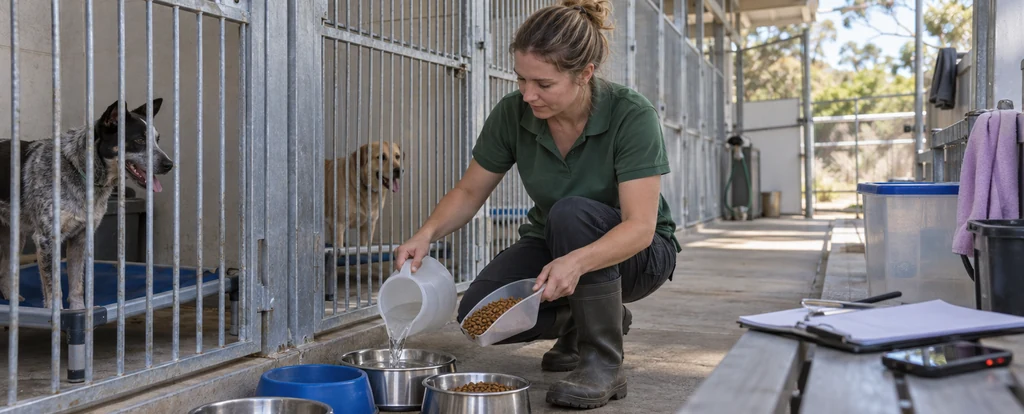
Boarding kennel operators look after dogs and cats in kennels and catteries while their owners are away, keeping animals fed, clean and safe.
- Median salary*
- $54,600
3.8%vs last year, before tax
- People employed
- 500
0.0%vs last year
- Projected growth
- +13.4%
to 2035
- AI exposure*
- Low
- automation risk
- Average hours
- 48/wk
+8h vs all jobs
- Shortage status
- Not in shortage
national
Boarding kennel operators run or work in kennels and catteries that house pets for days or weeks at a time. The job mixes hands-on animal care with cleaning, bookings, records and, in many small facilities, supervising staff. It is not the same as pet sitting in the owner's home: the animals come to you, and the daily routine is set by the kennel.
How much do boarding kennel operators earn?
The median full-time salary for a boarding kennel operator is $54,600 per annum, before tax, up $11,300 since 2018.
Pay depends heavily on whether you own the kennel or work in someone else's, because owners carry the costs and take what is left. Larger facilities, and those offering on-site or live-in arrangements, can pay more or include accommodation. For most employees the school holiday and Christmas peaks bring longer hours rather than higher rates.
What does a boarding kennel operator do day to day?
The list below is what fills most weeks; the exact mix shifts with seniority and whatever stage the current work is at.
- Feeding and watering boarders to the diet and medication instructions their owners leave
- Cleaning kennels, runs and exercise yards, and disinfecting surfaces between animals
- Exercising and socialising dogs, and watching for signs of stress, illness or injury
- Keeping records of vaccinations, health checks, medication and owner instructions
- Taking bookings, handling fees and answering enquiries, often while the phone rings mid-feed
What skills do boarding kennel operators need?
Employers look for animal care and handling, cleaning and grounds maintenance, operations management, backed by KennelBooker fluency and strong customer service.
Specialist skills
- Animal care and handling
- Cleaning and grounds maintenance
- Operations management
- Inventory management
Software and tools
- KennelBooker
- Gingr
- Xero
- Microsoft Excel
General skills
- Customer service
- Safety and compliance awareness
- Written communication
- Attention to detail
Is the job growing?
About 500 people work as boarding kennel operators in Australia, and employment is projected to grow 13.4% over the decade to 2035. That's healthy, above-average growth, and the role should stay in solid demand.
How do you become a boarding kennel operator?
Here's the path most boarding kennel operators take, step by step.
- 1Get used to handling animals
There is no single qualification for entry, and most people in the role hold no formal study beyond school: 44% hold Year 12 or below. Volunteering at a shelter, working as an animal attendant or walking dogs builds the feeding, cleaning and handling routines the job runs on.
- 2Add a short course or certificate
The Certificate II in Animal Care (ACM20121) or the Certificate III in Animal Care Services (ACM30122) covers animal health, hygiene, handling and kennel routines, and is offered by TAFE and private registered training organisations. Neither is required to start, but a certificate helps when you apply to larger facilities or want to move into veterinary-adjacent work later.
- 3Work in an established kennel
A paid job in a boarding facility teaches you how the roster works around holiday peaks, how records and vaccinations are checked, and how dogs with different temperaments are housed and exercised. This is where most operators learn the trade.
- 4Learn the compliance and business side
Running your own kennel means meeting local council registration, animal welfare and planning rules, which vary between councils and states, plus insurance, staffing and booking systems. Working in someone else's kennel first shows you what those costs and obligations look like in practice.
Ready to apply as a boarding kennel operator?
Whether you're working toward becoming a boarding kennel operator or already are one and want a hand with the next step (sharpening your resume for ATS screening, tightening your cover letter, or knowing what you'll actually be asked at interview), here are examples grounded in this specific role, not generic templates.
What jobs can a boarding kennel operator move to?
Moving into Veterinary Nurse typically comes with the biggest pay rise, worth $32,100 a year more on average.
| Move to | Typical pay change | Overlap | Retraining |
|---|---|---|---|
| Veterinary Nurse Boarding kennel operators bring practical animal care and observation skills to veterinary nursing, with a certificate needed for clinical duties.Known move | +$32,100 | 7% | reskill |
| Animal Attendant Boarding kennel operators bring hands-on feeding, cleaning and animal handling routines to animal attendant roles, with a certificate needed for broader shelter and clinic work.Known move | +$11,800 | 20% | reskill |
| Dog Groomer Boarding kennel operators bring calm animal handling and hygiene routines to dog grooming, with a grooming certificate needed for clipping and styling. | +$11,800 | 26% | reskill |
| Dog Breeder Boarding kennel operators bring knowledge of animal housing, feeding and health to dog breeding, with minimal retraining for managing litters. | +$0 | 76% | minimal |
Moves are chosen from Jobs and Skills Australia's Data on Occupation Mobility, which follows income tax records between 2011-12 and 2020-21, together with entry requirements and skill overlap. A known move is one people were seen making in that data. Pay change compares median full-time pay for the two roles.
Who works as a boarding kennel operator?
The typical boarding kennel operator is 54 years old; 68% are women, 65% work full-time, and full-timers average 48 hours a week.
- 54
- Median age
- 68%
- Female share
- 65%
- Full-time
- +8h
- vs all-jobs avg
What's it like being a boarding kennel operator?
The work runs on a fixed daily routine: animals are fed, cleaned and exercised at set times whatever the weather or the day of the week. Weekends, public holidays and school holidays are the busiest periods, and a full-time kennel operator averages around 48 hours a week. It suits people who are steady around animals and prefer working with their hands to sitting at a desk.
What people like
- The animals are the point of the job. Most of the day is spent with dogs and cats rather than on paperwork, and regular boarders become familiar animals you get to know.
- The routine is clear. Feeding, cleaning and exercise follow the same order each day, so you always know what is done and what is left.
- Owners remember good care. People leaving a pet behind are often anxious, and a calm handover with honest updates about how the stay went brings them back and brings referrals.
- Running your own kennel. For operators who own the facility, decisions about hours, staffing and how animals are housed are yours to make.
What people find hard
- Cleaning fills much of the day. Kennels and runs need hosing, disinfecting and fresh bedding daily, and the work is physical, wet and repetitive.
- The job does not pause for weekends or holidays. Boarders are fed on Christmas Day and every other day, so rosters include early mornings, evenings and public holidays.
- School holidays are the crunch. Bookings cluster in school holiday periods, so the kennel is fullest exactly when staff most want time off.
- Some boarders arrive unwell or unsettled. Older or anxious animals can deteriorate during a stay, and calling an owner with that news is part of the job.
Based on our synthesis of professional-body surveys and public accounts of the role, not first-person verified reviews.
Which industries employ boarding kennel operators?
Other Services employs the largest share of boarding kennel operators, followed by Agriculture, Forestry and Fishing.
Top employing industries
- 1Other Services
- 2Agriculture, Forestry and Fishing
Ranked by employment share; the source doesn't publish an exact percentage per industry.
| Year 12 or below | 44.2% | |
|---|---|---|
| Certificate III/IV | 20.7% | |
| Bachelor degree | 12.4% | |
| Diploma / Advanced Diploma | 11.6% | |
| Postgraduate | 4.4% |
Will AI replace boarding kennel operators?
This is a low-exposure job, because most of the work is physical care that cannot be done by software: animals still have to be fed, cleaned, exercised and checked by hand. Booking and record systems already handle reservations and vaccination reminders, and some kennels add cameras or automated feeders, but those tools support the work rather than replace it.
Share of typical working time by exposure level
- Feeding, medicating and health checksDiets, medication schedules and feed times can be tracked in kennel software, but someone still prepares the food, gives the medication and notices a boarder that has gone off its food.30%low
- Cleaning kennels, runs and yardsHosing, disinfecting and changing bedding are physical tasks, and automated cleaning systems suit large purpose-built facilities rather than most Australian kennels.30%low
- Exercise, handling and behaviour monitoringCameras show what a dog is doing in its run, but reading stress, separating dogs that do not get on and managing exercise groups stays with the handler.25%low
- Bookings, invoicing and owner updatesPlatforms such as KennelBooker and Gingr take reservations, store vaccination records and send reminders, removing much of the manual paperwork.15%high
Common questions about becoming a boarding kennel operator
Straight answers to the questions people ask most.
How much do boarding kennel operators earn?
The median full-time pay for a boarding kennel operator is $54,600 per year before tax. What moves that figure most is whether you own the kennel or work in one, along with the size of the facility and whether accommodation is included.
How do I become a boarding kennel operator?
No licence is required to work in a kennel, so most people start with hands-on animal experience gained through volunteering, an animal attendant role or dog walking. The Certificate II in Animal Care (ACM20121) or the Certificate III in Animal Care Services (ACM30122) helps with larger facilities, and running your own kennel also means meeting local council registration and planning rules.
Are boarding kennel operators in demand?
Boarding kennel operators are currently not in shortage, and employment is projected to grow 13.4% over the decade to 2035. The workforce is small, at about 500 people nationally, and bookings rise and fall with travel and holiday seasons, so a local facility's need for staff depends on how full its runs are.
Will AI change boarding kennel work?
Exposure is low, because the core of the job is physical care of live animals. Booking platforms, automated feeding systems and kennel cameras already handle some administration and monitoring, but someone still has to feed, clean, exercise and notice when a boarder is unwell.
What can a boarding kennel operator move into?
Animal attendant work uses the same handling and cleaning routines and pays $11,800 more a year, while dog grooming pays $11,800 more with a grooming certificate needed for clipping and styling. Veterinary nursing pays $32,100 more a year more but requires a certificate for clinical duties, and dog breeding involves minimal retraining and pays about the same. If you own the kennel, building the business is often where earnings grow, since the owner keeps what is left after costs.
Do I need a qualification to open a kennel?
By law you need no qualification, but running a boarding kennel means meeting council registration and animal welfare rules, which vary between councils and states. Insurance, a suitable property and reliable staffing are usually the practical barriers rather than study.
Related roles
Not sure this is you? Take the career quiz and get a ranked shortlist of roles that fit how you like to work.