Dog Breeder
Dog breeders raise litters of puppies from selected parent dogs, keeping the health and pedigree records that back each litter.
- Median salary*
- $54,600
4.0%vs last year, before tax
- People employed*
- 2,800
0.0%vs last year
- Projected growth*
- +2%
to 2035
- AI exposure*
- Moderate
- automation risk
- Average hours*
- 44/wk
+4h vs all jobs
- Shortage status*
- Not in shortage
national
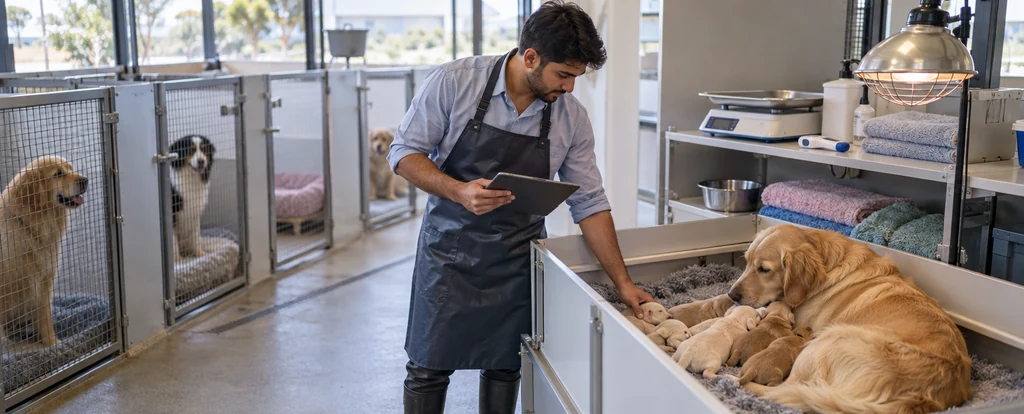
Dog breeders manage the mating, whelping and rearing of litters, usually from a kennel on their own property or a dedicated run at home. They keep pedigree and health records, follow state and council rules on kennel standards, and deal with buyers directly. The job is often confused with running a boarding kennel: a breeder keeps a small number of breeding dogs and produces litters, while a kennel operator looks after other people's dogs.
How much do dog breeders earn?
The median full-time salary for a dog breeder is $54,600 per annum, before tax, up $11,400 since 2018.
What a breeder earns depends heavily on scale, because most run one or two litters a year alongside other work while a full-time kennel produces more often. Costs come out first: health testing, vet bills, food, registration fees and kennel upkeep can absorb most of what a litter sells for. Association registration, show results and a long waiting list all support higher prices, and a litter lost to illness or a difficult whelping can wipe out a season's return.
What does a dog breeder do day to day?
The list below is what fills most weeks; the exact mix shifts with seniority and whatever stage the current work is at.
- Selecting breeding pairs on health, temperament and pedigree
- Caring for pregnant dogs, whelping litters and hand-rearing puppies
- Cleaning kennels, managing exercise and watching for illness
- Keeping pedigree, health testing and litter registration records
- Screening buyers and giving advice on puppy care, since most breeders want their dogs to stay in their homes
What skills do dog breeders need?
Employers look for animal care and handling, operations management, inventory management, backed by BreedMate fluency and strong customer service.
Specialist skills
- Animal care and handling
- Operations management
- Inventory management
Software and tools
- BreedMate
- Breeder's Assistant
- Xero
- Microsoft Excel
- Dogs Australia online services
General skills
- Customer service
- Attention to detail
- Written communication
- Safety and compliance awareness
- Digital literacy
Is the job growing?
About 2,800 people work as dog breeders in Australia, and employment is projected to grow 2% over the decade to 2035. That's modest growth: demand is steady rather than booming.
How do you become a dog breeder?
Here's the path most dog breeders take, step by step.
- 1Learn the work alongside an established breeder
Whelping, early puppy care and health checks are learned hands-on rather than from a course. Volunteering with a breed club, a rescue group or a boarding kennel gives you animal handling and kennel routines before you commit to buying breeding dogs.
- 2Check your state and council requirements
Rules differ by state. Many councils require a kennel to be registered or approved as a domestic animal business, and several states run breeder permit systems with minimum standards for housing, exercise and record keeping, so confirm the requirements for your address before you start.
- 3Consider a qualification in animal care
A Certificate III in Animal Care Services or Companion Animal Services at TAFE or a private RTO covers animal health, nutrition and hygiene. It is not mandatory, and 34% of people working as dog breeders hold Certificate III/IV as their highest qualification.
- 4Register with a canine association
Dogs Australia member bodies in each state handle pedigree registration and breeder accreditation, and buyers often check those listings. Registration brings litter paperwork, DNA parentage testing for some breeds and agreement to a code of conduct.
- 5Set up the business and the kennel site
That means council approval for the site, insurance, a record system for litters and health data, and a plan for pricing and finding buyers. Waiting lists, breed club networks and a simple website do most of the marketing.
Ready to apply as a dog breeder?
Whether you're working toward becoming a dog breeder or already are one and want a hand with the next step (sharpening your resume for ATS screening, tightening your cover letter, or knowing what you'll actually be asked at interview), here are examples grounded in this specific role, not generic templates.
What jobs can a dog breeder move to?
Moving into Dog Trainer typically comes with the biggest pay rise, worth $11,800 a year more on average.
| Move to | Typical pay change | Overlap | Retraining |
|---|---|---|---|
| Dog Trainer Dog handling and behaviour observation from breeding give a base for training, though a substantial course builds instruction skills. | +$11,800 | 25% | reskill |
| Dog Groomer Experience handling dogs and managing coats supports grooming work, but formal grooming training is needed for the trade. | +$11,800 | 29% | reskill |
| Animal Husbandry Technician Breeding records, nutrition and animal health skills transfer to husbandry technician work, with a short course adding formal certification. | +$7,800 | 50% | short course |
| Boarding Kennel Operator A dog breeder's kennel routines, animal handling and breeding knowledge carry directly into managing a boarding kennel. | +$0 | 76% | minimal |
Moves are chosen from Jobs and Skills Australia's Data on Occupation Mobility, which follows income tax records between 2011-12 and 2020-21, together with entry requirements and skill overlap. A known move is one people were seen making in that data. Pay change compares median full-time pay for the two roles.
Who works as a dog breeder?
The typical dog breeder is 49 years old; 55% are women, 60% work full-time, and full-timers average 44 hours a week.
- 49
- Median age
- 55%
- Female share
- 60%
- Full-time
- +4h
- vs all-jobs avg
What's it like being a dog breeder?
The rhythm is routine care with intense bursts: months of feeding, cleaning and health checks, then a few weeks around whelping when someone needs to be watching almost constantly. Most breeders work alone or with a partner on their own property, and many fit the kennel around another income until it is established. It suits people who are steady with animals, comfortable with paperwork and happy to work from home.
What people like
- Raising a litter from birth. Whelping and the first eight weeks are the hands-on part of the job, and watching puppies develop is what keeps most breeders going.
- Shaping a line over generations. Choosing pairs, tracking health results and seeing temperament and type carry through is slow work measured in years rather than litters.
- Working from your own property. The kennel sits at home, so the hours can bend around family and other work, though the dogs set the schedule.
- Buyers who stay in touch. Good breeders hear back for years, and those relationships bring repeat buyers and referrals.
What people find hard
- Income arrives in lumps. Money comes in when a litter is sold, while food, vet and registration costs run all year, which is why many breeders hold another job.
- Health problems are part of it. Puppies are sometimes lost, and an inherited condition can show up in a litter you planned carefully, which is both an emotional and a financial hit.
- Rules and record keeping. Council registration, state breeder permits, litter paperwork and health testing add up to real admin, and the requirements vary by state.
- Screening buyers is draining. Turning people away when a home is not right, and fielding impatient enquiries, takes time and can attract criticism online.
Based on our synthesis of professional-body surveys and public accounts of the role, not first-person verified reviews.
Which industries employ dog breeders?
Other Livestock Farming employs the largest share of dog breeders, followed by Veterinary Services.
Top employing industries
- 1Other Livestock Farming
- 2Veterinary Services
- 3Animal Training and Boarding
- 4Pet and Pet Supplies Retailing
- 5Sport and Recreation Activities
Ranked by employment share; the source doesn't publish an exact percentage per industry.
| Certificate III/IV | 34% | |
|---|---|---|
| Diploma / Advanced Diploma | 26% | |
| Bachelor degree | 20% | |
| Year 12 or below | 20% |
Will AI replace dog breeders?
This is a moderately exposed job: the animal care that fills most of the week is hands-on work that automation does not reach, while the paperwork and marketing side is already partly handled by software. Breeders use pedigree and litter registration databases, accounting tools such as Xero, and online listings to advertise litters, which cuts admin without changing the kennel routine. The judgement calls, which dogs to pair and which homes to sell to, stay with the breeder.
Share of typical working time by exposure level
- Feeding, cleaning and exercising the dogsHygiene, feeding routines and daily exercise happen in the presence of the animals, so software can log the routine but not carry it out.35%low
- Whelping and the first weeks of puppy careWhelping is unpredictable and often happens at night, and a whelping box camera can alert you but someone still has to step in when a puppy is stuck or not feeding.25%low
- Pedigree, health testing and litter paperworkDogs Australia online services and pedigree databases generate registration documents and store DNA and health results, removing hours of manual record keeping.20%high
- Answering enquiries, screening buyers and advertising littersWebsites, social media and enquiry forms handle first contact and standard questions, but judging whether a home suits a puppy still comes down to a conversation.20%moderate
Moves least exposed to AI
These career moves from dog breeder work are rated low for AI exposure:
- Boarding Kennel Operator
High skill overlap (76%), little retraining to get there, and a low automation-risk profile.
- Dog Trainer
Some skill overlap (25%), reskill to get there, and a low automation-risk profile.
- Dog Groomer
Some skill overlap (29%), reskill to get there, and a low automation-risk profile.
Common questions about becoming a dog breeder
Straight answers to the questions people ask most.
How much do dog breeders earn?
Dog breeders earn $54,600 per annum, before tax, on a full-time median. What an individual breeder takes home varies with the number of litters, the prices their dogs command, and whether the kennel is a full-time business or a sideline to other work.
How do you become a dog breeder?
Most people start by learning alongside an established breeder and checking their state and council rules, since a kennel usually needs registration or a breeder permit. A Certificate III in Animal Care Services (ACM30122) helps with animal health and hygiene, and registering with a canine association is what gives you pedigree paperwork and credibility with buyers.
Are dog breeders in demand?
Dog breeders are currently not in shortage, and employment is projected to grow 2% over the decade to 2035. About 2,800 people do this work, so the field is small and buyers usually find breeders through breed clubs, association listings and word of mouth.
Will AI replace dog breeders?
No. Feeding, whelping and assessing a dog's health and temperament are physical, hands-on work that software does not reach. Breeders do use pedigree databases, accounting software and online enquiry forms, which save admin time rather than replacing the job.
What else can a dog breeder do?
Breeding experience transfers most directly to running a boarding kennel, where the routines and animal handling are much the same and pay is about the same. Moving into animal husbandry technician work adds formal certification and pays $7,800 more, while dog training needs a substantial course and pays $11,800 more. Most breeders who stay in the field expand their own operation instead, since owning the kennel is where earnings grow.
Related roles
- Boarding Kennel Operator
- Animal Husbandry Technician
- Dog Trainer
- Dog Groomer
- Boarding Kennel Operator
- Animal Attendant
Not sure this is you? Take the career quiz and get a ranked shortlist of roles that fit how you like to work.