Cake Decorator
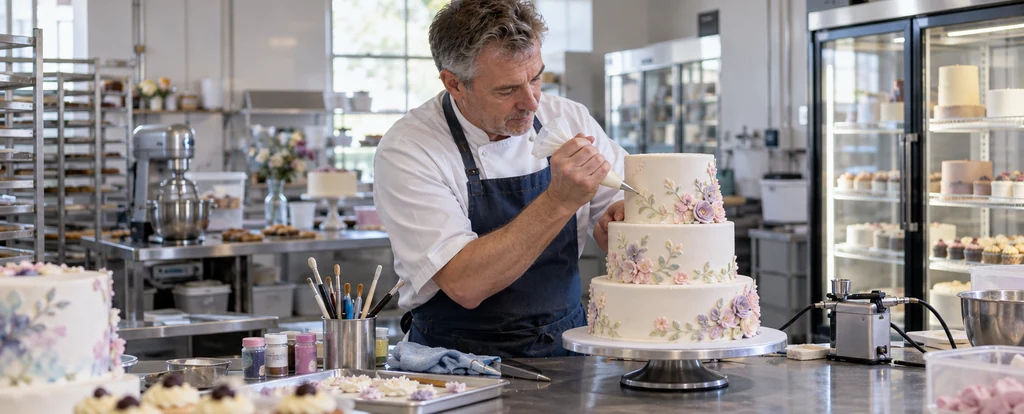
Cake decorators finish cakes by hand with icing, fondant and piped detail, turning them into centrepieces for weddings, birthdays and events.
- Median salary*
- $59,800
4.5%vs last year, before tax
- People employed*
- 4,200
0.0%vs last year
- Projected growth*
- +3%
to 2035
- AI exposure*
- Low
- automation risk
- Average hours*
- 38/wk
−2h vs all jobs
- Shortage status*
- Not in shortage
national
Most cake decorators work in specialist cake studios, retail bakeries, supermarket bakeries or patisseries, and some run a small business from a home kitchen. The job sits at the finishing end of baking: a pastry chef or baker makes the cake, while the decorator shapes how it looks and often talks the design through with the client. The work clusters around weekends and wedding season, because that is when the orders fall due.
How much do cake decorators earn?
The median full-time salary for a cake decorator is $59,800 per annum, before tax, up $12,700 since 2018.
Pay follows the award or enterprise agreement of the workplace, so a supermarket bakery, a wholesale cake manufacturer and a boutique studio can pay quite differently for similar work. Decorators who build their own client list and take wedding or event orders earn per cake rather than per hour, and that income arrives unevenly across the year. Experience, speed and a strong portfolio are what move you up the rates in a studio.
What does a cake decorator do day to day?
The list below is what fills most weeks; the exact mix shifts with seniority and whatever stage the current work is at.
- Preparing buttercream, ganache and fondant for covering, filling and piping
- Piping borders, lettering, scrollwork and patterns by hand
- Modelling sugar flowers, figures and toppers for a design brief
- Covering, dowelling and stacking tiered cakes so they travel and cut cleanly
- Talking through designs, colours and dietary requirements with clients
What skills do cake decorators need?
Employers look for food preparation and cooking, food safety and hygiene, craft and handmade production, backed by Piping bags and nozzles fluency and strong customer service.
Specialist skills
- Food preparation and cooking
- Food safety and hygiene
- Craft and handmade production
- Visual design
Software and tools
- Piping bags and nozzles
- Fondant modelling tools
- Cake turntable
- Airbrush kit
- Edible image printer
General skills
- Customer service
- Attention to detail
- Time and deadline management
Is the job growing?
About 4,200 people work as cake decorators in Australia, and employment is projected to grow 3% over the decade to 2035. That's modest growth: demand is steady rather than booming.
How do you become a cake decorator?
Here's the path most cake decorators take, step by step.
- 1Start with a Certificate III in cake and pastry
The Certificate III in Cake and Pastry, or the Certificate III in Baking (FBP30521), covers icing, piping, filling and food safety. It is the qualification most employers recognise, and it is usually delivered as part of an apprenticeship so you earn while you train.
- 2Complete an apprenticeship in a bakery or patisserie
A baking or pastry apprenticeship runs for around three years and combines paid work with off-the-job training. It is the standard way in, and it is where you build the speed and consistency that a studio expects.
- 3Build a portfolio of finished cakes
Employers and clients ask for photographs rather than a resume. Photograph every cake you finish, including the ones that go wrong, because a portfolio showing range in piping, fondant work and tiered construction is what gets you the next job.
- 4Add short courses in speciality techniques
Sugar flowers, chocolate work, airbrushing and figure modelling are usually learned through short courses or workshops rather than the certificate. Each one widens the briefs you can accept, which matters if you want wedding or celebration work.
- 5Check local food safety requirements
There is no licence to work as a cake decorator, but most commercial kitchens require a food safety supervisor certificate, and the requirement varies by state. If you plan to sell from home, you also need to check your local council's food business registration rules.
Ready to apply as a cake decorator?
Whether you're working toward becoming a cake decorator or already are one and want a hand with the next step (sharpening your resume for ATS screening, tightening your cover letter, or knowing what you'll actually be asked at interview), here are examples grounded in this specific role, not generic templates.
What jobs can a cake decorator move to?
Moving into Cook typically comes with the biggest pay rise, worth $14,700 a year more on average.
| Move to | Typical pay change | Overlap | Retraining |
|---|---|---|---|
| Cook Cake decorators can broaden into general cook roles, applying their food preparation skills with a short course in commercial cooking. | +$14,700 | 53% | short course |
| Pastry Chef Cake decorators bring precision piping and finishing skills to pastry chef roles, though the move typically requires completing a pastry apprenticeship. | +$13,900 | 69% | requalify |
| Chocolatier Cake decorators can specialise in chocolate work, moving into chocolatier roles with a short course to learn tempering and moulding techniques. | +$0 | 52% | short course |
Moves are chosen from Jobs and Skills Australia's Data on Occupation Mobility, which follows income tax records between 2011-12 and 2020-21, together with entry requirements and skill overlap. A known move is one people were seen making in that data. Pay change compares median full-time pay for the two roles.
Who works as a cake decorator?
The typical cake decorator is 35 years old; 75% are women, 55% work full-time, and full-timers average 38 hours a week.
- 35
- Median age
- 75%
- Female share
- 55%
- Full-time
- −2h
- vs all-jobs avg
What's it like being a cake decorator?
The work is quiet, detailed and deadline-driven, with long stretches standing at a bench and short bursts of pressure when an order is due. Thursdays through Saturdays are the heavy days, since most cakes leave for a weekend event, and Christmas and wedding season set the pace for the year. It suits someone who likes precise handwork, can keep a steady hand under time pressure, and enjoys seeing a piece finished and collected rather than working on something long and invisible.
What people like
- The finished cake is visible work. You hand over something that exists, that a client photographs and remembers, and the result of a day at the bench is obvious in a way office work rarely is.
- Focused handwork suits some people. Piping, covering and modelling reward patience and a steady hand. Many decorators describe the bench time as the most absorbing part of the job.
- Clients bring the occasion with them. A consultation is usually about a wedding, a first birthday or a retirement, so the conversation has some warmth to it that a general retail counter does not.
- The skills travel with you. Decorating is something you can do from a home kitchen or a small studio, and many decorators eventually take their own orders alongside or instead of wage work.
What people find hard
- Weekends and Fridays are the busy stretch. Most orders are collected or delivered for weekend events, so late finishes and Saturday morning work are normal and days off often fall early in the week.
- Delivery leaves no room for error. A stacked cake has to survive a car trip in Australian heat. Structural work, dowelling and cold transport are unglamorous parts of the job that carry the most risk.
- Clients change their minds. A design agreed weeks earlier can shift after a quote or a Pinterest photo, and reworking a covered cake is far slower than starting the decoration fresh.
- It is physically repetitive. Hours of standing, piping and fine hand movement take a toll on wrists, shoulders and back, and the work slows when your hands are tired.
Based on our synthesis of professional-body surveys and public accounts of the role, not first-person verified reviews.
Which industries employ cake decorators?
Bakery Product Manufacturing employs the largest share of cake decorators, followed by Cafes, Restaurants and Takeaway Food Services.
Top employing industries
- 1Bakery Product Manufacturing
- 2Cafes, Restaurants and Takeaway Food Services
- 3Specialised Food Retailing
- 4Accommodation
- 5Catering Services
Ranked by employment share; the source doesn't publish an exact percentage per industry.
| Certificate III/IV | 34% | |
|---|---|---|
| Diploma / Advanced Diploma | 26% | |
| Bachelor degree | 20% | |
| Year 12 or below | 20% |
Will AI replace cake decorators?
Cake decorating has low exposure to AI, because the job is hand finishing: piping, covering, modelling and assembling a cake that has to look right and travel safely. Edible image printers and design software have taken over flat printed toppers and client mockups, and online ordering tools handle the admin, but they change the preparation around the cake rather than the decorating itself.
Share of typical working time by exposure level
- Piping and hand finishingBorders, lettering and scrollwork are judged by eye and by hand pressure, and a machine cannot yet match the small adjustments a decorator makes on a warm day.35%low
- Covering, stacking and dowelling tiered cakesWorking out where the dowels go and how a three-tier cake will behave in a car on a 35 degree afternoon is practical judgement built from experience.25%low
- Preparing icings, fondant and modelled figuresButtercream consistency, fondant temperature and hand-modelled sugar flowers are all judged by touch, and recipes are adjusted on the day to suit the weather.20%low
- Design mockups, quotes and order adminDesign software, edible image printers and online order forms speed up sketches, printed toppers and quotes, so this part of the week is being partly absorbed by software.20%moderate
Common questions about becoming a cake decorator
Straight answers to the questions people ask most.
How much do cake decorators earn?
Cake decorators earn a median of $59,800 per year before tax. Pay depends on the award or enterprise agreement you are on, whether you work in a supermarket bakery, a wholesale manufacturer or a boutique studio, and whether you take your own client orders on top of wage work.
How do you become a cake decorator?
The usual route is a Certificate III in Cake and Pastry (FBP30321) or Baking, most often completed as an apprenticeship in a bakery or patisserie. You can also enter from a bakery assistant or kitchen hand role and build decorating skills through short courses, though that path takes longer to reach the same level of finish.
Are cake decorators in demand?
Cake decorators are currently not in shortage, and employment is projected to grow 3% over the decade to 2035. Openings are concentrated in bakery retail, cake studios and catering, so it helps to look in the weeks before wedding and Christmas season when studios take on extra hands.
Will AI replace cake decorators?
AI has limited reach into this job because the core of it is physical hand finishing. Edible image printers and design software already handle flat printed toppers and client mockups, but piping, fondant covering, sugar flowers and the structural work of a tiered cake still need a person at the bench.
What can a cake decorator move into?
Pastry chef is one option, with a pay difference of $13,900 more, though the move usually means completing a pastry apprenticeship. Chocolate work is a shorter step, needing a short course in tempering and moulding, and the pay difference there is about the same. Many decorators also grow their own order book into a studio or home business, which is often where earnings grow.
What hours do cake decorators work?
Full-time cake decorators average around 38 hours a week, and 55% work full time. Early starts are common in bakeries, and weekend work is near-unavoidable because that is when most celebration cakes are needed.
Related roles
Not sure this is you? Take the career quiz and get a ranked shortlist of roles that fit how you like to work.