Conveyor Belt Splicer
Conveyor belt splicers join and repair the heavy rubber belts that carry ore, coal and bulk materials, work that decides how quickly a mine or plant gets back to full output.
- Median salary*
- $119,600
4.3%vs last year, before tax
- People employed*
- 3,500
0.0%vs last year
- Projected growth*
- +3%
to 2035
- AI exposure*
- Low
- automation risk
- Average hours*
- 44/wk
+4h vs all jobs
- Shortage status*
- In shortage (regional)
national
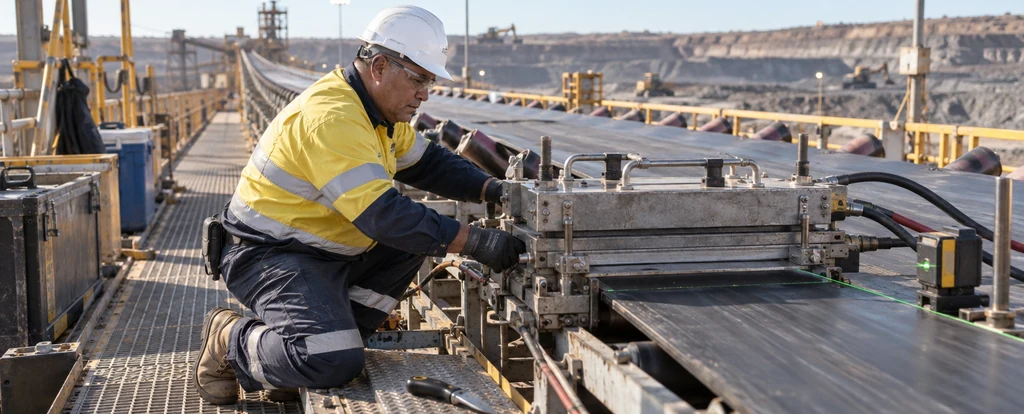
Conveyor belt splicers work on mine sites, ports and processing plants, joining and repairing the rubber and fabric belts that shift ore, coal and bulk materials. Most work for specialist belt servicing contractors that move from site to site, so the employer is often a service company rather than the mine. What sets the job apart from the fitting and maintenance trades is the splice itself: a hand-built joint that has to carry the same load as the belt either side of it.
How much do conveyor belt splicers earn?
The median full-time salary for a conveyor belt splicer is $119,600 per annum, before tax, up $25,200 since 2018.
Pay in this job follows the site more than the qualification. Mine site and fly-in fly-out work pays well above the manufacturing, port and quarry jobs doing similar repairs, largely through site allowances and roster arrangements, and shift work, overtime and shutdown call-outs lift the total again. Splicers who are strong on hot vulcanising, or who will travel to a remote site at short notice, sit at the top of that range.
What does a conveyor belt splicer do day to day?
The list below is what fills most weeks; the exact mix shifts with seniority and whatever stage the current work is at.
- Inspecting belts for worn covers, torn edges, pulled fasteners and misalignment, then judging whether a repair can wait until the next shutdown or the belt has to come out of service
- Cutting belt ends square, stripping back the covers and laying out the plies before a splice goes together
- Running a hot vulcanising press or a cold repair kit to bond the join and cure it to full strength
- Testing the finished splice, checking alignment and tension and watching the belt run in before handing it back to the plant
- Keeping presses, cutters and clamping gear clean and serviceable, and logging each job in the site maintenance system
What skills do conveyor belt splicers need?
Employers look for hand and power tool work, installation and maintenance, worksite safety management, backed by Vulcanising press fluency and strong attention to detail.
Specialist skills
- Hand and power tool work
- Installation and maintenance
- Worksite safety management
- Plant and equipment operation
Software and tools
- Vulcanising press
- Belt splicing kit
- Rubber cutting knives
- CMMS (e.g. SAP PM)
- Laser alignment tools
General skills
- Attention to detail
- Problem solving
- Physical stamina and dexterity
Is the job growing?
About 3,500 people work as conveyor belt splicers in Australia, and employment is projected to grow 3% over the decade to 2035. That's modest growth: demand is steady rather than booming.
How do you become a conveyor belt splicer?
Here's the path most conveyor belt splicers take, step by step.
- 1Start in a site support role
Most splicers come in as a trade assistant or labourer with a maintenance or belt servicing crew, handling belt ends and learning safe work procedures while getting paid. No prior qualification is needed to start.
- 2Get the licences and clearances your sites require
A White Card is standard for construction and civil sites, and mine sites run their own induction, usually with a current first aid certificate. A forklift or HR licence helps with moving belt rolls, presses and gear.
- 3Learn splicing on the job
Hot vulcanising and cold repair are taught by the specialist belt servicing companies and picked up over a few years alongside an experienced splicer. Short manufacturer courses cover press settings and cure times for different belt types.
- 4Add a qualification as you go
A Certificate III in polymer processing (PMB30121) or engineering is the usual formal option, and it supports a move into supervision, planning or crew coordination. It is commonly taken up after a few years on the tools.
Ready to apply as a conveyor belt splicer?
Whether you're working toward becoming a conveyor belt splicer or already are one and want a hand with the next step (sharpening your resume for ATS screening, tightening your cover letter, or knowing what you'll actually be asked at interview), here are examples grounded in this specific role, not generic templates.
What jobs can a conveyor belt splicer move to?
Moving into Driller typically comes with the biggest pay rise, worth $31,600 a year more on average.
| Move to | Typical pay change | Overlap | Retraining |
|---|---|---|---|
| Driller Site experience and equipment maintenance skills provide a base for drilling, though a short course is needed. | +$31,600 | 47% | short course |
| Crusher Operator Belt splicing skills and bulk material handling knowledge suit crusher operation, with minimal retraining in the same mining field. | +$0 | 67% | minimal |
| Shot Firer Mining safety awareness and equipment skills support shot firing, with a short course for the explosives ticket. | +$0 | 57% | short course |
| Tunneller A conveyor belt splicer's underground mining and materials handling experience transfers to tunnelling, with minimal retraining. | −$7,800 | 78% | minimal |
Moves are chosen from Jobs and Skills Australia's Data on Occupation Mobility, which follows income tax records between 2011-12 and 2020-21, together with entry requirements and skill overlap. A known move is one people were seen making in that data. Pay change compares median full-time pay for the two roles.
Who works as a conveyor belt splicer?
The typical conveyor belt splicer is 38 years old; 95% are men, 95% work full-time, and full-timers average 44 hours a week.
- 38
- Median age
- 5%
- Female share
- 95%
- Full-time
- +4h
- vs all-jobs avg
What's it like being a conveyor belt splicer?
The rhythm of this job is set by the equipment rather than the calendar. Some weeks are planned shutdowns with a fixed window and a crew working through the night, and others turn on a call-out when a belt splits at 2am on a remote site. It suits people who like finishing a physical job they can inspect and sign off, and who can handle heat, dust and a roster that keeps them away from home.
What people like
- You can see whether the splice worked. A joint either holds under load or it fails in front of you on the run-in, so you know quickly whether the work was right.
- Work that moves between sites. Splicers travel to different plants, ports and pits, so belt widths, rubber types and crews change from one job to the next.
- Small crews with a clear job. You usually work in a team of two to six with a deadline set by the shutdown schedule, which keeps the day easy to plan.
- A skill you carry between employers. Hot vulcanising takes a few years to learn properly and is picked up on site with a press and a mentor, which makes it portable across the resources sector.
What people find hard
- Shutdowns and breakdowns set the clock. Planned maintenance happens in windows of a few hours, often at night, and an unplanned belt failure means being called in at short notice.
- Confined, hot and dusty places. Splices are made at transfer points and head ends where access is tight, and the work involves dust, heat, heavy belt ends and full protective gear.
- Time away from home. Much of the work is on mine sites on fly-in fly-out or drive-in drive-out rosters that keep you on site for a week or more at a time.
- Hard on the body. Kneeling over a belt, hauling belt ends into position and clamping a press takes a toll on backs, knees and shoulders over a career.
Based on our synthesis of professional-body surveys and public accounts of the role, not first-person verified reviews.
Which industries employ conveyor belt splicers?
Mining employs the largest share of conveyor belt splicers, followed by Manufacturing.
Top employing industries
- 1Mining
- 2Manufacturing
- 3Transport, Postal and Warehousing
- 4Electricity, Gas, Water and Waste Services
- 5Construction
Ranked by employment share; the source doesn't publish an exact percentage per industry.
| Certificate III/IV | 34% | |
|---|---|---|
| Diploma / Advanced Diploma | 26% | |
| Bachelor degree | 20% | |
| Year 12 or below | 20% |
Will AI replace conveyor belt splicers?
Conveyor belt splicing has low exposure to AI and automation. The core of the job is physical and in the field: squaring a belt end, clamping a press and curing a joint on equipment that has been shut down for the job. Belt monitoring systems, laser alignment tools and maintenance software such as SAP change how faults are found and recorded, but none of them can build a splice.
Share of typical working time by exposure level
- Hot and cold vulcanisingRunning the press, clamping, heating and curing to the belt maker's specification is manual work with a physical result you can test.40%low
- Measuring and cutting belt endsSquaring a belt end and stripping the plies is done by hand with a knife on a belt that is often in an awkward spot.25%low
- Belt inspections and fault findingThermal and belt monitoring systems flag damage earlier, but deciding whether a patch will hold until the next shutdown is still a call made on site.20%moderate
- Job records and maintenance system entriesLogging the splice in the CMMS, writing up the repair and ordering materials is the part of the job software already handles most.15%high
Common questions about becoming a conveyor belt splicer
Straight answers to the questions people ask most.
How much does a conveyor belt splicer earn?
Conveyor belt splicers earn a median of $119,600 per year before tax, based on full-time workers. Mine site and fly-in fly-out roles sit at the top of the range because site allowances and roster arrangements add to the base, and overtime and shutdown call-outs push the total higher again.
How do you become a conveyor belt splicer?
Most people start as a trade assistant or labourer on a maintenance crew and learn splicing from an experienced hand over a couple of years. A White Card, a mine site induction and a first aid certificate are the usual entry requirements, and some employers also ask for a forklift or HR licence. A Certificate III in polymer processing (PMB30121) or engineering helps later if you want to move into supervision or planning.
Do you need a trade qualification to be a conveyor belt splicer?
No, it is not a licensed trade and most splicers learn the work on the job. The most common qualification held by people in the role is Certificate III/IV, at 34% of the workforce, and it tends to come with moves into supervision or crew coordination.
Is there demand for conveyor belt splicers?
Conveyor belt splicers are currently in shortage in regional areas, and employment is projected to grow 3% over the decade to 2035. The workforce is small, at about 3,500 people, so openings come up through specialist servicing contractors and mine site maintenance crews rather than through large intakes. If you are looking for work, the contractors that service mine sites are where the vacancies tend to appear.
Will AI or automation replace conveyor belt splicing?
AI and automation have little direct effect on this job. Belt monitoring systems and thermal cameras flag a failing splice earlier, and maintenance software handles the record keeping, but the repair itself is manual work on equipment that has been shut down for the job. The value sits in the hands, the press and the judgement about what a belt can carry until the next shutdown.
What can a conveyor belt splicer move into?
Belt splicing sits alongside other mine site roles, and moves between them share the same equipment and safety knowledge. Crusher operating sits at about the same pay, drilling pays $31,600 more and needs a short course, and tunnelling pays $7,800 less while drawing on the same underground materials handling experience. Experienced splicers also sometimes set up their own servicing crew, which is often where earnings grow.
Related roles
Not sure this is you? Take the career quiz and get a ranked shortlist of roles that fit how you like to work.