Crusher Operator
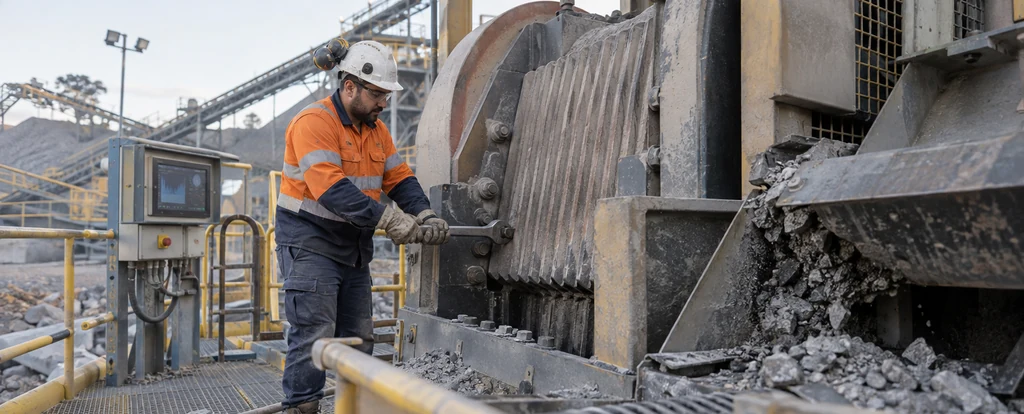
Crusher operators run the fixed plant that breaks ore, rock and recycled material down to the sizes a mine, quarry or processing site needs.
- Median salary*
- $119,600
4.4%vs last year, before tax
- People employed
- 1,100
0.0%vs last year
- Projected growth*
- +2%
to 2035
- AI exposure*
- Moderate
- automation risk
- Average hours*
- 46/wk
+6h vs all jobs
- Shortage status*
- In shortage (regional)
national
Crusher operators work at mines, quarries and processing plants, controlling jaw, cone and impact crushers from a control room and out on the plant itself. The role sits at the front of the processing chain, so the size and quality of what leaves the crusher sets what the rest of the plant can do. Unlike mobile plant operators, they look after fixed equipment that runs continuously through a shift, often on remote sites and almost always in dust and noise.
How much do crusher operators earn?
The median full-time salary for a crusher operator is $119,600 per annum, before tax, up $25,300 since 2018.
Pay depends heavily on where you work and how the roster is set, since remote mine sites and even-time swings usually pay more than town-based quarry work, and enterprise agreements fix the base rate, overtime and penalty rates. Experience also moves you up the classifications inside the same agreement, and some operations add production bonuses on top.
What does a crusher operator do day to day?
The list below is what fills most weeks; the exact mix shifts with seniority and whatever stage the current work is at.
- Running jaw, cone and impact crushers to break ore, rock or recycled material down to a set product size
- Watching feed rates and conveyor loads on the control screens, then adjusting settings to keep throughput steady
- Walking the plant to check for worn liners, damaged belts, leaks and hot bearings, and swapping parts out before they fail
- Clearing blockages and hang-ups in the crusher chamber, hopper or transfer chutes, which is often the most physical part of a shift
- Logging production figures and downtime, and handing plant condition and open faults over to the next crew at shift change
What skills do crusher operators need?
Employers look for plant and equipment operation, worksite safety management, operations management, backed by Citect SCADA fluency and strong attention to detail.
Specialist skills
- Plant and equipment operation
- Worksite safety management
- Operations management
- Installation and maintenance
Software and tools
- Citect SCADA
- Rockwell PlantPAx
- Metso DNA
- Cat MineStar
- Microsoft Excel
General skills
- Attention to detail
- Problem solving
- Physical stamina and dexterity
Is the job growing?
About 1,100 people work as crusher operators in Australia, and employment is projected to grow 2% over the decade to 2035. That's modest growth: demand is steady rather than booming.
How do you become a crusher operator?
Here's the path most crusher operators take, step by step.
- 1Finish Year 10 or Year 12
Most employers look for solid maths and English, because crusher operators read production figures and follow written procedures. A driver licence matters too, since many sites sit well outside town.
- 2Complete a Certificate II or III in resources and infrastructure or resource processing
These qualifications cover crushing and screening plant, conveyors and site safety, and they are what most mining and quarry employers expect. Training is often done through a traineeship or on the job, so you can earn while you learn.
- 3Get your inductions and licences in place
A White Card is usually needed for quarry and construction material sites, and mining operations run their own induction. Employers also commonly ask for a first aid certificate and, depending on the duties, a high risk work licence for tasks such as dogging or rigging.
- 4Start on the plant and work up
Many crusher operators begin as a plant operator, labourer or clean-up hand on a processing crew, learning the circuit before taking control of the crusher itself. From there, a Certificate IV in surface extraction operations or resource processing opens leading hand and supervisor roles.
Ready to apply as a crusher operator?
Whether you're working toward becoming a crusher operator or already are one and want a hand with the next step (sharpening your resume for ATS screening, tightening your cover letter, or knowing what you'll actually be asked at interview), here are examples grounded in this specific role, not generic templates.
What jobs can a crusher operator move to?
Moving into Driller typically comes with the biggest pay rise, worth $31,600 a year more on average.
| Move to | Typical pay change | Overlap | Retraining |
|---|---|---|---|
| Driller Crusher operators bring heavy machinery and processing experience, stepping up to drilling with a short course. | +$31,600 | 47% | short course |
| Conveyor Belt Splicer Crusher operators bring fixed plant experience and conveyor system awareness, moving into belt splicing with minimal retraining. | +$0 | 67% | minimal |
| Shot Firer Crusher operators bring mining site safety and plant knowledge, moving into blasting with a short course. | +$0 | 57% | short course |
| Bulldozer Operator Crusher operators bring plant operation and site safety skills, moving to bulldozer work with a short course. | −$13,000 | 67% | short course |
| Railway Track Machine Operator Crusher operators bring heavy plant control and safety awareness, moving to rail track machines with a short course. | −$13,000 | 82% | short course |
Moves are chosen from Jobs and Skills Australia's Data on Occupation Mobility, which follows income tax records between 2011-12 and 2020-21, together with entry requirements and skill overlap. A known move is one people were seen making in that data. Pay change compares median full-time pay for the two roles.
Who works as a crusher operator?
The typical crusher operator is 45 years old; 92% are men, 89% work full-time, and full-timers average 46 hours a week.
- 45
- Median age
- 8%
- Female share
- 89%
- Full-time
- +6h
- vs all-jobs avg
What's it like being a crusher operator?
The job has a rhythm set by the plant: watch the feed, listen for changes, adjust, and deal with whatever blocks the circuit. Most of the pressure comes from downtime, because a stopped crusher holds up everything downstream. People who like machinery, clear procedures and a measurable result at the end of a shift tend to settle into it well.
What people like
- You can see what your shift produced. Tonnage and product size are measured, so by the end of a shift you know whether the plant ran well and what you did about the problems.
- Long blocks of time off. Even-time rosters on remote sites often mean a full week off between swings, which suits people who would rather have time in long stretches than in small pieces.
- Skills that cross industries. Crushing circuits turn up in metal ore, coal, quarrying, recycling and mineral processing, so experience carries across sectors without starting again.
- Machinery worth learning properly. A crusher circuit rewards someone who understands it, and the more you know about liners, feed gradation and belt behaviour, the less the plant surprises you.
What people find hard
- Dust, noise and heat. Water sprays and PPE manage most of it, but the plant is still a loud, gritty place to spend a long shift.
- Blockages don't wait for a convenient moment. A hang-up in the chamber or chute stops production immediately, and clearing it can mean climbing, hammering or working the rock breaker from an awkward position.
- Shift work and distance from home. Nights, rotating rosters and fly-in fly-out swings are common, and they make ordinary weekly routines harder to hold.
- Production pressure is visible. Throughput targets sit in front of you on the control screens, so a slow shift or an unplanned stop gets noticed and discussed.
Based on our synthesis of professional-body surveys and public accounts of the role, not first-person verified reviews.
Which industries employ crusher operators?
Metal Ore Mining employs the largest share of crusher operators, followed by Coal Mining.
Top employing industries
- 1Metal Ore Mining
- 2Coal Mining
- 3Construction Material Mining
- 4Non-Metallic Mineral Product Manufacturing
- 5Exploration and Other Mining Support Services
Ranked by employment share; the source doesn't publish an exact percentage per industry.
| Certificate III/IV | 34% | |
|---|---|---|
| Diploma / Advanced Diploma | 26% | |
| Bachelor degree | 20% | |
| Year 12 or below | 20% |
Will AI replace crusher operators?
Automation and process control have been part of crushing for years, and most plants already run on PLC and SCADA systems that hold feed rates and settings steady. That pushes the operator's work towards monitoring, fault finding and physical plant maintenance rather than constant manual adjustment, so the job is partly exposed rather than replaced.
Share of typical working time by exposure level
- Monitoring crusher feed and conveyor throughputControl systems flag changes in load and product size, but the operator still decides when to slow the feeder or pull a belt back.30%moderate
- Inspecting and replacing liners, belts and screensWorn manganese liners still come out with a crane, hand tools and a shutdown crew, and condition is judged by sight and sound as much as by sensors.30%low
- Adjusting crusher settings for product sizeAutomated control loops handle much of the close-side setting, so the operator spends more time checking results than dialling them in by hand.20%high
- Clearing blockages and unblocking chutesA hung-up boulder in the chamber or a packed transfer chute needs a rock breaker, a hammer or a hose, plus someone who knows how the plant behaves.20%low
Moves least exposed to AI
These career moves from crusher operator work are rated low for AI exposure:
- Conveyor Belt Splicer
High skill overlap (67%), little retraining to get there, and a low automation-risk profile.
- Shot Firer
Solid skill overlap (57%), short course to get there, and a low automation-risk profile.
- Bulldozer Operator
High skill overlap (67%), short course to get there, and a low automation-risk profile.
- Railway Track Machine Operator
High skill overlap (82%), short course to get there, and a low automation-risk profile.
Common questions about becoming a crusher operator
Straight answers to the questions people ask most.
How much does a crusher operator earn?
The median for full-time crusher operators is $119,600 per annum, before tax. Remote rosters, overtime and penalty rates lift actual earnings above that on many mine sites, while town-based quarry work tends to sit closer to it.
How do you become a crusher operator?
Most people start with a Certificate II or III in resources and infrastructure or resource processing, or a traineeship with a mining or quarry company, then learn the circuit on the job. A driver licence, a White Card and site inductions are usually needed before you can step onto a plant.
Are crusher operators in demand?
Crusher operators are currently in shortage in regional areas, and employment is projected to grow 2% over the decade to 2035. The work follows mining and quarry activity, so openings tend to cluster on remote rosters and at construction material sites rather than being spread evenly.
Will automation replace crusher operators?
Not entirely. Control systems and remote monitoring already hold much of the steady-state crushing, but someone still has to clear blockages, change liners, judge wear and respond when the circuit upsets, and those parts of the job resist automation.
What can a crusher operator move into?
Drilling is a common step up, paying $31,600 more and using the same heavy machinery and processing experience with a short course. Railway track machine operation leans on fixed plant control and needs only a short course, though pay is $13,000 less, and conveyor belt splicing takes minimal retraining because you already know how belts behave.
What hours do crusher operators work?
Full-time crusher operators average 46 hours a week, and 89% work full time. Most sites run long shifts on rotating day and night rosters, with even-time swings common on remote operations.
Related roles
- Conveyor Belt Splicer
- Shot Firer
- Driller
- Bulldozer Operator
- Railway Track Machine Operator
- Mining Labourer
Not sure this is you? Take the career quiz and get a ranked shortlist of roles that fit how you like to work.