DJ
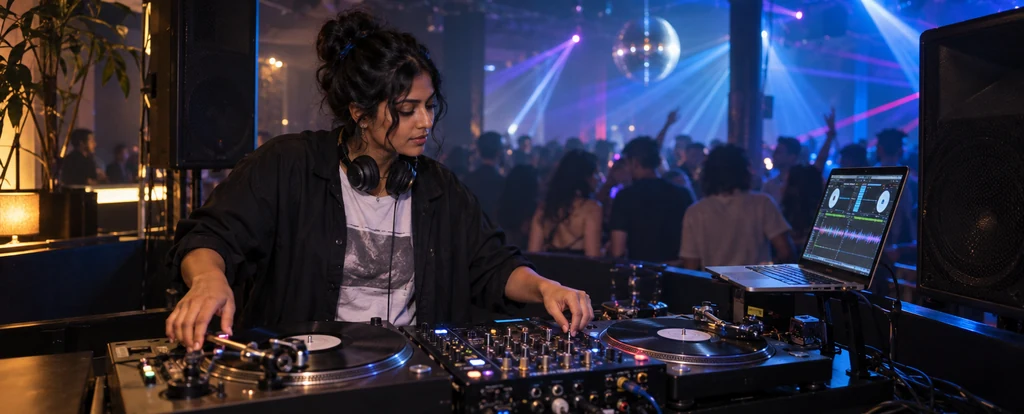
DJs mix recorded music for a live crowd, setting the energy of a venue and carrying it through the night.
- Median salary*
- $65,000
3.8%vs last year, before tax
- People employed*
- 3,400
0.0%vs last year
- Projected growth*
- +3%
to 2035
- AI exposure*
- Moderate
- automation risk
- Average hours*
- 40/wk
matches all-jobs average
- Shortage status*
- Not in shortage
national
Most DJs work in clubs, bars, festivals and private functions, usually on a casual or freelance basis, with the hours sitting at night and on weekends. What separates a working DJ from someone who plays music at home is reading a room and holding it, plus the unglamorous side of bookings, promotion and gear. Some also produce their own tracks or release mixes, which builds a following venues are willing to pay for.
How much do djs earn?
The median full-time salary for a dj is $65,000 per annum, before tax, up $13,500 since 2018.
What a DJ earns depends far more on the type of booking than on any qualification. A weekly club residency pays differently from a wedding, a corporate function or a festival slot, and most work is casual or freelance, so there is no paid leave and super is only guaranteed on some engagements. Agency commissions, travel to regional gigs and whether you supply your own gear all change what actually reaches your account.
What does a dj do day to day?
The list below is what fills most weeks; the exact mix shifts with seniority and whatever stage the current work is at.
- Selecting and mixing tracks to suit a venue, a brief and the crowd in front of them
- Reading the room and adjusting tempo, genre and volume as the night moves
- Setting up, testing and packing down decks, mixer, speakers and lighting
- Cutting demo mixes and posting clips to build a following between gigs
- Quoting fees, chasing invoices and confirming set times and technical needs with venues or event organisers
What skills do djs need?
Employers look for creative software production, content creation and writing, event coordination, backed by Serato DJ Pro fluency and strong customer service.
Specialist skills
- Creative software production
- Content creation and writing
- Event coordination
- Marketing analytics
- Selling and negotiation
Software and tools
- Serato DJ Pro
- rekordbox
- Traktor Pro
- Ableton Live
- Logic Pro
General skills
- Customer service
- Written communication
Is the job growing?
About 3,400 people work as djs in Australia, and employment is projected to grow 3% over the decade to 2035. That's modest growth: demand is steady rather than booming.
How do you become a dj?
Here's the path most djs take, step by step.
- 1Learn the gear and the software
Most people start with a controller and one of the programs clubs actually use, such as Serato DJ Pro, rekordbox or Traktor Pro. Practising beatmatching, phrasing and building a set is unpaid work, and it is where the hours go before anyone hires you.
- 2Build a library and a demo mix
A library sorted by key, tempo and mood lets you respond to a crowd quickly instead of scrolling. A short recorded mix sent to venues shows what you sound like in a way a track list never will.
- 3Play free or low-paid slots to get on line-ups
Support sets, house parties, university nights and community events build the stage time and the contacts that lead to paid work. Venues tend to book people they have already seen hold a room.
- 4Add study if you want the technical or event side
A Certificate IV or diploma in music, sound production or event management is useful for people heading into studio work, live sound or running events alongside gigs. It is not required to play sets, and among people working as DJs, 38% hold a Bachelor degree.
- 5Set up the business paperwork
Freelance DJs need an ABN, invoices and public liability insurance, which many venues and councils ask for before a booking is confirmed. Keeping records of gig income from the start makes tax time far less painful once bookings become regular.
Ready to apply as a dj?
Whether you're working toward becoming a dj or already are one and want a hand with the next step (sharpening your resume for ATS screening, tightening your cover letter, or knowing what you'll actually be asked at interview), here are examples grounded in this specific role, not generic templates.
What jobs can a dj move to?
Moving into Sound Engineer typically comes with the biggest pay rise, worth $30,900 a year more on average.
| Move to | Typical pay change | Overlap | Retraining |
|---|---|---|---|
| Sound Engineer A dj's live mixing, equipment setup and audio knowledge carry into sound engineering, with technical training needed for studio work. | +$30,900 | 41% | reskill |
| Musician A dj brings live performance, timing and music knowledge to playing instruments or vocals, though formal musicianship may need study. | +$26,800 | 40% | reskill |
| Social Media Content Creator A dj already cuts audio and promotes sets online, so those content and editing skills transfer to social media content creation. | +$5,200 | 45% | short course |
| Podcast Producer A dj's audio editing and music curation transfer to podcast production, though storytelling and production planning need further development. | +$0 | 40% | reskill |
| Entertainer A dj's stage presence, crowd reading and show running transfer to general entertaining work and broader performance roles. | −$5,200 | 53% | short course |
Moves are chosen from Jobs and Skills Australia's Data on Occupation Mobility, which follows income tax records between 2011-12 and 2020-21, together with entry requirements and skill overlap. A known move is one people were seen making in that data. Pay change compares median full-time pay for the two roles.
Who works as a dj?
The typical dj is 32 years old; 72% are men, 45% work full-time, and full-timers average 40 hours a week.
- 32
- Median age
- 28%
- Female share
- 45%
- Full-time
- +0h
- vs all-jobs avg
What's it like being a dj?
The job runs on other people's nights out, so the week is short in daylight hours and long after dark. It rewards people who are comfortable performing alone, reading a crowd and handling the admin side without being asked. The work is social and often fun, but the income is uneven and the hustle never really stops.
What people like
- A room moving to what you choose. The set is yours to build, and a packed floor responding to a track you picked is the part most DJs stay for.
- Nights instead of office hours. Most work happens between 9pm and 3am, which suits people who would rather not sit at a desk all day and leaves daytime free for production or a second job.
- Low cost to get started. A controller and a laptop are enough for your first gigs, so the entry cost is far lower than for most performance careers.
- Reputation compounds. Regular slots, support sets and an active online presence feed each other, so the more you play, the more often bookers call.
What people find hard
- Income arrives gig by gig. Casual and freelance work means quiet Januarys, no paid leave, and the unpaid time spent chasing invoices between bookings.
- The hours take a toll. Late finishes, loading in before the crowd arrives and getting home at 4am are the normal shape of the week, not an occasional one.
- You are also your own marketing department. Venues and agents expect a demo, recent photos and an online presence before they reply, and that work is done for free.
- Rooms and briefs can work against you. A quiet floor, a function crowd with a list of requests or a venue cutting your set short is part of the job, and the fee usually stays the same.
Based on our synthesis of professional-body surveys and public accounts of the role, not first-person verified reviews.
Which industries employ djs?
Live music venues and nightclubs employs the largest share of djs, followed by Events and festivals.
Top employing industries
- 1Live music venues and nightclubs
- 2Events and festivals
- 3Hospitality venues (bars and pubs)
- 4Wedding and private event services
- 5Broadcasting and streaming media
Ranked by employment share; the source doesn't publish an exact percentage per industry.
| Bachelor degree | 38% | |
|---|---|---|
| Diploma / Advanced Diploma | 24% | |
| Certificate III/IV | 20% | |
| Postgraduate | 10% | |
| Other | 8% |
Will AI replace djs?
DJing sits in the middle. Software already handles beatmatching, key matching and harmonic mixing, and AI tools can generate track suggestions, promo clips and cover art, which removes some of the routine work around a gig. What has not been automated is the live job of reading a room and holding it, plus the relationships with venues and promoters that produce the bookings. Most working DJs use the automation for preparation and still perform by hand.
Share of typical working time by exposure level
- Mixing and beatmatching liveSerato DJ Pro and rekordbox can sync tracks automatically, but landing a smooth transition and rescuing a floor that has emptied out is still done by ear in the moment.30%moderate
- Choosing what to playStreaming data and AI playlist tools help build a shortlist before the gig, but the call on what this room needs at 1am comes from watching it.25%moderate
- Promotion and demo mixesAI tools can draft captions, cut short clips and generate cover art, which takes much of the time out of keeping a following fed between bookings.25%high
- Setting up and running the gear on the nightCabling a booth, soundchecking, fault-finding a dead channel or the venue's power supply and talking the manager through the set are hands-on work on site.20%low
Moves least exposed to AI
These career moves from dj work are rated low for AI exposure:
- Musician
Solid skill overlap (40%), reskill to get there, and a low automation-risk profile.
- Entertainer
Solid skill overlap (53%), short course to get there, and a low automation-risk profile.
Common questions about becoming a dj
Straight answers to the questions people ask most.
How much do DJs earn?
Full-time DJs earn a median of $65,000 per year before tax. Casual and freelance work means annual income swings with how many bookings you hold, so a regular residency pays far more predictably than scattered one-off gigs, and agency commission or your own gear costs come out of the fee.
How do you become a DJ?
You learn on a controller and one of the standard programs, then get on line-ups wherever you can, starting with support slots, parties and community events. There is no licence or registration, but venues will ask for a demo mix and often for public liability insurance. Most working DJs build the booking side of the job at the same time as the performance side.
Are DJs in demand?
DJs are currently not in shortage, and employment is projected to grow 3% over the decade to 2035. That is a small movement in a small workforce, so most openings come from people leaving or cutting back rather than new roles appearing. Venues, weddings and events hire continuously, which makes getting on a line-up the practical hurdle rather than the number of jobs.
Will AI replace DJs?
Not the live performance, but it already handles parts of the preparation. Mixing software can beatmatch and key-match automatically, and AI tools can suggest tracks, edit promo clips and draft captions, which speeds up the work around a gig. Reading a crowd, holding a floor and being the person a venue trusts with its Saturday night are still done by a human in the booth.
What can DJs move into?
Sound engineering is a common move, since live mixing, signal flow and equipment knowledge carry across, and it pays $30,900 more on the DJ median. DJs who perform as well as play records often shift towards musician work, which pays $26,800 more, or into general entertaining through the same stagecraft and crowd-reading skills, at $5,200 less. Many DJs also run their own booking or mobile DJ business, hiring other performers and covering weddings, parties and corporate events, and that is often where earnings grow.
Can you make a full-time living from DJing?
Some do, though 45% of DJs work full time and the rest fit gigs around another job or study. A regular residency combined with private functions is the usual way to get close to full-time hours. Building production or event work alongside performing adds income that does not depend on a single weekly slot.
Related roles
Not sure this is you? Take the career quiz and get a ranked shortlist of roles that fit how you like to work.