Electrical Asset Inspector
Electrical asset inspectors check the condition of poles, wires and substation equipment so the electricity network stays safe and reliable.
- Median salary*
- $101,400
3.9%vs last year, before tax
- People employed
- 1,500
0.0%vs last year
- Projected growth*
- +5%
to 2035
- AI exposure*
- Moderate
- automation risk
- Average hours*
- 40/wk
matches all-jobs average
- Shortage status*
- Not in shortage
national
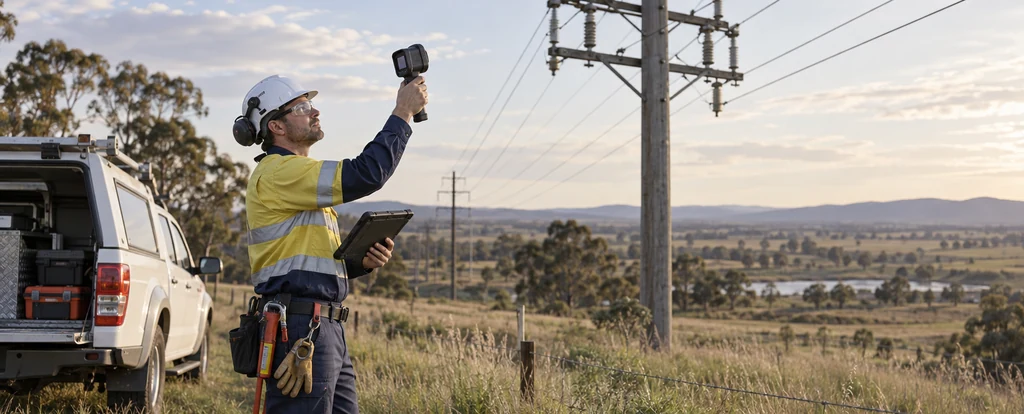
Electrical asset inspectors examine poles, overhead lines, transformers and switchgear on the electricity network, usually on foot at the asset or from a vehicle between sites. They rate each asset's condition and expected remaining life and record it, which is what decides what gets repaired and what gets replaced. It is an assessment job rather than a repair one: inspectors identify and grade defects, while field crews carry out the work.
How much do electrical asset inspectors earn?
The median full-time salary for an electrical asset inspector is $101,400 per annum, before tax, up $21,100 since 2018.
Who you work for moves pay more than anything else, since network and transmission businesses generally pay above the contractors that inspect on their behalf. Overtime and call-out during storm season add to earnings, and experience with high-voltage assets or live-line environments is rewarded. Location matters too, and remote or regional field roles often come with allowances or a company vehicle.
What does an electrical asset inspector do day to day?
The list below is what fills most weeks; the exact mix shifts with seniority and whatever stage the current work is at.
- Patrolling line routes on foot or by vehicle, checking poles, crossarms and conductors for rot, corrosion and storm damage
- Testing transformers, switchgear and other substation equipment, often with thermal imaging to find hotspots
- Rating each asset's condition and remaining life against network standards
- Logging defect data and photos in asset management systems such as SAP or Maximo
- Writing up inspection findings so asset planners can prioritise maintenance and replacement
What skills do electrical asset inspectors need?
Employers look for field inspection and testing, regulatory compliance, risk and internal controls, backed by SAP Asset Management fluency and strong safety and compliance awareness.
Specialist skills
- Field inspection and testing
- Regulatory compliance
- Risk and internal controls
Software and tools
- SAP Asset Management
- Esri ArcGIS
- IBM Maximo
- Fluke thermal imaging camera
- Mobile inspection apps
General skills
- Safety and compliance awareness
- Attention to detail
- Problem solving
- Written communication
- Digital literacy
Is the job growing?
About 1,500 people work as electrical asset inspectors in Australia, and employment is projected to grow 5% over the decade to 2035. That's modest growth: demand is steady rather than booming.
How do you become an electrical asset inspector?
Here's the path most electrical asset inspectors take, step by step.
- 1Start with an electrical trade or an ESI qualification
A Certificate III in Electrotechnology (Electrician) or a Certificate III in ESI (electrical supply industry) in distribution or transmission is the usual base. Both take about three to four years and are often completed as an apprenticeship with a network business.
- 2Get hands-on time with network assets
Working as a linesperson, substation technician or electrical tester builds the familiarity with poles, transformers and switchgear that inspection roles assume, and some employers use that background as their entry point.
- 3Learn inspection and condition assessment
A short course in asset inspection and condition assessment covers defect rating, remaining life assessment and the reporting formats network businesses use, and most employers deliver the network-specific standards in-house.
- 4Hold the licences and safety training employers ask for
A White Card, a current driver's licence, and working at heights and confined space training are common requirements. Some inspection work also needs a high risk work licence or an electrical licence.
- 5Apply to network businesses and inspection contractors
Distribution and transmission businesses and specialist inspection contractors do most of the hiring. A traineeship is a realistic way in if you are starting without a trade behind you.
Ready to apply as an electrical asset inspector?
Whether you're working toward becoming an electrical asset inspector or already are one and want a hand with the next step (sharpening your resume for ATS screening, tightening your cover letter, or knowing what you'll actually be asked at interview), here are examples grounded in this specific role, not generic templates.
What jobs can an electrical asset inspector move to?
Moving into Work Health and Safety Inspector typically comes with the biggest pay rise, worth $22,500 a year more on average.
| Move to | Typical pay change | Overlap | Retraining |
|---|---|---|---|
| Work Health and Safety Inspector Inspection and compliance experience carries into workplace safety auditing, with further study in work health and safety. | +$22,500 | 60% | reskill |
| Welding Inspector Electrical asset inspection knowledge supports welding inspection, with a short course in welding inspection and standards. | +$2,600 | 59% | short course |
| Insurance Risk Surveyor Asset condition assessment and reporting skills transfer to insurance risk surveying, though a diploma in risk is needed. | −$5,200 | 80% | reskill |
| Aerodrome Reporting Officer Infrastructure inspection and reporting habits suit aerodrome reporting, after a short course in aerodrome operations. | −$10,400 | 59% | short course |
| Transport Operations Inspector Regulatory inspection and report writing transfer to transport operations inspection, with a short course in transport compliance. | −$13,000 | 56% | short course |
Moves are chosen from Jobs and Skills Australia's Data on Occupation Mobility, which follows income tax records between 2011-12 and 2020-21, together with entry requirements and skill overlap. A known move is one people were seen making in that data. Pay change compares median full-time pay for the two roles.
Who works as an electrical asset inspector?
The typical electrical asset inspector is 47 years old; 79% are men, 84% work full-time, and full-timers average 40 hours a week.
- 47
- Median age
- 21%
- Female share
- 84%
- Full-time
- +0h
- vs all-jobs avg
What's it like being an electrical asset inspector?
The job runs to a fixed cycle of scheduled patrols and inspections, punctuated by storm season when damaged assets are checked again and routes get reshuffled. Most of the day is spent outdoors, alone or in a small crew, with the reporting done at the depot or from the vehicle afterwards. It suits people who like working to a written standard and want a clear answer about whether an asset is sound, marginal or due for replacement.
What people like
- Most of the week is outdoors. You spend your days at poles, substations and line routes rather than at a desk, with the paperwork fitted around the inspection round.
- Clear standards to apply. Condition rating systems and network standards define what counts as a defect, so decisions rest on evidence from the asset rather than on opinion.
- Your assessments change what happens next. A rating you record can move an asset up the replacement list, which links the inspection directly to the work that follows it.
- Movement between sites and asset types. Poles, transformers, switchgear and cables all come up in the round, and the location changes from one day to the next.
What people find hard
- Weather and access set the pace. Inspection goes ahead in heat, rain and wind, and a route can be reordered at short notice when a storm takes out part of the network.
- Long drives between assets. Rural and outer-suburban rounds mean hours behind the wheel, some of it on unsealed roads and fire trails.
- The reporting still has to be done. Every asset inspected needs a logged rating and notes, and a vague entry usually means a second visit to the same pole or substation.
- Repetition on familiar routes. The same line routes come around on a fixed cycle, so you may inspect the same stretches of network several times a year.
Based on our synthesis of professional-body surveys and public accounts of the role, not first-person verified reviews.
Which industries employ electrical asset inspectors?
Electricity Distribution employs the largest share of electrical asset inspectors, followed by Electricity Transmission.
Top employing industries
- 1Electricity Distribution
- 2Electricity Transmission
- 3Electrical Contracting Services
- 4Heavy and Civil Engineering Construction
- 5Renewable Energy Generation
Ranked by employment share; the source doesn't publish an exact percentage per industry.
| Certificate III/IV | 34% | |
|---|---|---|
| Diploma / Advanced Diploma | 26% | |
| Bachelor degree | 20% | |
| Year 12 or below | 20% |
Will AI replace electrical asset inspectors?
The job sits in the middle for AI exposure. Image recognition on drone and helicopter survey footage already does a first pass at spotting likely defects along line routes, and thermal analytics flags hotspots on substation equipment before an inspector arrives. What those tools do not do is decide what a defect means for the asset, and someone still has to confirm the finding on site, rate the condition and sign the report.
Share of typical working time by exposure level
- Patrolling line routes and polesDrone and helicopter surveys have taken over part of the routine corridor inspection, though ground patrols are still needed where vegetation, access or fine detail matters.30%moderate
- Rating asset condition and remaining lifeDeciding whether a cracked insulator or a corroded pole cap is a note for next year or a replacement job relies on site knowledge that image tools cannot supply.30%low
- Recording inspection data and photosEntering condition ratings and defect notes into asset management systems is largely a keyboard task, and image recognition is beginning to pre-fill some of it from survey footage.25%high
- Testing substation equipment and thermal surveysThermal imaging and diagnostic testing on transformers and switchgear are helped by analytics, but connecting the test gear and interpreting results near live equipment stays with the inspector.15%low
Moves least exposed to AI
These career moves from electrical asset inspector work are rated low for AI exposure:
- Work Health and Safety Inspector
High skill overlap (60%), reskill to get there, and a low automation-risk profile.
Common questions about becoming an electrical asset inspector
Straight answers to the questions people ask most.
How much do electrical asset inspectors earn?
Electrical asset inspectors earn $101,400 per year before tax at the median for full-time workers. Who you work for matters most, because network and transmission businesses generally pay above inspection contractors, and remote or storm-response roles add allowances and overtime. Inspection qualifications and experience with high-voltage assets both move you up the pay range.
How do you become an electrical asset inspector?
Most inspectors start with an electrical trade or a Certificate III in ESI distribution or transmission, then add training in condition assessment and inspection methods. Employers in distribution and transmission usually provide the network-specific standards training once you are in the role. A traineeship is a common way in for people without a trade.
Are electrical asset inspectors in demand?
Electrical asset inspectors are currently not in shortage, and employment is projected to grow 5% over the decade to 2035. Networks are replacing ageing poles and switchgear and connecting new renewable generation, so inspection work follows the size and age of the asset base rather than the wider jobs market.
Will AI replace electrical asset inspectors?
Electrical asset inspectors have moderate exposure to AI and automation. Drone and helicopter surveys with image recognition now do a first pass at finding likely defects on lines and poles, and thermal analytics flags hotspots before anyone visits the site. Confirming a defect in person, judging how urgent it is and signing off the condition rating still sit with the inspector.
Do you need to be an electrician to work as an electrical asset inspector?
Not always, but an electrical trade or an ESI qualification is the usual way in. Some employers take on people with electrical testing or test and tag experience and put them through the inspection training themselves. Whatever your background, you need to be comfortable reading network standards and writing findings that planners will act on.
Where can electrical asset inspectors move next?
Inspection and compliance experience transfers into work health and safety inspection, which pays about $22,500 more and draws on the same reporting skills, with further study in work health and safety. Insurance risk surveying is a close match on skills and needs a diploma in risk. A short course in welding inspection opens up welding inspector work for anyone who already reads standards and grades defects.
Related roles
- Work Health and Safety Inspector
- Welding Inspector
- Insurance Risk Surveyor
- Aerodrome Reporting Officer
- Transport Operations Inspector
- Electrician
Not sure this is you? Take the career quiz and get a ranked shortlist of roles that fit how you like to work.