Electronic Engineering Technician
Electronic engineering technicians build, test and maintain the electronic systems that keep communications, control and medical equipment working.
- Median salary
- $111,400
4.1%vs last year, before tax
- People employed
- 3,600
0.0%vs last year
- Projected growth
- +12.1%
to 2035
- AI exposure*
- Moderate
- automation risk
- Average hours
- 42/wk
+2h vs all jobs
- Shortage status
- In shortage
national
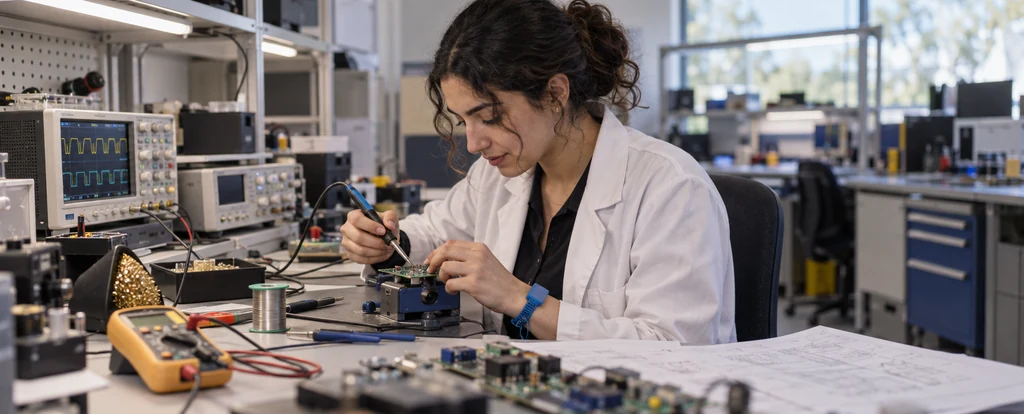
Most work in manufacturing, telecommunications, utilities, defence and research settings, testing circuits and calibrating instruments in a workshop or on site under the direction of an engineer. The role sits between the trades and engineering: an electronics technician repairs and replaces equipment, while an electronic engineering technician also builds test setups, reads schematics and documents results an engineer relies on. A certificate IV or diploma is the usual way in, and a degree is only needed if you want the engineer title.
How much do electronic engineering technicians earn?
The median full-time salary for an electronic engineering technician is $111,400 per annum, before tax, up $23,300 since 2018.
Pay moves with the sector first: defence contractors, utilities, mining and telecommunications pay more than general manufacturing, and most rates are set by an enterprise agreement. Shift rosters, site allowances and on-call work add to the base, and a specialist skill such as radio frequency work, high voltage testing or medical device servicing attracts a premium. Small repair and calibration firms pay less than large contractors.
What does an electronic engineering technician do day to day?
The list below is what fills most weeks; the exact mix shifts with seniority and whatever stage the current work is at.
- Setting up test benches and measuring circuits with oscilloscopes, multimeters and signal generators
- Fault-finding to component level on boards, power supplies and control units
- Assembling and soldering prototype circuits, then running them through their test sequence
- Calibrating instruments and sensors so readings stay within specification
- Writing up test results and updating schematics and maintenance records for the engineering team
What skills do electronic engineering technicians need?
Employers look for installation and maintenance, software testing and QA, regulatory compliance, backed by Altium Designer fluency and strong problem solving.
Specialist skills
- Installation and maintenance
- Software testing and QA
- Regulatory compliance
- Engineering design and analysis
Software and tools
- Altium Designer
- MATLAB
- LTspice
- LabVIEW
- Keysight oscilloscopes
General skills
- Problem solving
- Attention to detail
- Written communication
Is the job growing?
About 3,600 people work as electronic engineering technicians in Australia, and employment is projected to grow 12.1% over the decade to 2035. That's healthy, above-average growth, and the role should stay in solid demand.
How do you become an electronic engineering technician?
Here's the path most electronic engineering technicians take, step by step.
- 1Finish Year 12 with maths and physics
Year 12 maths, physics or an electronics subject makes the first year of study much easier, and most entrants come through a vocational qualification rather than a degree. If you left school early, a pre-vocational electronics or electrical course is a recognised way back in.
- 2Take a certificate IV or diploma in electronics engineering
TAFE and private training providers offer the UEE electronics qualifications, usually one to two years of study that can be done full time, part time or as part of a traineeship. Among people already in the role, Certificate III/IV is the most common qualification, held by 36% of the workforce.
- 3Get the licence your work needs
Assembly, testing and repair of electronic equipment generally does not need a licence, but work on fixed electrical wiring does, and the requirements differ between states and territories. Check with the electrical regulator where you live, and note that some field service employers ask for a restricted electrical licence.
- 4Start where the equipment is
Entry roles sit with equipment manufacturers, defence contractors, utilities, hospitals and calibration labs. A traineeship or a workshop job builds the equipment-specific experience employers ask for, which counts for more than the qualification once you have a few years in.
- 5Study further if you want the engineer title
Working as an electrical engineer or mechatronics engineer needs a bachelor degree, and universities usually give credit for diploma study. That keeps the move open later without starting your training again.
Ready to apply as an electronic engineering technician?
Whether you're working toward becoming an electronic engineering technician or already are one and want a hand with the next step (sharpening your resume for ATS screening, tightening your cover letter, or knowing what you'll actually be asked at interview), here are examples grounded in this specific role, not generic templates.
What jobs can an electronic engineering technician move to?
Moving into Mechatronics Engineer typically comes with the biggest pay rise, worth $32,200 a year more on average.
| Move to | Typical pay change | Overlap | Retraining |
|---|---|---|---|
| Mechatronics Engineer Mechatronic engineering builds on the same control and electronics knowledge, though a degree is needed for the engineer title.Known move | +$32,200 | 17% | requalify |
| Electrical Engineer Circuit and systems testing experience underpins electrical engineering work, but a degree is required for the title.Known move | +$21,400 | 30% | requalify |
| Electrician Electrical wiring and testing knowledge carries into electrician work, though a separate apprenticeship and licence are needed.Known move | +$2,500 | 30% | requalify |
| Instrumentation Technician Instrumentation work draws on the same calibration and fault finding skills, but the trade needs an apprenticeship.Known move | −$12,600 | 19% | requalify |
| Electrical Engineering Technician Moving across to electrical engineering technician uses the same testing and drafting skills, with retraining in electrical systems.Known move | −$19,900 | 42% | reskill |
Moves are chosen from Jobs and Skills Australia's Data on Occupation Mobility, which follows income tax records between 2011-12 and 2020-21, together with entry requirements and skill overlap. A known move is one people were seen making in that data. Pay change compares median full-time pay for the two roles.
Who works as an electronic engineering technician?
The typical electronic engineering technician is 43 years old; 91% are men, 85% work full-time, and full-timers average 42 hours a week.
- 43
- Median age
- 9%
- Female share
- 85%
- Full-time
- +2h
- vs all-jobs avg
What's it like being an electronic engineering technician?
The job has two modes: bench work, which is patient and detailed, and site work, which is urgent and physical. Day to day it is methodical, with test sequences, calibration records and fault finding that rewards care more than speed, but when a production line or a network goes down the pressure arrives all at once. People who enjoy it tend to like problems with a definite right answer and do not mind writing up what they did.
What people like
- Faults you can chase to the end. Tracking an intermittent fault to one failing capacitor or a cracked solder joint is satisfying in a way few desk jobs are, and the fix is provable on the bench.
- Working across hardware and software. You might be soldering one day, writing a LabVIEW test routine the next and updating firmware after that, so the work rarely settles into a single skill.
- Specialist knowledge that travels. Employers in defence, medical devices and utilities often advertise for experience with a particular system, so knowing one deeply makes you easy to place.
- Clear feedback on the work. A board that passes its test sequence or an instrument that holds calibration tells you the job is right, with no client opinion in the middle.
What people find hard
- Documentation takes a share of every job. Test records, calibration certificates and updated schematics have to be completed for each job, and in regulated industries that paperwork gets audited.
- Waiting on parts. A repair can stall for days while a component ships from overseas, and the deadline does not move with it.
- Site work and shutdowns. Installations and fault calls often happen outside business hours or at remote plants, so some roles come with on-call rosters and travel.
- You work under an engineer's sign-off. Final design decisions and approvals sit with the engineer, which frustrates technicians who want to own the whole problem.
Based on our synthesis of professional-body surveys and public accounts of the role, not first-person verified reviews.
Which industries employ electronic engineering technicians?
Public Administration and Safety employs the largest share of electronic engineering technicians, followed by Manufacturing.
Top employing industries
- 1Public Administration and Safety
- 2Manufacturing
- 3Information Media and Telecommunications
Ranked by employment share; the source doesn't publish an exact percentage per industry.
| Certificate III/IV | 35.9% | |
|---|---|---|
| Diploma / Advanced Diploma | 26.4% | |
| Bachelor degree | 15.7% | |
| Year 12 or below | 13.2% | |
| Postgraduate | 5.4% |
Will AI replace electronic engineering technicians?
AI has a moderate reach into this job. Automated test equipment and diagnostic software already handle routine measurement and flag likely faults, but they still need a person to set up the rig, decide what the results mean in a real installation and carry out the repair. Installation, calibration and hands-on fault finding stay largely manual.
Share of typical working time by exposure level
- Diagnosing faults to component levelSoftware can flag a suspect board from a data pattern, but tracing an intermittent fault in a power supply still means probing, swapping parts and knowing how the circuit behaves.30%moderate
- Setting up and running automated test sequencesTest racks and scripting carry out repeat measurements overnight, so the technician writes the sequence and checks the outliers rather than logging every reading by hand.25%high
- Installing and servicing equipment on siteCabling, racking, sensor mounting and calibration in a plant or substation happen in the physical world, with access, safety and interference problems no model can resolve.25%low
- Writing test reports and maintaining documentationDraft reports and updated schematics can be generated from test data, and editing them for the engineering team is mostly a matter of judgement about what matters.20%high
Moves least exposed to AI
These career moves from electronic engineering technician work are rated low for AI exposure:
- Electrician
Some skill overlap (30%), requalify to get there, and a low automation-risk profile.
Common questions about becoming an electronic engineering technician
Straight answers to the questions people ask most.
How much does an electronic engineering technician earn?
Full-time electronic engineering technicians earn a median of $111,400 a year, before tax. Pay depends on the sector and the roster, with defence, utilities and telecommunications contracts paying more than general manufacturing, and shift or site allowances adding to the base.
How do I become an electronic engineering technician?
The usual path is a certificate IV or diploma in electronics engineering from TAFE or another registered training organisation, followed by a workshop or field service job. Some people start with an electronics traineeship, which combines the study with paid work, and a degree is only needed if you want to work as an engineer.
Are electronic engineering technicians in demand?
Electronic engineering technicians are currently in shortage nationally, and employment is projected to grow 12.1% over the decade to 2035. The work is spread across defence, manufacturing, utilities, telecommunications and medical equipment, so openings appear where those industries are active.
Will AI replace electronic engineering technicians?
AI is changing parts of the job rather than replacing it. Automated test equipment and diagnostic software handle routine measurement and flag likely faults, but someone still has to set up the test, judge what the results mean for a particular installation and carry out the repair. Field installation, calibration and hands-on fault finding remain largely manual.
What can an electronic engineering technician move into?
The closest sideways move is to electrical engineering technician, which uses the same testing and drafting skills and pays about $19,900 less. Instrumentation technician draws on the same calibration and fault-finding work but usually needs an apprenticeship, and becoming an electrical engineer or mechatronics engineer means completing a degree.
What is the difference between an electronic engineering technician and an electronics technician?
An electronics technician mostly repairs and replaces equipment, while an electronic engineering technician also builds test setups, works from schematics and documents results for engineers. The two roles overlap heavily, and moving between them usually takes extra study rather than a new career.
Related roles
- Mechatronics Engineer
- Electrical Engineer
- Electrical Engineering Technician
- Instrumentation Technician
- Electrician
- Instrumentation Technician
Not sure this is you? Take the career quiz and get a ranked shortlist of roles that fit how you like to work.