Home Manufacturing & Production
Garment Cutter
Garment cutters turn rolls of fabric into the cut pieces a clothing maker sews together, following patterns and laying out the cloth so as little as possible is wasted.
- Median salary*
- $59,800
3.6%vs last year, before tax
- People employed
- 360
10.0%vs last year
- Projected growth
- +10%
to 2035
- AI exposure*
- Moderate
- automation risk
- Average hours
- 37/wk
−3h vs all jobs
- Shortage status
- Not in shortage
national
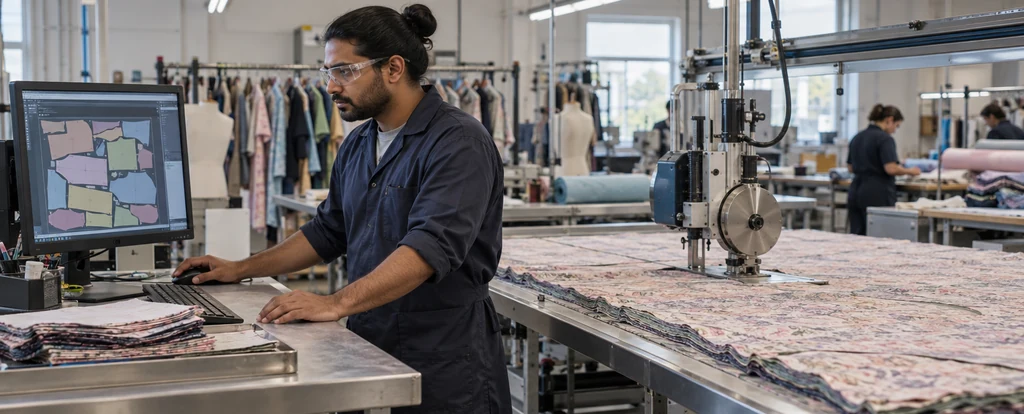
Garment cutters work in clothing factories, sample rooms and small workrooms, turning fabric into the bundles of pieces that machinists join into garments. The role sits between the patternmaker, who works out the shapes, and the machinist, who sews them, and the cutter decides how those shapes sit on the cloth. Long production runs are usually cut on computer-controlled machines, while samples, one-off garments and delicate fabrics are still cut by hand.
How much do garment cutters earn?
The median full-time salary for a garment cutter is $59,800 per annum, before tax, up $12,700 since 2018.
What you earn depends on the award or enterprise agreement covering the workplace, so a cutting room inside a larger manufacturer often pays more than a small workroom or an alterations business. Shift and early-start arrangements can add penalty rates, and skill with computer-controlled cutting and nesting software is one of the few things that moves pay within the same job.
What does a garment cutter do day to day?
The list below is what fills most weeks; the exact mix shifts with seniority and whatever stage the current work is at.
- Reading the cutting sheet and checking pattern pieces before a run, so the right sizes and fabric reach the table
- Spreading fabric to the required number of plies, matching grain, nap and checks across the lay
- Nesting pattern pieces to fit the most garments into the least cloth, which is where a cutter saves the most money
- Loading lays onto a computer-controlled cutter, or working through them with a straight knife or shears
- Checking cut bundles against the pattern, flagging fabric faults and recutting pieces when a flaw ruins a section
What skills do garment cutters need?
Employers look for craft and handmade production, hand and power tool work, plant and equipment operation, backed by Gerber AccuMark fluency and strong attention to detail.
Specialist skills
- Craft and handmade production
- Hand and power tool work
- Plant and equipment operation
- Reading plans and specifications
- Operations management
- Inventory management
Software and tools
- Gerber AccuMark
- Lectra Modaris
- CLO3D
- Electric fabric cutting machine
- Fabric spreading machine
General skills
- Attention to detail
Is the job growing?
About 360 people work as garment cutters in Australia, and employment is projected to grow 10% over the decade to 2035. That's healthy, above-average growth, and the role should stay in solid demand.
How do you become a garment cutter?
Here's the path most garment cutters take, step by step.
- 1Finish school, with design, textiles or maths subjects if they are offered
Year 12 is not a formal requirement for the job, and employers weigh hand skills, care with measurements and reliability at least as heavily as school results.
- 2Get into a cutting room as a production assistant or machinist
Many cutters start by spreading fabric, bundling pieces or machining, then learn cutting on the job. This route is paid and is the most common way in.
- 3Take a Certificate III in clothing and textile production, or in applied fashion design and technology
TAFE courses in these areas cover pattern reading, fabric behaviour and cutting equipment, and can be studied part time while you work. The fashion design version suits people aiming at sample room and made-to-measure work.
- 4Learn the computer cutting and nesting software
Systems such as Gerber AccuMark and Lectra Modaris are used in most production cutting rooms, and training is available through TAFE, equipment suppliers and on the job. Confidence with the software is often what separates a cutting room assistant from a cutter.
Ready to apply as a garment cutter?
Whether you're working toward becoming a garment cutter or already are one and want a hand with the next step (sharpening your resume for ATS screening, tightening your cover letter, or knowing what you'll actually be asked at interview), here are examples grounded in this specific role, not generic templates.
What jobs can a garment cutter move to?
Moving into Clothing Patternmaker typically comes with the biggest pay rise, worth $5,200 a year more on average.
| Move to | Typical pay change | Overlap | Retraining |
|---|---|---|---|
| Clothing Patternmaker Garment cutters bring precise pattern reading and fabric cutting to clothing patternmaking, though formal patternmaking study is required. | +$5,200 | 26% | reskill |
| Leather Goods Maker Garment cutters bring accurate cutting and pattern skills to leather goods making, with further training in leather handling needed. | +$5,200 | 38% | reskill |
| Canvas Goods Maker Garment cutters bring textile cutting and pattern skills to canvas goods making, with apprenticeship training in heavy fabrics needed. | +$2,600 | 42% | requalify |
| Sail Maker Garment cutters bring fabric layout and cutting accuracy to sail making, though an apprenticeship in sail making is required. | +$1,600 | 62% | requalify |
| Tailor Garment cutters bring accurate cutting and pattern knowledge to tailoring, with further training in fitting and garment construction. | −$5,200 | 30% | reskill |
Moves are chosen from Jobs and Skills Australia's Data on Occupation Mobility, which follows income tax records between 2011-12 and 2020-21, together with entry requirements and skill overlap. A known move is one people were seen making in that data. Pay change compares median full-time pay for the two roles.
Who works as a garment cutter?
The typical garment cutter is 56 years old; 55% are men, 58% work full-time, and full-timers average 37 hours a week.
- 56
- Median age
- 45%
- Female share
- 58%
- Full-time
- −3h
- vs all-jobs avg
What's it like being a garment cutter?
The rhythm of the job is set by production runs: a lay is planned, spread, cut and handed to the machinists, then the next one begins. Much of it is standing at a table in a noisy room, concentrating on fabric that may stretch, slip or carry a flaw, and the pressure rises when orders bunch before a season. It suits people who like working with their hands, notice detail in cloth and measure twice before cutting once.
What people like
- The fabric maths that pays off. Working out a nest that fits an extra garment into a lay is a visible saving, and experienced cutters take pride in how little cloth they waste.
- Cloth in your hands every day. Every fabric behaves differently, from stable cotton to slippery lining and stretch knits, so the work rewards feel and experience as much as software.
- Small teams and visible output. Cutting rooms are usually small, and the pieces you cut move straight to the machinists, so you see what your work produced the same day.
- A mix of machine and hand work. Sample room jobs and one-off garments break up the production runs, and hand cutting with shears uses a different set of skills from running the automated cutter.
What people find hard
- Standing, and repeating the same lay. Most of the day is spent on your feet at the cutting table, and a large order can mean the same garment cut again and again.
- A wrong cut wastes a whole lay. Because the fabric is spread in many plies, one misread instruction or slipped knife can ruin metres of cloth, so the work leaves little room for a careless moment.
- Deadlines bunch before seasons. Orders arrive together ahead of summer and winter ranges, and because cutting is the first step, any delay there holds up the whole production line.
- Few employers to choose from. It is a small occupation, with about 360 people working as garment cutters, and openings are concentrated in clothing manufacturing, which means moving town can mean leaving the trade.
Based on our synthesis of professional-body surveys and public accounts of the role, not first-person verified reviews.
Which industries employ garment cutters?
Manufacturing employs the largest share of garment cutters, followed by Retail Trade.
Top employing industries
- 1Manufacturing
- 2Retail Trade
- 3Arts and Recreation Services
Ranked by employment share; the source doesn't publish an exact percentage per industry.
| Year 12 or below | 57.7% | |
|---|---|---|
| Certificate III/IV | 14.6% | |
| Diploma / Advanced Diploma | 11% | |
| Bachelor degree | 7.3% | |
| Postgraduate | 0.8% |
Will AI replace garment cutters?
This is a moderately exposed job, because the repetitive cutting in a production run is already handled by automated cutters and nesting software that proposes layouts in seconds. What keeps the exposure from being higher is the cloth itself: grain, stretch, nap and flaws need a person to read them, and samples and delicate fabrics are still cut by hand.
Share of typical working time by exposure level
- Laying out and nesting the patternsNesting software offers a layout almost instantly, but someone still checks grain, nap and pattern matching before the lay is cut.25%moderate
- Cutting production lays on the automated cutterOnce the lay is loaded and the cutting file is set, the machine works through a long run faster and more evenly than a straight knife.25%high
- Cutting samples and one-off pieces by handSample room cutting in silk, lace or slippery knits is still done by hand because the fabric shifts too unpredictably for a machine.25%low
- Checking cut bundles and fabric faultsDeciding whether a flaw in the cloth can be cut around or the whole piece recut is a judgement about the fabric and the order.25%low
Moves least exposed to AI
These career moves from garment cutter work are rated low for AI exposure:
- Leather Goods Maker
Some skill overlap (38%), reskill to get there, and a low automation-risk profile.
Common questions about becoming a garment cutter
Straight answers to the questions people ask most.
How much do garment cutters earn?
Garment cutters earn $59,800 per year before tax when working full time. The award or enterprise agreement at your workplace, shift arrangements and how much of the cutting you do on computer-controlled equipment are the main things that move that figure.
How do you become a garment cutter?
Most people start in a cutting room as a spreading or production assistant, or after time as a machinist, and learn cutting on the job. A Certificate III in clothing and textile production or applied fashion design and technology gives the pattern and fabric knowledge employers look for, and no licence is required.
Are garment cutters in demand?
Garment cutters are currently not in shortage, and employment is projected to grow 10% over the decade to 2035 over the decade to 2035. The occupation is small, so most openings come from replacing people who leave rather than from new positions, which means local manufacturing activity matters more than the national picture.
Will AI or automation replace garment cutters?
Automated cutters and nesting software already handle most of a long production run, so that side of the job is exposed. What stays with people is judging how a particular fabric will behave, planning a lay around flaws in the cloth, and hand cutting samples and unstable materials.
Can garment cutters move into other work?
Sail making uses much of the same fabric layout and cutting skill (62% overlap), though it needs apprenticeship training in sail making and pays $1,600 more. Clothing patternmaking is a step up at $5,200 more, but requires formal patternmaking study. Canvas goods making is a shorter move at $2,600 more, since heavy fabric cutting transfers with apprenticeship training.
What is the difference between a garment cutter and a patternmaker?
Patternmakers work out the shape and fit of a garment, while cutters take those patterns and get the most pieces out of the cloth. The two sit beside each other in a factory, and cutters who take on pattern study often move across.
Related roles
Not sure this is you? Take the career quiz and get a ranked shortlist of roles that fit how you like to work.