Mine Surveyor
Mine surveyors measure and map mine workings so that tunnels, pits and ore bodies stay on target.
- Median salary*
- $124,800
4.0%vs last year, before tax
- People employed
- 820
2.5%vs last year
- Projected growth*
- +4%
to 2035
- AI exposure*
- Moderate
- automation risk
- Average hours*
- 46/wk
+6h vs all jobs
- Shortage status*
- In shortage
national
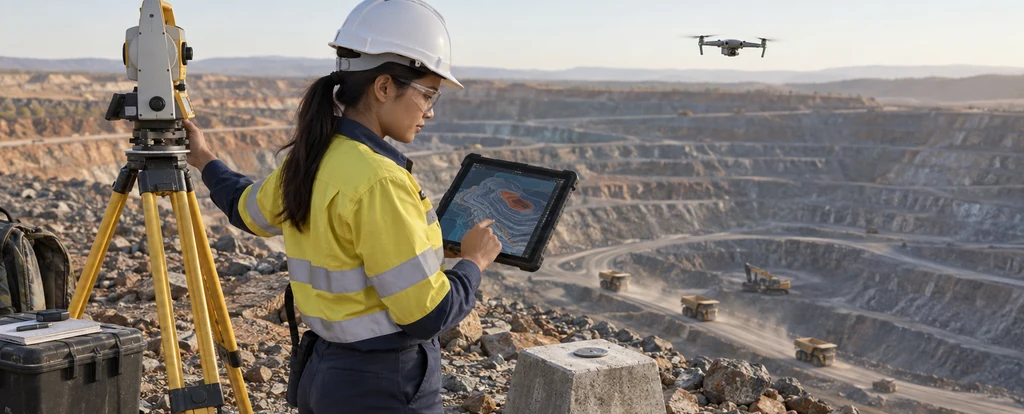
Mine surveyors work at both underground and open pit operations, often on a fly-in fly-out roster, and their plans are the site's record of what has actually been mined. The role sits close to general surveying but is narrower and more regulated: most states require mines to appoint a registered mine surveyor, so registration is part of the job rather than an optional extra.
How much do mine surveyors earn?
The median full-time salary for a mine surveyor is $124,800 per annum, before tax, up $26,000 since 2018.
Pay moves most with the site and the roster, since underground and remote operations usually pay more than quarrying or construction surveying, and short contract placements pay more again. Registration level matters too, because a registered mine surveyor can take on statutory appointments that unregistered surveyors cannot.
What does a mine surveyor do day to day?
The list below is what fills most weeks; the exact mix shifts with seniority and whatever stage the current work is at.
- Measuring underground development and open pit faces with total stations, laser scanners and drones
- Setting out drill and blast patterns, mining limits and services so the next cut goes in the right place
- Maintaining the mine plans and spatial database the whole site works from
- Monitoring ground movement, pit wall stability and stockpile volumes
- Calculating ore and waste quantities for the monthly reconciliation against the mill's figures
What skills do mine surveyors need?
Employers look for surveying and geospatial work, field inspection and testing, data analysis, backed by Deswik.Survey fluency and strong attention to detail.
Specialist skills
- Surveying and geospatial work
- Field inspection and testing
- Data analysis
- Worksite safety management
- CAD and technical drawing
- Engineering design and analysis
Software and tools
- Deswik.Survey
- Maptek Vulcan
- Micromine
- Surpac
- Leica GeoMoS
General skills
- Attention to detail
- Problem solving
Is the job growing?
About 820 people work as mine surveyors in Australia, and employment is projected to grow 4% over the decade to 2035. That's modest growth: demand is steady rather than booming.
How do you become a mine surveyor?
Here's the path most mine surveyors take, step by step.
- 1Complete a surveying or geomatics degree
A Bachelor of Surveying, geomatics or spatial science degree takes four years and covers measurement, cadastral law and mine surveying electives. Around 52% of the people working as mine surveyors hold a bachelor degree, and some arrive through a mining engineering degree plus a postgraduate qualification instead.
- 2Get site experience while you study
Mine sites take students over the summer break, and survey assistant work during semester holidays counts towards the practical experience registration later requires.
- 3Register with your state or territory surveyors board
Registration as a surveyor is required in most states before you can take a mine surveyor appointment, and the process includes a period of supervised practice. Requirements differ between states and territories, so check the board where you intend to work.
- 4Add a mine surveyor certificate of competency
Several states require a certificate of competency in mine surveying, issued by the mining regulator after a period of supervised underground work. A postgraduate qualification in mine surveying is a common alternative route for surveyors who already hold registration.
Ready to apply as a mine surveyor?
Whether you're working toward becoming a mine surveyor or already are one and want a hand with the next step (sharpening your resume for ATS screening, tightening your cover letter, or knowing what you'll actually be asked at interview), here are examples grounded in this specific role, not generic templates.
What jobs can a mine surveyor move to?
None of the roles mine surveyors typically move into pay more than the role itself. Surveyor is the closest match. If a bigger salary is the goal, moving up into a senior or principal position within the role is usually the faster route than moving sideways.
| Move to | Typical pay change | Overlap | Retraining |
|---|---|---|---|
| Surveyor Mine surveyors can move into general surveying, applying registration and measurement expertise, but reskilling covers broader land and cadastral contexts. | −$5,200 | 41% | reskill |
| Hydrographic Surveyor Mine surveyors bring underground measurement and mapping skills to hydrographic surveying, needing only a short course in water-based techniques. | −$15,600 | 58% | short course |
| GIS Analyst Mine surveyors' spatial information and mapping skills suit GIS analysis, though a substantial reskilling in geographic information systems is required. | −$26,000 | 32% | reskill |
Moves are chosen from Jobs and Skills Australia's Data on Occupation Mobility, which follows income tax records between 2011-12 and 2020-21, together with entry requirements and skill overlap. A known move is one people were seen making in that data. Pay change compares median full-time pay for the two roles.
Who works as a mine surveyor?
The typical mine surveyor is 38 years old; 96% are men, 91% work full-time, and full-timers average 46 hours a week.
- 38
- Median age
- 4%
- Female share
- 91%
- Full-time
- +6h
- vs all-jobs avg
What's it like being a mine surveyor?
The job follows the mine's roster rather than a standard week, with long shifts split between the field and the survey office, and often a fly-in fly-out arrangement. Survey departments are small, so a mine surveyor usually does the measurements, the processing and the statutory plans with little backup. It suits someone who likes measurement for its own sake and is comfortable working underground or on a pit floor in heat, dust and water.
What people like
- Your marks steer the mine. Setting out a drill pattern or a mining limit and then watching the face advance exactly where you put it is the clearest feedback the job offers.
- Field and office in the same day. Mornings are spent underground or on the pit floor with a total station, afternoons processing the data and drafting plans.
- Small team, wide responsibility. Most sites run two or three surveyors, so your measurements go straight into the production figures and the plans the regulator reads.
- The tools keep changing. Drones, laser scanners and mine planning software have replaced a lot of manual measurement, which suits surveyors who like learning new equipment.
What people find hard
- Rosters keep you on site. Two weeks on, one week off is common at remote mines, and that shapes family and social life more than the work itself does.
- Mistakes show up in tonnes. A mis-set level or a stope marked in the wrong place can send waste to the mill or hold up production, and the error is usually found by someone else.
- Statutory deadlines don't move. Monthly plans, reconciliation reports and safety updates are due on schedule whether or not the week went to plan.
- Underground is hard on the body. Heat, dust, water and long walks carrying equipment are part of the day at underground operations.
Based on our synthesis of professional-body surveys and public accounts of the role, not first-person verified reviews.
Which industries employ mine surveyors?
Metal Ore Mining employs the largest share of mine surveyors, followed by Coal Mining.
Top employing industries
- 1Metal Ore Mining
- 2Coal Mining
- 3Non-Metallic Mineral Mining and Quarrying
- 4Exploration and Mining Support Services
- 5Construction
Ranked by employment share; the source doesn't publish an exact percentage per industry.
| Bachelor degree | 52% | |
|---|---|---|
| Postgraduate | 26% | |
| Diploma / Advanced Diploma | 13% | |
| Other | 9% |
Will AI replace mine surveyors?
Mine surveying sits in the middle: measurement and drafting are increasingly automated, while the statutory and safety side of the job is not. Drones, laser scanners and mine software have cut the hours spent collecting and processing data, but someone still has to choose where to set control, check that the survey is correct and sign the mine plans.
Share of typical working time by exposure level
- Field measurement and setting outTotal stations, scanners and drones capture readings automatically, but the surveyor still picks the control points and pegs the mining limits by hand.30%moderate
- Processing scans into plans and volumesSoftware turns point clouds into surfaces and volume calculations with little manual drafting, so this part of the week is shrinking.25%high
- Ore reconciliation and reportingMine software does the arithmetic, but working out why surveyed tonnes differ from the mill's figures takes someone who knows the ground.25%moderate
- Statutory mine plans and sign-offPlans lodged with the regulator follow a format set by state mining law, and the surveyor adapts them to what has actually happened underground that month.20%low
Moves least exposed to AI
These career moves from mine surveyor work are rated low for AI exposure:
- Surveyor
Solid skill overlap (41%), reskill to get there, and a low automation-risk profile.
Common questions about becoming a mine surveyor
Straight answers to the questions people ask most.
How much do mine surveyors earn?
Mine surveyors earn $124,800 per year before tax at the median, above what general surveying pays, because the work is based at remote and underground sites. Contract placements and supervisory roles at larger operations sit above that figure, while assistant work sits below it.
How do you become a mine surveyor?
Start with a surveying or geomatics degree, then register with the surveying board in your state or territory and complete the supervised underground experience your mining regulator requires. Several states also issue a certificate of competency in mine surveying, which is usually the last step before you can take a statutory appointment.
Are mine surveyors in demand?
Mine surveyors are currently in shortage nationally, and employment is projected to grow 4% over the decade to 2035 over the decade. The occupation is small, with about 820 people working in it, so the hiring picture depends on how many operations are running in your state.
Will AI replace mine surveyors?
The measurement side of the job is already partly automated: drones, laser scanners and mine software such as Deswik.Survey and Maptek Vulcan collect and process much of the data a surveyor once gathered by hand. What has not moved is the judgement about where to set control and whether a survey is right, along with the statutory plans that carry a mine surveyor's certification.
Where can mine surveyors move next?
General surveying is a close move, since registration and measurement skills carry across, and pay is $5,200 less; hydrographic surveying needs only a short course in water-based techniques and pays $15,600 less. GIS analysis draws on the same spatial data but requires substantial reskilling, and pay is $26,000 less. Experienced mine surveyors also move into contracting or start their own survey practice serving several sites, which is often where earnings grow.
What is the difference between a mine surveyor and a surveyor?
General surveyors measure land boundaries, construction sites and cadastral plans, while mine surveyors apply the same instruments to underground workings, pit shells and ore bodies. Mine surveyors also carry statutory duties under state mining law, which general registration on its own does not cover.
Related roles
Not sure this is you? Take the career quiz and get a ranked shortlist of roles that fit how you like to work.