Optical Dispenser
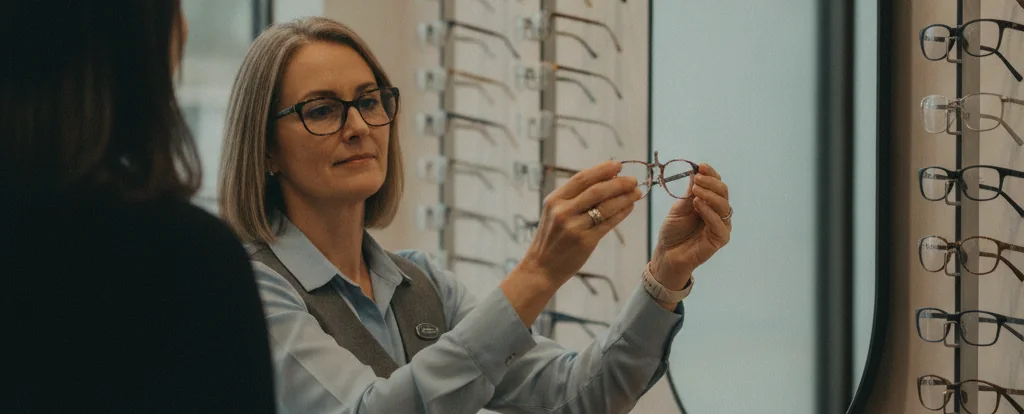
Optical dispensers fit and sell prescription glasses and contact lenses, turning a prescription written by an optometrist into eyewear that suits the person wearing it.
- Median salary
- $105,900
4.1%vs last year, before tax
- People employed
- 6,200
1.6%vs last year
- Projected growth
- +13.9%
to 2035
- AI exposure*
- Moderate
- automation risk
- Average hours
- 39/wk
−1h vs all jobs
- Shortage status
- Not in shortage
national
Optical dispensers work in optometry practices, optical chains and department store optical departments, taking the prescription an optometrist or ophthalmologist has written and turning it into finished glasses or contact lenses. They spend their day measuring faces, explaining lens options, adjusting frames and handling the retail side of the visit. The role is often confused with optometry, but optical dispensers do not test eyes or diagnose conditions; their work begins once the prescription exists.
How much do optical dispensers earn?
The median full-time salary for an optical dispenser is $105,900 per annum, before tax, up $22,200 since 2018.
Pay depends most on the practice and where you sit in it, since a qualified dispenser with a Certificate IV usually earns more than an untrained retail assistant, and large chains often work to set bands while independents negotiate individually. Many roles also carry a sales component, such as a bonus tied to lens upgrades or premium frames, and part-time work is common, which pulls the annual figure down even when the hourly rate is similar. Award coverage matters too, with most dispensers covered by a retail or health services award that sets penalty rates for weekend work.
What does an optical dispenser do day to day?
The list below is what fills most weeks; the exact mix shifts with seniority and whatever stage the current work is at.
- Taking facial and pupillary measurements so a prescription is translated into a frame and lens that sit correctly
- Talking customers through lens materials, coatings and frame choices against their prescription, their budget and how they actually use their glasses
- Adjusting frames on the spot, heating and bending them until they sit level and the lenses line up with the eyes
- Working out why new glasses feel wrong, which often means checking the fitting and measurements before questioning the prescription
- Keeping the retail side moving: quoting, processing private health fund claims, ordering lenses from the lab and following jobs through to collection
What skills do optical dispensers need?
Employers look for selling and negotiation, product management, backed by Phoropter fluency and strong customer service.
Specialist skills
- Selling and negotiation
- Product management
Software and tools
- Phoropter
- Focimeter
- Frame adjustment tools
- Lens edging software
- Patient management system
General skills
- Customer service
- Attention to detail
- Written communication
- Problem solving
Is the job growing?
About 6,200 people work as optical dispensers in Australia, and employment is projected to grow 13.9% over the decade to 2035. That's healthy, above-average growth, and the role should stay in solid demand.
How do you become an optical dispenser?
Here's the path most optical dispensers take, step by step.
- 1Get a start in an optical practice
Many dispensers begin as an optical assistant or trainee, learning on the shop floor while the practice supports their study. About 33% of people working in the role finished school at Year 12 or below, so the entry point is usually willingness to train rather than a particular qualification.
- 2Complete the Certificate IV in Optical Dispensing
This is the industry standard qualification, offered by TAFE and private providers and covering optics, lens types, measurement, fitting and dispensing. It usually takes about a year of full-time study or two years part-time, and most people do it while working in a practice.
- 3Learn the clinical side under supervision
Measured and fitted work is learned with an optometrist nearby, from taking pupillary distances to handling a customer whose progressive lenses will not settle. This supervised stage is what turns the qualification into confidence with real prescriptions.
- 4Join the professional body
Optical Dispensers Australia is the main professional association, and membership gives access to continuing education and a network of dispensers. There is no national registration or licensing requirement for the role in Australia, but many employers prefer a qualified, association member applicant.
Ready to apply as an optical dispenser?
Whether you're working toward becoming an optical dispenser or already are one and want a hand with the next step (sharpening your resume for ATS screening, tightening your cover letter, or knowing what you'll actually be asked at interview), here are examples grounded in this specific role, not generic templates.
What jobs can an optical dispenser move to?
Moving into Medical Device Sales Representative typically comes with the biggest pay rise, worth $29,100 a year more on average.
| Move to | Typical pay change | Overlap | Retraining |
|---|---|---|---|
| Medical Device Sales Representative Optical dispensers can move into medical device sales, using their healthcare product and customer experience, though further sales training is needed. | +$29,100 | 53% | reskill |
| Optometrist Optical dispensers who become optometrists build on their lens and patient knowledge, but must complete an optometry degree and registration.Known move | −$9,700 | 13% | requalify |
| Store Manager Optical dispensers move into store management using their retail and customer service experience, often needing further management training.Known move | −$21,700 | 9% | reskill |
| Optical Mechanic Optical dispensers can move into lens production as optical mechanics, applying their knowledge of lens specifications, with additional technical training.Known move | −$40,900 | 10% | reskill |
Moves are chosen from Jobs and Skills Australia's Data on Occupation Mobility, which follows income tax records between 2011-12 and 2020-21, together with entry requirements and skill overlap. A known move is one people were seen making in that data. Pay change compares median full-time pay for the two roles.
Who works as an optical dispenser?
The typical optical dispenser is 35 years old; 79% are women, 34% work full-time, and full-timers average 39 hours a week.
- 35
- Median age
- 79%
- Female share
- 34%
- Full-time
- −1h
- vs all-jobs avg
What's it like being an optical dispenser?
The job runs on a mix of booked appointments and walk-ins, so the day moves between the measuring room and the shop floor where customers choose frames. The satisfaction is concrete: getting a progressive lens to sit properly or fixing a frame that has been uncomfortable for months is a result the customer notices straight away. It suits people who are patient with fine detail, comfortable with their hands, and not put off by the sales conversation that comes with retail.
What people like
- You see the result on someone's face. A frame that finally sits level or a pair of glasses that stops causing headaches is a visible fix, and customers often say so before they leave the store.
- The technical side rewards curiosity. Lens design, coatings, prism and reading additions all follow rules you can learn, and knowing them lets you solve problems a customer has been living with for years.
- Steady hours in a clinical setting. Most practices keep regular opening hours rather than shift work, and the environment is closer to a health clinic than a busy sales floor, even with Saturday rosters in retail chains.
- You build a following of regulars. People come back every year or two, often bringing family, so a dispenser who remembers a customer's prescription history becomes the reason they return to that practice.
What people find hard
- Sales targets sit alongside the care. Many employers track premium lens and frame sales, and that pressure can clash with recommending what a customer actually needs, depending on how the practice is run.
- Weekend and evening work. Optical retail opens when customers are free, so Saturdays and late trading are part of the roster in most chains and shopping centre locations.
- Some problems are not yours to fix. When glasses still feel wrong, the cause can be the prescription or how the eye is adapting, and explaining that without dismissing the customer's experience takes patience.
- Progression means retraining. Moving beyond practice management or a senior dispensing role usually means an optometry degree or a shift into sales, so the role can feel like a ceiling if you want more responsibility.
Based on our synthesis of professional-body surveys and public accounts of the role, not first-person verified reviews.
Which industries employ optical dispensers?
Health Care and Social Assistance employs the largest share of optical dispensers.
Top employing industries
- 1Health Care and Social Assistance
Ranked by employment share; the source doesn't publish an exact percentage per industry.
| Year 12 or below | 33.4% | |
|---|---|---|
| Certificate III/IV | 28.5% | |
| Bachelor degree | 16.8% | |
| Diploma / Advanced Diploma | 12.9% | |
| Postgraduate | 2.7% |
Will AI replace optical dispensers?
The role sits in the middle, because automated lens edging and digital measuring instruments have taken over some of the technical steps while online sellers have changed how a share of customers buy glasses. What remains firmly human is the part customers judge the practice on: reading what someone means when they say the glasses feel wrong and adjusting a frame on their face. A dispenser who is good with people and precise with measurements stays useful whatever the software does.
Share of typical working time by exposure level
- Measuring and fitting framesDigital instruments take the first readings, but someone still has to judge how a frame sits on a face and where the pupils land in the finished lens.30%low
- Advising on lenses and coatingsSoftware can suggest a lens type from a prescription, yet explaining the trade-offs between thickness, coatings and cost is a conversation with a person who has a budget.25%moderate
- Adjusting and repairing framesHeating, bending and replacing nose pads or screws happens at the bench with the customer waiting, and it stays hands-on work.25%low
- Orders, claims and stockSending lens orders to the lab, processing private health fund claims and tracking frame stock through a practice management system are already largely automated.20%high
Moves least exposed to AI
These career moves from optical dispenser work are rated low for AI exposure:
- Optometrist
Some skill overlap (13%), requalify to get there, and a low automation-risk profile.
Common questions about becoming an optical dispenser
Straight answers to the questions people ask most.
How much does an optical dispenser earn?
Full-time optical dispensers earn a median of $105,900 per annum, before tax. That figure moves with the practice you work in, whether you hold a Certificate IV, and whether the role carries a sales bonus or is part-time.
How do you become an optical dispenser?
Most people start in an optical practice as an assistant or trainee and complete the Certificate IV in Optical Dispensing (HLT47825) while working. The qualification covers optics, measurement and fitting, and there is no national registration requirement, though employers often prefer it and many dispensers join Optical Dispensers Australia.
Are optical dispensers in demand?
Optical dispensers are currently not in shortage, and employment in the role is projected to grow 13.9% over the decade to 2035. Openings come from practices replacing staff as well as new work, so shop-floor experience and a completed Certificate IV are what separate applicants when a position comes up.
Will AI replace optical dispensers?
Parts of the job are already automated: digital measuring instruments take initial readings, lens labs use automated edging, and practice software handles orders and health fund claims. The fitting and the conversation are harder to automate, because judging how a frame sits on a real face and working out why someone is uncomfortable still needs a person in the room.
What can an optical dispenser move into?
Becoming an optometrist builds on the lens and patient knowledge but requires a university degree and registration, and the median pay for optometrists is $9,700 less than for dispensers. Medical device sales representatives draw on the same product knowledge and sit $29,100 more. Store management uses the retail side of the job, though the median pay is $21,700 less.
What is the difference between an optical dispenser and an optometrist?
An optometrist tests eyes, writes prescriptions and checks eye health, while a dispenser takes that prescription and turns it into glasses or contact lenses. They usually work in the same practice, which is why the two are often mixed up, but only the optometrist is registered to examine eyes and diagnose conditions.
Related roles
- Optometrist
- Store Manager
- Optical Mechanic
- Medical Device Sales Representative
- Optical Mechanic
- Pharmacy Assistant
Not sure this is you? Take the career quiz and get a ranked shortlist of roles that fit how you like to work.