Home Manufacturing & Production
Optical Mechanic
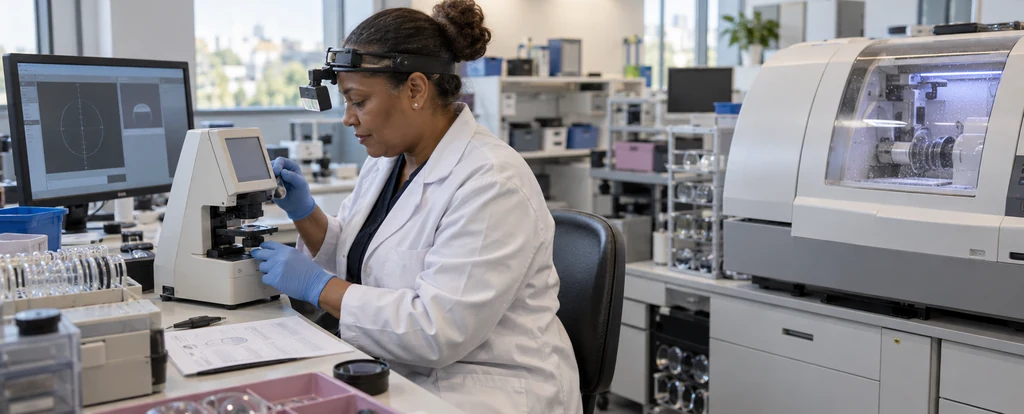
Optical mechanics cut, grind and fit prescription lenses into frames, turning an optometrist's prescription into a pair of glasses that works.
- Median salary*
- $65,000
3.7%vs last year, before tax
- People employed
- 400
0.0%vs last year
- Projected growth
- +13.9%
to 2035
- AI exposure*
- Moderate
- automation risk
- Average hours
- 38/wk
−2h vs all jobs
- Shortage status
- Not in shortage
national
Most optical mechanics work in the laboratory of an optical chain, an independent practice or a wholesale lens supplier, where prescriptions arrive and finished glasses go out. The job sits behind the counter: an optical dispenser deals with the customer and the frame choice, while the mechanic makes the lens itself. It rewards patience with measurement, because a lens that sits a fraction off centre will not be comfortable in front of the eye.
How much do optical mechanics earn?
The median full-time salary for an optical mechanic is $65,000 per annum, before tax, up $13,900 since 2018.
Pay follows the award or enterprise agreement of the employer, so a large retail chain and a small independent laboratory can pay differently for identical work. Laboratories that handle a high volume of progressive lenses, coatings and rimless glazing tend to pay above the base rate, and shift or overtime work adds to it when orders build up. Running a laboratory's workflow and staff is usually paid above the bench rate.
What does an optical mechanic do day to day?
The list below is what fills most weeks; the exact mix shifts with seniority and whatever stage the current work is at.
- Reading a prescription and setting the lens parameters for each job
- Surfacing, grinding and polishing lens blanks to the required power
- Edging lenses to the shape of the frame and glazing them into place
- Checking finished lenses on a lensmeter and reworking anything out of tolerance
- Repairing and adjusting frames, and cleaning and calibrating the edger, generator and polisher
What skills do optical mechanics need?
Employers look for craft and handmade production, installation and maintenance, plant and equipment operation, backed by Automated lens edger fluency and strong attention to detail.
Specialist skills
- Craft and handmade production
- Installation and maintenance
- Plant and equipment operation
Software and tools
- Automated lens edger
- Lensmeter (vertometer)
- Lens surfacing and generator equipment
- Frame warmer and adjustment tools
- Optical laboratory management software
General skills
- Attention to detail
- Problem solving
- Time and deadline management
- Digital literacy
Is the job growing?
About 400 people work as optical mechanics in Australia, and employment is projected to grow 13.9% over the decade to 2035. That's healthy, above-average growth, and the role should stay in solid demand.
How do you become an optical mechanic?
Here's the path most optical mechanics take, step by step.
- 1Finish secondary school with maths and a science subject
The work is measurement and arithmetic, and the formulas behind lens power and grinding depth are easier to pick up with those subjects behind you. Around 27% of people in the role finished school at Year 12 or below, so there is more than one way in.
- 2Get a start in an optical laboratory
Entry is usually as a trainee or a lens processing hand, and the training is paid. Retail chains, independent practices with their own lab and wholesale lens suppliers all take on juniors, so it is worth approaching them directly rather than waiting for an advertised vacancy.
- 3Study a qualification while you work
Certificate III and Certificate IV in optical dispensing (HLT47825) are the qualifications most people in the trade hold or study toward, and a traineeship lets you complete one on the job. Short courses in precision measurement or engineering can add to the bench skills.
- 4Widen the range of work you can handle
Moving from single-vision lenses into progressive and prism work, coatings and rimless glazing is what turns a bench hand into someone a laboratory relies on, and it often brings a pay review with it.
- 5Move into laboratory supervision or into dispensing
Experienced mechanics can take on a laboratory's workflow and staff, or move to the front of the shop as an optical dispenser, where the product knowledge carries across.
Ready to apply as an optical mechanic?
Whether you're working toward becoming an optical mechanic or already are one and want a hand with the next step (sharpening your resume for ATS screening, tightening your cover letter, or knowing what you'll actually be asked at interview), here are examples grounded in this specific role, not generic templates.
What jobs can an optical mechanic move to?
Moving into Electronic Engineering Technician typically comes with the biggest pay rise, worth $46,400 a year more on average.
| Move to | Typical pay change | Overlap | Retraining |
|---|---|---|---|
| Electronic Engineering Technician Precision assembly and equipment calibration carry into electronic technician work, with further study in electronics. | +$46,400 | 22% | reskill |
| Optical Dispenser Optical mechanics bring lens production and prescription knowledge into dispensing, fitting and selling eyewear to patients.Known move | +$40,900 | 10% | reskill |
| Electrical Engineering Technician Precision measurement and machine setup transfer to electrical technician roles, supported by further study in electrical systems. | +$26,500 | 14% | reskill |
Moves are chosen from Jobs and Skills Australia's Data on Occupation Mobility, which follows income tax records between 2011-12 and 2020-21, together with entry requirements and skill overlap. A known move is one people were seen making in that data. Pay change compares median full-time pay for the two roles.
Who works as an optical mechanic?
The typical optical mechanic is 48 years old; 67% are men, 70% work full-time, and full-timers average 38 hours a week.
- 48
- Median age
- 33%
- Female share
- 70%
- Full-time
- −2h
- vs all-jobs avg
What's it like being an optical mechanic?
The day has a steady rhythm set by the order book: batches of lenses to surface and edge in the morning, jobs to check and despatch before the courier leaves. It is quiet, hands-on, measured work, and the pressure comes from getting each lens right the first time, because a remake costs the laboratory money and the customer a second visit. People who enjoy it tend to like fine work with their hands, a clear standard to meet and a workshop rather than a front counter.
What people like
- The result is measurable. A lens either matches the prescription or it does not, so you know by the end of the day whether a job is right rather than waiting on someone else's opinion.
- Equipment you get to know properly. Edgers, generators and polishers reward an operator who understands their settings, and a small change to a cycle alters the finish of every lens that follows.
- Variety inside a narrow trade. Single-vision, bifocal, progressive and coated lenses each bring their own setup and their own ways of going wrong, so the week is rarely one job repeated.
- No customers to manage. Almost all of the work happens at the bench, which suits people who would rather solve a problem with their hands than talk a customer through frame choices.
What people find hard
- Despatch deadlines. Laboratories work to cut-off times for the courier, so a busy day means batches of lenses that all have to be finished and checked before the van arrives.
- Mistakes are expensive and visible. A lens edged to the wrong axis or scratched during polishing wastes a blank, delays the customer and shows up plainly under a lensmeter.
- Standing work in a wet workshop. The day is spent on your feet at machines, with water, coolants and polishing compounds around, so the physical load builds over a long week.
- The work is invisible to the customer. The person collecting their glasses thanks the dispenser who served them, while whoever made the lens stays out of sight in the lab.
Based on our synthesis of professional-body surveys and public accounts of the role, not first-person verified reviews.
Which industries employ optical mechanics?
Health Care and Social Assistance employs the largest share of optical mechanics, followed by Manufacturing.
Top employing industries
- 1Health Care and Social Assistance
- 2Manufacturing
- 3Wholesale Trade
Ranked by employment share; the source doesn't publish an exact percentage per industry.
| Certificate III/IV | 38.2% | |
|---|---|---|
| Year 12 or below | 26.9% | |
| Diploma / Advanced Diploma | 12.2% | |
| Bachelor degree | 11% | |
| Postgraduate | 4% |
Will AI replace optical mechanics?
Automation reaches a good part of this job. Surfacing generators and edgers cut and finish lenses from a digital prescription with far less hand work than the trade once involved, and laboratory software tracks orders from the prescription through to despatch. The mechanic still sets up each job, verifies the finished lens and deals with the frames, coatings and fit problems the equipment cannot judge, which is why the role is rated as moderately exposed.
Share of typical working time by exposure level
- Surfacing and edging lenses on automated equipmentGenerators and edgers read the prescription digitally and run the cut, so the operator loads blanks, chooses the cycle and picks up a badly set job before it wastes a lens.30%high
- Glazing, fitting and adjusting framesSetting a lens into a rimless or metal frame, warming and adjusting temples and bending a bridge to sit straight are hand skills that vary with every frame.30%low
- Checking finished lenses on a lensmeterVerifying power, axis and optical centre against the order still comes down to a person at the bench, who also spots coating flaws and lenses sitting proud of the frame.25%low
- Equipment maintenance and order recordsCleaning and calibrating the generator and edger, changing wheels and logging jobs in laboratory software is partly scheduled and recorded automatically, but a machine cutting slightly out still needs someone to notice and correct it.15%moderate
Common questions about becoming an optical mechanic
Straight answers to the questions people ask most.
How much do optical mechanics earn?
Median pay is $65,000 per year before tax for full-time work. The employer matters most: a chain laboratory, an independent practice and a wholesale supplier each set pay under their own agreement, and shift or overtime hours add to the base rate.
How do you become an optical mechanic?
Most people start as a trainee in an optical laboratory and learn surfacing, edging and frame fitting on the job while studying a certificate in optical dispensing. There is no national registration or licence for the trade, so employers judge you on the bench skills you can demonstrate.
Are optical mechanics in demand?
Optical mechanics are currently not in shortage, and employment is projected to grow 13.9% over the decade to 2035 over the decade to 2035. The occupation is small, so most openings come from people leaving or retiring rather than from new laboratories opening, and a single employer can account for several of them.
Will AI or automation replace optical mechanics?
A large share of the measuring and cutting is already automated, with surfacing generators and edgers running from a digital prescription to tight tolerances. What stays with the mechanic is setting each machine up for the job, verifying the finished lens against the order, and handling the frames and coatings the equipment cannot judge.
What jobs can an optical mechanic move into?
Optical dispensing is a close move, and pay there is $40,900 more because the role adds sales and patient contact to the product knowledge you already have. Precision assembly and equipment calibration also carry into electronic engineering technician work, with further study in electronics.
Do I need to be an optometrist to do this job?
No. Optical mechanics work from prescriptions written by optometrists or ophthalmologists, but they do not test eyes or write prescriptions themselves. The training runs for months to a couple of years rather than the degree and clinical placements an optometrist completes.
Related roles
- Optical Dispenser
- Electronic Engineering Technician
- Electrical Engineering Technician
- Optical Dispenser
- Screen Printer
- Saw Doctor
Not sure this is you? Take the career quiz and get a ranked shortlist of roles that fit how you like to work.